On sailors, swirling spores, and coming home
This month's pudding: on needles, green coats, and the stubborn pull of north, plus Jacobsen, Geese, and a word machine bobbing in Dutch waters.
Hoi!
According to my self-set schedule, I was supposed to send this letter to you all almost two weeks ago, but I failed. I was not particularly busy, which would be the go-to reason. Instead, I was simply trying to get through February, nothing to report.
But, now, something truly newsworthy happened: a published pamphlet! Poetry! Good enough reason to get back to my desk, and get things moving again. While doing so, familiar things came back to me: Dickinson’s poems, green coats, balloons, the rain. I've brought them all together in this month's pudding; may it be tasty.

From my desk
Words that found their way onto the page.
A week ago, the wonderful collective Short Pieces That Move published another series of pamphlets (six of them!), one of them written by yours truly. Its title: ‘As if, the needle knows the north’. A nod to a letter Emily Dickinson once wrote to her life-long mentor and pen pal Higginson. She wanted his opinion on whether or not her poetry felt alive, if it was breathing, if it would be publication-worthy.
A tough question to ask (she only asked him once), an even harder one to answer (Higginson was impressed by Dickinson's work, but, for it to be publishable, he advised her to change everything that made her work so unique. In other words, to suck the life out of it. Luckily, she didn’t.).
I've been quite occupied by Dickinson's work, even though I never seem to get close to the heart of her matter. She's a puzzling poet, especially for a non-native English reader like myself. Over the last few years, I’ve therefore decided to be hands-on with her poems, using them as a way to look anew at seemingly familiar things. To capture balloons, for instance. Or volcanoes.
Looking through Dickinson’s poetic lens has enabled me to put my impossible attraction to these silly objects and ambiguous mountains into words. And while I thought I was done writing about fiery mouths and unexpressed desires, Dickinson suddenly re-appeared while writing this pamphlet, although only indirectly. Unexpectedly, really.
Instead of writing an essay that traces a particular thing through a poetic lens, I was challenged by the SPTM crew to venture into a poetic journey of my own. I thought I had steered away from Dickinson while doing so. And still, there she was, giving me direction, permission. Dickinson's original sentence, the one I borrowed from, reads:
The Sailor cannot see the North—but knows the Needle can.
I am no sailor, but I decided to put my trust into the needle, following its pull up north, into uncharted waters. The result has two parts. I end the piece with a retelling of a trip to the arctic winter of Svalbard, that treeless, catless, sunless island:
I went as far north as I could go. Sailors can’t see it, but know the needle can. Or so said the poet. I followed her needle on a tiny plane, straight into twenty-four hours of darkness. I arrived in the middle of the day. Waiting for my suitcase to come back to me, I looked at the images above the band. Aurora borealis, polar bears, seed bank. The end felt near.
But it starts with a one-line-per-day venture into poetic form, destination unknown. For this inwards journey, I explored a new language for something harder to name: the ways I have learned to discipline my body into coolness, into quiet, into not-wanting, forcing it to be singular, while the underbelly rumbles:
We / are funneled by stainless steel, the cold rails shutting / us still. Slanted numbers click: from zero to bye. / On the sixteenth floor, I trail my tongue along / a hedge of thirty-three teeth. My throat starves, / wrapped in bottle green. My sweetest, do not go / too deep.
Post-launch, I got sick, but still dragged myself to a much anticipated Geese show. Leaning against the wall of the sold out venue, amidst sweaty teenagers, I listened to a stripped, gorgeous version of Au Pays du Cocaine, to a wailing Winter giving an unknown you permission to be free, like a sailor in a great green coat, and still come home.
Green was the colour I desired most when being up north. Not the green of good luck, but the green of land, of mould, of life that passes and comes back. Green is supposed to be a sign of bad luck in the world of sailors, as it’s the colour of the land they left behind or might get stranded on. Winter wraps the one who leaves, who desires to move freely, in a green coat, questioning whether or not it is possible to be out there, to change, and still find your way back.
Publishing the SPTM pamphlet offered me a way to do both: to connect what was once scattered, to be wrapped in the great green sky, come home and write about it.
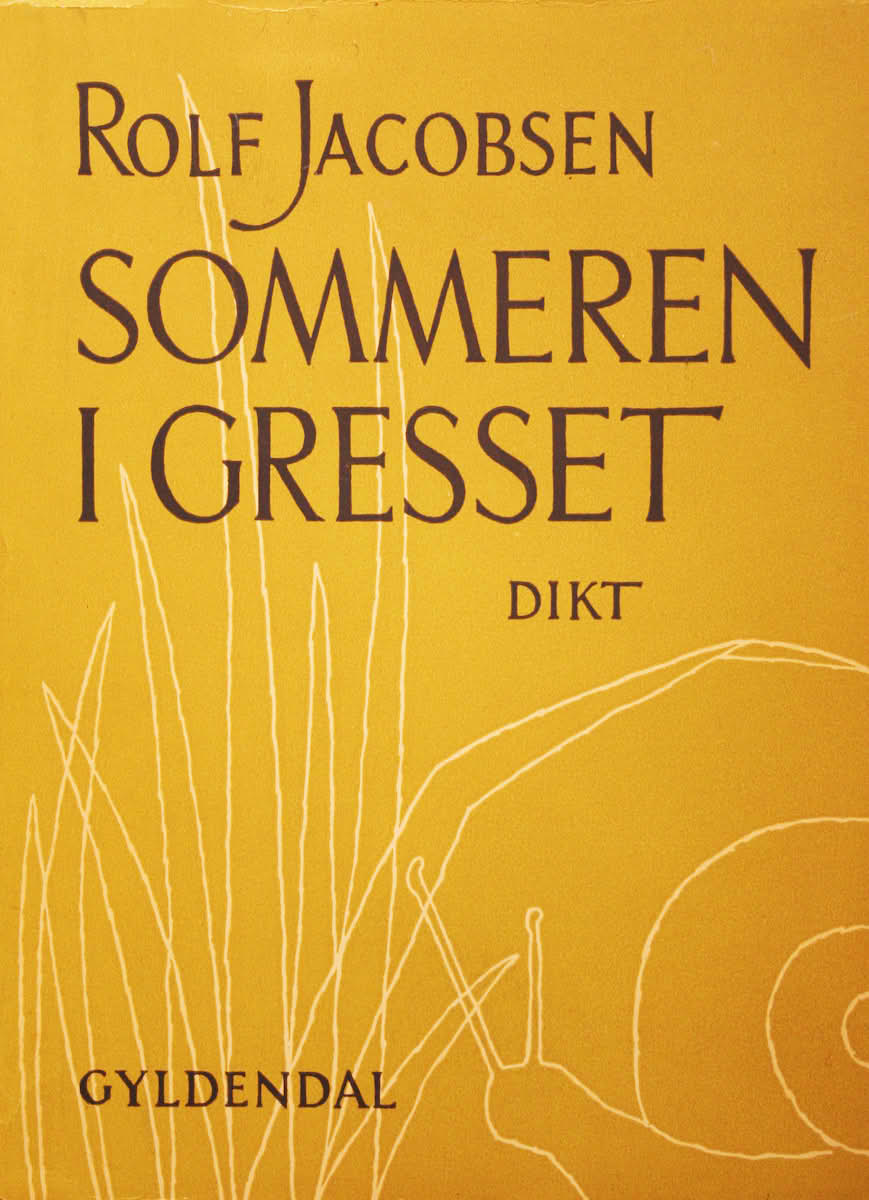
I don’t think I’ll be done with the needle just yet. In the spirit of Dickinson, I end this letter to you with another beginning. Rolf Jacobsen, the Norwegian poet whose poems describe the north in ways I'm still learning from and keep coming back to, knew something about what it is like to be wrapped in Winter’s great green coat, while longing for the seeds to take hold:
‘For we have forgotten this: that the Earth is a star of grass, a seed-planet, swirling with spores as with clouds, from sea to sea, a whirl of them. Seeds take hold under the cobblestones and between the letters in my poem. Here they are.’
Excerpt from ‘Green Light’ / ‘Grønt Lys’, published in Summer in the Grass / Sommeren I Gresset, 1956, featured in ‘North in the World: selected poems of Rolf Jacobsen, a bilingual edition’, translated by Roger Greenwald (2002).
From other desks
Words/images that reached me from other rooms.
I'm compiling this list while it's raining outside, which prompted me to read the first poem in ‘North in the World’ again: 'Rain'. I did so while listening to Jacobsen reading the original, 'Regn', from his first collection Earth and Iron / Jord og Jern (1933). I hope someone translates his poems into Dutch again; I can only find a handful online. Regn / rain / regen. In any language, it seems to always be the first thing. In Dutch, it might also be the last.
Please buy and read the pamphlets published by SPTM—all of them. They move, and they will move you. Order via the form; hand-delivery possible in Amsterdam, Rotterdam and Brussels. Shout out to KB, AK, AB, and LB! <3
I also attended a spring school hosted by SPTM, whose sessions usually happen online. Led by Kate Briggs and the rest of the SPTM crew, we came together to read and write in short sprints, building upon existing words and things we found across the space, until something unexpected started to move; short pieces of collective writing. For anyone who craves the same permission to simply start, to freely follow the pull of the needle, I'd recommend Lucy Yves' writing prompts, partially published on The Paris Review and also available in book form.
On magnetic pulls: Jazmina Barrera's Linea Nigra, a book-length essay on pregnancy, earthquakes, and the line that is starting to appear on my belly. Its purpose remains contested, but it’s understood in natural birth circles as a guiding path for newborns finding their way to the breast. A line that knows north, in other words. Nichole LeFebvre wrote a beautiful review for LARB, which is where I'd suggest you start. And if you feel lost at sea, Barrera's collection of essays on lighthouses can be a lifesaver.
Finally: Charlie recently read from my balloon essay on More Poetry is Needed, also featuring Dickinson's balloon poem, the one that first pulled me into Emily’s strange lands. She keeps coming back like a boomerang, as she should. May you all enjoy her words—and her em-dashes. (Are they named after her? They really should be.)
Diptych
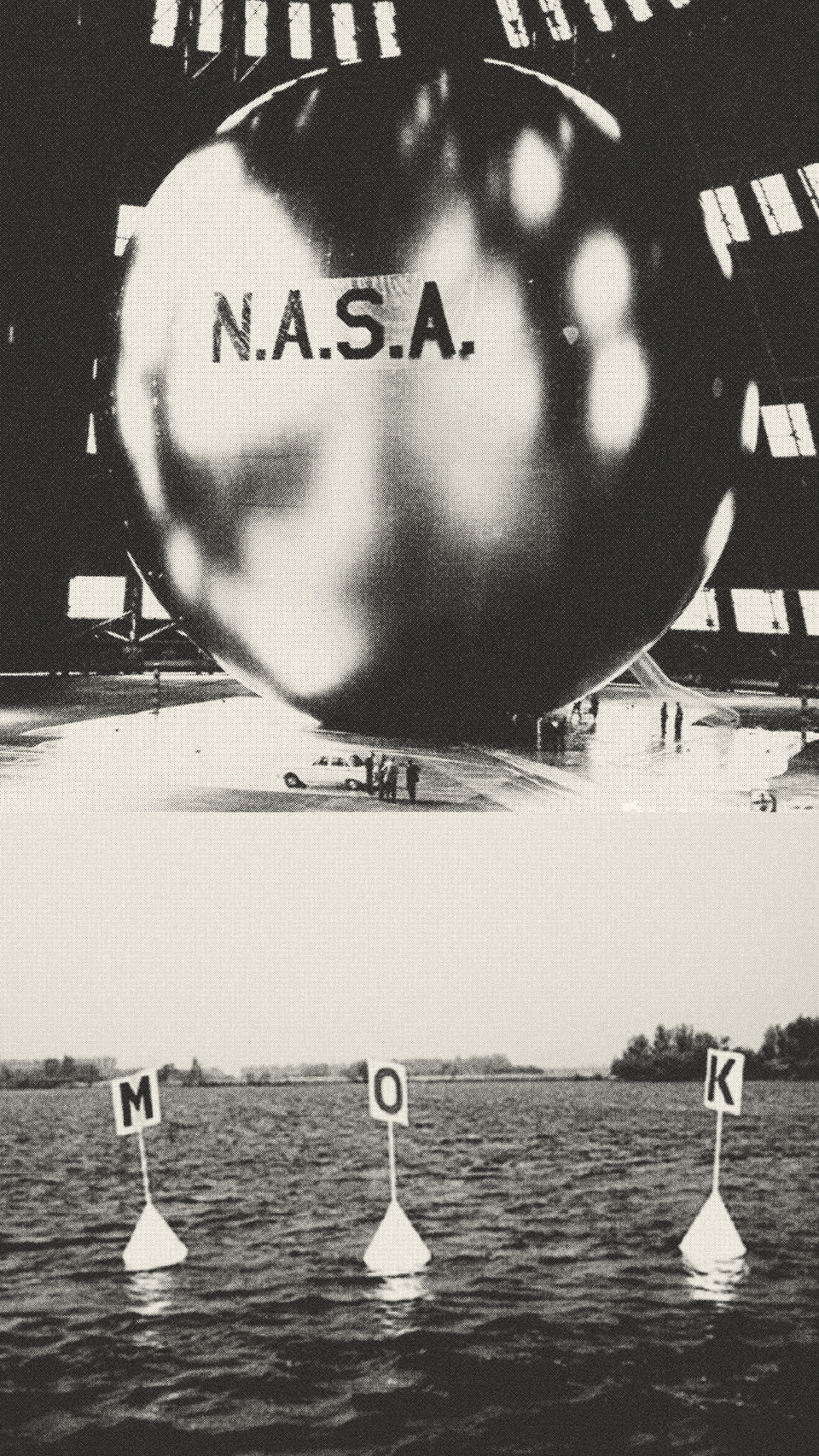
Two images that found each other across my desktop.
Happy Puddings,
Iris
Add a comment: