
When Character Doesn’t Matter, Who Does?
Platner’s record would be disqualifying anywhere else. Why are prominent Democrats embracing him—and what does it say about the party?
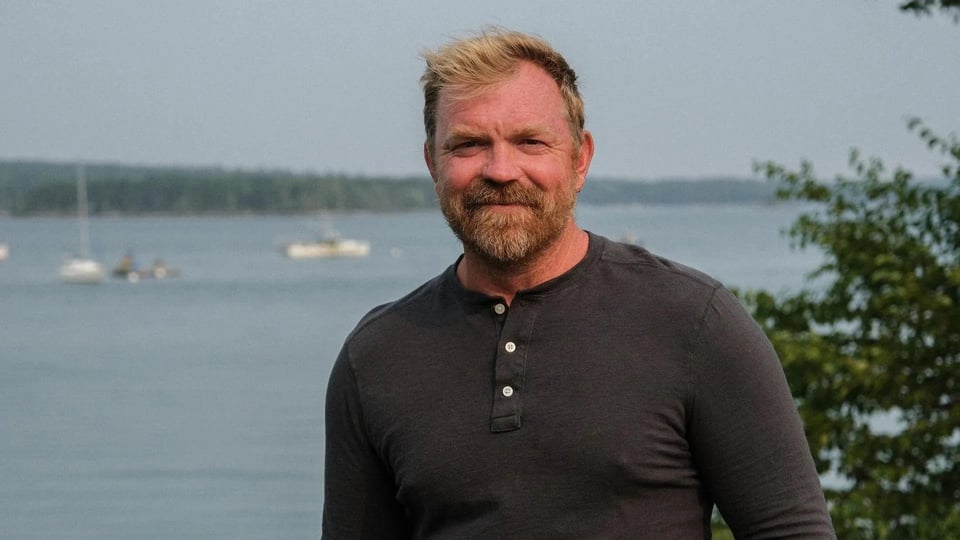
Let’s not sugarcoat this: if you’re Jewish and still think the Democratic Party is a safe home, it’s time to get real. What just happened in Maine is not just alarming—it’s a warning. Graham Platner, a candidate whose résumé includes a Nazi SS Totenkopf tattoo, Reddit posts blaming sexual assault survivors for their own attacks, casual racism, violent rhetoric, and cozying up to antisemitic conspiracy theorists, is being celebrated by prominent Democrats. Yes, you read that right. Elizabeth Warren praises his “populist agenda for working families.” Ruben Gallego gushes about his ability to “draw people into politics.” Never mind the actual, documented disqualifications that would have ended anyone else’s career.
Upgrade nowLet’s break it down. Platner once wore a tattoo that glorifies a Nazi death squad. He made posts telling sexual assault survivors they should “take some responsibility.” He called rural Mainers “racist and stupid,” suggested violent political action as a solution to inequality, trafficked in racist stereotypes, and endorsed figures spreading antisemitic conspiracy theories. And now, we are supposed to look past all of it because…what? He’s a Marine veteran? An oyster farmer? Someone with a populist flair?
Do you see what this is really saying? That Jewish history, Jewish trauma, and Jewish values are optional. That the historic Black-Jewish alliance, which has been central to progressive politics for decades, can be quietly sidelined in the name of optics. That basic human decency is negotiable if a candidate polls well with 18–29-year-olds or energizes the “disaffected” vote.
Meanwhile, Governor Janet Mills—Sen. Chuck Schumer’s handpicked candidate, with a proven record of winning and delivering for Maine—is the candidate actually capable of flipping this Senate seat. Yet, despite her experience and electability, other prominent Democrats are elevating Platner, spectacle over substance, optics over principle. Warren and Gallego’s endorsements signal that character can be ignored, ethics are optional, and the safety and dignity of Jewish voters are apparently negotiable.
And here’s the kicker: Platner’s supporters are spinning narratives like it’s all forgivable human error. “He’s a human being who made mistakes and recognizes them,” says Sen. Chris Murphy. Really? Mistakes like a Nazi tattoo? Blaming sexual assault survivors? Dismissing the lived experience of entire communities? That’s not a mistake. That’s a pattern. And ignoring it tells Jewish voters one thing: you are background noise. Optional. Disposable.
The dissonance is deafening. How does a party that claims to champion justice, equity, and inclusion rationalize endorsing someone whose history is antithetical to every one of those values? How do we explain to our communities that the people raising their voices in outrage are the ones who now see Platner as their candidate? How do we continue to trust that the party cares about us when its actions scream the opposite?
We are not talking about a minor indiscretion here. We are talking about a candidate whose past is steeped in symbols, rhetoric, and behavior that most Americans—most Democrats, most Jews, most Black voters—would find disqualifying. And yet the endorsements keep coming, as if polling numbers outweigh ethics, as if spectacle is the only metric that matters.
So yes, Jews, Blacks, progressives, and anyone who believes that decency matters should be asking hard questions: When did it become acceptable for someone with Platner’s record to be lifted up by the Democratic Party? What message does it send to victims of sexual assault, to Black and Jewish voters, to anyone who still believes in the party’s moral compass? Are we supposed to be treated like chopped liver while optics and populism take center stage?
This isn’t just about Maine. It’s about the future of a party that once prided itself on moral leadership and inclusivity. If the Democratic Party cannot recognize that a candidate with Platner’s history is unfit, then it has, in effect, made a decision: decency is optional, ethics are negotiable, and both Jewish and Black voters are expendable.
Silence is complicity. If we care about our communities, our values, and the moral credibility of our politics, we cannot sit quietly. We cannot let this pass. Because if Platner wins, it will not be a victory for democracy, for Maine, or for progress—it will be a victory for cynicism, spectacle, and the outright abandonment of principle.
