
Equal Protection Has Been Revoked
Kansas is canceling driver’s licenses and birth certificates for transgender residents—retroactively. What happens when equal protection depends on which state line you cross?
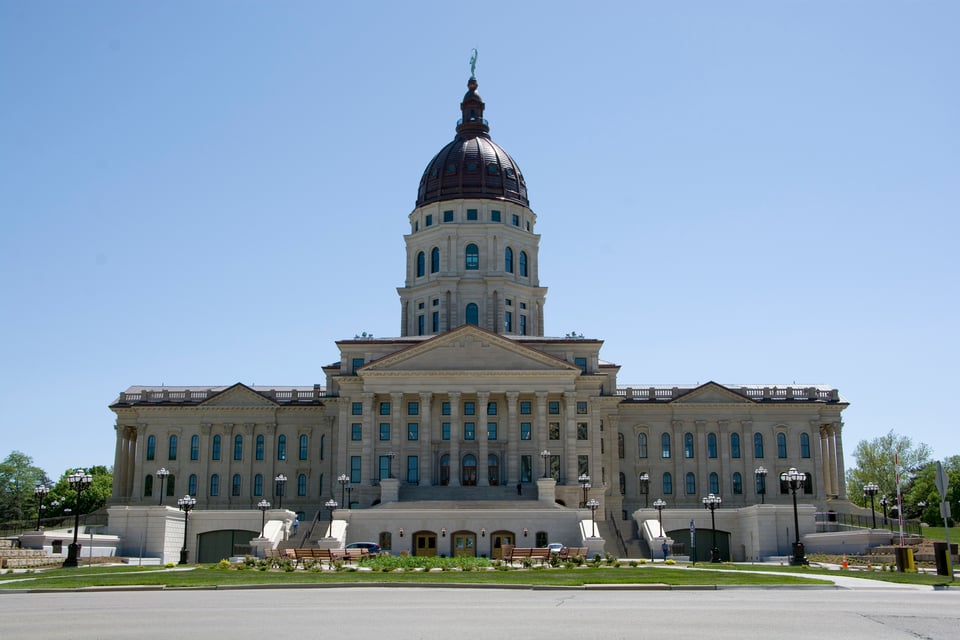
A month ago, I wrote that equal protection in Kansas now comes with an asterisk.
This week, the asterisk turned into a shredder.
With a veto override of Governor Laura Kelly, Kansas Republicans have enacted a law that does something no other state has dared to do: retroactively invalidate the driver’s licenses and birth certificates of transgender residents who followed the law, went through the courts, paid their fees, and updated their documents in good faith.
Not just banning future changes.
Not just freezing policy in place.
Reversing it.
Roughly 1,700 driver’s licenses. Nearly as many birth certificates. Cancelled. Reissued. Corrected, in the state’s view — erased, in reality.
State leaders say this is about “common sense.” One Republican lawmaker suggested voters simply want to “return to biology I learned in high school.” The implication is that transgender Kansans are a philosophical disagreement—a campus debate that wandered into statute.
But here is what this law actually does.
It forces people to carry identification that outs them. It compels them to present documents that contradict their lived reality every time they apply for a job, board a plane, get pulled over, or cash a check. It increases the risk of harassment and violence at the precise moment they must interact with authority.
And then, in a final twist of bureaucratic pettiness, the state will charge $26 for the privilege of being misidentified.
If you were looking for a metaphor, you’d struggle to find one more perfect than this: the government reaches into your wallet, invalidates your ID, and sends you the bill.
Kansas is not alone in restricting updates to gender markers. Florida. Tennessee. Texas. Others have taken steps to block changes going forward. But Kansas has decided to be first in line for something darker: undoing what was already done, clawing back recognition that had been granted.
That’s not policy refinement. That’s punishment.
And it lands differently when you are the one whose life is being “refined.”
In April, I have been invited to attend a family simcha in Kansas. A celebration. A moment of joy. Instead, I find myself calculating risk. Do I feel safe stepping into a state where the legislature has made it clear that my identity is not merely disputed but administratively unacceptable? Where the law now mandates that official documents contradict who I am? At this point, I do not feel safe stepping foot within Kansas state lines.
When lawmakers talk about “returning to common sense,” they never mention that common sense for trans people now includes contingency plans, safety calculations, and quiet exit strategies.
This is what erosion looks like. Not a single dramatic moment, but a steady narrowing of space.
First, restrict medical care for trans youth. Then bar participation in sports. Then bathrooms. Then documents. Then retroactively revoke documents. Each step is framed as modest. Reasonable. Technical.
But the through-line is unmistakable: make life harder. Make it exhausting. Make it expensive. Make it public.
The Fourteenth Amendment promises equal protection of the laws. It does not say equal protection unless a supermajority disagrees with your existence. It does not say due process unless the culture war demands a casualty.
And yet we are watching courts strained to their limits, executive officials ignoring orders they dislike, and a Supreme Court that has shown increasing comfort with narrowing the scope of constitutional protections when trans Americans are involved.
I am a fourth-generation American on my mother’s side. My family has been here since the 19th century. That lineage does not grant me special status—but it underscores something simple: we belong here. We have always been here. Trans Americans are not new. We are not imported. We are not a fad conjured by “ideology.”
We are citizens.
There is a reason historians describe patterns when governments begin identifying, isolating, and administratively targeting minority populations. The language is bureaucratic. The steps are incremental. The justification is always safety or order or common sense.
Until it isn’t.
Democratic officials can veto. They can sue. They can speak. But in a state where one party holds legislative supermajorities, vetoes become temporary speed bumps. Court victories become invitations to draft tighter language next session.
And still, trans Kansans remain. They go to school. They work. They raise families. They pay taxes. They love the state that is now telling them, in no uncertain terms, that love is not reciprocated.
Public policy is not an abstraction. It determines whether someone feels safe walking into a licensing office. Whether they risk humiliation at a TSA checkpoint. Whether they can attend a family wedding without rehearsing explanations for why their ID doesn’t match their face.
The question is not whether Kansas Republicans believe there are “two sexes.” The question is whether the Constitution protects only those whom a majority finds comfortable.
Equal protection with an asterisk is not equal protection. It is a warning label.
And when a state begins voiding the legal identities of its own residents, the rest of the country should stop pretending this is a niche issue confined to one legislative chamber in Topeka.
This is where we are in 2026.
The line is no longer hypothetical. It’s printed on 1,700 invalidated licenses.
