America’s Birthday Is Not About Donald Trump
From Freedom 250 to the Kennedy Center, the recurring theme is impossible to miss: every institution and every celebration must revolve around him.
I love the idea of celebrating 250 years of American independence. In an era when Americans can barely agree on what day of the week it is, the nation’s semiquincentennial should be one of those rare occasions that brings people together rather than pushes them further apart.
Upgrade nowA quarter millennium after the signing of the Declaration of Independence should be the kind of occasion that transcends party affiliation. Americans disagree about almost everything these days, but surely we can agree that the nation’s 250th birthday ought to be bigger than whichever politician happens to occupy the White House at the moment.
Unfortunately, this is Donald Trump we’re talking about.
The latest saga involving Freedom 250’s troubled concert series demonstrates what has become one of the defining characteristics of Trump’s political career: his inability to allow anything, no matter how historic or significant, to exist without making himself the central character.
The controversy surrounding the concert series was already embarrassing enough. Artists began dropping out after concerns emerged that an event marketed as nonpartisan was, in practice, closely tied to Trump and his political movement. Whether those concerns were fair or not, they were real enough that more than half of the announced performers decided the association was not worth the headache.
A normal response would have been to reassure participants, clarify the mission of the event, and make a credible case that the celebration belonged to all Americans rather than one political movement.
Instead, Trump immediately proposed replacing the artists with himself.
Not as a speaker. Not as a host. Not as one participant among many.
As the attraction.
In a Truth Social post that reads more like parody than presidential communication, Trump described himself as “the Number One Attraction anywhere in the World,” claimed he draws larger crowds than Elvis Presley did in his prime, and suggested he should take the place of the musicians who had withdrawn.
If that sounds less like a national celebration and more like a campaign rally, that’s because it is.
The most revealing aspect of this entire episode is that Trump attacked the performers as “overpriced” and “third rate” without acknowledging that Freedom 250—the organization he founded—was responsible for booking them in the first place.
This was not a lineup imposed upon him by political enemies. It was not a scheduling disaster inherited from a previous administration. These were artists selected by his own organization for his own signature celebration.
Apparently they were good enough on Wednesday and “third rate” by Saturday—an impressive turnaround, even by standards of political messaging.
The logic is difficult to follow unless one understands that Trump’s primary concern is not the success of the event itself but the extent to which it reflects positively on him.
That same instinct is evident in his ongoing fixation with the Kennedy Center.
Trump speaks about the institution less as a national cultural landmark than as something incomplete until it has been rebranded in his honor—ideally with his name already installed, just to save time.
Everything comes back to the same transaction: his involvement, his name, his recognition, his credit—preferably in that order, and preferably in large print.
The Kennedy Center exists to celebrate artists. America 250 is supposed to celebrate the nation. Yet somehow both conversations end up revolving around Donald Trump.
Notice the recurring theme.
A national cultural institution becomes a story about Trump.
A celebration of America's founding becomes a story about Trump.
A concert series becomes a story about Trump.
The nation's semiquincentennial becomes a story about Trump.
At a certain point, you almost have to admire the consistency, even if it’s not exactly reassuring.
Patriotism, at its best, requires a certain amount of humility. The country existed before us and will exist after us. The Fourth of July is not about the president. Memorial Day is not about the president. America's 250th birthday is not about the president.
A genuinely patriotic leader understands that some occasions are meant to diminish the individual ego, not inflate it.
The tragedy here is that America's 250th birthday genuinely deserves better.
There is no shortage of ways to commemorate this milestone. Concerts. Historical exhibits. Educational programming. Community events. Public service initiatives. Discussions about both the country’s triumphs and its failures. There is room for patriotism without propaganda and national pride without personality cults.
What there should not be is an expectation that every major public event must function as a vehicle for one man’s ego.
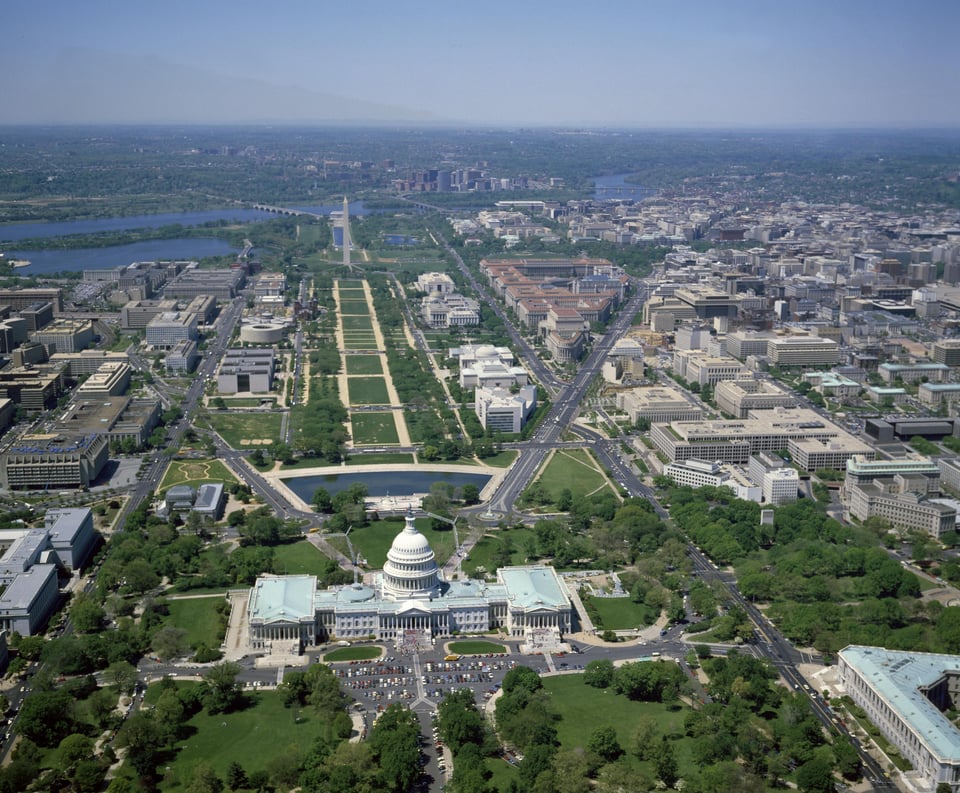
The National Mall does not belong to Donald Trump.
The Kennedy Center does not belong to Donald Trump.
America’s 250th birthday does not belong to Donald Trump.
It belongs to Americans.
And if the organizers of Freedom 250 are discovering that many artists and participants are uncomfortable with the event’s direction, perhaps the answer is not to place Trump at the center of the celebration.
Perhaps the answer is to finally stop placing him there.
Because if Donald Trump believes the problem with Freedom 250 is that Americans are insufficiently interested in Donald Trump, then he has diagnosed precisely the opposite of the problem.
The problem is not that America lacks enthusiasm for Donald Trump. The problem is that he keeps mistaking America for an audience.
