Comics that Question America 💫
Plus: Zines are not a crime.

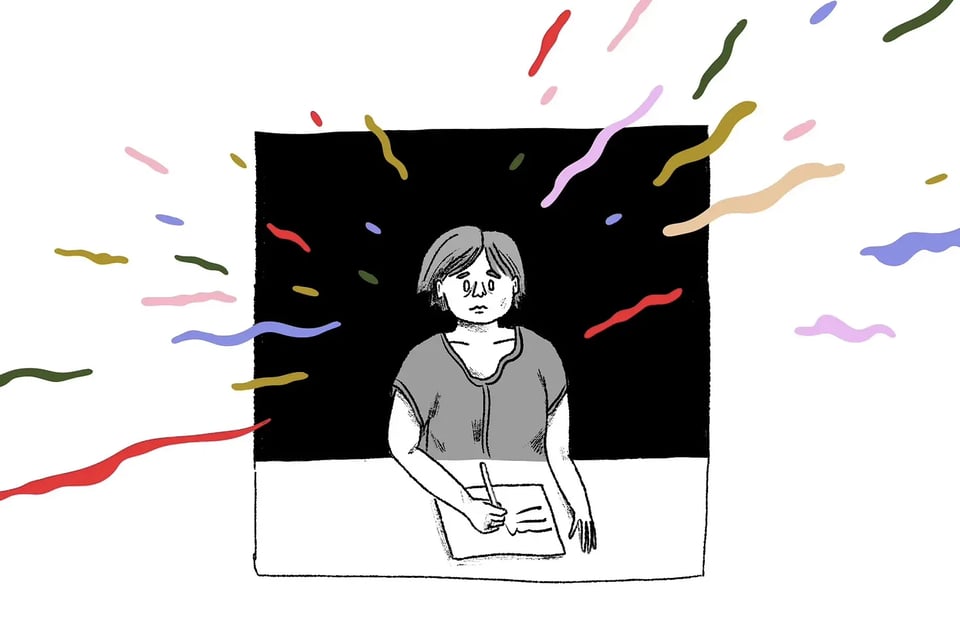
>> My Journey Through a Migraine by Ellika
Millions of people get migraines. Here’s what mine feel like.
🧨 Plus a few recent comics we’ve published that reflect on American empire
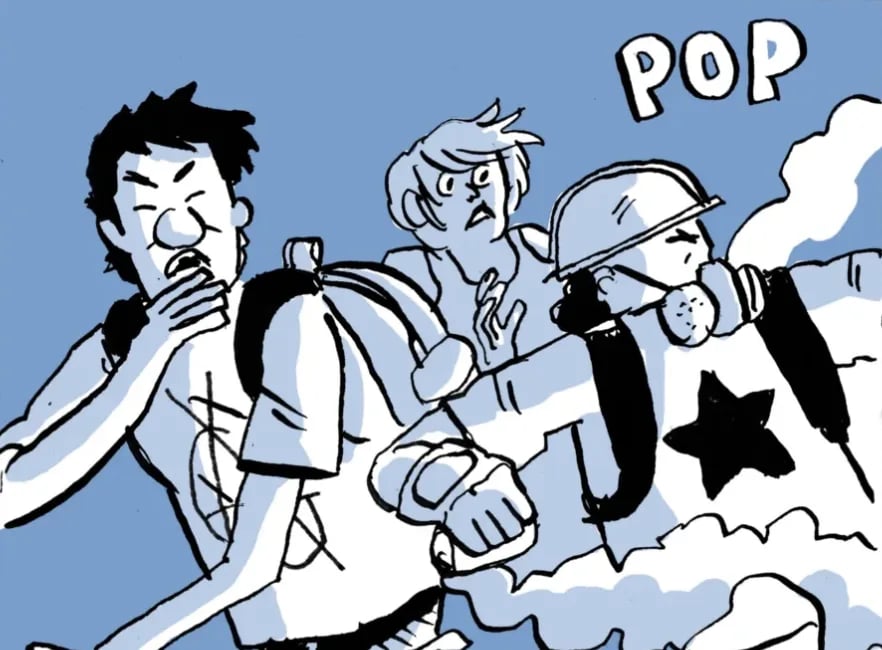
>> No Place Feels Like Home by Mike Centeno: Witnessing Trump’s Overreach into Venezuela from Abroad
>> Scrolling as Witness by Mollie Ruskin: Every day, I look at the world through my phone screen.
>> On the Border of Nice by Winter Wei: Canadians often define ourselves by criticizing the U.S., but is everyone welcome here?
>> Watching ICE in My Neighborhood by Tanya Crenshaw: Reflecting on how ICE raids impact every community.

Comics that Illustrate a Complicated Country
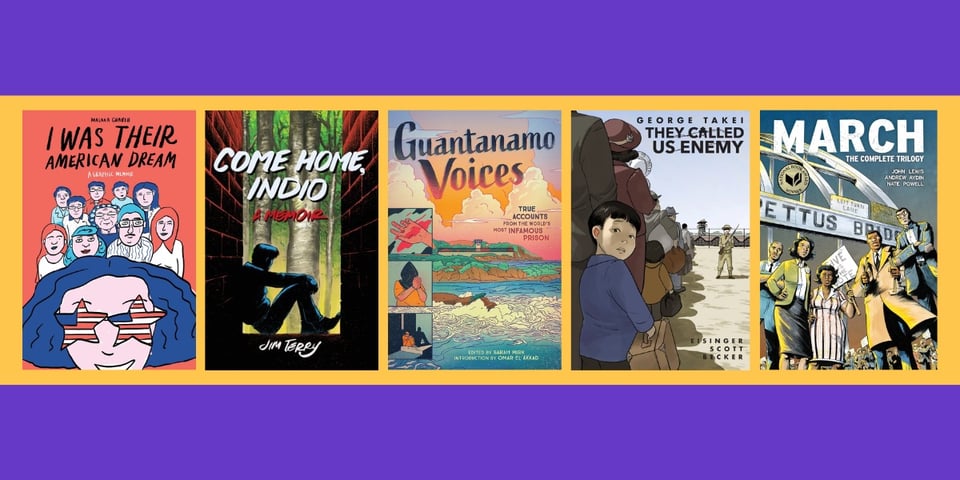
Required reading for the Fourth of July: This holiday weekend, we’re highlighting five graphic narratives that provide personal perspectives on what it means to be American. These gripping stories complicate our understanding of the power the United States wields in the world.
• “I Was Their American Dream” by Malaka Gharib is a coming-of-age memoir about being the child of Filipino and Egyptian immigrants and navigating familial expectations, American culture, and Malaka trying to find her voice on her own terms.
• “Come Home, Indio” by Jim Terry is a memoir of the author’s childhood experiences trying to balance Indigenous identity with life in the Chicago suburbs, and the mental health struggles (and triumphs) that follow.
• “They Called Us Enemy” by George Takei, Justin Eisinger, Steven Scott, et al. is a reflective memoir about George Takei’s childhood years in the American concentration camps during WWII, and the struggle of government-enacted racism and its effects on Japanese families.
• “Guantánamo Voices” by Shay Mirk is an anthology showcasing ten stories from people affected by the Guantánamo Bay prison and the infamous legacy it continues to carry.
• “March” by John Lewis, Andrew Aydin, and Nate Powell is a first-hand account of author John Lewis’s involvement in the Civil Rights Movement and ensuing human rights sociopolitical movements in modern America.
→ Buy all these books on Bookshop.org

✨ All of our classes and workshops are online and sliding scale.✨
STARTS SOON! → Make Your Dang Comic with Kane Lynch: Whether you’re new to making comics or an experienced illustrator looking to push yourself through an artistic block, this eight-week-long beginner-friendly class will kickstart your creativity and put you on track to create a finished comic you’ll be proud of. July 7 – August 25, on Tuesdays from 4pm-6pmPST/7pm-9pm EST.
» Advanced Graphic Storytelling with Sanika Phawde: For this in-depth, six-week class on creating compelling graphic narratives, Sanika will walk participants through building a big project from an idea to the pencilling stage, with a focus on finding the core of a story and pacing a comic to express its emotional beats. Thursdays, September 3rd – October 8th, 4pm-6pm PST/7-9pm EST.
» Building a Sketchbook Practice with Anna Sellheim: In this four-week class, we’ll build a sketchbook practice that actually sticks. By the end, you’ll have a sketchbook that feels genuinely useful and the tools to keep it going long after class is over. Wednesdays, August 5th – August 26th, 4pm-6pm PST/7-9pm EST.
Upcoming One-Off Workshops
Intro to digital drawing with Procreate: Want to get into drawing digitally? Or maybe you’re a seasoned Procreate user looking for some new tips and tricks? This beginner-friendly workshop with Audra McNamee will go over a basic comics-making workflow in Procreate. Monday, August 3rd from 4-6pm PST/7-9pm EST
→ Check out all our upcoming classes

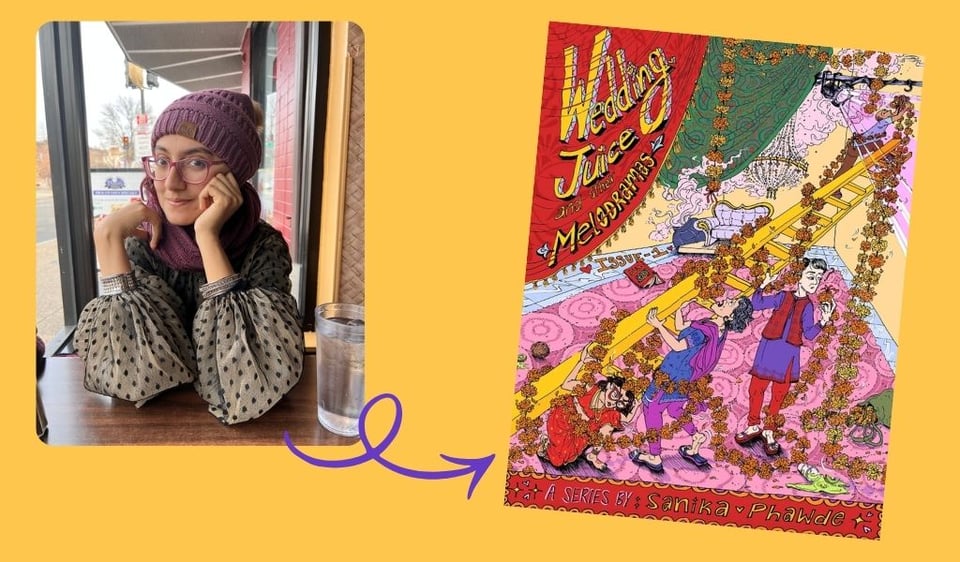
Three Questions for Sanika Phawde
Sanika Phawde was my teacher for a graphics novel class at MassArt. Her passion and insights as a teacher opened my mind to the world of indie comics and expanded my artistic horizons exponentially. Sanika’s autobiographical series “Wedding Juice and Other Melodramas” won the 2025 Ignatz Award for Outstanding Series. I got the chance to talk to her about creating that series and her upcoming Advanced Graphic Storytelling class for Crucial. —Chai Turner, Crucial Comix summer intern
What do you think are the greatest strengths of comics as a medium?
I love how comics allow the reader to hold multiple truths at once. You get to experience this omnipresent view of the story and also get to follow the more specific emotional trajectory of the characters in it at the same time. In a comic, you can have a room full of characters who are experiencing the same situation, but as a reader you can see that each character is having a completely different reaction and a different experience of the same situation, based on who they are and their past experiences.
What are you hoping to explore in your Crucial class?
My goal is to allow people to experiment with many different entry points into starting and structuring their story. Over the course of this class, attendees will learn which techniques and tools work best for them, and are able to not only create a final sketch version of their long form comic, but also feel confident going into future long form projects due to the strong practice of process they develop in this class.
While making Wedding Juice, what has surprised you during the process?
When I first started making Wedding Juice, I thought it was going to be a single 24-page comic that was going to help me process big confusing feelings (frustration, guilt, gratitude, love, loss of control) while preparing for my wedding in India. I finished drawing the book the day before my wedding and I was very worried about telling my family about it. I have made many comics about my mother and she has always been very supportive but this was the first time I had made a story about my dad and I was worried that it would hurt him. But when I showed him the book, I was shocked to see how delighted he was. He was so pleased with how he was represented and quoted in the book! He stands by all his decisions. And it made me realize that it is okay to express conflict in autobiographical work as long as you treat your characters with respect, and allow the real people they are based on to feel seen. My father is now my first reader on this series.
→ Check out Sanika’s upcoming class and follow her on Instagram @thejackfruitslayer

Reading Zines is Not a Crime

The Trump administration has won a terrorism case against a group of people who staged a protest outside an ICE facility in Texas last year. In an alarming twist, the case dragged a surprising piece of evidence into the spotlight: political zines.
Some background on the case: On July 4th last year, protesters demonstrated outside ICE detention center in Prairieland, Texas. They set off fireworks and sprayed some graffiti. When federal officers called in local police, there was an exchange of gunfire between a police officer and one of the protesters, and the officer was shot. In trying to make an example out of all the protesters, the government made the sweeping generalization that anyone involved in antifa actions is domestic terrorist. “Antifa is a domestic terrorist organization that has been allowed to flourish in Democrat-led cities—not under President Trump,” were the actual words of U.S. Attorney General Pamela Bondi.
Police started following the husband of one of the protesters, Daniel “Des” Sanchez Estrada, and saw him moving a box from their house to an apartment. The police raided the apartment and found a box of anarchist zines. The criminal complaint against Sanchez Estrada describes the zines as “handwritten training, tactics, and planning documents for civil unrest with anti-law enforcement, anti-government, and anti-Trump sentiments.” On June 23rd, the defendants were sentenced to extremely long sentences—Estrada was sentenced to 30 years in prison for transporting these zines. The families of the defendants are fighting for an appeal and the Freedom of Press Foundation said in a statement condemning the long sentence: “Under the First Amendment, possessing literature cannot be criminal, so what legitimate evidence could he possibly have been concealing? Political zines like those Sanchez possessed are no different from the pro-Revolution pamphlets this country’s founders had in mind when they drafted the First Amendment’s press clause.”
💌 Call to Action: Zine-makers are speaking out against the conviction, including a San Diego-based group that is collecting zines to sell as a fundraiser for the Prairieland Defense at an upcoming festival. Fill out this form and send them your zines by July 11th.

» The Rumpus is looking to publish more comics under new comics editor Aubrey Hirsch! They pay $500 for original comics they can publish online. Submissions are ongoing so check out the guidelines here.
» Canadian artists with “sick stories” are encouraged to apply for Our Sick Stories, an organization collecting zines to sell at local markets that feature themes of disabilities, chronic illness, neurodivergence, mental illness, etc. Applications are rolling, so the sooner the better!
» Got a comic about existential rage? Coin-Operated Press is accepting submissions for its monthly collaborative zine, with submissions for existential rage comics being open until the end of July!
P.S. Support this cool Kickstarter! Cartoonist Andrew Coltrin is raising money for “Nerd Emergencies,” a comics anthology of neurodivergent perspectives. A bunch of cool artists are involved, so consider pre-ordering a copy! The Kickstarter runs until July 15!
This newsletter was written by Chai Turner and Shay Mirk. Crucial Comix is supported in part by our backers on Patreon and by the Sequential Artists Workshop.