The 1998 dragging death that changed Texas hate crime law
Today in True Crime by Case Bound
Source-backed daily true-crime history.
June 7, 2026
Non-graphic · Sensitive events discussed without explicit detail.
The 1998 dragging death that changed Texas hate crime law
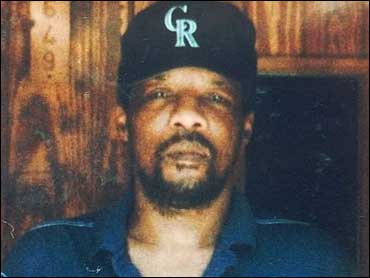
On the morning of June 7, 1998, James Byrd Jr. walked along a road in Jasper, Texas. He was 49 years old, a well-known figure in this small East Texas town, and he was looking for a ride home. Three white men in a pickup truck offered him one. It was a decision that would cost him his life.
Byrd had been at a party the night before. By the early morning hours, he was walking alone on a dark stretch of road when King, Brewer, and Berry pulled alongside him. They said they would take him where he needed to go. Instead, they drove him to a remote, wooded area where the attack began.
The three men beat Byrd severely. According to evidence presented at their trials, King and Brewer fractured his eye sockets and ribs, striking him with a wooden bat. Berry was present but played a lesser role. When the beating was done, the men chained Byrd's ankles to the back of their pickup truck and dragged him along the winding rural road — for nearly three miles.
Shawn Allen Berry eventually cooperated with investigators and led them to what remained of the crime scene. That cooperation would be the reason he escaped the death penalty. King and Brewer, who initiated and carried out the worst of the violence, were tried together in February 1999. Both were convicted of capital murder and sentenced to death. Berry pleaded guilty to murder and received life in prison in exchange for his testimony against the other two.
The case drew comparisons to the worst of the Jim Crow era — to lynching murders that had haunted the South for generations. Jasper, a town roughly divided between white and African American residents, was thrust into an uncomfortable national spotlight. Law enforcement officials described the crime scene as among the most disturbing they had encountered. Along the nearly three-mile stretch of road, investigators found blood, tissue, and personal belongings scattered in the wake of what had been done to Byrd's body.
The murders of King and Brewer did not come quickly. Both remained on death row for more than two decades. Lawrence Russell Brewer was executed by the state of Texas on June 21, 2012. He showed no remorse. John William King was executed on July 17, 2019, bringing a measure of closure to Byrd's family and the Jasper community. Shawn Allen Berry remains incarcerated.
The case became a catalyst for meaningful legal change. Before June 1998, Texas was one of only four states in the country without a hate crime statute. The outcry over Byrd's death changed that. In 2001, the Texas Legislature passed the James Byrd Jr. Hate Crimes Act, which took effect that September. The law allowed for enhanced penalties when a crime could be proven to have been motivated by bias against a victim's race, religion, color, disability, sexual orientation, national origin, or ancestry. In 2009, Congress passed the Matthew Shepard and James Byrd Jr. Hate Crimes Prevention Act, extending federal hate crime protections and adding gender, gender identity, and sexual orientation to the list of covered characteristics.
In the years after the murder, Byrd's family and community members worked to transform grief into something constructive. They established the James Byrd Foundation for Racial Healing to support community healing, education, and efforts to combat racial hatred. Jasper created a park in Byrd's honor — a physical reminder in the town where he was killed.
The questions raised by the case remain urgent decades later. The persistence of white supremacist ideology, the vulnerability of minority communities, and society's responsibility to confront hate-motivated violence are not problems that executions resolve. James Byrd Jr. was a friendly, helpful man who accepted a ride from strangers. His death — and the legislative legacy it left behind — continues to serve as one of the most significant hate crime cases in modern American history.
Also on this day
-
Clarence Elkins Wrongful Conviction — June 7, 1998 · Innocence ProjectOn June 7, 1998, a home invasion in Barberton, Ohio left Judith Johnson dead and her 6-year-old granddaughter sexually assaulted. Clarence Elkins was arrested and convicted solely on the testimony of the child, who said the attacker looked like him. He was sentenced to life in prison. His wife conducted her own investigation, identifying the actual perpetrator as a neighbor. DNA testing excluded Elkins and matched Earl Mann, a convicted sex offender. Elkins was exonerated in December 2005 after serving over 7 years in prison. His case illustrates the danger of eyewitness testimony from children and the role of determined family members in wrongful conviction exonerations.
-
Maggie and Paul Murdaugh Murdered — June 7, 2021 · A&EOn the evening of June 7, 2021, Alex Murdaugh called 911 to report discovering the bodies of his wife Maggie and their youngest son Paul at their 1,770-acre Moselle Road hunting lodge in Islandton, South Carolina. Both had been shot multiple times. Alex Murdaugh was later charged and convicted in March 2023 of both murders, sentenced to life in prison. The case was part of a broader investigation into the Murdaugh family's history of alleged financial crimes and other suspicious deaths. In May 2026, the South Carolina Supreme Court overturned the convictions and granted a new trial.
Sources used/checked for this issue
- James Byrd Jr., Wikimedia Foundation — James Byrd Jr., Wikipedia. https://en.wikipedia.org/wiki/James_Byrd_Jr.
- Murder of James Byrd Jr., Wikimedia Foundation — Murder of James Byrd Jr., Wikipedia. https://en.wikipedia.org/wiki/Murder_of_James_Byrd_Jr.
Today in True Crime by Case Bound — 2026-06-07
