June 3, 1955: The execution of Barbara Graham, third woman executed in California
Today in True Crime by Case Bound
Source-backed daily true-crime history.
June 3, 1955: The execution of Barbara Graham, third woman executed in California
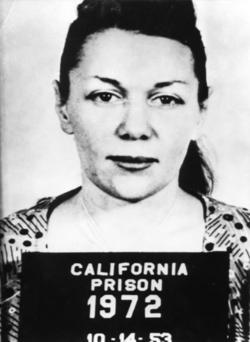
Barbara Elaine Graham was born on June 26, 1923, in Oakland, California, and spent much of her early life in the San Francisco Bay Area. By the early 1950s she had become associated with a loose network of criminals and gamblers in Los Angeles. That association would prove fatal — for someone else.
On the morning of March 9, 1953, Graham arrived at the home of Mabel Monohan, a 64-year-old retired vaudeville performer, in Burbank, California. Graham claimed her car had broken down nearby and asked to use the phone. Monohan let her in. Within minutes, four men — Jack Santo, Emmett Perkins, John True, and Baxter Shorter — entered behind her. The plan was a robbery: a rumor had circulated that Monohan, the former mother-in-law of a gambling club owner named Luther B. Scherer, kept as much as $100,000 in cash in her home.
What happened inside the house was brutal. Monohan was beaten, gagged, and left dying on the floor of her own home. When her gardener discovered her body two days later, the case became a major Los Angeles investigation. A $5,000 reward was offered by Monohan's daughter Iris. The robbery itself had failed — the intruders found nothing in the places they searched. A purse in a closet contained $15,000 in jewelry that was never touched.
The investigation quickly narrowed to Graham and her associates. Baxter Shorter turned state evidence, testifying that Graham had let the men into the house and that the beating had occurred inside. John True gave corroborating testimony. Shorter himself would later be kidnapped and murdered by Perkins and Santo — an act that underscored the violent loyalties at the center of this case. Graham was arrested alongside her co-conspirators and charged with first-degree murder.
The prosecution was led by Deputy District Attorney J. Miller Leavy, an experienced prosecutor who built his case around witness testimony and Graham's own recorded statements. Graham had attempted to secure an alibi, paying $25,000 to an inmate who was in fact working with police. The entire alibi scheme was recorded and used against her at trial. She was also recorded admitting to being at the scene. The combined weight of the witnesses and her own recorded admissions proved decisive. Graham was convicted of first-degree murder and perjury and sentenced to death.
Her legal team pursued appeals aggressively, and Governor Knight issued two stays of execution as the case wound through the courts. The pressure for clemency was substantial — Graham's supporters argued she had not personally struck Monohan and that the murder had been carried out by the men, not by her. Her own last words would allude to the limits of certainty: "Good people are always so sure they're right." She also famously responded to a guard's advice to take a deep breath when the cyanide was dropped — "How the hell would you know?" — a line that became one of the more memorable final statements from California's gas chamber.
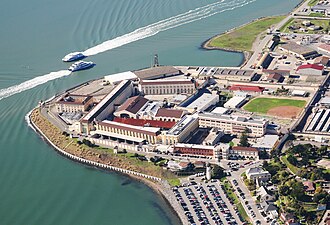
On June 2, 1955, Graham was transferred to San Quentin. The execution was scheduled for 10:00 a.m. the following morning. She was executed by gas on June 3, 1955, at the age of 31, the same day as her co-conspirators Jack Santo and Emmett Perkins. She was buried at Mount Olivet Cemetery in San Rafael, California.
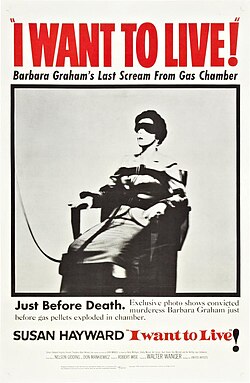
The case drew national attention in part because Graham was a woman — the third woman executed in California — and in part because of the brutality of the crime and the controversy over her precise role. In 1958, the film "I Want to Live!" starred Susan Hayward in an Oscar-nominated performance that portrayed Graham sympathetically, presenting her as potentially innocent. The film was based on Graham's own letters from prison and on articles by journalist Edna Sherrill, and it was explicitly marked as highly fictionalized in its credits. The tension between the legal record — which showed a conviction upheld on appeal — and the film's portrayal of Graham as a victim of circumstance remains unresolved in the historical record.
Also on this day
-
Zoot Suit Riots Begin, Los Angeles (June 3, 1943) · WikipediaRacial tensions erupted in Los Angeles when U.S. Navy sailors attacked Mexican American youths wearing zoot suits. Violence continued for days, with 500-plus arrested and 150-plus injured. The first night of riots began June 3, 1943.
-
Shlomo Argov Shot Outside Dorchester Hotel, London (June 3, 1982) · WikipediaIsraeli ambassador to the United Kingdom shot outside the Dorchester Hotel in London; survived the attempted assassination. The attackers were Abu Nidal Organization operatives. The incident triggered the 1982 Lebanon War three days later.
-
Douglas Gretzler Executed, Arizona (June 3, 1998) · WikipediaSerial killer executed by lethal injection at Florence State Prison, Arizona on June 3, 1998. Convicted of 11 murders with accomplice Willie Luther Steelman; the pair claimed 17 total victims. Executed while serving life sentences.
-
Zane Floyd Kills Four at Albertson's Supermarket, Las Vegas (June 3, 1999) · WikipediaAt age 23, shot and killed four people and injured one at an Albertson's supermarket in Las Vegas using a pump-action shotgun. Floyd was later convicted and sentenced to death.
Today in True Crime by Case Bound — 2026-06-03
