2026-05-31: 12 dead in Virginia Beach municipal building shooting — second-deadliest workplace shooting in U.S. history
Today in True Crime by Case Bound
Source-backed daily true-crime history.
Non-graphic · Sensitive events discussed without explicit detail.
2026-05-31: 12 dead in Virginia Beach municipal building shooting — second-deadliest workplace shooting in U.S. history
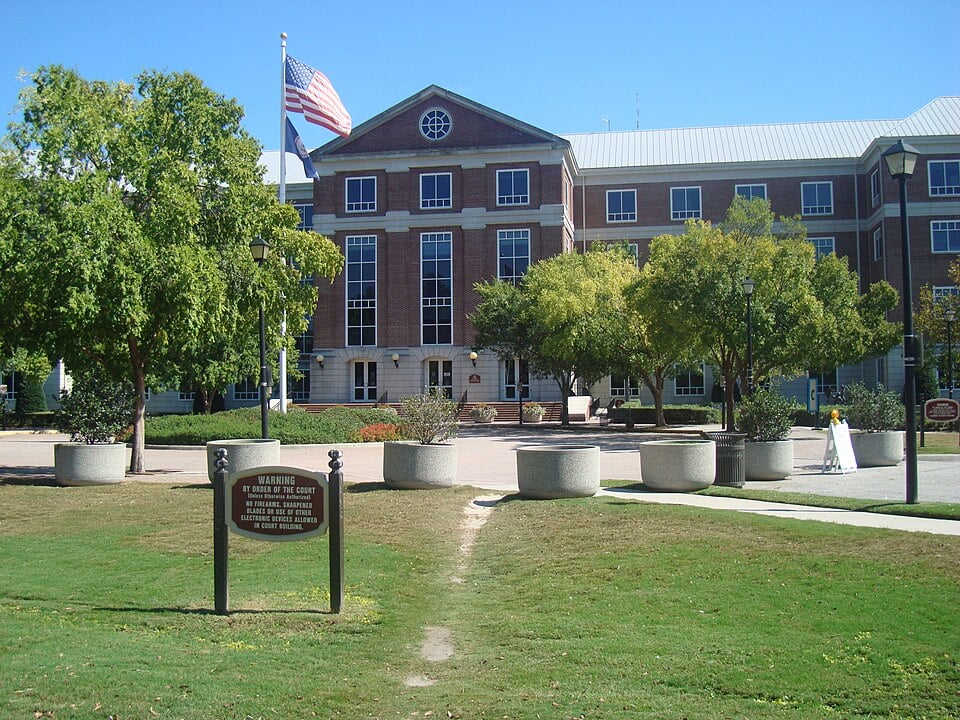
At approximately 4:08 p.m. on May 31, 2019, DeWayne Antonio Craddock, a 40-year-old city employee in the public utilities department, began shooting inside Building 10 of the Virginia Beach Municipal Center — a courthouse and city office complex in Virginia Beach, Virginia. The attack lasted approximately 36 minutes, ending at 4:44 p.m. when Craddock was killed in an exchange of gunfire with arriving police officers. Twelve people were killed — eleven city employees and one contractor performing permit work inside the building — and four others were wounded, including a police officer who was shot in the ballistic vest and survived.
The shooting became the second-deadliest workplace shooting in U.S. history, following the 1986 Edmond post office shooting, and the deadliest mass shooting in Virginia's recorded history. Craddock had submitted his resignation by email hours before the attack, according to sources citing the Virginian-Pilot. The FBI Norfolk field office described the attack as rooted in perceived workplace grievances — a characterization sourced from a press release the field office published, which was not independently accessible during this research session (HTTP 403 — attribution required).
The city's independent review, conducted by the firm Hillard Heintze and commissioned by the City of Virginia Beach, was published in November 2019. It documented the timeline and response in detail. The review noted it could not fully resolve questions about whether warning signs may have been present in Craddock's employment record — characterizing this as a gap between documented conditions and actionable prevention signals. The Hillard Heintze report identified systemic gaps in how employee complaints were logged and acted upon, though it did not identify any single missed opportunity as determinative in preventing the attack. Six of the victims worked alongside Craddock in the public utilities department, a detail that drew scrutiny to the workplace dynamics preceding the attack.
The weapons used were an H&K USP Compact Tactical .45-caliber pistol equipped with a suppressor — confirmed in both the Wikipedia article and the city's independent review — and a Glock 21 .45-caliber pistol that was not used during the attack. Both weapons were purchased legally in 2016 and 2018. The suppressor's presence extended the shooting's audible footprint, and initial reports from people outside the building described hearing what sounded like fireworks or construction noise, delaying some bystanders' recognition of the threat. One surviving victim told NPR that a coworker had considered bringing a personal firearm to work but had refrained because of the city's no-weapons policy.
The attack unfolded inside a secure government building during a Friday afternoon when most public counter service had already closed; there were no independent press on scene, and no photographs of the shooting itself have entered the public record. First responders arrived within minutes of the first calls; the Virginia Beach Police Department, Norfolk FBI field office, and local EMS all contributed to the response, which continued through the early evening. The city's independent review documented the response timeline in detail, noting the coordination challenges that arise when an active shooter situation unfolds across multiple agencies.
The Hillard Heintze independent review, commissioned by the City of Virginia Beach and published in November 2019, identified systemic gaps in how employee complaints were logged and acted upon. It did not identify any single missed opportunity as determinative in preventing the attack — a finding that reflects the broader challenge in threat detection, where ambiguous signals often become legible only in hindsight, after reconstruction creates the pattern that earlier data could not. The review noted it could not fully resolve questions about whether warning signs may have been present in Craddock's employment record. Six of the victims worked alongside Craddock in the public utilities department, a detail that drew scrutiny to the workplace dynamics preceding the attack. The city's subsequent workplace violence prevention recommendations — derived from the Hillard Heintze review — were described by advocates as insufficient, particularly regarding the capacity of the existing employee assistance program to intervene through available channels.
No suspects or accomplices remain at large. The case remains a reference point in workplace violence prevention discourse and in policy discussions about the inherent difficulty of identifying ambiguous pre-attack behavior before it resolves into a pattern legible only in hindsight.
Also on this day
-
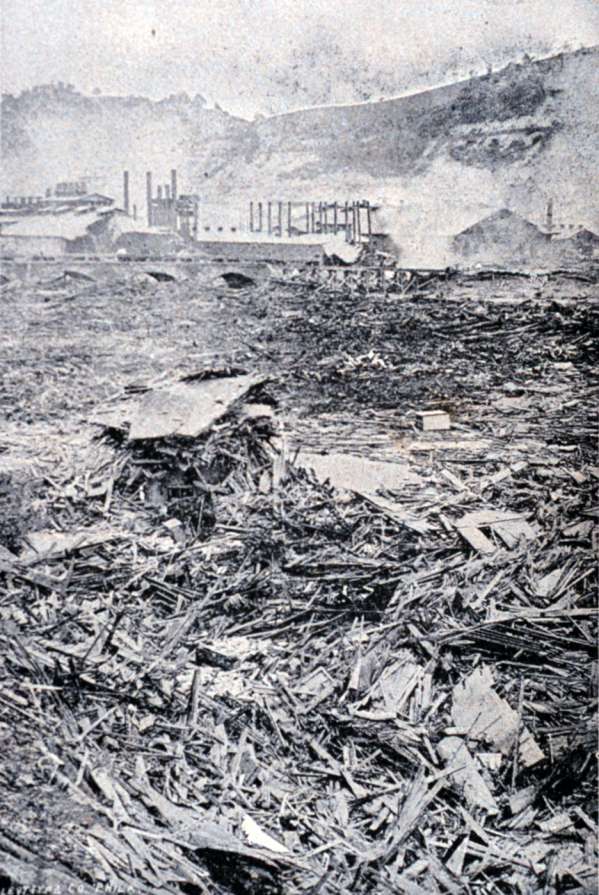
Johnstown Flood — Johnstown, Pennsylvania, 1889, May 31, 1889 · WikipediaCatastrophic dam failure at South Fork released 14.55 million cubic meters of water, sending a 60-foot wall of water into Johnstown, Pennsylvania. More than 2,200 dead. The disaster was attributed to institutional negligence — dam owners ignored warnings and failed to maintain the structure.
-
Aileen Wuornos: Charles Carskaddon Murder — Pasco County, Florida, 1990, May 31, 1990 · WikipediaAileen Wuornos shot Charles Edmund Carskaddon, age 40, nine times with a .22 caliber weapon in Pasco County, Florida. His body was found June 6, 1990. Wuornos was later convicted as a serial killer for murders committed in 1991–1992; this May 31, 1990 shooting predates her serial killing career.
-
Morral Affair Bombing — Madrid, Spain, 1906, May 31, 1906 · WikipediaAt the wedding of King Alfonso XIII of Spain, a bomb planted by Republican sympathizer Miguel Morral exploded, killing 24 people. The king and queen were unharmed. The attack was an assassination attempt using a parcel bomb at the wedding venue.
-
1985 United States–Canada Tornado Outbreak — Ohio, Pennsylvania, Ontario, 1985, May 31, 1985 · WikipediaForty-four tornadoes struck Ohio, Pennsylvania, New York, and Ontario on May 31, 1985. Ninety people were killed — 76 in the U.S. and 14 in Canada. The Barrie, Ontario tornado was rated F4. Worst tornado outbreak in Pennsylvania history.
-
1935 Quetta Earthquake — Quetta, Pakistan, 1935, May 31, 1935 · WikipediaA 7.7 Mw earthquake destroyed Quetta (modern-day Pakistan) on May 31, 1935, killing between 30,000 and 60,000 people. The quake destroyed approximately 90% of the city's buildings.
-
Gaza Flotilla Raid — International Waters, 2010, May 31, 2010 · WikipediaIsraeli Shayetet 13 commandos boarded the Gaza Freedom Flotilla in international waters on May 31, 2010, to break the Gaza blockade. Nine Turkish citizens were killed in the ensuing violence. The incident escalated diplomatic tensions between Israel and Turkey.
-
Tulsa Race Massacre — Tulsa, Oklahoma, 1921, May 31, 1921 · WikipediaA white mob attacked the Greenwood District of Tulsa, Oklahoma, destroying the prosperous Black neighborhood known as Black Wall Street. Official death toll is at least 36; estimates range higher. This was one of the worst incidents of racial violence in U.S. history.
Today in True Crime by Case Bound — 2026-05-31
