
Risk Factors and Symptoms of Pancreatic Cancer
Context for Greg and Doctor Thomas' early scenes
We’re starting to layer in more of the physical impact of Greg’s pancreatic cancer as we continue deepening our character work. Here’s some additional context about the specific type of cancer Greg has, and a bit more detail on the risk factors and symptoms he would likely be experiencing earlier in the play.
From the National Library of Medicine:
In the United States, there are approximately 50,000 new cases of pancreatic cancer annually. Pancreatic cancer involves the head or body of the pancreas and is the fourth leading cause of death in the US. With virtually no early detection methods and limited treatment options, pancreatic cancer often is not diagnosed until the advanced stage of disease at which time the life expectancy is 12 to 18 months.
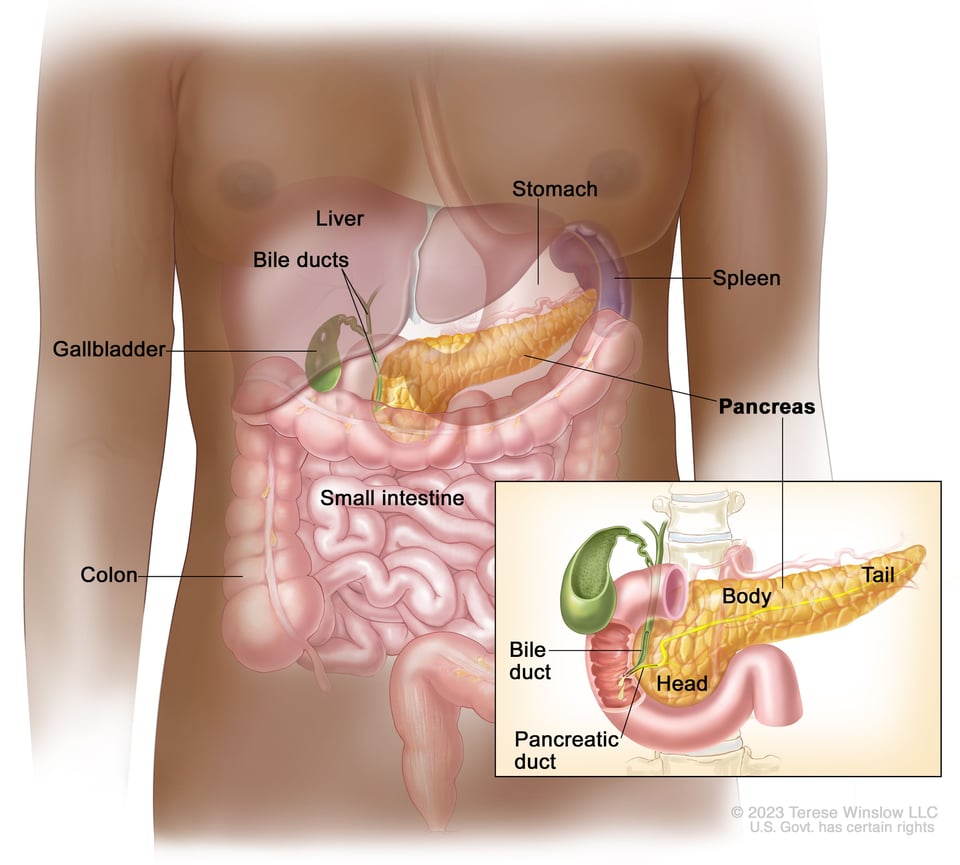
We hear about some of Greg’s lifestyle and health factors that might put him at higher risk for this type of cancer, including his long history of smoking:
Smoking is one of the most important risk factors for pancreatic cancer. The risk of getting pancreatic cancer is about twice as high among people who smoke compared to those who have never smoked. About 25% of pancreatic cancers are thought to be caused by cigarette smoking.
And we know Greg has diabetes:
Pancreatic cancer is more common in people with diabetes. The reason for this is not known. Most of the risk is found in people with type 2 diabetes…It’s not clear if people with type 1 (juvenile) diabetes have a higher risk.
There are not many noticeable symptoms in the early stages of pancreatic cancer. As the cancer grows, symptoms may include jaundice, pain in the upper or middle abdomen and back, weight loss for no known reason, loss of appetite, and fatigue. Because the signs of pancreatic cancer are so similar to the symptoms of many other illnesses, and because the pancreas is obscured by other organs in the abdomen on imaging tests, this type of cancer is especially difficult to detect and has an overall survival rate of less than 6%.
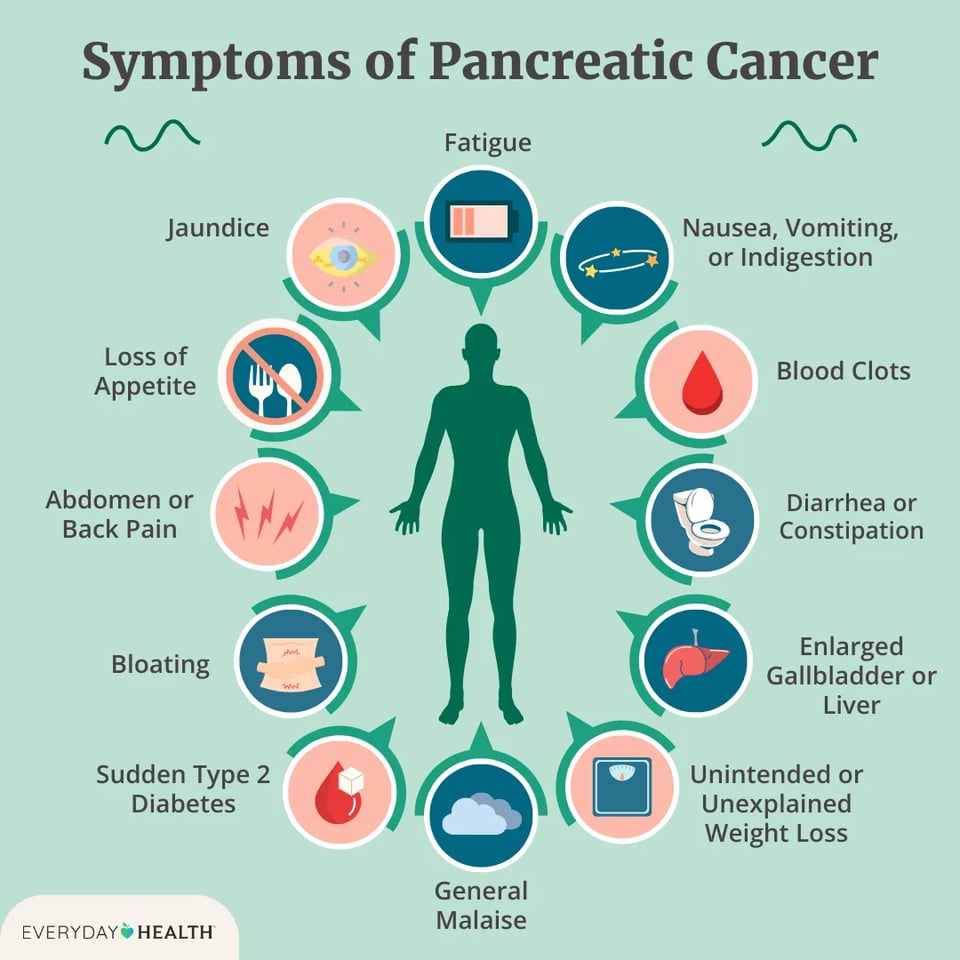
This thread on the pancreatic cancer subreddit has some first person accounts about the symptoms that led folks to get checked out; a common theme is how minor the early signs were before diagnosis, and the difficulty in getting a diagnosis because other ailments were initially suspected.
After someone is diagnosed with pancreatic cancer, doctors will assess whether it has spread in order to determine the stage of the cancer, which describes how much cancer is present in the body. The earliest stage of pancreatic cancer is stage 0, and then ranges from stages I (1) through IV (4). The lower the number, the less the cancer has spread. Greg’s cancer is diagnosed as stage IV, meaning it’s an advanced cancer that has spread to distant areas like the liver, abdominal cavity, lungs, or bones.
We’ll dive into the treatment protocol and additional physical impacts of pancreatic cancer that we see later in the play in a separate upcoming post.
Add a comment: