
Lawn Painting
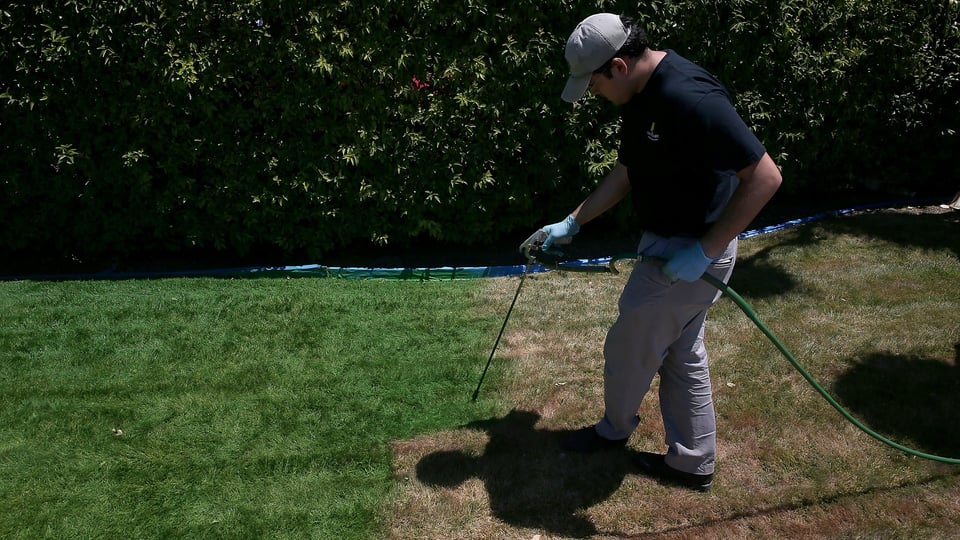
GREG: That house across the street? Now that’s a lawn. That’s a perfect lawn.
WILL: That lawn is painted green. It’s artificial.
GREG: Whoa.
WILL: It’s more common than you think. They probably do it at night, so no one will notice.
GREG: That’s fucked up!
WILL: Lawn grasses aren’t even native to North America. All these flowers too, it messes with the pollinators.
For some home owners, especially in areas of the country with drier climates, lawn painting has become an increasingly popular way to maintain the curb appeal of their properties.
The lawn paint isn’t really paint; it’s a non-toxic colorant created from natural pigments and oils that doesn’t wash off once dried, and can last up to 6 months. Lawns can be painted by professional landscapers or as a DIY project to give dormant, browning lawns a uniform and healthy-looking green color, or to cover brown spots. Painted lawns still require maintenance like mowing and watering; the paint is not a true replacement for lawn care, but it may lessen the amount of water, fertilizer, and pesticides needed to achieve a uniform aesthetic.
As climate change leads to longer periods of drought, which results in municipal water restrictions, lawn painting will likely continue to gain popularity for those interested in maintaining the “traditional” look of a suburban front yard.
As Will notes though, this style of lawn grass is not even native to the U.S. Popular lawn grasses like Kentucky Blue Grass are actually European and Asian in origin, and were brought over as livestock feed by the first settlers who colonized the east coast. Because these grasses are not acclimated to the climate and ecology of North America, the cycle of resource use and high maintenance to keep it healthy never ends.
We’ll talk more about Greg’s effort to rewild his lawn in a future post!
Add a comment: