The Week in Botany December 8, 2025
I know I should be promoting the interview with Santiago Ramírez-Barahona for the words, but he also takes amazing pictures, like this one of the understorey of a Mexican cloud forest.
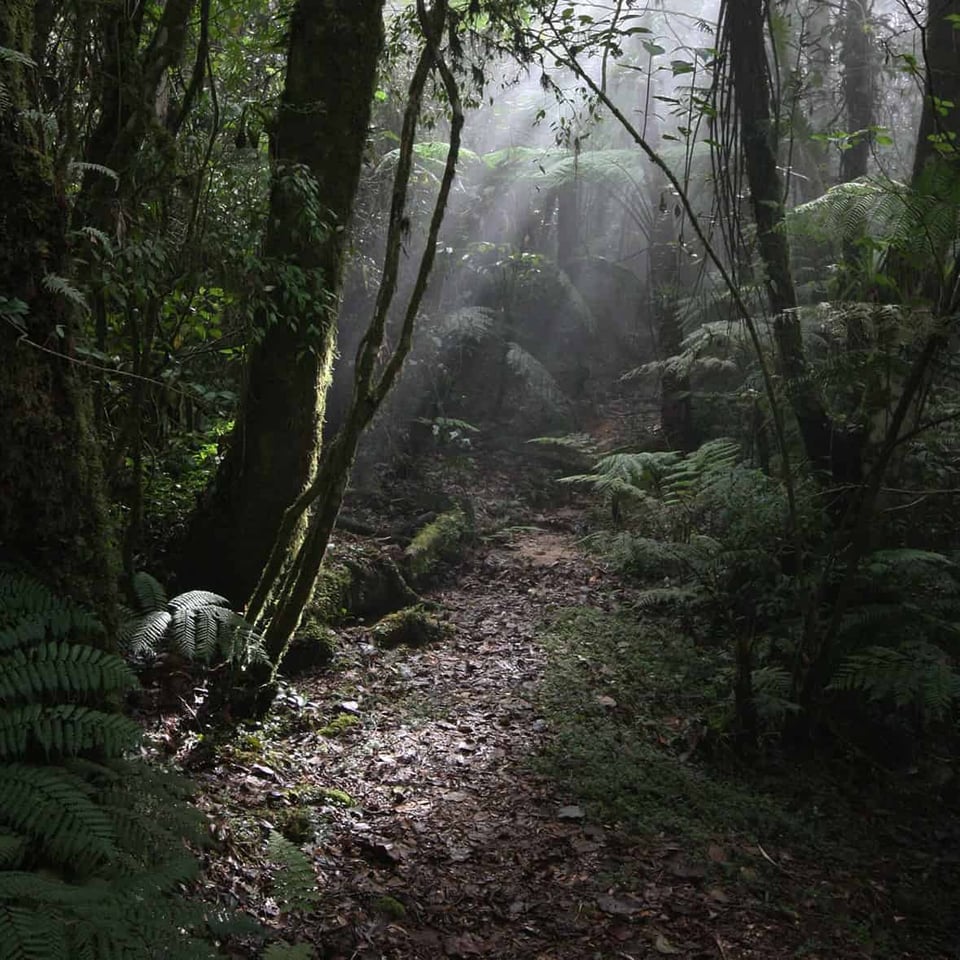
I’ll cheerfully admit I’m envious of anyone who can capture light in that way.
This coming week we have aging blooms, how the rootstock of grapevines shapes the whole plant, and how waterbirds deliver seeds. There will also be another email of the papers and the news stories you’re sharing on Mastodon and Bluesky at the same time next week. Until next time, take care.
Alun (webmaster@botany.one)
On Botany One
Butterfly Havens in Forgotten Lots
Common plants and abandoned lots turn urban spaces into vital feeding grounds for butterflies.
Santiago Ramírez-Barahona: “There is Always Something New With Plants”
Botany One interviews Dr Santiago Ramírez-Barahona, a Mexican scientist fascinated with tree ferns, cloud forests and plant evolution.
Miniature, Yet Fire-Resilient: What Mosses Can Teach Us on a Warming Planet?
In the Cangas, where the soil boils under the sun and fire turns everything into ash, tiny mosses found their way to endure.
This South African Gladiolus Might Actually Be Seven Species in Disguise
Gladiolas separated by space and time may be evolving into separate species.
Banking seeds for tomorrow
Seeds banks provide a lifeline to species going extinct.
…and last’s week’s Week in Botany with the importance of microscopes and news from around the web.
News & Views
The fall of a prolific science journal exposes the billion-dollar profits of scientific publishing
One of the 15 publications that put out the most studies globally has been expelled from the indexing system for irregularities. Its publisher, Elsevier, has a 38% profit margin that reached $1.5 billion in 2024.
Can tinkering with plant pores protect crops against drought?
It’s not an open-and-shut case. But researchers are finding out plenty by genetically altering the numbers of these openings, as well as simulating future atmospheres, and more.
Vanishing experts, vanishing species: The taxonomy crisis
Plant taxonomy is the foundation of biodiversity science, but a global skills crisis threatens its future. Training a new generation of taxonomists is urgent and new research maps where help is most needed to close the skill gaps.
AI is Destroying the University and Learning Itself
Students use AI to write papers, professors use AI to grade them, degrees become meaningless, and tech companies make fortunes. Welcome to the death of higher education.
What your Introduction section isn’t
Today, the fourth and final instalment in a short series inspired by bad papers I’ve read (some of them, I’ll admit once again, my own). I’ve let myself rant about what a Methods sections shouldn’t be, and what a Results section shouldn’t be, and what a Discussion section shouldn’t be. That leaves an obvious gap: what shouldn’t your Introduction section be?
ERC-Plus: jackpot science or missed chance to fix academia?
Sophien Kamoun’s reflections on ERC-Plus, Europe’s newest ultra-competitive research grant and what it tells us about the academic culture we’re building.
New genomic techniques: deal to support the green transition in farming
The new rules will make the EU food system more secure and sustainable, with climate- and pest-resistant plants that give higher yields and require fewer fertilisers and pesticides.
Scientists make new progress in understanding how flowers are built
A team of plant biologists has made an exciting discovery about how flowers grow and organize themselves, and one of the key authors was Assistant Professor in Plant Biology Ya Min (Minya) from the University of Illinois. Their new study, published in the journal Current Biology, explores how a gene called CYCLOIDEA (CYC) helps shape the early development of a wildflower known as Mimulus parishii (commonly known as monkeyflower). This gene is important because it helps the flower decide which side will become the “top,” setting the stage for the plant’s final form.
Rare cottonweed returned to beachfront
An endangered plant species is being reintroduced to a beachfront common where it was first recorded more than 400 years ago.
Over a pint in Oxford, we may have stumbled upon the holy grail of agriculture
I knew that a revolution in our understanding of soil could change the world. Then came a eureka moment – and the birth of the Earth Rover Program.
Ultra-rare carnivorous 'killer plant' found lurking on city's doorstep
There's an old saying that everything in Australia wants to eat you – and this apparently includes plants, with the island a global hotbed of carnivorous species. Now, scientists have made a particularly special find, stumbling across thousands of ultra-rare meat-eaters banding together close to city limits.
This Week in Botany
5 Years Ago: Crop diversity and semi-natural habitat a boon to yields as well as pollinators
10 Years Ago: Altruistic plants?
15 Years Ago: Banana sustains … for nutrition, for livelihoods and for the environment
Scientific Papers
Enrichment of root-associated Streptomyces strains in response to drought is driven by diverse functional traits and does not predict beneficial effects on plant growth (FREE)
Using two 16S rRNA sequencing methods with different levels of taxonomic resolution, Fonseca-Garcia et al confirmed drought-associated enrichment (DE) of Streptomyces in field-grown sorghum roots and identified five closely related but distinct amplicon sequence variants (ASVs) belonging to the genus with variable drought enrichment patterns.
Unexpected productivity and invasion resistance in plant communities assembled from allopatric populations ($)
Using four native plant species from 15 environmentally similar locations across a broad region, Agneray et al compared ecosystem function among communities assembled from allopatric or sympatric sources. Consistent with predictions of niche differentiation in co-occurring native plants, they observed more negative native plant–plant interactions in allopatric-sourced communities, and more positive interactions in sympatric-sourced communities.
Cross-species interactome analysis uncovers a conserved selective autophagy mechanism for protein quality control in plants (FREE)
Selective autophagy is a fundamental protein quality control pathway that safeguards proteostasis by degrading damaged or surplus cellular components, particularly under stress. This process is orchestrated by selective autophagy receptors (SARs) that recruit specific cargo for degradation. Although significant strides have been made in understanding the molecular framework of selective autophagy, the diversity of SAR repertoires across species remains largely unexplored. Through a comparative interactome analysis across five model organisms, Sánchez de Medina Hernández et al identified a suite of conserved and lineage-specific SAR candidates.
Mechanics and growth coordination define SOSEKI-based polarity fields (FREE)
The formation of organs requires the coordinated growth of cells and tissues relative to the main body axes. Plant growth is typically anisotropic and mechanically coupled through contiguous cell walls, yet how these physical patterns link to cell and tissue polarity remains unclear. Piepers et al use SOSEKI (SOK) proteins—previously thought to report global polarity fields—as markers to dissect how polarity arises during lateral root (LR) organogenesis.
AGO5 restricts virus vertical transmission in plant gametophytes (FREE)
Hoffmann et al show that AGO5, an RNA interference factor expressed specifically in shoot apical meristem stem cells and the germline of Arabidopsis thaliana, drastically reduces the vertical transmission of Turnip yellow mosaic virus (TYMV).
The Pik NLR pair accumulates at the plasma membrane as a hetero-oligomeric sensor-helper immune protein complex prior to activation (FREE)
Pai et al investigated the oligomeric state of the genetically linked rice (Oryza sativa) sensor Pik-1 and helper Pik-2 NLR pair prior to effector activation when transiently expressed in Nicotiana benthamiana leaves. We show that both wild-type Pikm-1 and engineered Pikm-1Enhancer sensors associate with Pikm-2 and form ∼1 MDa hetero-complexes in the resting state that accumulate at the plasma membrane.
Overlooked and extensive ghost forest formation across the US Atlantic coast ($)
Yeung et al mapped over 10 million individual dead trees across the US Atlantic region, a sea level rise hotspot, using deep learning and sub-metre aerial imagery. Their analysis reveals disproportionate and pervasive tree mortality in many previously unrecognized ghost forest hotspots, with over 6 million dead trees concentrated in low-lying (<5 m) forests, primarily driven by salinization rather than flooding alone.
Read free via ReadCube: https://rdcu.be/eTyQb
Salicylic acid-induced alkalinization of the apoplast requires TRANSMEMBRANE KINASE 1 and results in growth attenuation (FREE)
Müller et al show that SA activity depends on TRANSMEMBRANE KINASE 1 (TMK1) resulting in apoplast alkalinization and growth restriction. SA treatment prevents phosphorylation and activation of plasma membrane (PM) H+-ATPases at the cell surface and does not depend on the auxin receptor Auxin Binding Protein 1 (ABP1).
Cell wall patterning regulates plant stem cell dynamics ($)
Plant cells are wrapped in a semirigid wall that reconfigures as cells expand. The chemical and material properties of pectin, a key component of cell walls, can influence cell division. Zhu et al. found different pectin properties in new versus mature cell walls, which are controlled by pectin-modifying enzymes such as PME5.
The B-class auxin response factor MpARF2 is essential for meristem organization in free-living plant gametophytes ($)
Flores-Sandoval et al report that in the liverwort Marchantia polymorpha, pluripotent stem cells are protected from auxin-mediated differentiation by the single B-class auxin response factor (MpARF2), an embryophyte-specific gene that antagonizes auxin responses. They describe the critical role of MpARF2 in meristem establishment and maintenance using reporter lines, loss- and gain-of-function alleles, and gene-interaction experiments.
A fungal root endophyte functionally complements host immunity and mitigates natural immune variation in Arabidopsis (FREE)
Beneficial root-associated microbes can enhance plant resilience by complementing aspects of host immunity. The fungal root endophyte Serendipita indica (Si) is known to promote plant growth and confer broad stress tolerance. To assess how natural host genetic variation influences Si-mediated protection, Peltz et al screened 47 Arabidopsis thaliana accessions for susceptibility to the fungal pathogen Bipolaris sorokiniana (Bs) with and without Si colonization.
In AoBC Publications
Careers
Note: These are posts that have been advertised around the web. They are not posts that I personally offer, nor can I arrange the visa for you to work internationally.
SynProm: Fast, Modular Spatio-Temporal Transcriptional Reporters for Plants (Plant BioDesign Bristol project), Bristol
Understanding when and where genes are activated is central to decoding how plants respond to stress and environmental change. However, current approaches, such as RNA-seq or stable reporter lines, are often slow, costly, or limited in flexibility. This PhD project will establish SynProm, a modular synthetic biology toolkit for rapid, spatio-temporal monitoring of plant gene activity.
Postdoctoral Researcher (Salem Group), Norwich
Working as part of a team led by Dr Hassan Salem, you will develop and apply genetic manipulation tools to dissect the molecular and functional mechanisms underlying insect–microbe mutualisms.
Assistant or Associate Professor (Research and Education) in Forests under Global Change, Birmingham
We are seeking to appoint an Assistant or Associate Professor in Forests under Global Change in the School of Geography, Earth & Environmental Sciences (GEES) at the University of Birmingham, UK. The successful candidate will join a growing research community addressing how forests respond to climate change, disturbance, and environmental stress. The post will strengthen our internationally recognised expertise in forest ecosystems, including the world-leading Birmingham Institute of Forest Research (BIFoR) Free-Air CO₂ Enrichment (FACE) experiment, a unique long-term platform for understanding how mature temperate forests respond to rising atmospheric CO₂.
Postdoc (m/f/d) position on synthetic approaches to promote arbuscular mycorrhiza symbiosis, Potsdam
The candidate will conduct high impact research on plant molecular mechanisms that promote the formation of spores of arbuscular mycorrhiza fungi. The postdoc will be embedded in the project “AMFactory”, which is is based on a multidisciplinary collaboration with the ambition to bridge the gap between the contaminant-free production of AMFs in root organ cultures and their mass-production in bioreactors at low costs, making EU worldwide competitive on the market of AMF bioinoculants.
Head of Cell Biology KWS Vegetables, Wageningen
We are looking for a hands-on Head of Cell Biology (m/f/d), based at the KWS Vegetables research location in Wageningen, the Netherlands. The Head of Cell Biology will co-develop the research strategy for KWS Vegetables and will lead the Cell Biology team for KWS Vegetables. Areas of expertise include cell biology (e.g. plant regeneration, in vitro propagation and the production of double haploids), speed breeding, plant reproduction, with a focus on development, implementation and routine application of methodologies to support the breeding process.
PhD position in Deciphering the Cellular and Molecular Basis of Signal Integration in Plants, Amsterdam
Do you wonder how plants simultaneously process, weigh and interpret the countless signals form their surroundings? Are you interested in delving into the mechanisms of signal integration in plants on a cellular level and have a passion for molecular biology and bio-imaging? Then this job may be for you! We are seeking a dedicated PhD-candidate to join our ambitious but collaborative team.
The EEB Postdoctoral Fellowship, Toronto
The Fellow may collaborate with a single or multiple advisors on research in ecology and evolution. We seek candidates who propose innovative and independent research programs. Given this independence, there will be access to a small research supplement to support the successful candidate’s research. To facilitate interactions within the department, the Fellow will organize a workshop on a topic related to the Fellow’s interest for graduate students, postdocs and faculty. Prior to applying, we encourage candidates to contact faculty members with shared interests about potential research collaborations.


