
Expedition 55
The Bathysphere
Welcome to the 55th edition of The Bathysphere. We hope the waves are calm, wherever you are. This week, Chris checks the time, and Florence wants you to make a zine.
The Bathysphere crew
Christian Donlan
Florence Smith Nicholls
Keith Stuart
Contact us at [email protected]
Delightful games
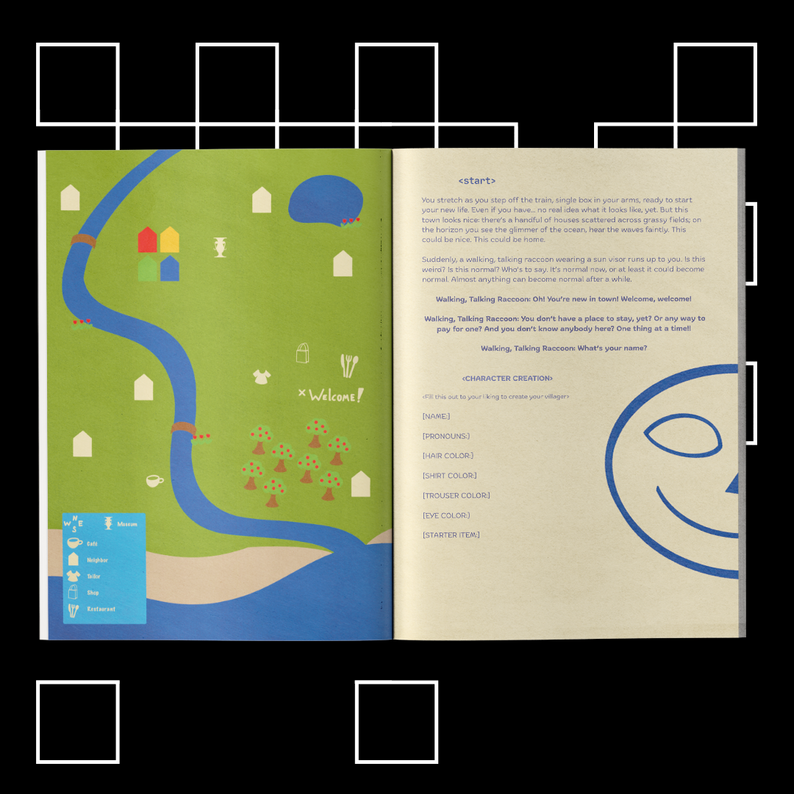
I am fascinated by journaling games, and while I have a few, I have yet to work up the energy to try them out. I think New In Town might be a good place to start. For one thing, it’s pretty quick to play, with sessions lasting about an hour. For another, it’s heavily Animal Crossing coded. CD
Interesting things
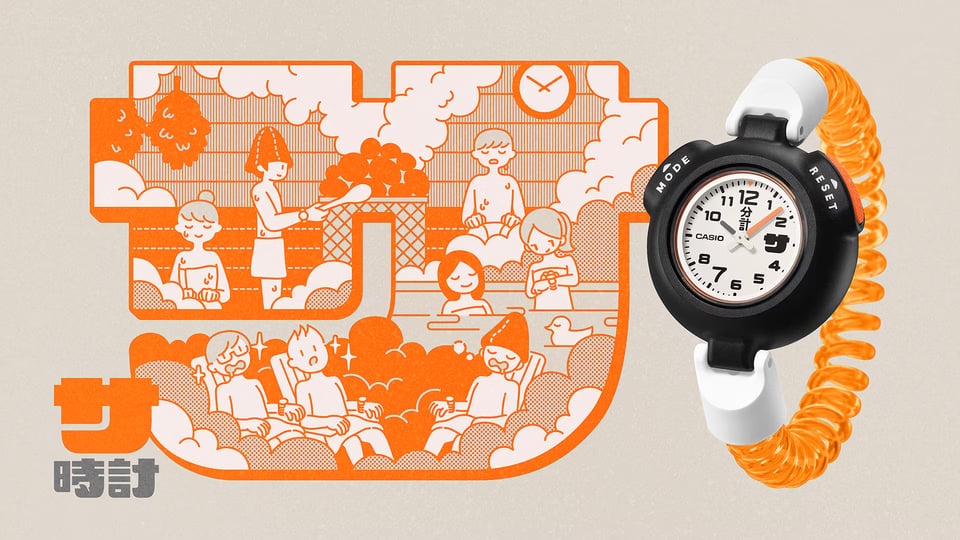
Casio have made a watch designed for people who really like saunas. I am ambivalent in terms of saunas, and I also realise this is not a watch newsletter. Nonetheless, I look at this watch and I think: that’s the kind of design I would like to see in more games. CD
Essay: Why you should make a zine about your favourite game
Vice Versa, a zine made by “Lisa Ben” in 1947, defined itself as “a magazine dedicated, in all seriousness, to those of us who will never be able to adapt ourselves to the ironbound rules of Convention.” Though definitions may vary, zines are usually noncommercial, DIY small-batch publications. Their grassroots, self-published nature means that they can cover niche and indeed unconventional topics. So what I’m saying is: you should make a zine about your favourite weird video game that no one else knows about.
Zines are often associated with the rise of the Xerox machine and the riot grrrl subculture of the 1990s in North America. However, the precursor to the modern zine can actually be found in the Harlem Renaissance of the 1920s, in which “little magazines” were distributed to share Black literature, art and culture. The first fanzine is generally assumed to be The Comet, which was distributed in 1930 by the Science Correspondence Club.
Since those early days, zines have flourished and adapted to the digital era. You can find a host of weird and wonderful zines to download on itch.io, such as the Old Games Zine about the game preservation scene in Canada, or a zine about games that a person called Matthew Murray owns but has not played. So what I’m also saying is: here’s the really good stuff that’s hidden behind the internet’s sofa.
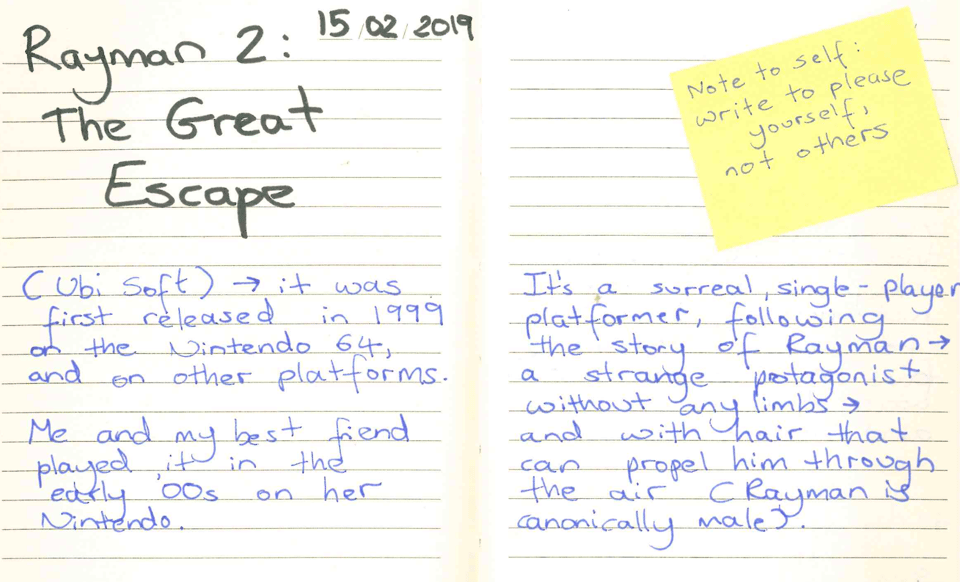
I first made a zine about the queerness of archaeogaming back in 2018, but the most personal and weird one I ever made was in 2019 about the intimacy of playing the game Rayman 2 on a friend’s Nintendo 64. I love that zines are both spatially constrained but compositionally permissive - what does it matter if I scrawl across the page and make something rough around the edges for an audience in the single digits? That zine doesn’t just preserve the play experience I had as a child, it also preserves how I processed that memory seven years ago. A double image, a Xerox copy of a copy.
Not only a way of recording your personal relationship with a game, a zine can also be a game in of itself. There are countless examples of short-form zine games, but one I recently stumbled across is the Dis-loyalty Zine by Helen Kwok and Chad Toprak. You play by punching a hole through each logo of a brand on the BDS list every time you boycott them, to eventually reveal a poem and a hidden image. The zine takes on a new identity through defacement.
In Vice Versa there is the statement: “This is your magazine.” It might seem like I’m trying to sell you an idea (and I am) but no one can sell your own soul back to you. Don’t just create a zine, create your zine. FSN
Add a comment: