
Expedition 53
The Bathysphere
Welcome aboard! Today, we set sail for Venice, by way of New York and Baghdad. It’s that kind of week.
The Bathysphere crew
Christian Donlan
Florence Smith Nicholls
Keith Stuart
Contact us at [email protected]
Delightful games
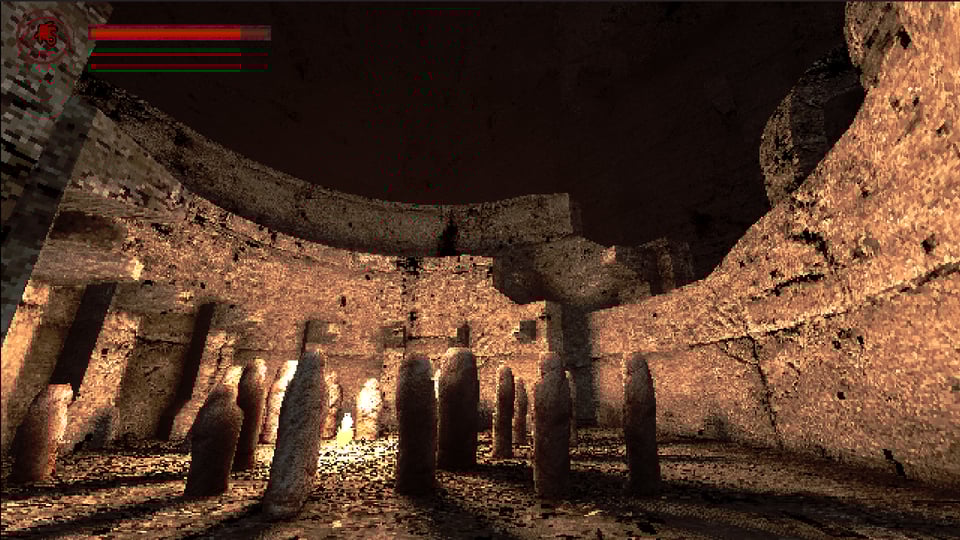
If you’re into games about giant insects and subterranean peril, you may have already discovered Idols of Ash, in which a spelunker must reach the bottom of a deep cave while avoiding a monstrous (and very hungry) centipede. The visual style is pure PS2-era survival horror and I love the way it creates lore out of very little but stone and shadows. KS
Interesting things
I am sharing this article everywhere because it’s so fascinating if you’re into modern horror tropes. MIT has a piece on “institutional gothic”, meaning the use of modern spaces such as offices and underground stations as gothic environments of dread and terror. It references the backrooms video game genre, of course, and makes interesting comparisions with foundational gothic works such as The Castle of Otranto. KS
Squashing cities
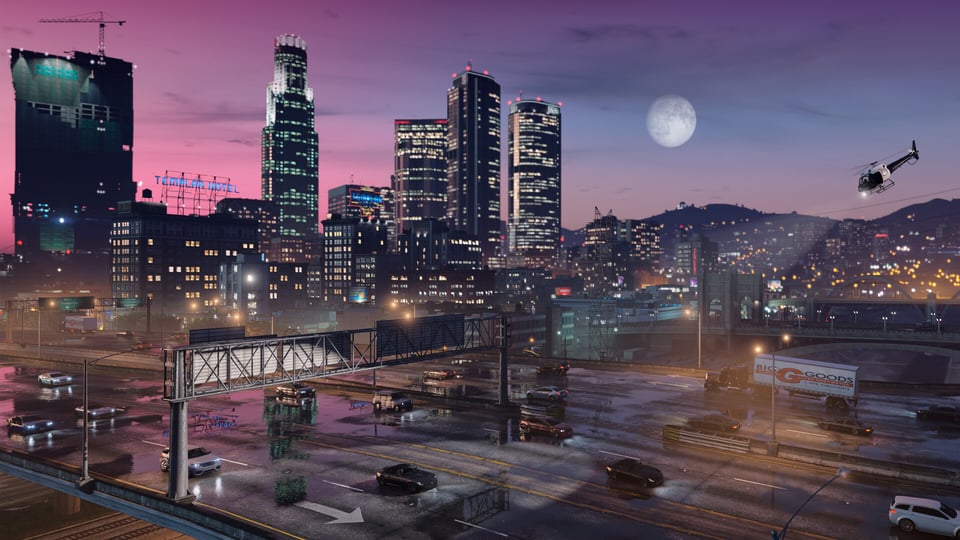
It’s a rare week in which my wife and I don’t go for a drive around Los Santos. Rockstar’s version of Los Angeles is a wonderful work of recreation. (There are fascinating TikToks out there devoted to analysing the various textures in the game and where they came from in LA itself.) But it’s also something else. It’s a masterpiece in reduction. GTA 5 takes an extremely large city and makes it compact. More importantly, though, it makes it feel compact while still creating an illusion of great scale.
This strikes me most when I’ll be in one location and I’ll spot another location in the near distance. I think you can be on the Rockstar equivalent of Rodeo, for example, and see all the way down Olympic. This works in the game, I think, because I sort of expect to see famous landmarks on the horizon in a city. But it’s worth remembering the distances involved in the real Los Angeles. Crenshaw Blvd, I discovered last week, is 23 miles long. I think Pico is 15 miles long. When you’re in the real LA you’re very aware of this: it’s one of those cities where everything feels like it’s about an hour’s drive away. In Los Santos you can cross the city in five minutes but it still feels like a proper journey. Neat piece of work.
Loads of games do this, of course. They just often don’t do it with places that are so easy to actually go and check out for real. On the Rockstar side of things there’s Marvel’s Spider-Man, which is a wonderfully deft realisation of the lower and middle parts of Manhattan in particular. And I remember spending hours in Driver: San Francisco, kind of preferring it to the real place, not least because of that game’s endless charm and high spirits.
But a lot of cities in games are now cities of the past. Assassin’s Creed is so good at this stuff: I particularly love its Baghdad, with its curving streets and House of Wisdom. But I can also remember the moment I arrived in Alexandria, this watery, slightly dreamy city with its legendary library. I felt like I was walking into a fantasy. And I suppose I was.
We expect places like this to be works of contraction. The passing of centuries have eroded memories and street plans, and there’s also the need to stop the scale of these ancient worlds from becoming overwhelming. Get it right and it feels like a trip to the past that is mindful of your time. Get it wrong and it’s a bit like that shot in one of the Mummy films - I think it’s the second - where you can see all of London’s landmarks from one viewpoint. Watching the film in the UK I remember the whole cinema bursting into laughter.
I’m not going to pretend to know how any of this stuff gets done. But what I discovered recently is that games (and films like the Mummy series) aren’t the only artforms that do this sort of contraction business. I’ve been reading The Book of Resting Places by Thomas Mira y Lopez recently, and it has this fascinating chapter on Canaletto, of all people, and the tricks he employed.
Canaletto! I’m ashamed to say that I’d always breezed past his stuff in the galleries. I had always assumed his paintings of Venice were pretty but kind of workmanlike. But Mira y Lopez goes deep and discovers a Canaletto who is filled with fabrications and geographical contractions. He moves landmarks around, and selects impossible vantage points. The reality of the city itself bends to his need to create a perfect image. Venice for Canaletto is “a place that exists how he wants it to exist.” Canaletto, we are told, was once a designer of opera sets. “Flights of fancy constitute the norm.”
I don’t really know why all of this was such a surprise to me. But I think it comes down to my incurious assumptions about certain art forms and certain artists. I expect videogames to bend reality to make things work, because when I load them up it’s because I’m chasing a form of being where reality has been bent about a little. But oil painting, particularly someone like Canaletto, who I had cruelly assumed was a plodder, lives in my imagination as a place where people go out and capture a scene and then render it faithfully. (If nothing else I need to investigate why I’m now more interested in him because I know he’s not necessarily telling the truth.)
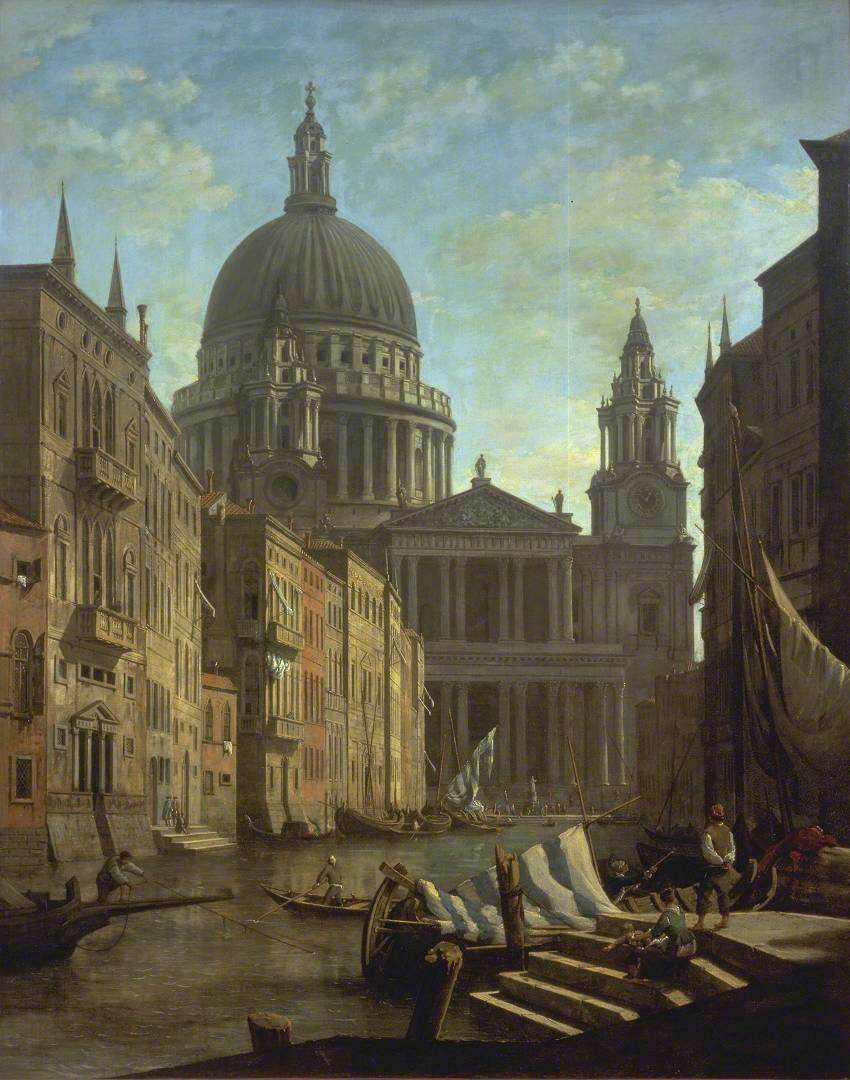
All this despite the fact that one of my favourite paintings of all time is a painting of Venice so fancifully arranged that it has St Paul’s Cathedral in the distance. This work by William Marlow is doubly false, in fact, because the Venetian buildings in the foreground are actually all buildings he saw in London while facing towards St Paul. Then he just Venetianified them with balconies and different stone and whatnot. The big lies like plonking a London cathedral in Venice draw attention to themselves. It’s everything else that I clearly don’t think about enough. CD
Retrospective adventures
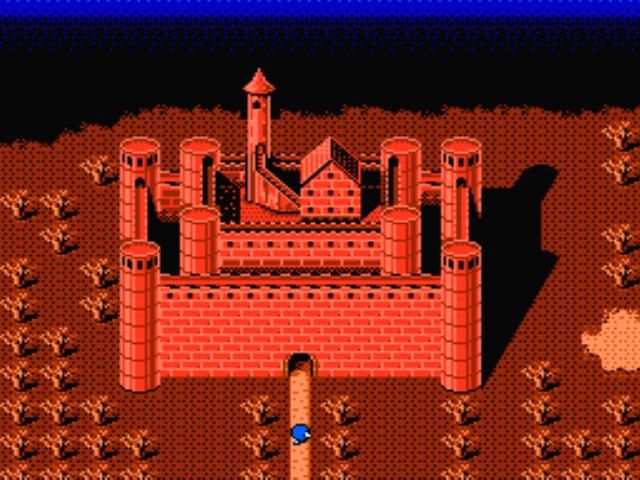
As a fan of both castles and retro games, I just wanted to share this screenshot from Hal Laboratory’s block-pushing puzzler Adventures of Lolo. It’s just a short “cinematic” to introduce the character, but the colours and architecture are fascinating and I wonder what the artist’s reference material was for this building, with its exterior walls and high central tower. Video games have always been great at mixing real-life and fantasy reference materials to create compelling environments – we can certainly look at Ico and Dark Souls for more modern examples. Anyway, I love this weird red castle and the shadow it casts over the barren landscape. KS
Add a comment: