
Expedition 41
The Bathysphere
Good day intrepid explorers! This week Florence does a deep dive on a certain hockey show and why it’s a “Sportslike,” and Chris looks back on Paradise Marsh and Proteus.
The Bathysphere crew
Christian Donlan
Florence Smith Nicholls
Keith Stuart
Contact us at bathyspherecrew@gmail.com
Delightful games
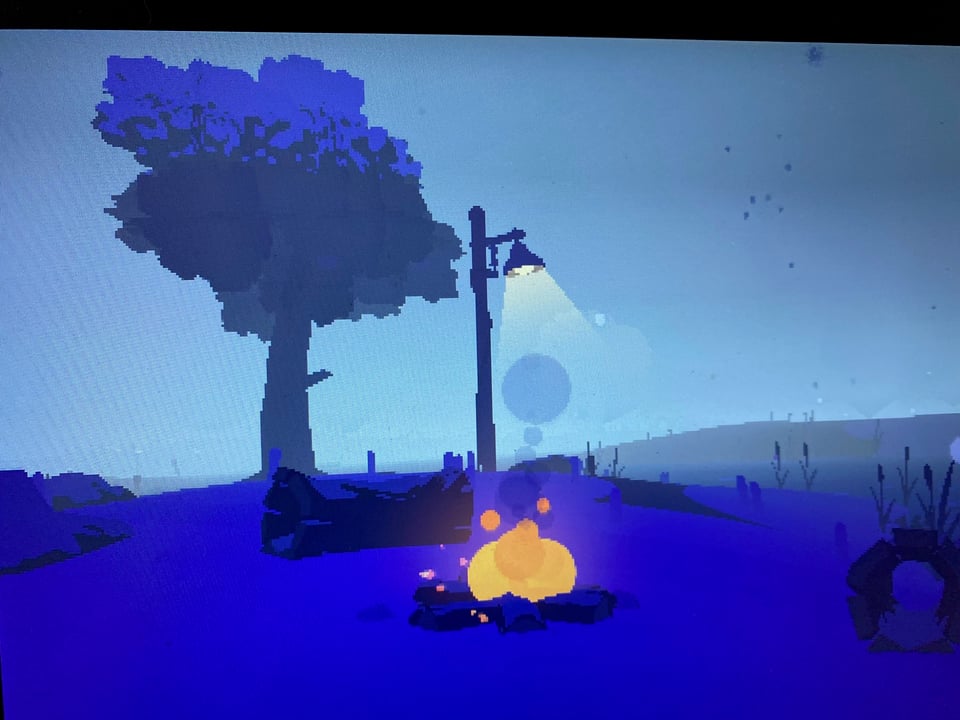
I was scrolling through ancient phone pictures today and was stopped dead by a picture I had taken while playing Paradise Marsh back in the day. (The laptop I used didn’t have a screenshot button that worked so when I wanted to remember something I would take a pic on my phone.) At the time I thought this was a lovely game, but given a bit of distance it’s clearly an absolute beauty too. Just look at it! I need to play it again pronto. CD
Interesting things
I think this trailer for Proteus on Vita is the best videogame trailer I have ever seen.
I’ve been thinking this since I first saw it 12 years ago, and every now and then I still track it down to watch it again.
And really I’m selling it short by saying it’s the best trailer for a videogame, because it does so much more than sell an excellent game on an excellent games machine.
If I had to explain to someone the power and potential of games as a format, I would probably show them this. It’s how some of my favourite games collide with memory. They are pieces of landscape that we in turn experience in other pieces of landscape. CD
Essay: Heated Rivalry is a Sportslike
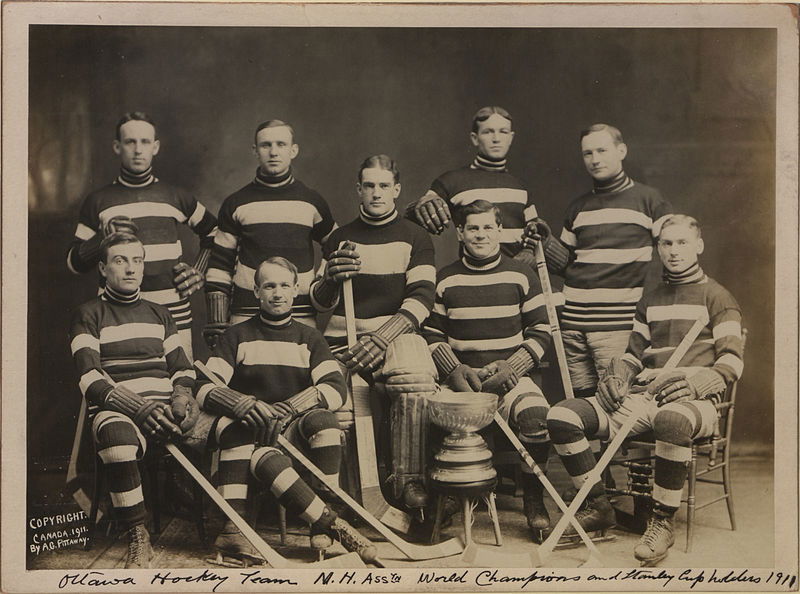
You’ve probably heard the term “emergent narrative” cropping up in countless discussions about video games. However, it’s far from new. Back in 1997, Ruth Aylett wrote an article in which she uses football as an example of how a game can produce emergent narrative:
“The addition of conflicting aims and some constraints on allowable physical behaviour together with a limited time often - though by no means invariably - produces recognisable narrative structure. For example, the late substitution producing the winning goal; the new young player scoring on his debut; the player committing a reprehensible foul who injures himself seriously in the process; the talented but petulant player who retaliates when fouled, gets sent off, and loses his team a crucial match.”
Sports are story machines. They are compelling not just for the performance of athleticism and skill by players, but the narrative arc of a season, the local history of a team, and the archetypes of individual players. Aylett’s description reminded me of two things: an incredibly popular TV series, and a games manifesto.
You already know from the title of this piece that I will inevitably be discussing the thing that is dominating social media feeds right now. Heated Rivalry is a Canadian TV show adapted from a book. Its protagonists are Shane Hollander and Ilya Rozanov, two hotshot rival ice hockey players who are intertwined in an illicit love affair. I’ve seen Heated Rivalry described as “hockey-baiting,” and it’s true that actual hockey games only have a minor supporting role in the series, with romance, sex and interpersonal relationships taking centre stage. But that makes sense. Because Heated Rivalry is a Sportslike.
“THE SPORTS GAME IS TOO BUSY. Everyone expects franchise-career modes, motion captured stadiums, sweaty grass physics, and the latest microtransactions.
It’s so busy becoming a sport, it can’t think about the people in sports.”
So begins A Sportslike Manifesto, published by Grapefruit Games. The studio was co-founded by Robert Yang, who is renowned for making games exploring queer sexuality and kink. If you enjoyed The Cottage in Heated Rivalry, well, Yang made a game about cottaging back in 2017. It is a historic bathroom simulator and deserves better than that clumsy joke. In any case, A Sportslike Manifesto helped me to better understand what appealed to me about Heated Rivalry as a show that is more about locker rooms and gym socks than actual point-scoring (at least in a traditional sense). Indeed:
“THE SPORTSLIKE -can- think about sports.
The Sportslike is much like a Sports Game.
However, The Sportslike is not a Sports Game.
Because it’s not a Sports Game, The Sportslike can think about sports and sportspeople.”
The manifesto encourages us to think about the stories of individual athletes, of the people who work in sports but are often invisible - “What if we had games about cleaning stadium urinals or throwing hot dogs?” It also asks us to think about sports history. Heated Rivalry is set in the late noughties and early 2010s, which may seem like recent history, but that specificity holds weight. For example, both Shane and Ilya attend the 2014 Winter Olympics in Sochi, Russia. That event was marred by controversies over homophobic policies and the subsequent annexation of Ukrainian Crimea (though the latter is not mentioned in the show).
Rather than moments of intimacy being revealed through play, the hockey league calendar provides the narrative design for the pair’s sexual tension. Any time they face off on the ice isn’t so much about who wins as it is an opportunity for them to tussle beneath the sheets afterwards. Points scored in the game matter less than who texted first.
Then there’s the tension between hockey as a hyper-masculine, heteronormative “magic circle” versus Shane and Ilya as queer men who want each other. There’s a reason why “playing for the other team” is an idiom for being homosexual - to be queer is to go against the grain, not follow the rules. In a 2019 study of 146 hockey players from 11 countries, 68% of players heard teammates use homophobic slurs during a two week period. The study’s lead researcher concluded that this was due to “a desire for social acceptance and to conform to what’s viewed as ‘culturally normal’.”
Grapefruit Games is working on its own Sportslike, a turn-based RPG about managing an underdog rugby team in New Zealand called Tryhard. Beyond the fanfare of Heated Rivalry, I know who I’m rooting for. FSN
Add a comment: