
Expedition 31
The Bathysphere
Hello, and welcome back aboard! Make sure the hatch is firmly shut. This week Chris is taking us swimming, while Florence looks to the stars and Keith visits the West of Ireland.
The Bathysphere crew
Christian Donlan
Florence Smith Nicholls
Keith Stuart
Contact us at [email protected]
Delightful games
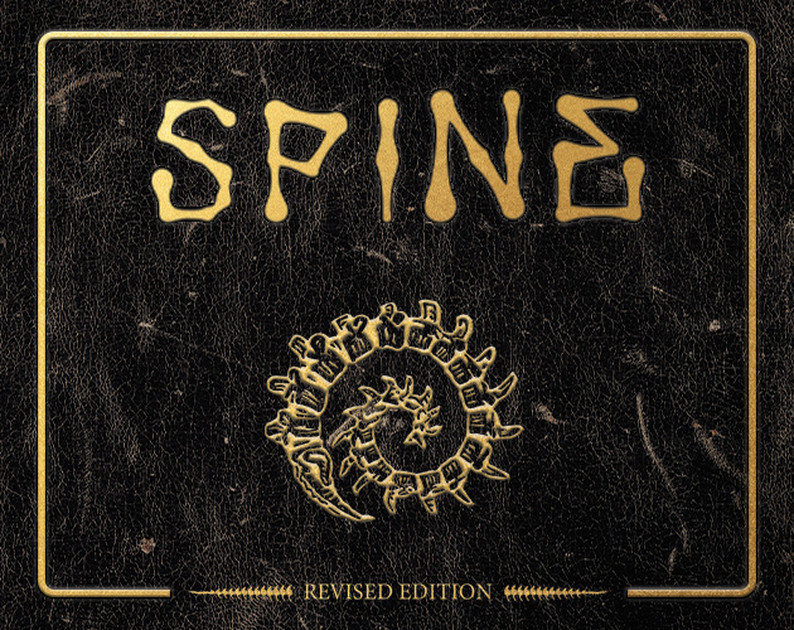
I’m really looking forward to trying out the solo TTRPG Spine, the beta version of which is now available to download for free from itch. You play as a researcher reading a strange tome, following the prompts in its endnotes. I’m very interested in the concept of “bookplay” that Spine leans into - how books can function as props or the locus of play itself FSN
I’m not official allowed to write about this yet, but I am currently reviewing Seance of Blake Manor and I can tell you already it’s a must for fans of detective games, especially those who are also interested in spritualism and colonialism. You’re an investigator looking into the strange disappearance of a guest from an isolated hotel on the west coast of Ireland. In typical Agatha Christie style all the other inhabitants have secrets to hide, and through interrogation and exploration, a vast web of intrigue builds. I am having an absolute ball. KS
Interesting things
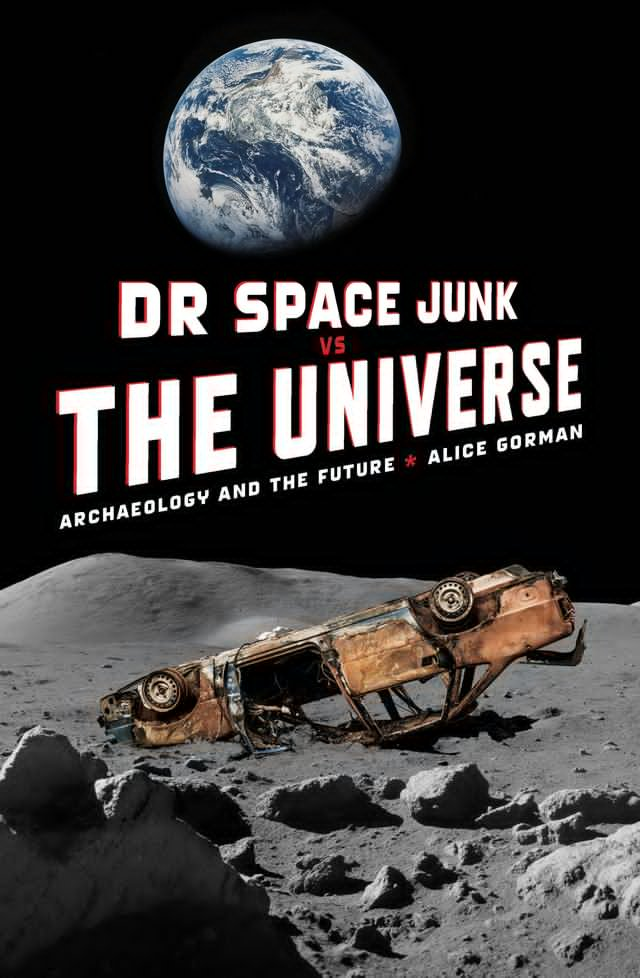
I recently came back from a larp in Poland about being a scientist trying to communicate with an alien lifeform. Ever since, I can’t quite let go of my astronaut persona, and I’ve been reading Dr Space Junk vs The Universe: Archaeology and the Future by Alice Gorman. As someone who does archaeology in contemporary video games, I particularly like the book’s emphasis on archaeology as a field being applicable to both the deep past and the contemporary world, including human material culture beyond Earth. FSN
Essay: Backstroke
It’s the end of term at my swimming school, which means that at last night’s lesson I was the only person in the water. My teacher, who has been steadily teaching me the front crawl, felt expansive, so we tried something a bit different.
I won’t go into this too deeply, but for the first half of the lesson we just played a game: how far could I get if I kicked off the wall, lying on my back, and just used my feet as propulsion. It was a surprisingly good game, and a little chaotic, as I swiftly found that if I kicked too hard I could drive my entire head underwater when I wasn’t expecting it.
But then she added some arm movements and by the end of the lesson she had sneakily taught me the entirety of the backstroke. I went from almost knowing one stroke to suddenly knowing one and almost another. And I didn’t see it coming.
We will return to this. For now, what it reminded me of was a thing I ended up doing a few years back, when I would volunteer with our local NHS trust as a “patient educator.” Medical students are generally brilliant, but they’re sometimes brilliant in a bubble of the classroom, and they sometimes have a degree of anxiety about meeting actual patients. So every now and then they’d meet people like me, just to get over the shock of a real patient. Inevitably, we’d go through a fake GP visit and a diagnosis. Equally inevitably, it soon turned into a game.
The game was: what’s the diagnosis? And what’s the differential? And how quickly can you get there, and, looking back, what was the clue that gave it all away? The game, then, was a little like medical Cluedo, and it was always exciting to see brilliant minds zooming in on the correct solution.
But here’s the thing: these moments weren’t ultimately about getting the diagnosis right. As the GP, you’re meant to be on the right track, sure, but you’re also meant to learn how to deal with people, to understand what their garbled testimony is getting at and, if possible, to understand what is actually concerning them. The patient who comes in with a migraine, for example, may be worrying that they secretly have a brain tumour like the one that killed a friend - they might be unwilling to share this worry with a GP, but it’s this worry and not the migraine that wakes them up at three in the morning. Students - and patient educators in fact - played this game to understand a little more about the mysteries of kindness and empathy.
So what begins, rather naturally, as a game, is actually something else. As it was with my peculiar swimming lesson that started out as a challenge and ended up with me being taught an entire way of swimming without, as I typically do, getting in my own way.
And it reminds me that there’s a special handful of games that are absolutely games up until the point when they absolutely aren’t anymore. I’m thinking of something like Hob’s Barrow, which has a message that, for me at least, only became apparent once the game was over and I was teased into untangling some of my invisible biases that had muddled the story and its message. That was incredibly worthwhile! I’m thinking even of Spelunky, which is a wonderful Roguelike and also a fascinating study in some of the less cool virtues: patience, noticing things, spotting patterns, studying failure.
Ask not what illness a patient has, but what patient an illness has - or words to that effect, spoken by William Ostler, who invented teaching hospitals amongst other things. To put it another way, games are human magic, and part of their magic is knowing when to open up and transform and become even more thoroughly human. CD
Add a comment: