The Pull, no. 1
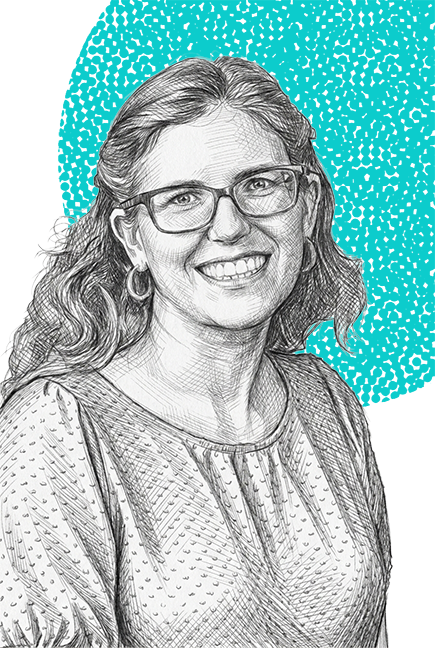
With holiday meals now fading into memory along with any New Year’s food (or drink) resolutions, this month’s expert is:
Juli McLoone, curator
Janice Bluestein Longone Culinary Archive
University of Michigan
Archival Magic: Gloves or no gloves in your work?
JM: [laughs] So, as you likely know from your experiences with archives, by and large, no gloves for paper-based materials because you’re more likely to damage things and tear paper because the gloves are not going to fit well, and you’re losing access to all the nerve endings in your hands.
But we do wear gloves for photographs and also for some metal artifacts in our collection, like our silver tea set.
AM: What was the most recent archival object you showed to someone else?
JM: I selected a wooden marshmallow crate for a class that came in on Monday. It’s a really good class, an American Studies methods class, and they come in to sort of say, what can you learn from an object? Because a lot of times, we’re so fast to start trying to analyze things, we forget to slow down and actually observe what we’re seeing.
And when you have a lot of text, it’s also easy to just dive in and say, okay, what does this say and how can I contextualize it and argue with it? But first you just need to slow down and say, what can I actually observe about this?
So for this class, I and other curators bring out objects from our collection. So it’s a wooden box, a very lovely, beautifully constructed wooden box. Smaller than a crate — maybe the size of your laptop. It says “Marshmallow” on the side, The Three Millers Company, and it's just a very different way of shipping things than we're accustomed to thinking about, right? We assume things come in plastic or in Amazon bags, and so you have to really think — how were people transporting food in the late 19th and early 20th century?
I would imagine there must have been butcher's paper or something like that when you’re actually putting the marshmallows in because wood and sticky sugar is not a felicitous combination.
AM: When did you first realize that you enjoyed working with archival materials?
JM: I’ve always loved books and history. My undergraduate background is in English literature and in cultural anthropology. I figured out that while I love reading anthropology and teaching anthropology, I am way too introverted to survive life as an anthropologist. [laughs]
There’s many paths into the special collections and archives world, but my degree is in library sciences. I went to grad school at the University of Iowa which also has the Center for the Book. I was fortunate to have a half-time assistantship in special collections, and so my first sort of major task was working with the Ding Darling papers.
He was an early-to-mid-century cartoonist who, at the time, was a household name whose cartoons were syndicated all over the United States. And we just had many, many linear feet of his correspondence, his writings, his drawings, and there were additional accretions that it was my job to add in.
There’s something really wonderful about immersing yourself in the documents and minutiae of someone’s life who you’ll never meet, and you’ll never know, and you may not have had much in common with them, but just seeing their perspectives and their views and also how they change over time.
AM: What’s the most memorable item you’ve found or seen in any archive?
JM: Back to my graduate school days in Iowa, one of the many collections they have is the Fluxus mail art collection, which is sort of an avant-garde artistic movement in the 20th century. Sometimes I think that all of the U.S. Postal Service restrictions on what you can mail really are the fault of the Fluxus people because they would mail anything. There was just a big bag of hair that someone stuck a stamp on. And I have to say that's pretty memorable.
In the area that I work in now, one of my favorites is a menu printer. Imagine you are a restaurant that needs to reprint your menus frequently. It has words already put together. So unlike a regular letterpress where you have to put each letter together as you're building out your text, instead it's: eggs, toast, rolls.
I'm actually in the process of working to possibly transfer that to the Book Arts Studio because then it could actually be used, and I think that would be really cool for people to get experiential learning actually printing menus with this printer.
AM: What is one aspect of the archives that you wish the general public understood better?
JM: So what I love is that people do recognize that archives and libraries are full of special and interesting things. We’re really lucky in that respect. You know, you tell people that you’re a librarian or that you work in archives and they’re like, “That sounds really cool, tell me about what you do, what you work with.” So that’s wonderful.
I think a lot of times what people don’t understand is that we often have to make really hard choices about what we take and preserve in libraries and archives because we are working with the constraints of the physical world, and that means shelving space.
And also that anything you take in, it’s not just shelving space: it’s the climate control, it’s the monitoring, it’s the description. Because if you take in material that then you don’t have the resources to describe it in a finding aid through archival processing, that material exists in limbo where researchers still aren’t getting to use it.
It’s also more difficult to keep track of. So it’s really hard for people when we say no to something. We’re never saying no frivolously.
AM: Archives are often portrayed as sterile or silent, but can you describe a specific sight, sound, smell, touch, or taste in your workspace?
JM: Our Special Collections Research Center is in the university library, so it's really not very quiet. [laughs] There's always students studying and talking. It's nice to feel that we're part of this larger academic community.
One of our off-site storage facilities is a really unique building that used to have scientific labs in it. Our archival shelving is in all of these little rooms that used to be laboratories. There's still signs on the walls that say things like “clean corridor” and “dirty corridor,” and the light switches have rubber covers on them that could be sterilized. That sometimes feels a little bit like you're in the video game BioShock. It certainly is not the space people expect when they're thinking about archives.
AM: What archives-related question should I ask the next person?
JM: A lot of our job involves lists and spreadsheets, and we love the materials, but by and large most of us can get a lot more excited about a spreadsheet than you would think.
So I want the next person to tell you about a spreadsheet that was involved in a project that they’ve worked on sometime in their archival career, and what that project was about and why it was really great.
Happy new year! This is a significant shift in the Archival Magic format, but I didn’t want to create a separate, limited-run publication. I worked with Google Gemini AI to develop a title to set apart this interview series within the primary newsletter.
I wanted something active, tactile, and human. We tested dozens of options and variations together, and eventually, I chose “The Pull.”
Here’s some of Gemini’s supporting notes from our exchange: “In an archive, a pull is the act of retrieving records for a user. In 2026, we’re focusing on the people who make that hand-off possible. ... It implies a discovery is about to happen, and it focuses on the now rather than the then.”
Gemini also noticed that the title is a “spatial entry point” (what I would call a strong sense of place).
I have lots of questions/concerns about AI, but I’m quite pleased with this particular experience!
—
This newsletter was written on the traditional lands of the Piscataway and Nacotchtank.