Tuesday, March 3, 2026. Annette’s Roundup for Democracy.
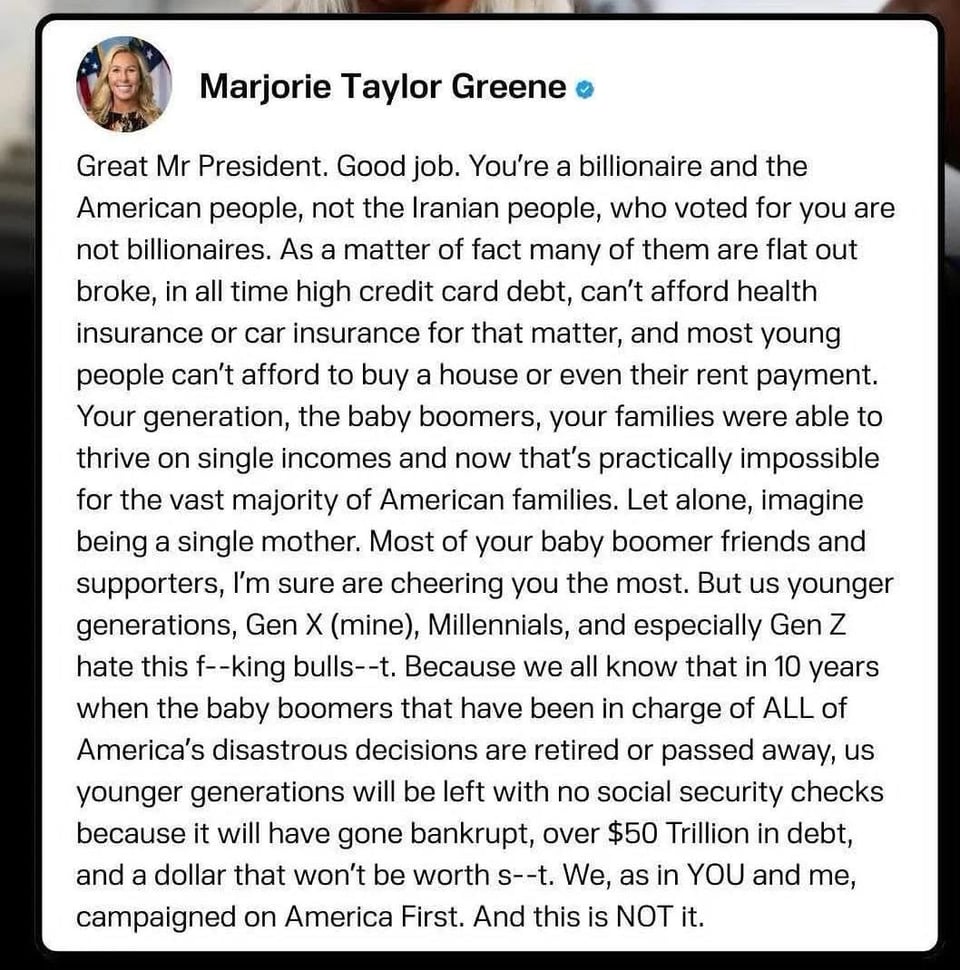
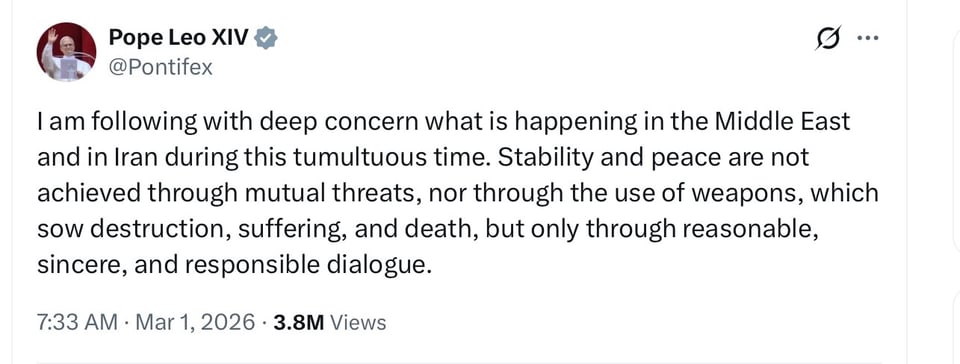
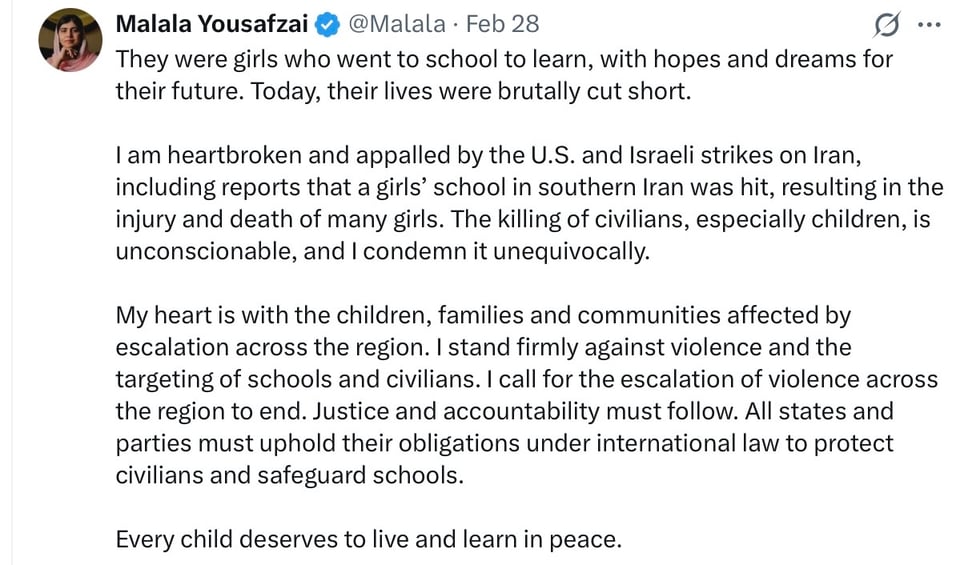
Trump started an illegal war.
Now a hapless Commander-in-chief thrashes around, searching for a why and wherefore.
Trump, who campaigned against 'endless' wars, enters Iran with no end date.
To win the White House in 2016, Donald Trump first had to get by former Florida Gov. Jeb Bush, the son and brother of two past presidents inextricably linked with U.S. wars in the Middle East.
Attacking the Bush family dynasty — and its legacy — became a feature of Trump’s campaign. And that meant doubling down on criticism of the Iraq War that President George W. Bush had led the U.S. into under the premise of finding weapons of mass destruction that never materialized.
“The war in Iraq was a big, fat mistake,” Trump responded when he was asked at a Republican presidential debate in February 2016 whether he still believed, as he said he did in 2008, that Bush should have been impeached for it.
“We can make mistakes,” Trump added. “But that one was a beauty. We should have never been in Iraq.”
The moment was one of many in Trump’s long history of denouncing "forever wars" and promising, as president himself, to keep the U.S. out of the sorts of foreign entanglements that could lead to them.
But one year into his second term, Trump has ordered military action in multiple countries, including the January strike on Venezuela to capture Nicolás Maduro. And now with the war in Iran, Trump has plunged America into its most significant conflict since the post-9/11 wars in Iraq and Afghanistan — without any congressional approval.
Trump’s successful 2024 campaign to return to power was predicated in large part on how he hadn’t started any wars in his first term.
“My entire adult lifetime has been shaped by presidents who threw America into unwise wars and failed to win them,” Trump’s future vice president, JD Vance, wrote for The Wall Street Journal in a January 2023 column endorsing Trump’s 2024 bid.
At a briefing today, Defense Secretary Pete Hegseth rejected suggestions that Iran could become Trump’s Iraq, pledging that the conflict wouldn’t spiral into an “endless” war. But Trump himself indicated the U.S. could be engaged for longer than he bargained.
“Right from the beginning, we projected four to five weeks,” Trump said at a Medal of Honor ceremony at the White House. “But we have capability to go far longer than that. ... Somebody said today, they said, ‘Oh, well, the president wants to do it really quickly; after that, he'll get bored.' I don't get bored. There's nothing boring about this.”
Trump also listed four objectives for Operation Epic Fury: degrading Iran’s missile capabilities, destroying Iran’s navy, ensuring Iran can never obtain a nuclear weapon and containing its proxy forces by ensuring Iran cannot “continue to arm, fund, and direct terrorist armies outside of their borders.”
The beginning of war with Iran comes just weeks after the military operation in Venezuela that ousted Maduro. And Trump said Sunday that he is separately contemplating “a friendly takeover” of Cuba, suggesting that the U.S. could be heavily involved in three foreign entanglements simultaneously.
Though Trump has pledged for years to keep the U.S. out of new wars, he has taken a hard line with Iran, whether by discarding the nuclear treaty negotiated by his predecessor, President Barack Obama, killing Iranian military official Qassem Soleimani in an airstrike or bombing Iran’s nuclear facilities last year.
During his 2016, 2020 and 2024 runs for the White House, Trump said that Iran cannot be allowed to develop a nuclear weapon. Since taking office, Trump has stated “no fewer than 33 times that Iran cannot be allowed to have a nuclear weapon,” a White House official said. That concern that was the basis for launching “major combat operations” against the country, Trump told NBC News on Sunday.
Trump’s skepticism of foreign intervention — and of fighting wars in the Middle East in particular — dates to before his time in elected politics. In addition to describing Bush’s invasion of Iraq as an impeachable offense, Trump had also repeatedly suggested that Obama would use military aggression for political gain.
“In order to get elected, @BarackObama will start a war with Iran,” Trump posted on social media in November 2011.
He made a similar prediction in October 2012, weeks before Obama was re-elected: “Now that Obama’s poll numbers are in tailspin — watch for him to launch a strike in Libya or Iran. He is desperate.”
Trump’s 2016 campaign for president stitched together a new “America First” Republican coalition that rejected the neoconservative, interventionist foreign policy.
“As a candidate for president, I pledged a new approach,” Trump would say in his 2019 State of the Union address. “Great nations do not fight endless wars.”
Jeb Bush, the brother of the president who had launched the Iraq War, made a convenient foil as Trump romped through the primaries during that campaign. Even so, as is often the case with Trump, he had to explain his own shift in thinking on Iraq. When asked by Howard Stern in a 2002 interview if he would support an invasion of Iraq, Trump responded affirmatively. After the audio of the interview resurfaced in 2016, Trump said that he had changed his mind by the time the war began.
Days later, during a surprise visit to U.S. troops in Iraq, Trump explained his thinking further.
“While American might can defeat terrorist armies on the battlefield, each nation of the world must decide for itself what kind of future it wants to build for its people, and what kind of sacrifices they are willing to make for their children,” he said. “America shouldn’t be doing the fighting for every nation on Earth [while] not being reimbursed, in many cases, at all.”
The following year, as he was preparing to accelerate the Syria withdrawal amid Turkey’s escalating military operations there, Trump reupped his philosophy.
“Turkey has been planning to attack the Kurds for a long time. They have been fighting forever,” he posted on social media. “We have no soldiers or Military anywhere near the attack area. I am trying to end the ENDLESS WARS.”
And in November 2020, after Trump lost his re-election bid to Joe Biden, acting Defense Secretary Chris Miller issued an update on plans to draw down troops in Afghanistan and Iraq.
“With the blessings of Providence in the coming year, we will finish this generational war, and bring our men and women home,” Miller said. “We will protect our children from the heavy burden and toll of perpetual war.”
Now, though, Trump is openly acknowledging that ground troops might be necessary in Iran.
“I don’t have the yips with respect to boots on the ground — like every president says, ‘There will be no boots on the ground.’ I don’t say it,” Trump told the New York Post in an interview Monday.
So far, six U.S. service members have been killed during the Iran operation.
That’s a far cry from the anti-war posturing from the 2024 campaign that put Trump back in office.
That race began with Vance, then a senator, framing his supportive Wall Street Journal column around the idea that Trump would not “recklessly” send Americans to fight in foreign wars. It ended with a messaging blitz aimed particularly at the young male voters who helped carry Trump and Vance to victory.
In late October 2024, Trump’s team amplified commentary from journalist Peter Hamby, who on CNN had shared that young men he spoke with on college campuses “are worried about global conflict, because they are of draft age.”
And in a series of social media posts days before Election Day, longtime Trump adviser Stephen Miller repeatedly warned that a win for the Democratic candidate, then-Vice President Kamala Harris, would lead to young men being “drafted to fight” in a “3rd World War.”
“If you vote for Kamala, Liz Cheney becomes defense secretary,” Miller wrote, referring to the anti-Trump Republican and former House member from Wyoming known for her hawkish foreign policy views. “We invade a dozen countries. Boys in Michigan are drafted to fight boys in the Middle East. Millions die.” (NBC News)
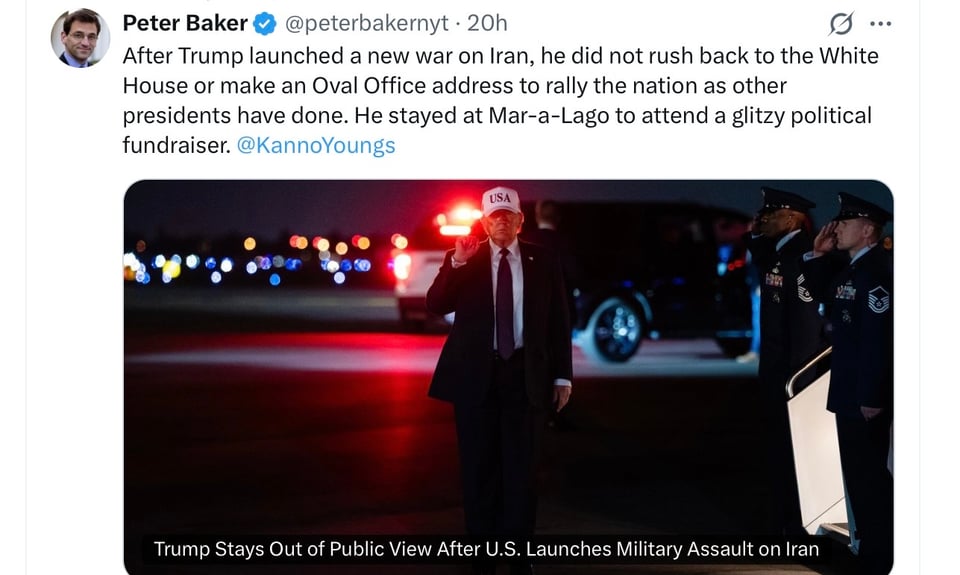
First, Trump bullied American law firms.
Then, yesterday, he folded. Court loss after court loss pushed him back.
Trump Administration Abandons Efforts to Impose Orders on Law Firms.
The move amounts to a surrender in a clash that has led many law firms to submit to the president rather than face the threat of his executive orders.
The Trump administration on Monday abandoned its attempts to impose potentially crippling executive orders against law firms that refused to capitulate to the president, walking away from its appeal of victories the firms had won against the White House.
With a brief due this week, Justice Department lawyers told the U.S. Court of Appeals for the District of Columbia that they were no longer interested in pursuing the cases and were voluntarily asking the court to dismiss them.
The decision is the White House’s most significant acknowledgment that the executive orders cannot be successfully defended in court. The move is particularly striking given that some firms opted to reach deals in a bid to head off executive orders that President Trump’s Justice Department said it would no longer stand behind.
The battle over the executive orders had roiled the legal establishment and led many firms to submit to Mr. Trump rather than face the existential threat his directives represented. The orders barred the firms from government business and suggested that their clients could lose government contracts, spurring widespread panic in the legal profession.
Four firms — Perkins Coie, WilmerHale, Jenner & Block and Susman Godfrey — fought the orders, quickly receiving favorable rulings from district court judges. Nine others struck deals with Mr. Trump, most notably Paul Weiss, drawing sharp criticism.
Already, the Justice Department acknowledged in court that a parallel effort to use the Equal Employment Opportunity Commission to scrutinize the hiring practices of some of the country’s biggest law firms amounted to very little. The commission has said that most of the firms did not provide any of the requested information and that it now considers the matter closed.
Mr. Trump’s attacks on law firms were one of the early gambits in the shock-and-awe retribution campaign he mounted upon returning to the White House last year. In February 2025, he issued executive orders against two firms associated with his perceived enemies.
The first firm Mr. Trump targeted, Covington & Burling, had given free legal advice to Jack Smith, who as special counsel led investigations into Mr. Trump. The second, Perkins Coie, did work for Democrats during the 2016 presidential campaign and had hired a research firm that ultimately led to the creation of an unsubstantiated dossier about the ties between Mr. Trump’s campaign and Russia.
The judge overseeing Perkins Coie’s case, Beryl Howell, said the executive order “sends little chills down my spine,” later writing that the administration had sent a clear message, “Lawyers must stick to the party line, or else.” The orders, she wrote, were “an unprecedented attack” on foundational constitutional principles.
Regardless, Mr. Trump signed a third executive order against the law firm Paul Weiss, which employed a litigator who as a prosecutor with the Manhattan district attorney’s office led an investigation into Mr. Trump. The firm was widely expected to fight because its chairman, Brad S. Karp, had helped galvanize the legal world to stand up to Mr. Trump during his first term.
But instead, Paul Weiss entered into negotiations with the White House.
Paul Weiss and other firms were particularly vulnerable to the orders because of a basic structural shift. While it was known for its litigation attorneys — the fast-talking, brief-writing lawyers who appear in court — the firm increasingly relied on highly paid corporate lawyers, who often bring in the most money. The firm’s litigators determined the executive order was illegal, but its top corporate rainmaker, Scott A. Barshay, said the firm could not even be perceived as adverse to Mr. Trump because it would hurt their business and clients.
Mr. Karp, fearing Mr. Barshay would leave the firm and take many partners and clients with him, went along with his desires, striking a deal in which the firm essentially agreed to represent clients no matter their political beliefs and do pro bono legal work for largely uncontroversial causes.
But the deal led to an uproar inside the firm, the legal community and among Democrats, who considered it a capitulation. And it appeared to embolden Mr. Trump, who went on to make similar deals with eight other firms.
In June, the administration appealed Judge Howell’s ruling, and the four cases were consolidated to be heard as one by a panel of appeals judges in the District of Columbia. Last month, the court ordered the Justice Department to file its appeal by Friday.
The Justice Department’s surrender is the latest example of the White House pushing the limits of the law, benefiting from the lag time between the use of its power and the courts’ response. The administration has deployed the tactic in its efforts to keep its chosen U.S. attorneys in place and the prosecution of some of Mr. Trump’s adversaries. In some instances, even when the administration has walked away from its initial legal position, it has still been able to impose its will.
Despite its legal losses, the administration continues to take an unusually muscular approach with businesses. Last week, after talks between the Trump administration and the artificial intelligence firm Anthropic blew up, Defense Secretary Pete Hegseth formally designated the company a “supply-chain risk to national security,” meaning that no contractor or supplier with military ties can do business with the firm.
The legal designation is highly unusual for an American company. Anthropic has vowed to fight it in court. (New York Times)
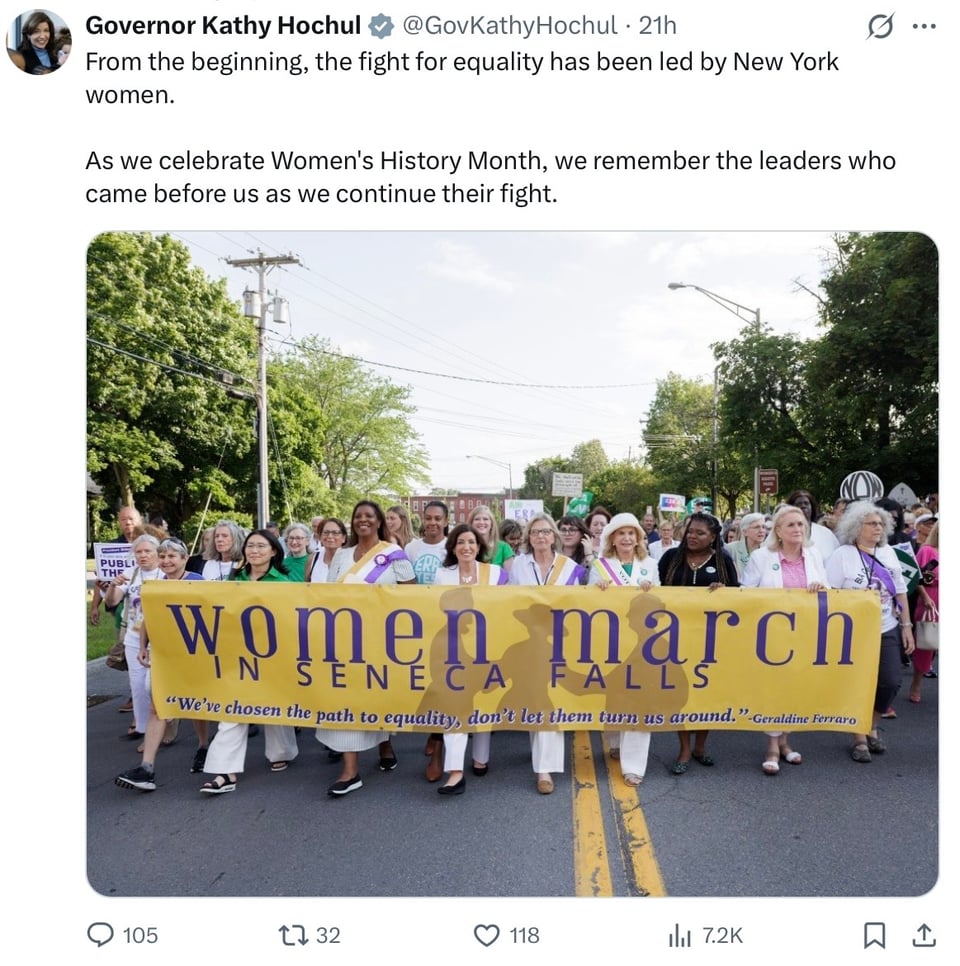
Women’s History Month is here.
Heather Cox Richardson was at the New York Historical last night.
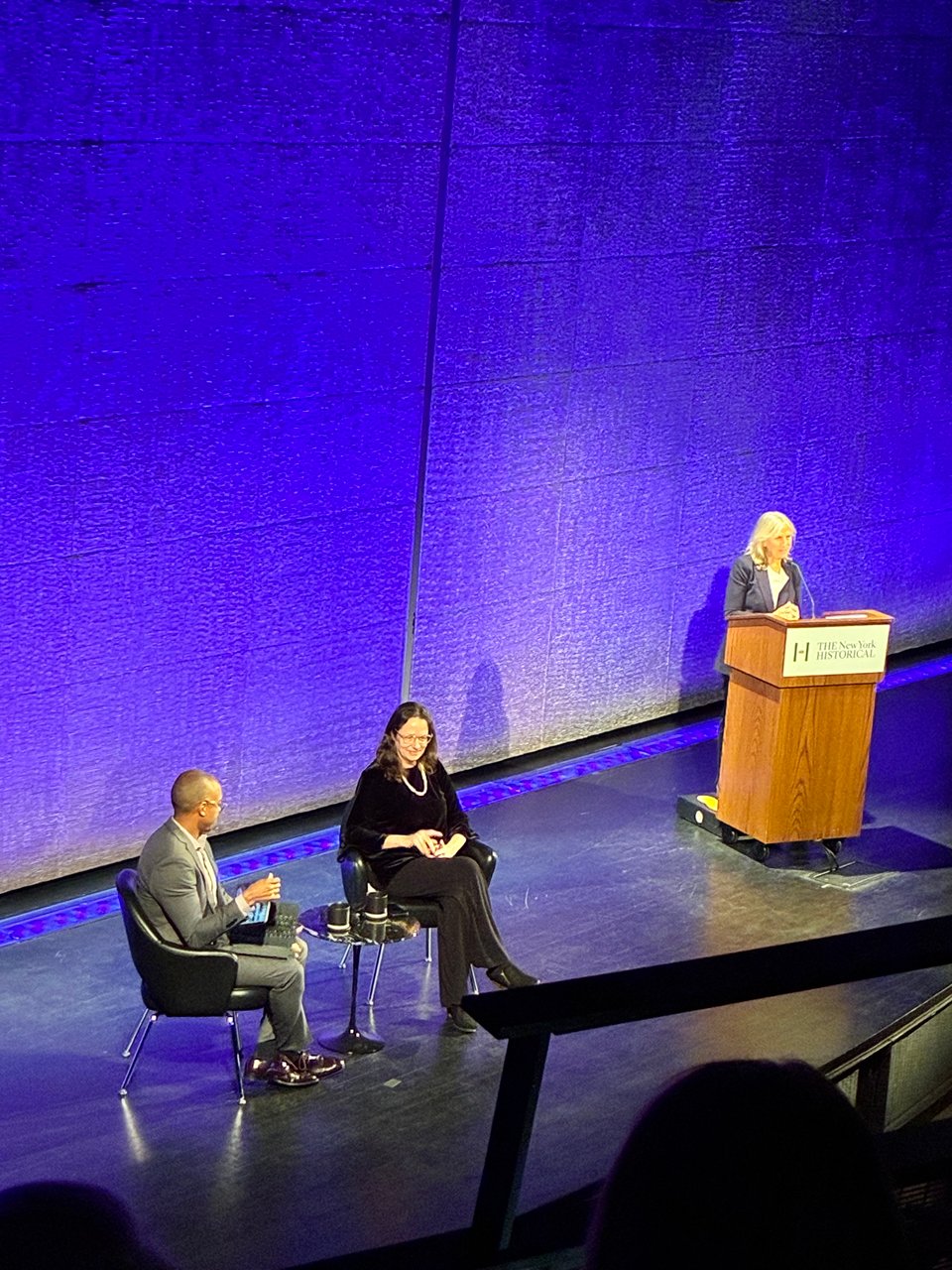
When asked about the present circumstances our country finds itself in, she said that the responses by the people in Minnesota, especially the women, gave her heart: “If I were to take a bet, I think we’re looking at the start of a new progressive era.”
Describing Trump, she said, “Never before was there a President who just wants to look good for the evening news.”
She acknowledged that she too was worried about Trump’s attempt to disrupt the midterms, but she said there were many lawsuits happening and that the Save bill was paused because they don’t have the 60 votes in the Senate.
She also said we were not helpless, and urged us all to “keep contacting our Senators and Representatives” to say we “want free and fair elections.”
On more general issues, she urged us to put pressure on Trump via our calls to officials, posts on social media, etc. to demand that he let go of high level members of his cabinet. Kristi Noem and Kash Patel seemed to her good and likely targets. When anyone is fired, that will weaken Trump.
As to 2028, she agreed that there were now so many Democratic hopefuls and yet no single candidate that it seems we might coalesce around. She thought that was a good thing.
She compared the situation to that of the Republican Party in the 1850’s, which faced the same situation - many candidates and ideas, but no one special candidate. And then Lincoln appeared.
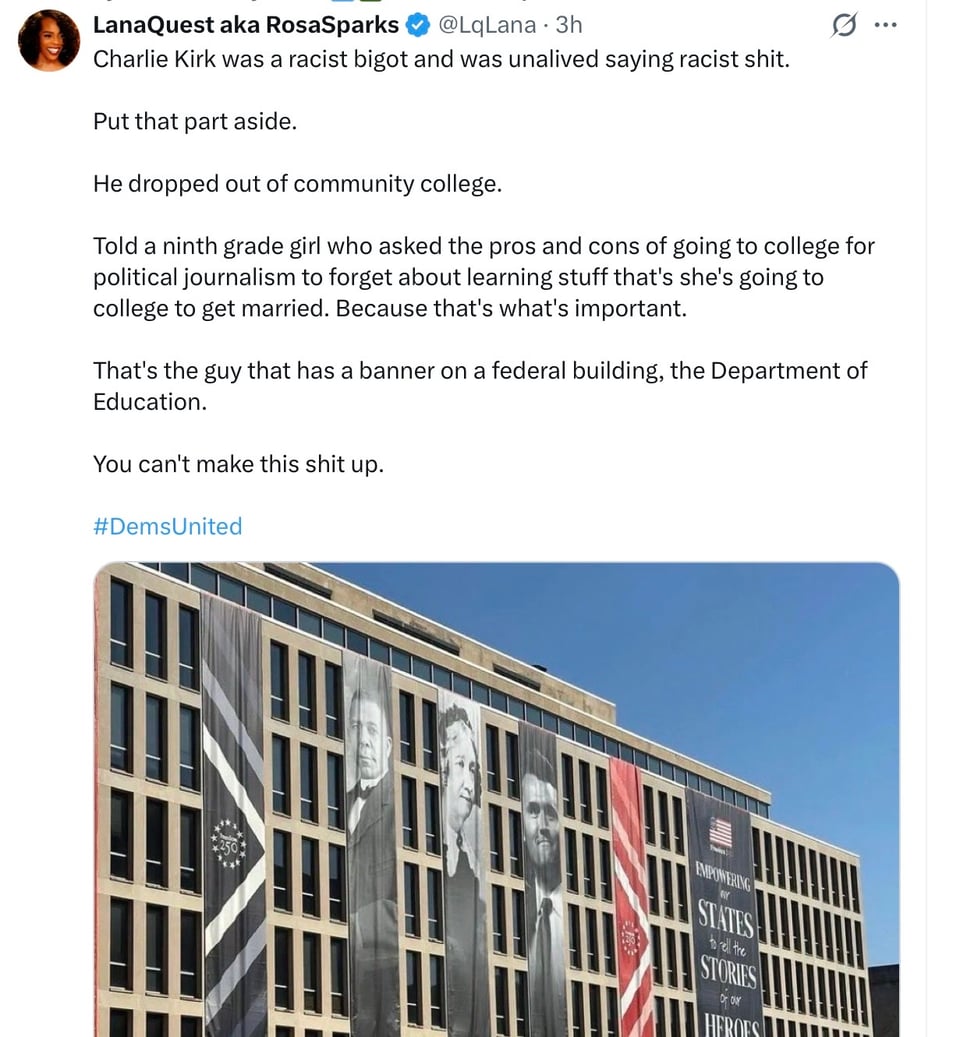
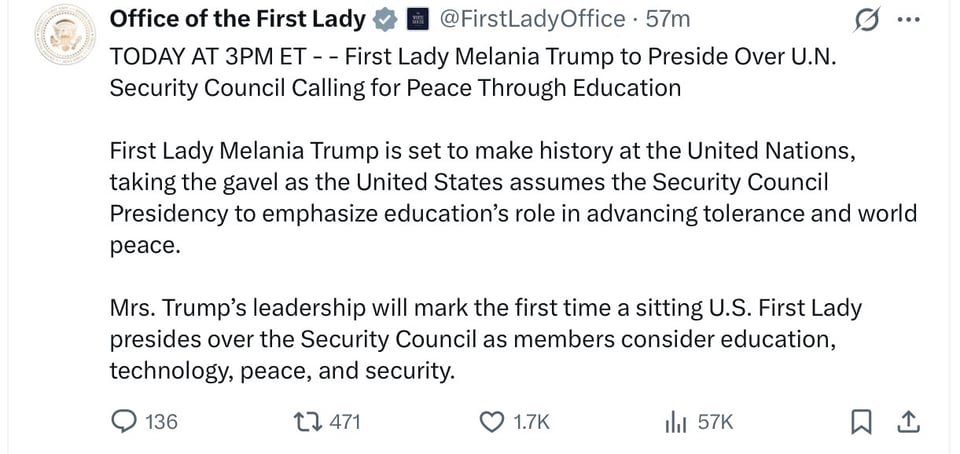
Education was dealt a blow by the Trump regime yesterday.
Today in Texas
US Senate candidates in Texas make final pitches to voters ahead of Tuesday’s primary.
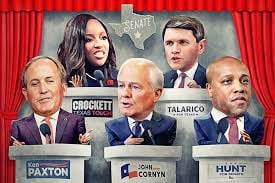
Candidates and political groups are pouring money into the race at a record pace, partly fueled by Talarico’s fundraising and allies of Cornyn trying to save his long career.
Heading into Tuesday’s primary elections, the cost of advertising and reserved advertising time had topped $110 million, the most ever for a Senate primary, according to the ad-tracking firm AdImpact.
A late visit to Texas on Friday by President Donald Trump, who used the Port of Corpus Christi as a backdrop for a speech highlighting energy production, drew all of the top Republican U.S. Senate candidates. And while Trump said Friday he’s “pretty much” decided whom to endorse, he declined to name who he’ll actually support.
“We have a great attorney general, Ken Paxton. Where’s Ken? Hi, Ken,” Trump said. He continued, “And we have a great senator, John Cornyn. Hi, John.”
Noting that they’re in a “little bit of a race,” Trump added: ’It’s going to be an interesting one, right? They’re both great people.”
Despite his long career in Texas politics, Paxton has painted himself as a Washington outsider and a staunch supporter of Trump.
“I’m not going up to Washington, D.C., to join the swamp club,” Paxton said at a campaign event in Fort Worth. “I will go up there and fight for you.” (Associated Press)
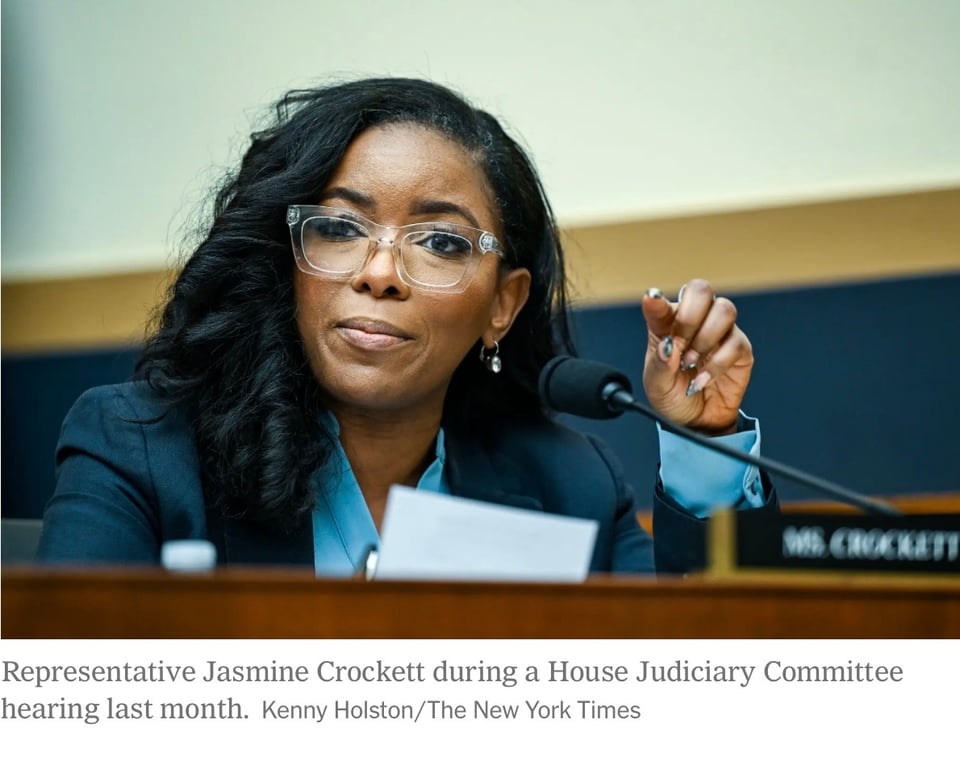
Texas Governor Spends Millions on Attack Ads Featuring Jasmine Crockett.
Gov. Greg Abbott hopes the ads featuring the Democrat will galvanize Republican voter turnout in November.
Gov. Greg Abbott of Texas, who is expected to easily win his Republican primary next week, is spending millions of dollars on ads featuring Representative Jasmine Crockett, one of two Democratic candidates for Senate.
Ms. Crockett is disliked by Republican primary voters, and putting her in a pair of ads during early voting was aimed at boosting turnout, Mr. Abbott’s political advisers said.
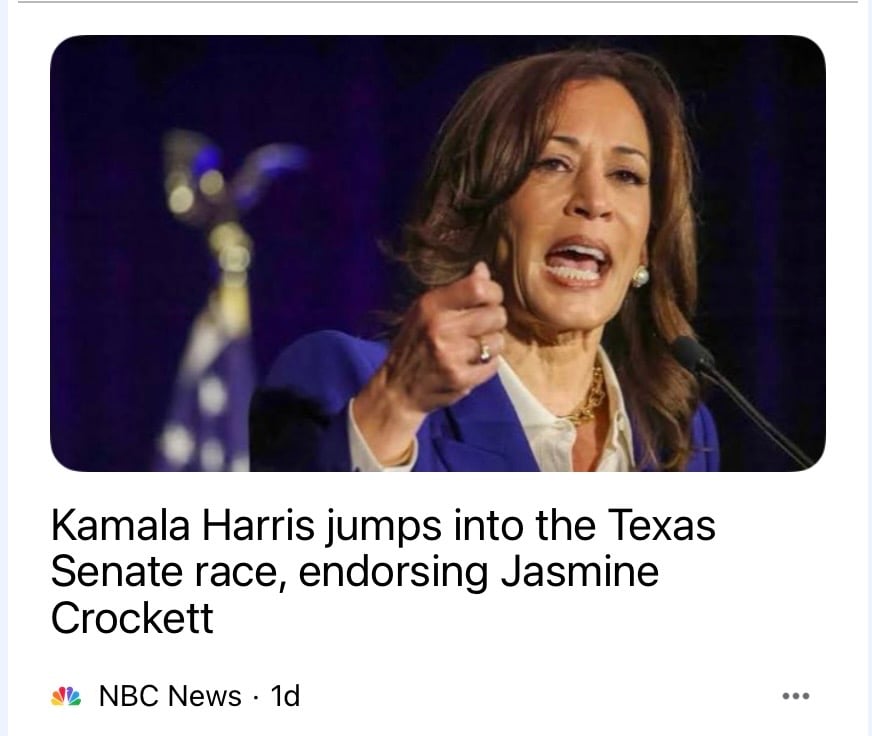
The ads place Ms. Crockett alongside prominent Democrats — including Senator Bernie Sanders of Vermont, Representative Alexandria Ocasio-Cortez of New York and Zohran Mamdani, the recently elected New York mayor — who are admired by the Democratic Party’s base and loathed by many Republicans. Another ad features the former vice president, Kamala Harris.
Dave Carney, Mr. Abbott’s top political strategist, said the ads carried a simple message: “You vote for us Republicans, or you get this: A.O.C. and Mamdani and Crockett.”
By portraying Ms. Crockett as one of the Democratic party’s most polarizing figures, the ads may elevate a candidate that Republicans want to face in the general election for U.S. Senate. The governor’s campaign has spent $3.4 million on the two ads, according to his campaign.
The ads appeared to echo a strategy employed by Democrats in 2022 where they boosted hard right Republicans in primary fights who they thought would alienate general election voters.
In that election cycle, the Democratic meddling worked best when a Republican primary candidate was running in a general election against a rival branded as a true Trump acolyte. Democrats ran ads that attacked the far-right Republican to elevate their profile with primary voters loyal to Mr. Trump on the theory they would fail with the broader electorate.
“Early on in this process, people thought, ‘Watch for Republicans to be promoting Jasmine Crockett and trying to push down James Talarico, because we would rather have Crockett in the general election,’” said Vinny Minchillo, a longtime Republican political consultant from the Dallas area who was not involved with the ads. “We would rather have Crockett in the general election.”
Ms. Crockett, a Dallas-area congresswoman known for her no-holds-barred confrontations with Republicans in Washington, is locked in a contested Democratic primary against a state representative, Mr. Talarico. The election is March 3.
Mr. Talarico said he has shaped his candidacy to appeal to voters fed up with partisan warfare. He wants to attract not only Democratic voters but Republicans displeased with the direction of the country under President Trump.
Mr. Carney said that he viewed Ms. Crockett as a more vulnerable general election candidate, though he added that Mr. Talarico had backed similarly progressive policies, albeit more quietly.
“He has the same voting record,” Mr. Carney said. “No one knows it. They will.”
One of Mr. Abbott’s ads, which ran this month, includes video of Ms. Crockett saying, “It is not a criminal violation to enter the country illegally.” Another ad running this week begins with images of Ms. Ocasio-Cortez, Mr. Sanders and Ms. Crockett, calling them “the new radical left.”
The ads provided a preview of how Texas Republicans could attack any Democrat running in general elections this fall.
Ms. Crockett, who has portrayed herself as the better choice against Republicans, has noticed the attention.
“They really are scared,” Ms. Crockett said at a campaign event in Houston on Friday. “This is why the governor is spending over a million dollars a week right now against me.” (New York Times)
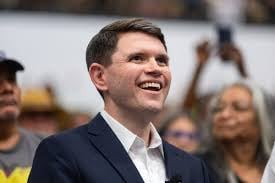
Rep. James Talarico
Who do you know in Texas? Call 3 people if you can. Get out the vote or vote your self if you live in the Lone Star State.
Iowa Democratic race for the Senate.
You may remember the 19 year old Zach Wahls who testified about his two moms when the Iowa legislature. He quickly became an important advocate for marriage equality.
He is now 34 years old, and a veteran State Senator in the Iowa legislature (elected first in 2019) with 3 years as Minority Leader on his resume.

He now leads in the Iowa race to be the Democratic nominee for the US Senate.
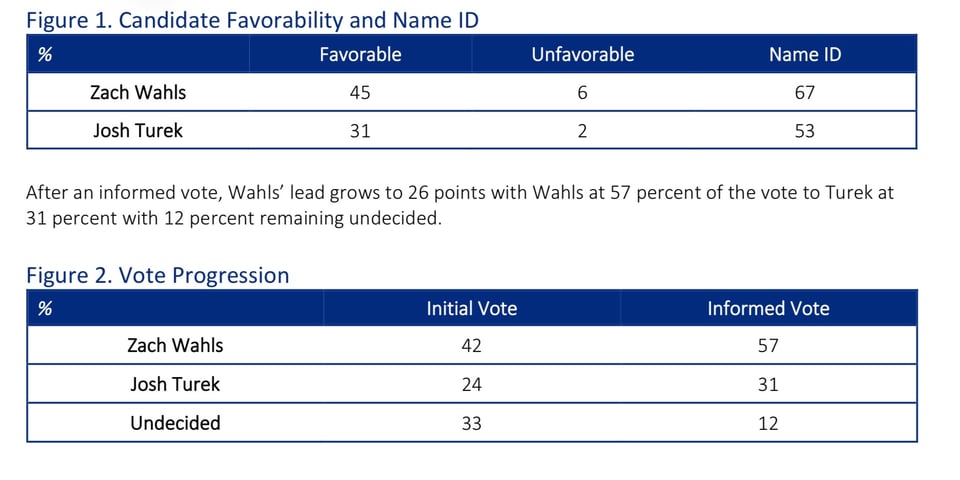
Zach Wahls leads by 18 points in the primary election for U.S.Senate.
State Senator Zach Wahls is well positioned to win a primary against State Representative Josh Turek.1
Wahls has stronger name identification (67 percent) than Turek (53 percent) and higher favorable ratings
(45 percent favorable Wahls, 31 percent favorable Turek). Wahls begins this race leading Turek by 18
points (42 percent to 24 percent) with 33 percent undecided.
Wahls’ lead holds throughout the state with suburban voters supporting Wahls by 18 points in the initial
vote (42 percent Wahls to 24 percent Turek) and by 16 points across rural Iowa (40 percent Wahls to 24
percent Turek).
The Iowa Primary is June 2nd. Contribute to Zach Wahls campaign here
Heated Race in New York that matters to me personally as well as politically.
My remarkable cousin is running to do the right things.
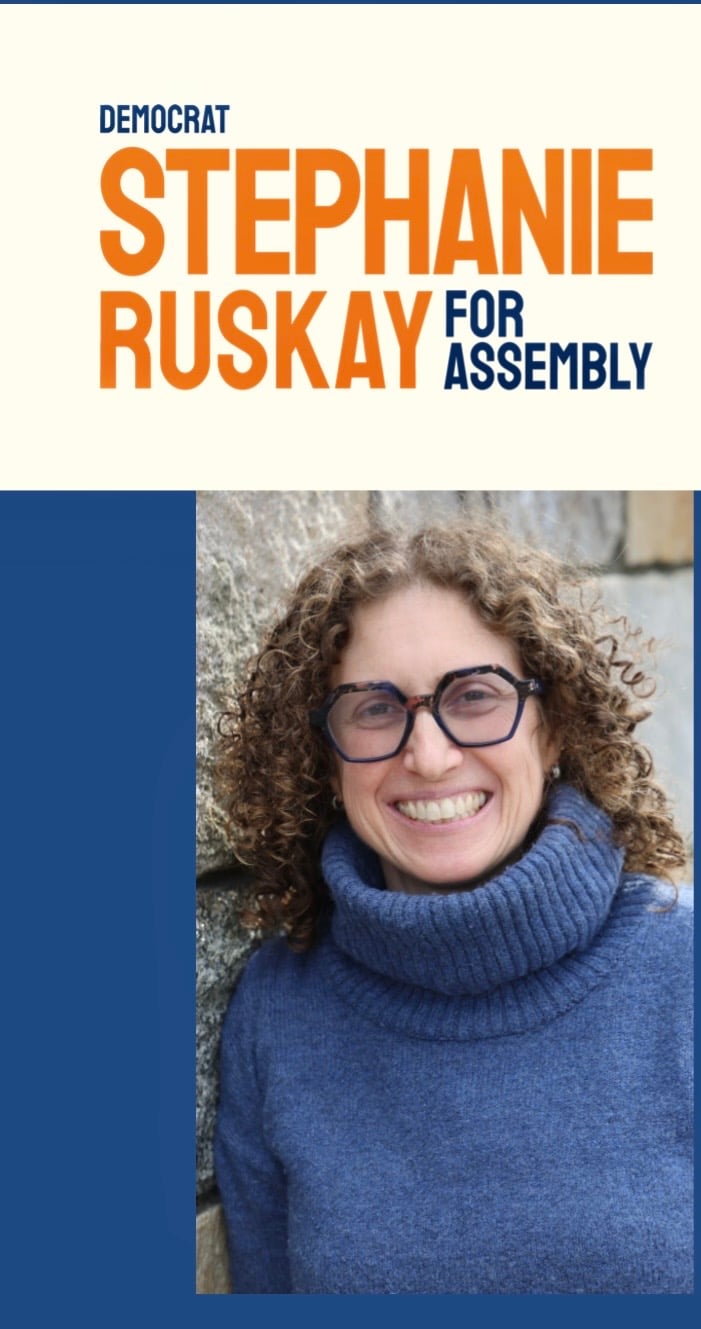
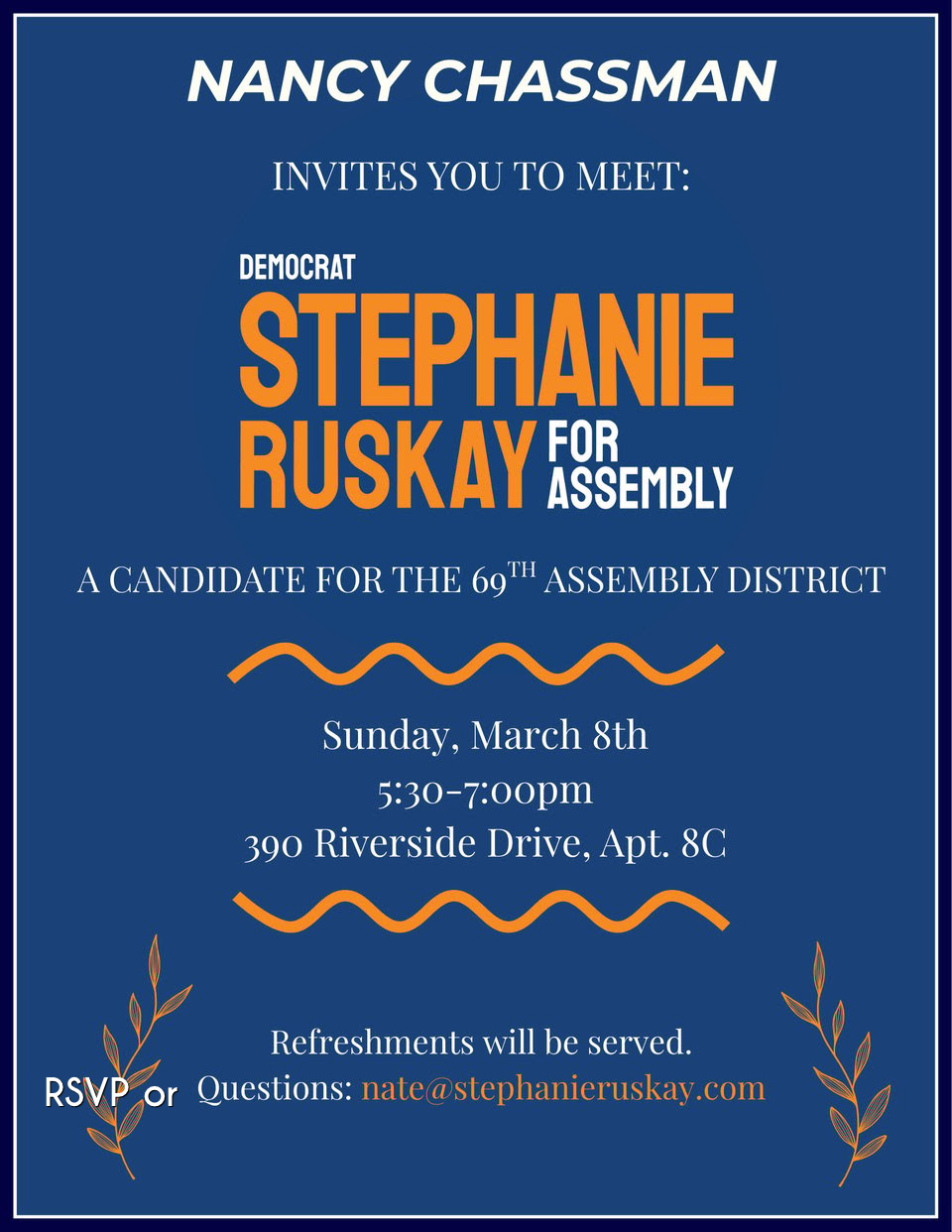
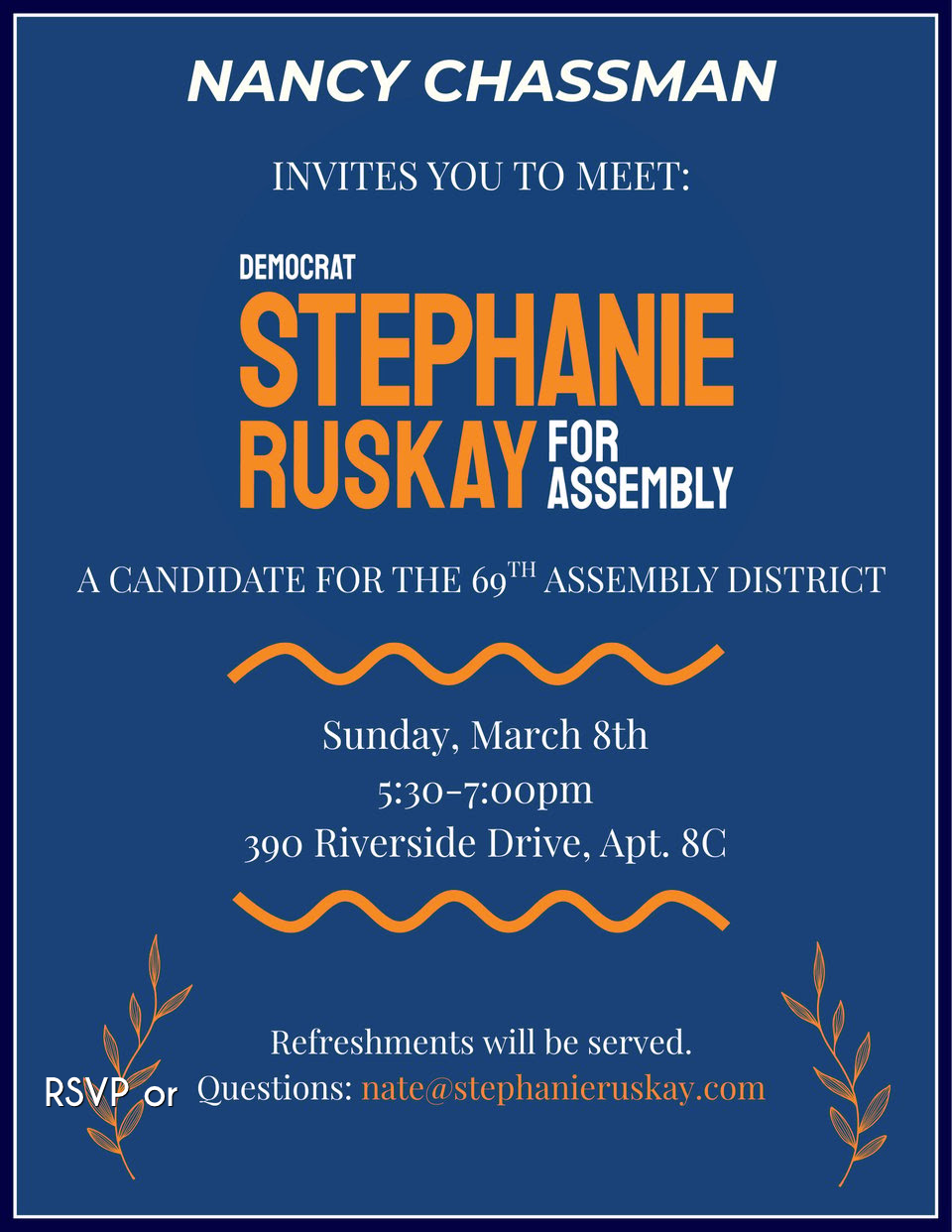
Just a reminder about a house party for Stephanie Ruskay running for the NYS Assembly in the 69th District of Manhattan covering the UWS and Morningside Heights.. Eve and I will be there, as will Stephanie.
Here are some of the endorsements Stephanie has received to date. The Primary is in June.

Donate to Stephanie through this link.
Or join us at the house party for Stephanie on Sunday, March 8. See above.☝️