Thursday, July 30, 2026. Annette's Roundup for Democracy.
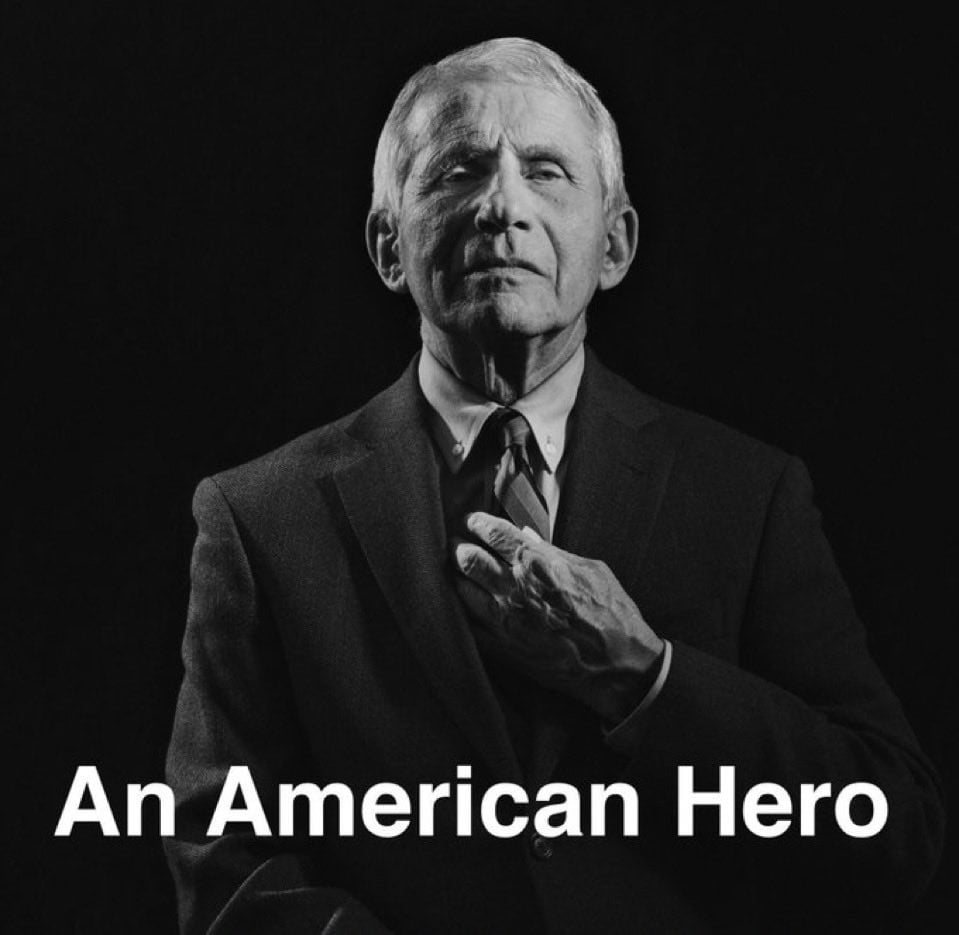
Do-nothing GOP Senators become active, about an issue resolved years ago, and about Dr. Fauci.
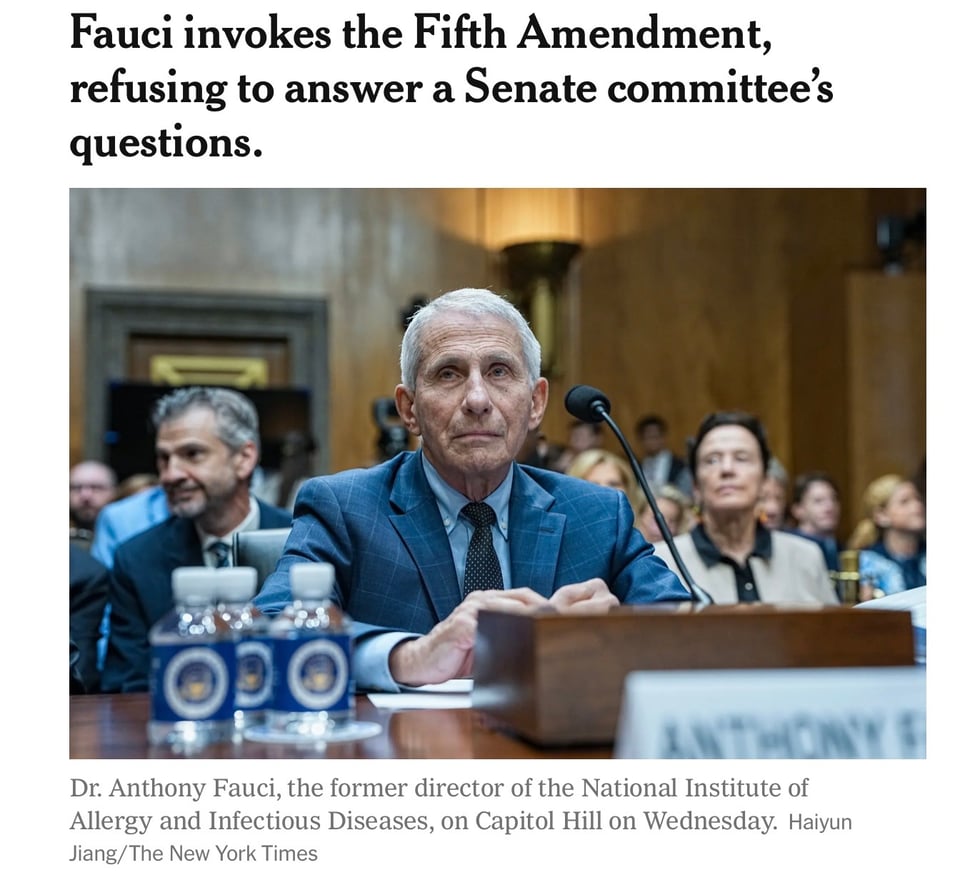
Below is the initial New York Times report on this hearing. 👇
Senator Rand Paul, Republican of Kentucky, has opened the hearing of the Senate Homeland Security Committee, repeating his longstanding, unsubstantiated claims that the coronavirus originated in a lab and that Fauci and other officials covered it up.
Ahead of the hearing, Paul released portions of Fauci’s diary that don’t prove the claims he’s making.
This hearing is taking place before the Senate Committee on Homeland Security and Governmental Affairs; Senator Paul Rand is the Republican chairman, and Senator Gary Peters is the top Democrat. Part of the committee’s job is to provide oversight for the workings of government agencies.
Senator Gary Peters, Democrat of Michigan, is now giving an opening statement on behalf of the minority, accusing the chairman, Rand Paul, and other Republicans of departing from the committee’s duty of bipartisan investigation in favor of a process intended to “legitimize a predetermined conclusion that was reached years ago.”
Dr. Anthony S. Fauci is speaking before a Senate committee, where he plans to accuse the panel’s chairman, Senator Rand Paul, of having an “unhinged obsession with me” before invoking his constitutional right under the Fifth Amendment not to incriminate himself.
Fauci said, referring to Paul, “The only conclusion I can reach is that the sole reason he is calling me before this committee is to get me to say something, anything, that could vindicate his repeated public pledges that I end up, in his words, quote ‘behind bars’ unquote.”
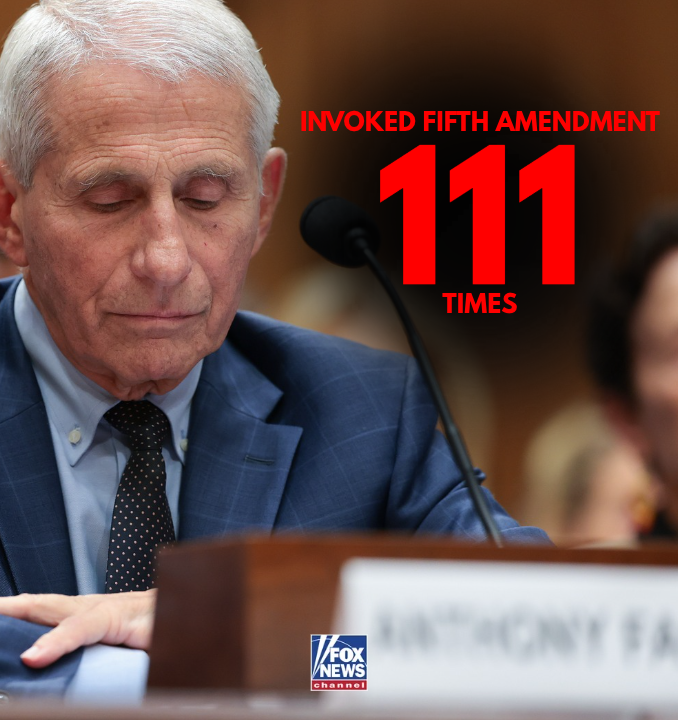
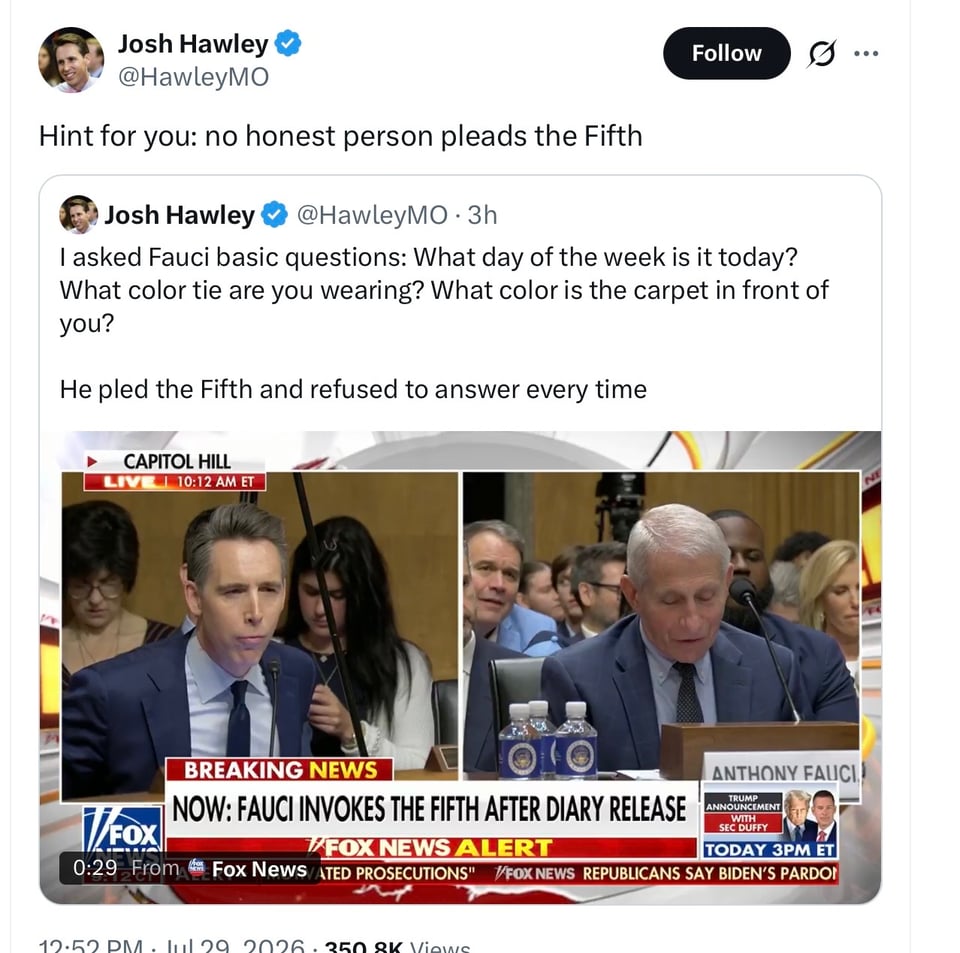
Challenged by Paul about National Institutes of Health funding for virus research in China, Fauci is repeatedly invoking his Fifth Amendment rights not to answer questions.
Fauci is reading a prepared response to each question from Paul: “On the advice of counsel, I respectfully decline to answer based upon my rights under the Fifth Amendment of the Constitution.”
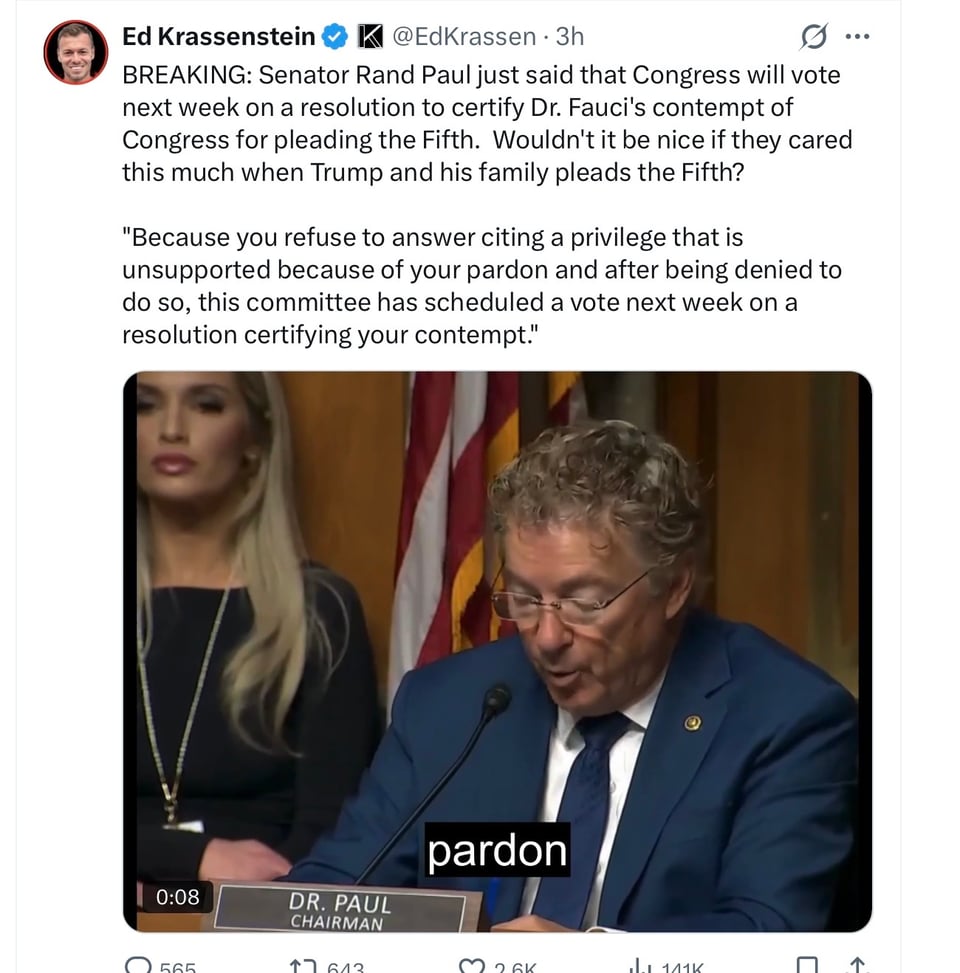
Paul had suggested before that the pardon Fauci received from President Biden in his final hours in office might not fully protect him. At the same time, he’s now suggesting that it’s unreasonable for Fauci to take the Fifth Amendment because he is protected by the pardon.
In the absence of responses from Fauci, senators are using the hearing as a platform to reiterate longstanding positions — not unusual in congressional hearings, even when the witnesses do respond.
Republicans are repeating false or exaggerated claims about vaccine side effects and treatments, like ivermectin, that weren’t shown to be effective against Covid, and criticizing school closures. Democrats are criticizing the Trump administration’s handling of science and public health, citing rising measles cases and the cyclosporiasis outbreak.
To advance his case that the coronavirus leaked from a lab, Paul has repeatedly suggested that the virus has a feature not found in nature: a furin cleavage site, which helps the virus get inside cells. Scientists were worried about that feature in the very early days of the pandemic.
But as they studied it more closely, they found that furin cleavage sites are in fact common in other coronaviruses, even if they had not been detected in the closest known relatives of the pandemic virus. Scientists who have scrutinized the furin cleavage site have said it contains many features showing that it had not been engineered.
Lawyer removed: After Mr. Paul warned Dr. Fauci that there would be “repercussions” for his refusal to testify, Dr. Fauci’s lawyer, David Schertler, tried to speak on his client’s behalf. “Another word and you’re gone,” Mr. Paul warned him. Moments later, after Mr. Schertler spoke out again, the chairman ordered a security officer to escort him from the hearing room.
(part of continuing coverage from the New York Times)
One more thing.
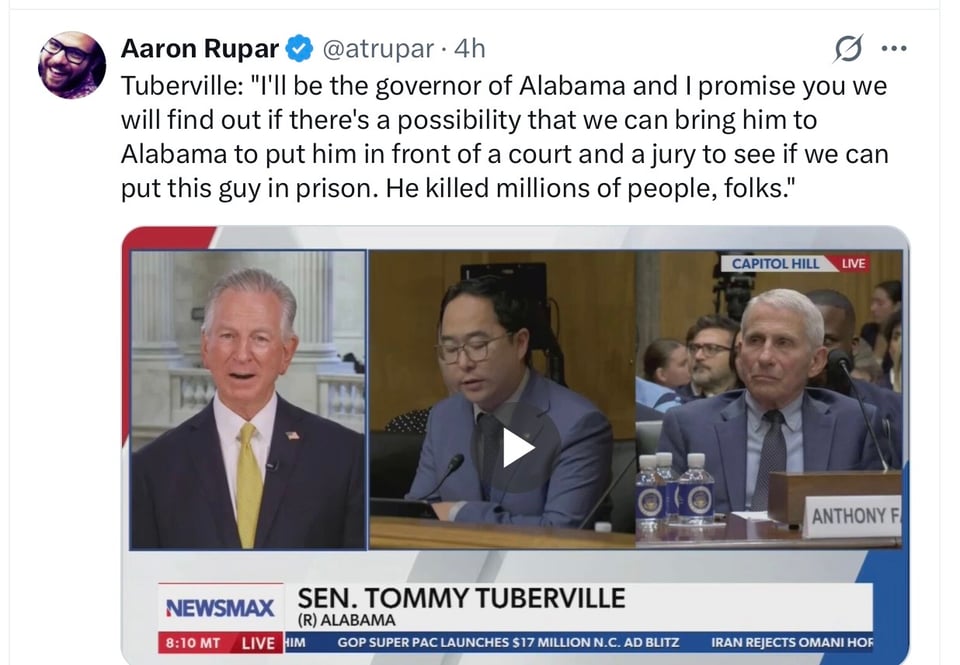
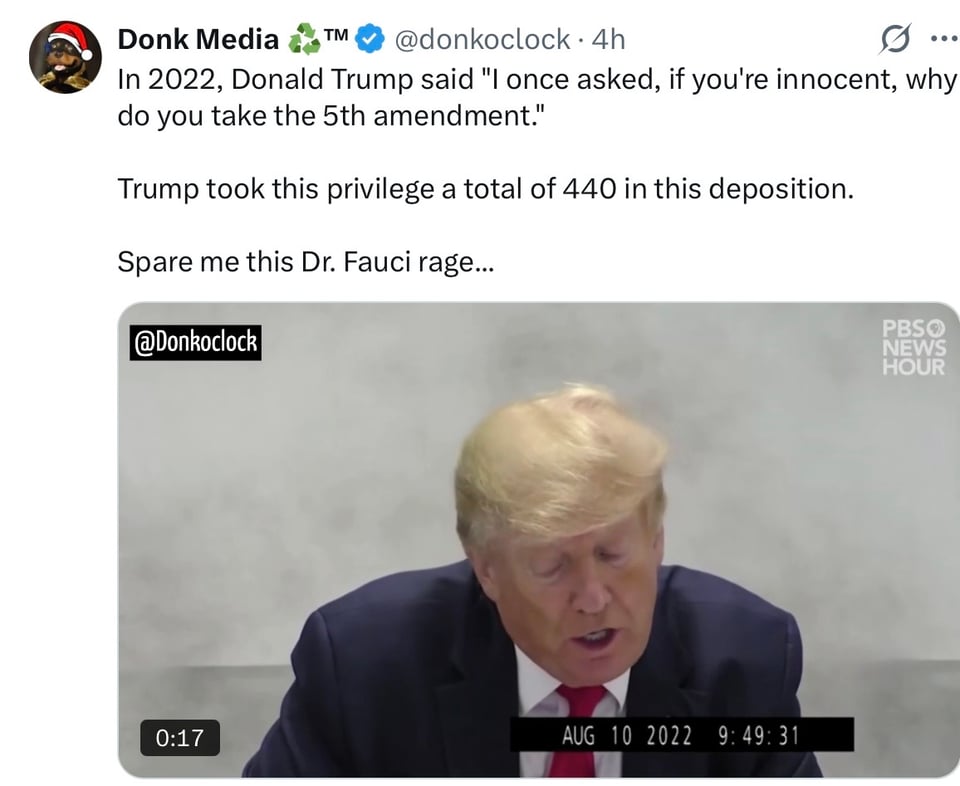
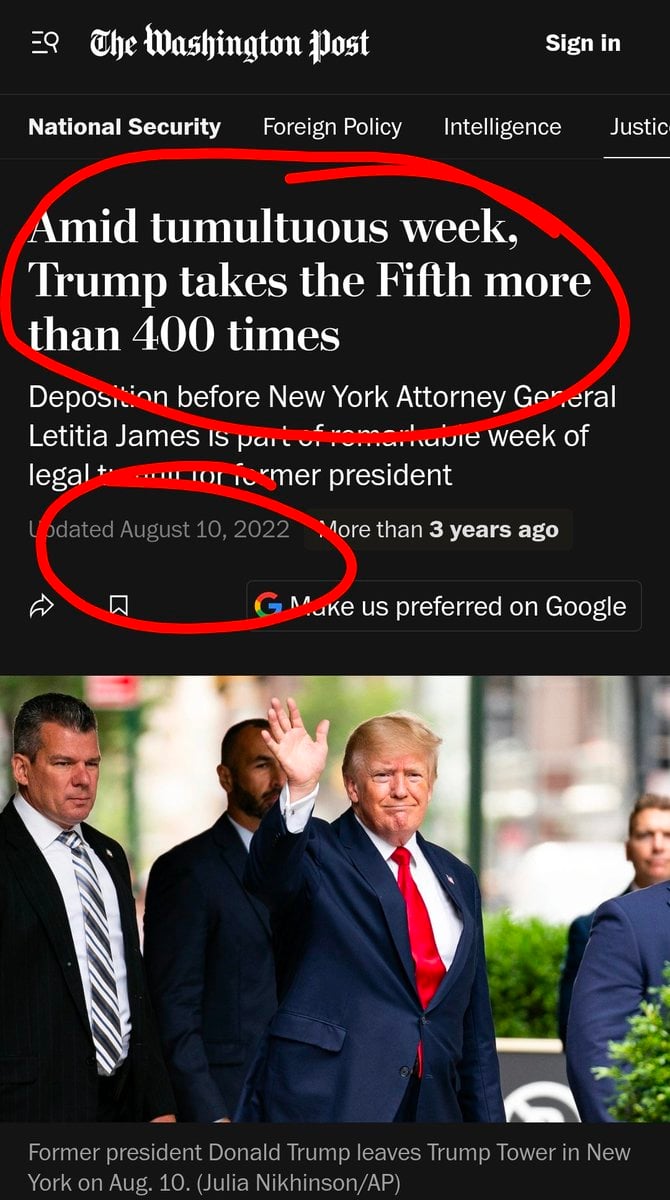
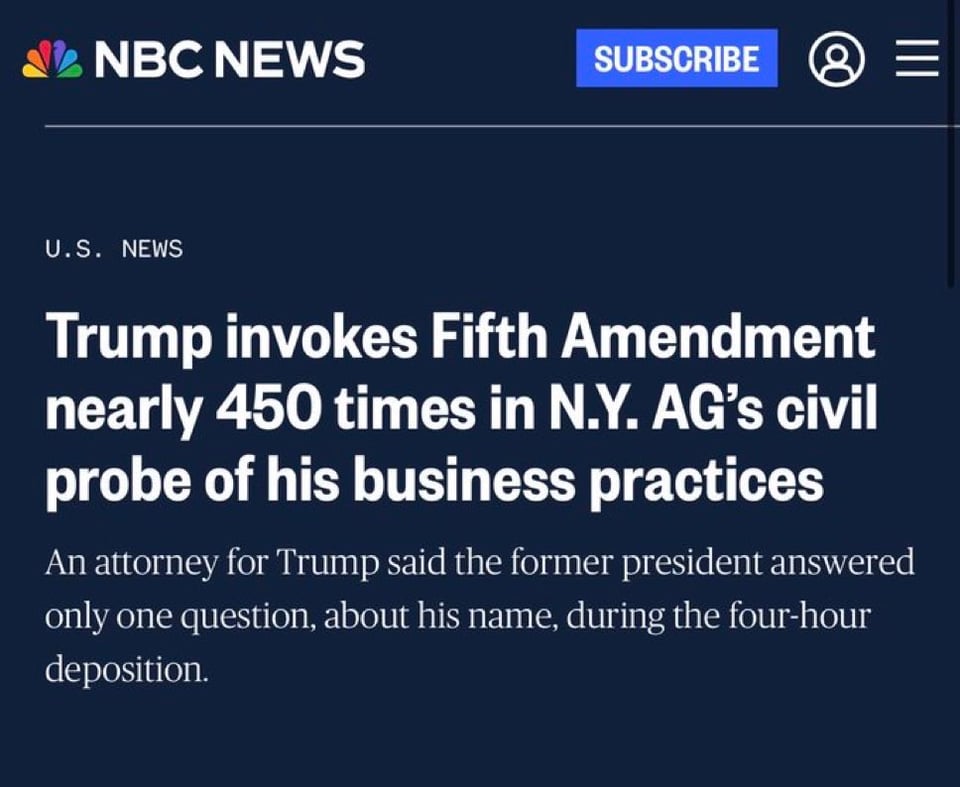
Trump knows no limits when seeking vengeance and attacking those he sees as opponents.
Trump overrode his own agencies to deny four Democratic disaster requests
President Donald Trump overruled his own agencies when he denied disaster aid for four Democratic-led states this month.
Emails between state and federal officials obtained by POLITICO along with more than 150 pages of documents submitted to FEMA by three states — New Jersey, Massachusetts and Rhode Island — provide new details about Trump’s low rate of approving disaster aid for his political adversaries. He also denied a request by New York after administration officials verified that it had met federal standards for approval, according to state officials.
Trump’s rejections came after regional offices of the Federal Emergency Management Agency and NOAA determined that the states met government thresholds for receiving aid following a record-breaking snowstorm in February.
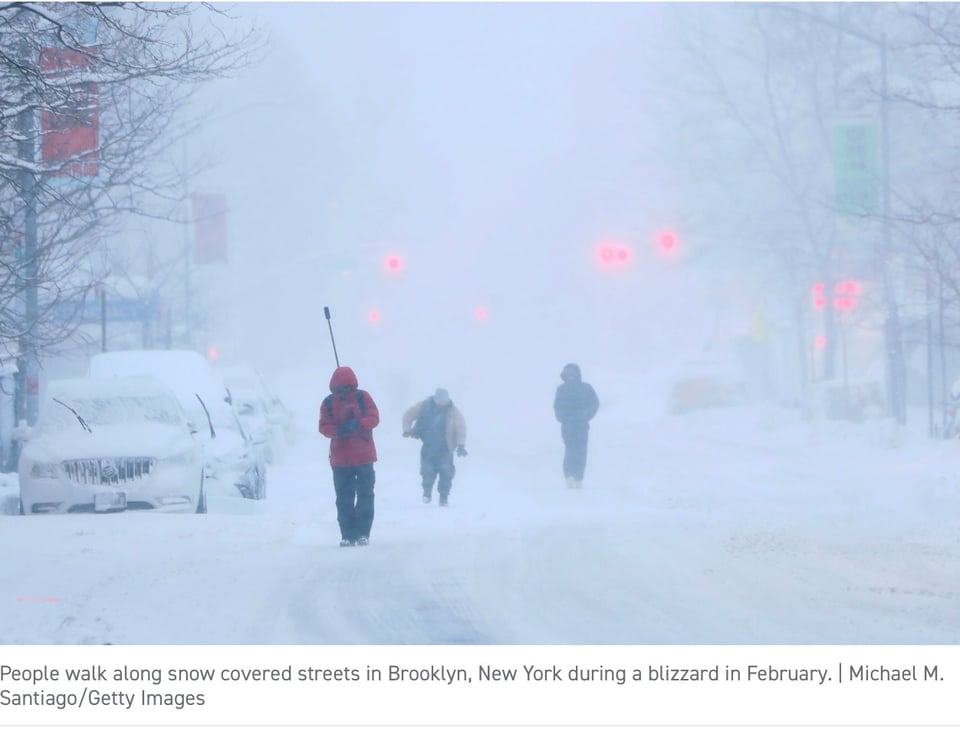
“The Blizzard of 2026 certainly achieved a pinnacle ranking in the memories of those who experienced it and climatologically in the historical rankings of snowstorms,” said a NOAA report confirming Rhode Island met the requirement for disaster aid.
Presidents retain sole authority over granting federal disaster aid to states, but it’s highly unusual to deny a governor’s request after FEMA field offices have verified that damage estimates exceeded preestablished levels, according to a former agency official who worked under Republican and Democratic administrations.
“I can’t think of a time a declaration was denied” for a state that met FEMA and NOAA standards, said the former FEMA official who was granted anonymity to speak about internal decision making.
The emails and documents, which haven’t previously been reported, shed new light on Trump’s decisions to reject an overwhelming number of requests for disaster aid from Democratic-led states, even as he has approved nearly 90 percent of requests from states that are governed by members of his own party. The revelations also offer a fuller picture of Trump’s tenure over the most partisan distribution of FEMA aid since the agency was created in 1979.
Trump’s recent rejections involving snow diverge from the actions of other presidents, including Trump in his first term, who routinely approved similar requests from governors of opposing parties.
Presidents since George W. Bush approved all 69 state requests for snow assistance that met FEMA standards except for a 2016 request from New Mexico, which was being investigated for mishandling FEMA funds, according to a POLITICO analysis of agency records.
The four states sought $227 million in aid altogether after the paralyzing February storm dumped record snowfall over areas of the East Coast, leading to unprecedented snow-removal costs. POLITICO obtained the emails and state documents through open records requests submitted to New Jersey, Rhode Island and Massachusetts. New York officials said federal agencies also validated their request for aid, but POLITICO could not independently confirm that.
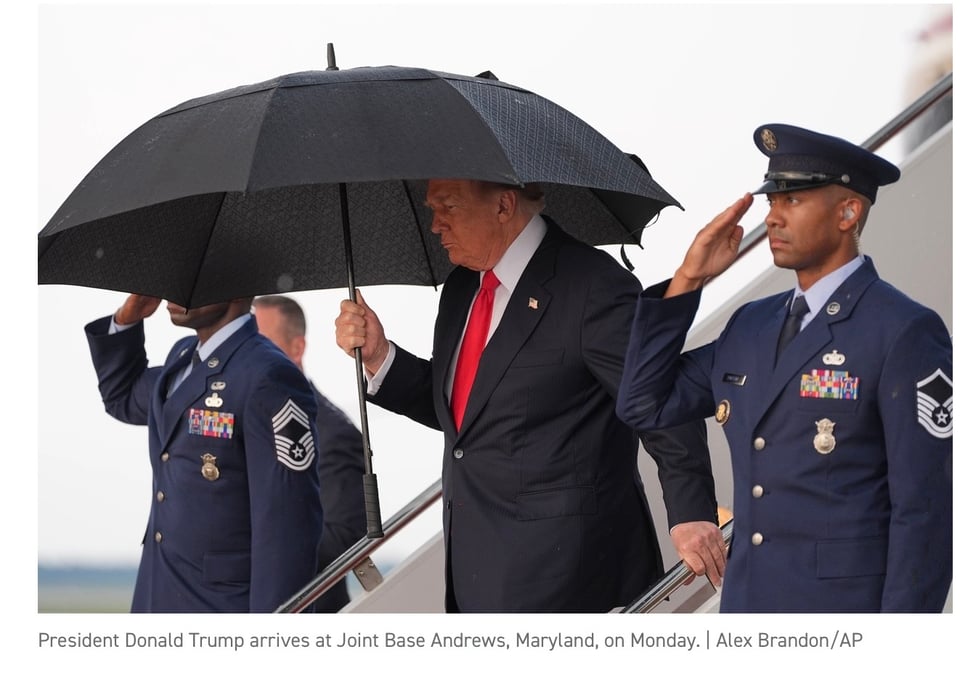
The Trump administration defended its denials. Neither FEMA or a White House spokesperson answered questions about why the states’ requests were rejected after meeting federal thresholds that historically have triggered the disbursement of aid.
“There is no politicization to the President’s decisions on disaster relief,” White House spokesperson Abigail Jackson said in a statement. Trump handles disaster requests “with great care” to ensure state aid is used “to supplement — not substitute, their obligation to respond to and recover from disasters.”
FEMA has paid roughly $850 million in snow assistance since 1999. Eighty-two percent has gone to states that are now led by Democrats — having a governor and two senators from the Democratic Party. Six percent went to Republican-led states.
The disparity is largely the result of Democrats holding power in snowy regions where aid is requested such as New England and the mid-Atlantic.
States met federal guidelines — but were still rejected.
Snow assistance was targeted for elimination last year in a memo by FEMA leadership as a way to reduce spending. Congress pushed back on that idea — a signal the administration may have disregarded.
“If the federal government is paying for regular operations like snow removal, what next? Garbage removal?” a FEMA spokesperson said in a statement about the recent denials. “The federal government’s role is not to fund routine functions.”
Officials in Rhode Island and Massachusetts did not respond to requests for comment.
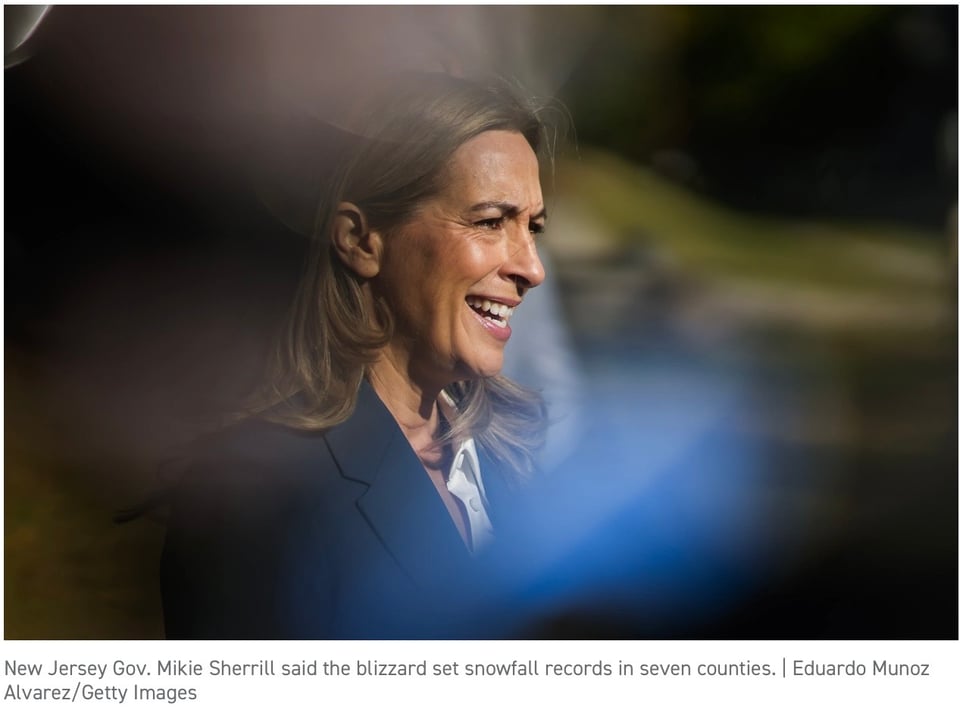
“Without that aid, our local governments will be stuck with the costs of an unprecedented snowstorm that didn’t care about political boundaries,” New Jersey Gov. Mikie Sherrill said in a statement to POLITICO.
Matt Janiszewski, a spokesperson for the New York State Division of Homeland Security and Emergency Services, said New York Gov. Kathy Hochul believes “disaster relief should not be political.”
“New York State exceeded both the financial damages and snowfall thresholds necessary to receive a Major Disaster Declaration for February’s blizzard, and we will be appealing the decision,” Janiszewski said.
A 1997 federal regulation aims to prevent FEMA from funding cleanup after routine snowstorms by making assistance available “only for cases of record or near record snowstorms.” Snow depth is to be determined by “official government records.”
The blizzard that slammed the East Coast in late February broke historical records in each of the three states. For example, it dropped 37.9 inches in 24 hours on Rhode Island, according to the National Weather Service, an arm of NOAA whose data is used by FEMA field offices to help verify state damage estimates.
Other regulations require FEMA to assess disaster damage jointly with the state requesting the money. The estimate is then used to make recommendations to the president about whether disaster aid is warranted. FEMA sets a cost threshold for each state and typically suggests approving disaster aid when the level is met or surpassed.
“Simply having record or near-record snowfall does not automatically qualify a state or community for federal aid if the overall impact and damages do not meet the necessary criteria,” FEMA said in its statement.
On April 3, FEMA’s New England regional office approved an estimate showing that Rhode Island easily met its cost threshold, according to the emails.
“FEMA has completed validations for the Rhode Island February 22-23 Severe Winter Storm Preliminary Damage Assessment,” Alex Johnston, a FEMA emergency management specialist, wrote to Lawrence Macedo, a senior official with the state’s emergency management agency.
The “total validated amount,” Johnston wrote, was $19,305,057.13 — the exact figure Gov. Dan McKee had included in his April 7 letter to Trump requesting disaster aid.
The damage figure is nine times higher than FEMA’s $2.1 million cost threshold for Rhode Island.
McKee told Trump that snow-removal costs “exhausted available resources, including personnel, equipment, and budgeted emergency funds.” Quoting federal law, he added, “Effective response and recovery exceed the capabilities of the State and affected local governments.”
McKee also attached 33 pages of documentation by NOAA showing that the storm shattered snowfall records in each of the state’s five counties, surpassing the regulatory snowfall requirement.
In May, as Trump considered McKee’s request, NOAA published a news release headlined, “Rhode Island Receives New 24-Hour State Snowfall Record.”
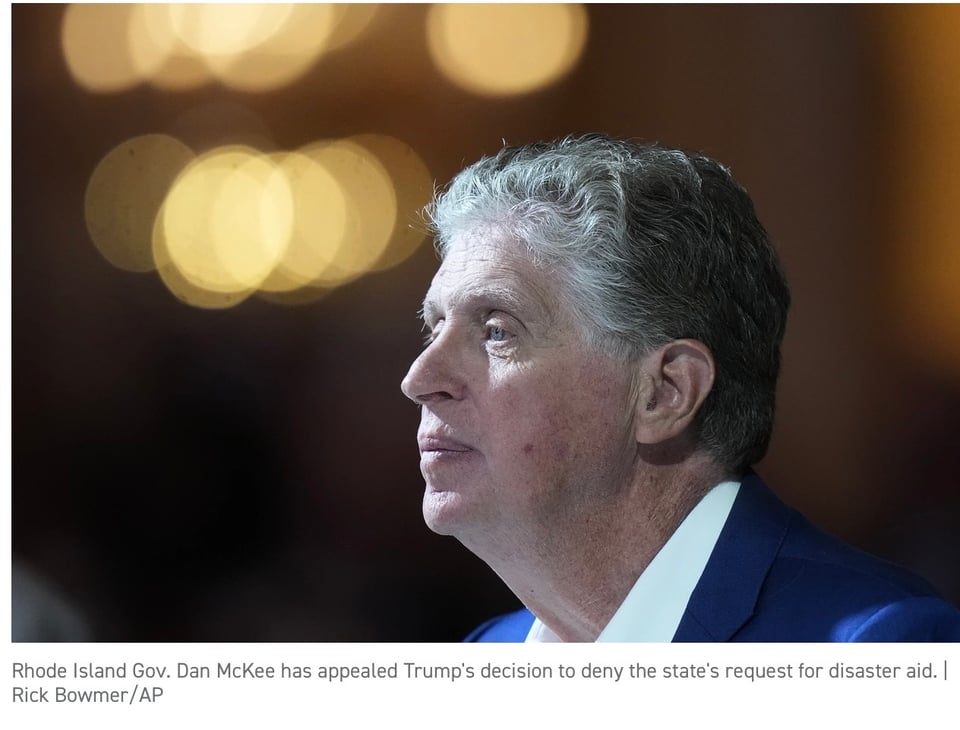
“Another case of the White House putting politics ahead of people,” McKee said after Trump rejected his request. McKee appealed the decision.
Other governors sent Trump similar evidence supporting their aid requests.
Massachusetts Gov. Maura Healey included an eight-page NOAA report showing snowfall records were set in three of the state’s 14 counties. She also sent a “validated Joint Preliminary Damage Assessment” by the state and FEMA showing $45 million in snowstorm-related costs — mostly for snow removal.
FEMA’s cost threshold for Massachusetts is $13.6 million.
Sherrill attached a 16-page NOAA report showing snowfall records in seven New Jersey counties. A 12-page spreadsheet developed by the state and FEMA documented $84.4 million in costs — mostly for snow removal.
FEMA’s cost threshold for New Jersey is $18 million.
The federal agency did not respond to questions about whether it disputed the information it received from the states.
Hochul, a Democrat, also requested snow assistance for the February storm. The state said FEMA and New York validated $79 million in snowstorm costs — double the threshold for the state. The request was denied.
‘Truly extraordinary events’
The recent requests mirror appeals for snow assistance during previous administrations.
When Interior Secretary Doug Burgum was North Dakota’s Republican governor and sought snow assistance after a 2022 storm, he included a NOAA report documenting snowfall records and a spreadsheet showing $1.7 million in storm damage — just above the state’s FEMA threshold. Then-President Joe Biden approved Burgum’s request in 23 days.
FEMA is now suggesting that it would be more difficult for states to receive federal help after snowstorms, even if they break records.
“Federal assistance is reserved for truly extraordinary events that overwhelm local and state capabilities,” FEMA said in its statement. “States that regularly experience snow should plan and handle these activities as part of their regular operations.”
FEMA noted that Trump approved snow assistance last month for the Mashpee Wampanoag tribe, which it said “is in Massachusetts, a ‘blue’ state.” The federally recognized tribe is a sovereign nation.
Erica Bornemann, who ran Vermont Emergency Management from 2017 to 2023, said federal assistance helps states prioritize snow removal — and potentially save lives. FEMA reimburses states for 75 percent of eligible costs.
“The basis of providing support for snow removal is because you’re removing snow that’s causing a health and safety hazard to the public,” Bornemann said, adding that snowstorms can strand drivers, block roads and cut off access to hospitals.
In a memo to the White House Office of Management and Budget last year, FEMA’s top political appointee at the time said Trump could “deny major disaster declarations for snowstorms” to save federal dollars. The memo, obtained by POLITICO, listed four other policy changes that would cut FEMA spending, none of which are likely to have a partisan tilt.
The author, Cameron Hamilton, then-FEMA’s acting administrator, was fired after clashing with his boss, then-Homeland Security Secretary Kristi Noem, over other issues.
But the memo by Hamilton, whom Trump recently nominated to be FEMA’s permanent administrator, shows the difficulty of eliminating entrenched federal aid programs.
The Senate Appropriations Committee said in a report last year that it “reaffirms Congress’ intent … that snowstorms shall be eligible for Federal disaster relief.”
Chair Susan Collins, a Republican, is from Maine, which has received roughly $20 million in FEMA snow assistance. (Politico)
Media and press that serve Authoritarians don’t serve the rest of us.
Learn more about Elon Musk. Much more.
Why Do We Tolerate Elon Musk’s Racist Commentary?
“The Turner Diaries” is a work of white supremacist agitprop. It purports to be the diary of a neo-Nazi militant, Earl Turner, who is working to overthrow the United States government — or as the book calls it, “the System” — through a group called “the Organization.” Turner castigates “the System” for promoting integration, encouraging nonwhite immigration and placing Jewish people, Black Americans and other minorities in positions of authority over whites.
Among other atrocities, the novel describes nuclear attacks on predominantly Black cities, a Holocaust of Jewish Americans, the total ethnic cleansing of California, the subjugation of women and the “Day of the Rope” — a mass public lynching of white people deemed “race traitors” for their relationships with nonwhites. The book’s epilogue describes a future after the “Great Revolution” in which the former United States is now an all-white, utopian garrison state led by the Organization, which went on to export its revolution and exterminate nonwhites worldwide.
The white power movement in the United States, notes the historian Augusta Dell’Omo in “Saving Apartheid: White Internationalism at the End of the Cold War,” “looked to white southern Africa for inspiration as it planned for the coming ‘race war.’” This apocalyptic fantasy of racial conflict in places such as Zimbabwe and South Africa shaped “The Turner Diaries.” And in turn the novel, first serialized in the pages of a white nationalist periodical in 1975 and then published as a stand-alone volume in 1978, became a touchstone for the American and global far right.
“The Order,” a white supremacist terrorist group responsible for three killings, including the murder of the Denver talk-radio host Alan Berg, took its name from the book. And Timothy McVeigh, who bombed the Murrah Federal Building in Oklahoma City, killing 168 people, carried passages from the book on his person and once sold the book at gun shows.
The ideas, images and language of “The Turner Diaries” have long since entered the gestalt of far-right ideology. The book hovers there even when it isn’t mentioned. In his manifesto, for example, Dylann Roof — who murdered nine people at the Mother Emanuel Church in Charleston, S.C. — frames himself as a martyr and calls on white Americans to fight a race war against Black people.
Today, you don’t have to look far or dig deep to see the ambient influence of “The Turner Diaries” on the far right. You need just to spend a little time in the online world of the richest man on the planet, Elon Musk (although to be clear there is no direct evidence that Musk has read the book).
The Musk of the mainstream media is an enthusiastic, if awkward, technologist, industrialist and would-be government reformer, as seen in his now-defunct Department of Government Efficiency. But Musk spends much of his time on X, his social media website, where he amplifies far-right accounts and shares his own white nationalist, anti-immigrant politics for all the world to see.
Over the past month in particular, he has adopted the imagery of a recent film, “Citizen Vigilante,” in which the actor Armie Hammer spends the run time playing a Charles Bronson-esque character who targets alleged criminals, framed mostly as Arab and African migrants. Musk uses that imagery to state his views about what must be done to save Western civilization.
“Yes,” replied Musk to an image of a gun-toting Hammer clad in black with the caption, “First the traitors then the invaders.” He also shared a post from a different user who explained that the point of “Citizen Vigilante,” in which the Hammer character “spends the first half of the movie murdering white people not migrants,” is that you must “always hang a traitor before you hang an enemy.” Musk repeated this several times, including in a post that simply said, “Traitors before invaders.”
Last week, Musk again posted that we must “Deal with traitors before invaders” and then said a few days later that “Anyone who opposes remigration is a traitor.”
“Remigration” is the call, from far-right European political parties, to forcibly remove nonwhite citizens to their supposed countries of origin, regardless of whether they are immigrants or native-born. It is essentially a form of ethnic cleansing and it is envisioned as a response to the supposed “Great Replacement” of white Europeans with nonwhites, an idea originating from a different work of far-right fiction, “The Camp of the Saints,” published in 1973.
As Musk sees it, opponents of remigration are traitors to “the West.” And as “traitors” their proper fate, according to the logic of his posts, is to be killed as punishment for their role in the demographic transformation of majority-white nations and, presumably, as a warning to those who might pollute the national bloodstream by welcoming nonwhites into their lives and into the country.
Musk’s preoccupation with demographic “traitors” flows directly from his obsession with population collapse, which he frames in terms of shrinking European and white American birthrates. “White people are a rapidly diminishing minority of the global population,” Musk wrote in September 2025. “Low birth rate,” he later said, “is the number one threat to the West followed closely by migration. There will be no West if this continues.”
One might even see his destruction of the United States Agency for International Development — responsible, so far, for an estimated 700,000 deaths worldwide — as consistent with his concern with falling white birthrates relative to those in places such as sub-Saharan Africa, where U.S.A.I.D. was active. After all, one way to secure a future for Western children, in this zero-sum view of the world, would be to starve African ones.
Musk, it should be said, insists that no one has died because of his cuts.
In a recent interview with The Economist, Musk denied that he was a racist, even as he defended his far-right views of immigration. “If you have a large and growing, rapidly growing group of people whose beliefs are antithetical to Western beliefs, at some point, there will be a reckoning,” he said.
But those views, as we see, are indistinguishable from what you would find in “The Turner Diaries.” With hundreds of millions of followers on a platform he personally controls, Musk stands as the most prominent purveyor of far-right and ultranationalistic rhetoric in the world. This is the same Musk who is also busy leveraging his vast wealth to shape that same world in his own image.
And what is that image?
As Quinn Slobodian and Ben Tarnoff show in their book “Muskism: A Guide for the Perplexed,” an important part of Musk’s vision is to see the world as a compound, where “the horizons of humankind” are shrunk “into the defense of white fertility.” This in turn is tied to a larger effort to liberate humanity from the “woke mind virus” that Musk sees as a self-destructive tendency responsible for the “empathy” that has led Western nations to open their societies to others.
This too is little more than a restatement of themes and ideas found in “The Turner Diaries,” where the titular character believes that whites have been corrupted by a “Jewish-liberal-democratic-egalitarian plague.” Slobodian and Tarnoff observe that these views are also downstream of Musk’s upbringing in South Africa, where apartheid leaders fretted over birthrates and the future of white society.
Musk’s virulent racism and vicious, disturbing views are no secret. He does not hide them. They sit in plain view, easily accessible on the social media website he owns, where he does everything he can to promote similarly far-right and white supremacist ideas.
If there is a question to ask, then, it is this: Why does Musk get a pass? Why do politicians, journalists and commentators treat his far-right racist radicalism as a sideshow rather than the core of his political, ideological and industrial project, seen in everything from his deep support for Donald Trump in the United States and Restore Britain in Britain to his decision to construct a massive pollution-generating data center in predominantly Black Memphis?
Musk spends a large part of his free time fomenting violence and spreading the same hateful ideology that motivated some of the deadliest shootings and attacks ever to happen on American soil. It is that fact, and not the cars he builds or the rockets he launches, that ought to define his place in public life. (JAMELLE BOUIE, columnist, New York Times)

