Thursday, January 22, 2026. Annette’s Roundup for Democracy.
Davos

Ukraine
The Greenland crisis shouldn’t overshadow Ukraine, the NATO chief says.
Talk of President Trump’s designs on Greenland filled the corridors at the annual World Economic Forum in Davos, Switzerland, but Europe’s real security problem now is Ukraine and its fight against Russian aggression, Mark Rutte, the secretary general of NATO, said on Wednesday.
“The risk here is that we focus, of course, on Greenland, because we have to make sure that issue gets solved in an amicable way,” Mr. Rutte said on a panel in Davos. “But the main issue is not Greenland. Now, the main issue is Ukraine. I’m also a little bit worried that we might drop the ball focusing so much on these other issues.”
Mr. Rutte cautioned against complacency on Ukraine, as peace efforts continue and the European Union promises 90 billion euros ($105 billion) in funding to Kyiv over the next two years. The Russians are losing 1,000 troops a day, he said, but escalating the fight in a war that is critical for regional and U.S. security.
“Ukraine should be our No. 1 priority, and then we can discuss all the issues, including Greenland,” he said.
Ukraine, he said, was running out of interceptors to shoot down Russian missiles, and he urged European countries to step up their military industries to meet Ukraine’s needs and NATO’s own targets.
President Karol Nawrocki of Poland, which has been one of NATO’s biggest backers of Ukraine, agreed with Mr. Rutte. Speaking on the same panel, he said the war in Ukraine, on Poland’s border, remained “the main problem in Europe nowadays.”
“I’m not afraid,” Mr. Nawrocki said, “that the situation around the Greenland means that we forget about Ukraine.”
There were reports that Mr. Trump’s special envoy, Steve Witkoff, would travel to Russia to meet with President Vladimir V. Putin on Thursday. Mr. Witkoff mentioned the possibility in an interview with CNBC, and Tass, the Russian state news agency, quoted a Kremlin official as saying that the meeting was on Mr. Putin’s schedule.
It would be their first meeting in nearly two months. During that time, U.S. and Ukrainian officials, with European advice, have been preparing a peace proposal to present to Mr. Putin. But Russian public statements about the proposed peace plan have been largely negative.
Trump’s answers on Ukraine at Davis. (Source. NEw York Times)
“If they don’t get this done, they are stupid,” Trump says of President Volodymyr Zelensky of Ukraine and President Vladimir V. Putin of Russia reaching a peace deal. Trump, who is now speaking with Borge Brende, the World Economic Forum president, then caveats, “I don’t want to insult anyone,” prompting one person in the crowd to cackle.
Trump’s comments that he would meet on Wednesday with Zelensky — and that the Ukrainian president might already be in the audience at Davos — raised eyebrows in Kyiv. Zelensky had said that he was unsure whether he would travel to Switzerland, with an energy crisis caused by Russian attacks taking priority. When asked about Zelensky’s whereabouts in light of Trump’s remarks, Dmytro Lytvn, an adviser to the president, said Zelensky was in Kyiv. It is unclear whether he might travel to Davos on Thursday.
Trump Embarrasses All of America in Slurred, Disjointed Davos Speech.
Donald Trump gave a terrible speech to a dead silent room at the World Economic Forum.
President Trump delivered yet another rambling, long-winded speech Wednesday at the World Economic Forum in Davos, using the massive world stage to rail against windmills, complain for the umpteenth time about how the 2020 election was rigged, reaffirm his desire to seize Greenland from Denmark, and take credit for every good thing in the world.
The room was dead silent virtually the entire time.
“Certain places in Europe are not even recognizable frankly, anymore. They’re not recognizable. And we can argue about it, but there’s no argument,” Trump said early in his speech to the room full of Europeans. “Friends come back from different places—I don’t wanna insult anybody—and say ‘I don’t recognize it.’ And that’s not in a positive way.… It’s not heading in the right direction.”
The rhetoric aligned seamlessly with the deeply racist, anti-immigrant sentiments that the European right is pushing with his support.
Trump also took the time to hit on one of his favorite punching bags: windmills.
“There are windmills all over Europe. There are windmills all over the place. And they are losers,” Trump said, seemingly talking about the windmills personally. “One thing I’ve noticed is that the more windmills a country has, the more money that country loses, and the worse that country is doing. China makes almost all of the windmills, and yet I haven’t been able to find any wind farms in China.”
This is not true, China has multiple windmill farms.
“Did you ever think of that? They put up a couple big wind farms, but they don’t use them, they just put them up to show people what they could look like,” he continued. “They don’t spin, they don’t do anything.”
Trump then of course got to Greenland, accidentally mixing it up with Iceland for nearly the entire time he spoke about it.
“Until the last few days, when I told them about Iceland, they loved me,” Trump said, meaning to say Greenland. “They called me daddy … very smart man said, ‘He’s our daddy.’”
“So we want a piece of ice for world protection. And they won’t give it,” Trump continued. “We’ve never asked for anything else, and we could have kept that piece of land. And we didn’t. They have a choice. You can say yes and we will be very appreciative, or you can say no and we will remember.”
It’s been a rough 36-ish hours for our fearless leader. On Tuesday, he made a guest appearance at White House press secretary Karoline Leavitt’s briefing only to read names and show pictures to the press corp for over an hour. And now, after his plane was initially diverted on its way to Davos last night, he’s doing more useless ranting. (Text is from The New Republic)
MASSIVE BREAKING: Former Trump WH Attorney Ty Cobb just stated that Trump has dementia on @AriMelber's show!
— Brian Krassenstein (@krassenstein) January 21, 2026
"No, I think there’s been a significant decline. You know, he’s always been driven by narcissism but I think the dementia and the cognitive decline are palpable as do… pic.twitter.com/AZoQjEeRRC
Trump steps back from the brink on Greenland. But the damage has been done.
The president’s effort to acquire Greenland, even with the threat of force off the table, has changed the way allies see the U.S.

After two weeks of escalating threats toward Europe, President Donald Trump blinked on Wednesday, backing away from the unthinkable brink of a potential war against a NATO ally during a speech at the World Economic Forum in Davos.
Trump’s vow not to use military force to seize Greenland from Denmark eased European fears about a worst-case scenario and prompted a rebound on Wall Street. And his declaration hours later after meeting with NATO’s leader that he may back off of his tariff threat having secured the “framework” of an agreement over Greenland continued a day of backpedaling on one of the most daring gambits of his presidency to date.
But his continued heckling of allies as “ungrateful” for not simply giving the U.S. “ownership and title” of what he said was just “a piece of ice” did little to reverse a deepening sentiment among NATO leaders and other longtime allies that they can no longer consider the United States — for 80 years the linchpin of the transatlantic alliance — a reliable ally.
"The takeaway for Europe is that standing up to him can work. There is relief, of course, that he's taking military force off the table, but there is also an awareness that he could reverse himself," said a European official who attended Trump's speech and, like others interviewed for this report, was granted anonymity to speak candidly. "Trump's promises and statements are unreliable but his scorn for Europe is consistent. We will have to continue to show resolve and more independence because we can no longer cling to this illusion that America is still what we thought it was."
Trump’s abrupt about-face after weeks of refusing to take military intervention off the table comes a day after Greenland shock waves sent global markets plunging, wiping out over $1.2 trillion in value on the S&P 500 alone. The president’s policy shift mirrored a similar moment in April, when he quickly reversed sweeping tariffs after a market downfall tied to his policies.
If Trump’s refusal to use the military to threaten Greenland and the U.S.’s NATO allies holds, it would represent a win for administration officials such as Treasury Secretary Scott Bessent, who on Tuesday counseled the Davos set not to overreact or escalate the fight with Trump, assuring concerned Europeans that things would work out soon.
The threat of force appeared to have the strong backing of deputy chief of staff Stephen Miller, who offered the most forceful articulation of those desires in an interview this month where he claimed that America was the rightful owner of Greenland and insisted the “real world” was one “that is governed by force, that is governed by power.”
But Miller aside, most saw the threat of force as an attempt to create leverage for an eventual negotiation. If Trump were to have pursued using military force, there could have been pushback from his closest allies like Secretary of State Marco Rubio and Vice President JD Vance, said a person close to the administration and granted anonymity to describe the private dynamics.
“Do some senior administration people talk to their best friends in conservative world and media and basically say, ‘Yeah, I don't know why we're doing this?’ Sure, but I think those are all in confidence,” the person said.
Increasingly, Europeans have been voicing their growing fears aloud. When Trump arrived in the snowy Swiss Alps Wednesday afternoon for this annual confab of business and political titans, the West remained on edge after the president announced last weekend that he intended to increase tariffs on several European countries that had sent troops to Greenland for military exercises. As they contemplated the fact that an American president was threatening the territorial sovereignty of one ally and turning to economic coercion tactics against others, European leaders strategized openly about retaliating in kind.
That posture marked a major shift from Trump’s first year back in office, when European leaders put up a fight but ultimately and largely accepted his terms — NATO begrudgingly agreeing to spend more on defense, taking on all of the financial burden for Ukraine aid and the European Union accepting a 15 percent tariff on all exports to the U.S. — in order to keep the president from breaking with the alliance and abandoning Ukraine.
But the president’s brazen challenge to Denmark over Greenland and shocking disregard for Europe’s territorial sovereignty amounted to a disruption that is orders of magnitude more concerning. Demanding that Denmark, a steadfast NATO ally, allow him to purchase Greenland — and, until Wednesday, holding out the prospect of using military force to seize it — threatened to cross a red line for Europe and effectively shatter 80 years of cooperation, upending an alliance structure that America largely built to avoid the very kind of imperialistic conquest Trump suddenly seems fixated on pursuing.
“We’ve gone from uncharted territory to outer space,” said Charles Kupchan, the director of European studies at the Council on Foreign Relations and a former adviser to President Barack Obama. “This is not just strange and hard to understand. It borders on the unthinkable, and that’s why you’re seeing a different response from Europe than before Greenland was center stage.”
Trump’s social media posts last weekend announcing that he intended to increase tariffs on the European countries that had sent troops to Greenland for training exercises drew harsh public responses from heads of state across Europe and prompted a flurry of private phone calls and even text messages — some of which the president shared on social media — urging him to work with them more constructively to address security in the Arctic.
That didn’t stop Trump on Wednesday from continuing to assert an intention to acquire Greenland through negotiations, despite an overwhelming majority of Greenlanders being opposed to living under U.S. control.
“Let’s not be too cheerful on him excluding violence, as that was outrageous in the first place,” said a second European official in Davos. “And his narrative on Greenland is BS. It should be called out.”
Trump, who met with European leaders to discuss Greenland on Wednesday afternoon, suggested in his remarks that the U.S. acquiring the massive island between the Arctic and North Atlantic was in the best interests of Europe as well as America’s. “It's the United States alone that can protect this giant, massive land, this giant piece of ice, develop it and make it so that it's good for Europe and safe for Europe,” he said.
“You can say yes, and we will be very appreciative, or you can say no and we will remember,” Trump continued.
Those words did not appear to fully allay the growing anxieties of democratic leaders that the world is spinning in a new and frightening direction, away from decades of relative peace and stability and back to a prewar era of global conquest.
Canadian Prime Minister Mark Carney, addressing Davos on Tuesday ahead of Trump’s arrival, was emphatic in declaring that there is no going back. “Every day we are reminded that we live in an era of great power rivalry,” Carney said. “That the rules-based order is fading. That the strong do what they can, and the weak suffer what they must.”
Calling for democratic nations to take steps to lessen their reliance on the U.S. and their vulnerability to pressure from this White House, Carney urged other leaders to accept a new reality that, in his view, the longstanding postwar order was already gone. “Let me be direct: We are in the midst of a rupture, not a transition.”
Trump made it clear on Wednesday that he saw Carney’s remarks, alluding to Canada’s reliance on the U.S. and going as far to suggest that its safety continues to depend on American defense technology. “They should be grateful to us,” he said. “Canada lives because of the United States. Remember that, Mark, next time you make your statement.” The implied threat, in a way, may have underscored the Canadian leader’s point.
With persistent threats of higher tariffs from the White House even after Trump backed off his saber rattling over annexing the country, Canada has looked to rebalance its trade relationships with other countries, including China, to reduce its economic dependence on the U.S.
In Europe, leaders may be following suit. Just last week, Brussels approved a landmark free trade agreement with the Mercosur bloc of South American countries, a long-sought deal that took on greater urgency in recent months to provide Europe with a bulwark against Trump’s protectionism and coercive economic measures.
There is still hope in Europe that Trump will eventually accept something less than U.S. ownership of Greenland, especially after his apparent walkbacks Wednesday on the threats of tariffs and military force. That could include accepting a standing offer from Denmark to boost America’s military presence on the island, not to mention economic cooperation agreements to develop natural resources there as climate change makes mineral deposits more accessible.
But European leaders increasingly seem to accept that there are limits to their ability to control Trump — and are looking to hedge their reliance on the U.S. as urgently as possible.
Anders Fogh Rasmussen, the former Danish prime minister and secretary general of NATO, wrote this week that it’s time for Europe to shift its posture toward the U.S. from one of close allies to a more self-protective stance defined by a stronger military and reciprocal tariffs.
“Mr. Trump, like Vladimir Putin and Xi Jinping, believes in power and power only,” he wrote, likening the U.S. president to the leaders of Russia and China. “Europe must be prepared to play by those same rules.”
Trump’s threats against Denmark have obliterated the long-held view about the U.S., that after 80 years of standing up to imperialist conquerors from Adolf Hitler’s Germany to Saddam Hussein’s Iraq, Washington would always be the tip of the spear when it came to enforcing a world order founded on shared democratic ideals.
Suddenly, that spear is being turned against its longtime allies.
“The jewel in the crown of our power and of our role in the world has always been our alliance system,” said Jeremy Shapiro, a veteran of the State Department under the President Barack Obama administration who is now a fellow at the European Council on Foreign Relations in Washington.
Shapiro noted that the U.S. has at times still employed hard power since the end of World War II, especially in its own hemisphere. But overall, American foreign policy has largely been defined by its reliance on soft power, which he said “ is much less expensive, it is much less coercive, it is much more moral and ethical, and it's more durable.”
Returning to the law of the jungle and a world where larger powers gobble up smaller ones, Shapiro continued, will make the U.S. more like Russia and China — the two countries he claims threaten U.S. interests in Greenland — and weaker over the long term.
“Moving from our trusted methods to Putin’s methods is worse than a crime,” he said. “It’s an idiocy.” (Politico)
One more thing.
Because occasionally it is better to laugh, rather than cry or howl, at the absurd position America is in, with this guy in the White House.

Denmark Offers Trump Ownership of Room in Assisted Living Facility in Greenland

DAVOS (The Borowitz Report)—In a much-praised resolution to a roiling diplomatic crisis, on Wednesday Denmark offered Donald J. Trump “full ownership” of a room in an assisted living facility in Greenland.
The deal was orchestrated by French President Emmanuel Macron and Canadian Prime Minister Mark Carney, who were seen high-fiving moments after Trump signed the admission form.
Speaking to reporters, Carney said that Trump’s new home was actually located in Iceland, not Greenland, but added, “We’re pretty sure he doesn’t know the difference.”
For his part, President Macron acknowledged that the agreement represented a compromise, noting, “Our first choice was an ice floe.”
A New Report by the folks who created and published Project 2025.
A report by the right wing Heritage Foundation provides a look at the Right’s current views and goals for women and the family. 2026 views.
Saving America by Saving the Family: A Foundation for the Next 250 Years
Introduction
On July 4, 2026, Americans will remember how the Founding Fathers won their freedom and established ordered liberty through a system of limited government, federalism, and the rule of law. In understanding their crowning achievement, Americans must recognize that the Founding Fathers were, quite literally, fathers: Fifty-four of the 56 signers of the Declaration of Independence married and had a total of 337 children among them—an average of six each.1
Thus, when the men and women of the Revolution sacrificed their lives, fortunes, and sacred honor to secure the blessings of liberty “for our posterity,” it was their children, their children’s children, and an expanding circle of Americans stretching across untold generations that they had in mind. The key to American greatness in the first 250 years remains the key to American greatness in the next 250 years: the family.
The Founders knew a hard truth: that when a nation fails to preserve the family, the state soon fails to preserve itself. This is fixed by the stubborn facts of human nature: It takes one fertile man and one fertile woman to reproduce, and young human beings are wholly dependent on others for many years after birth. One knows from universal experience that children are best raised in homes with their married mothers and fathers. Moreover, abundant social science research confirms that every alternative to the natural family with married parents has proven across space and time to be, on average, inferior for couples, and especially for any children that arise from their union.
For that reason, Aristotle grounds political order not in the palace or the marketplace but in the household (oikos). The family is the most natural of all associations for the supply of man’s everyday wants, the first building block from which society arises. Cicero, building on the observations of Aristotle, referred to the first society as marriage itself and the home with children as the foundation of civil government, “the nursery, as it were, of the state.”2
The family is the foundation of civilization, and marriage—the committed union of one man and one woman—is its cornerstone. It is the seedbed of self-government. The home is where fathers, mothers, and their children cultivate virtue and practice cooperation, responsibility, stewardship, and self-reliance. Without families, a country cannot create meaningful work and prosperity. It lacks a storehouse of strong and brave men to protect itself from hostile aggressors at home and abroad. It lacks even the ingredients for responsible citizenship itself—without which no republic is possible. Despite their own radical philosophy, even the mad Communist dictators of the 20th century, such as Stalin and Mao, could not eradicate the need for the family.
In many respects, a strong family—dependent on God and one another—is itself a declaration of independence. It advances the cause of liberty by minimizing the need for government in daily life. In the immortal words of John Adams, “Our Constitution was made only for a moral and religious People. It is wholly inadequate to the government of any other.”3
The question that will determine the course of America’s future is: What happens to a nation when its citizens largely stop having children and, when they do, eschew marriage? These questions are not theoretical. This is the reality that the American Republic now faces. Americans’ answer to the question of family will determine the health and survival of the Republic.
The task of the authors of this Special Report is to propose ways to remove the many obstacles blocking the formation of healthy families, to make marriage and family life easier, and to restore family to the center of American life in rhetoric and in reality.
The statistics on the American family are sobering. The percentage of married adults in this country has been on a steady decline since the 1960s, and a third of young Americans are expected never to marry.4
Those who do decide to marry do so at later ages than their forebears, as evidenced by the fact the median age of first marriage has gone up by about eight years for women (to 28.6) and about seven years for men (to 30.5) in a generation.5
These changes have transformed American family life. Married couples are still the most common household type, but married households are no longer the majority of U.S. households. In the 1950s and through the mid-1960s, around three-quarters of U.S. households included a married couple. Today, fewer than half of the nation’s roughly 132 million households are comprised of married couples.6
Cohabitation, by contrast, is on the rise. In fact, more Americans today are cohabiting than has ever been the case. These changes point to shifting priorities for men and women, but the people who feel them most are America’s children.
When the Moynihan report, The Negro Family: The Case for National Action, was published in 1965, Daniel Patrick Moynihan—then Assistant Secretary of Labor under President Lyndon Johnson—was so concerned about a 25 percent nonmarital birth rate for black women that he called for national action from the federal government. In the decades since the report was published, that rate has nearly tripled. The changes in marriage culture and family structure that have largely been associated with low-income neighborhoods in the country’s largest cities have taken on a new shape in recent decades. Today, the national nonmarital rate is 40 percent, and one-quarter of American children live with a single parent—the highest rate in the world.7
The practical result is that millions of children will never experience life with both parents or stability in the home. Marriage no longer anchors childhood, and the results are clear: weaker educational attainment among children, higher poverty, and neighborhoods hollowed out by instability.
Alongside the decline in American marriage has come an even more precipitous drop in fertility. Unless reversed, deaths will soon outpace births, reshaping the American family from a source of abundance into a scarcity of both parents and children.
This dramatic turn away from marriage and family formation has many causes, but two stand out. The first was Lyndon Johnson’s War on Poverty. The rapid growth of the welfare state incentivized unwed childbearing, imposed devastating financial penalties on low-income people who got married, and discouraged able-bodied people from working.
The disruptions to American family life caused by bad public policy in the 1960s were exacerbated by cultural upheavals that radically changed social norms around sex, sexuality, marriage, children, and gender roles. Second-wave feminism and the sexual revolution promoted an individualistic, child-free, marriage-free, sexual “liberation” that promised to lead to an unparalleled era of consent-based human happiness and fulfillment. Over the course of 60 years, casual sex, abortion, childlessness by choice, and no-fault divorce became normalized, while marriage and the natural family became stigmatized.
For most of human history, marriage was accepted as the lifelong union of one man and one woman. Almost all major cultures recognized it as ennobling and viewed it as the optimal social arrangement for the rearing of children. Americans considered parenthood the natural and desirable course of life for almost everyone. Even through most of the 20th century, Americans married during young adulthood, and most children were born to married parents.
That life script has been flipped. Today, fewer than 50 percent of Americans believe that society is better off when people prioritize marriage.8
These new norms mean that many children today will have no concept of the traditional family name, family home, or family vacation, because their definition of family doesn’t include marriage and, often, either fathers or siblings.
With the decline in American marriage came an even more precipitous drop in the number of children brought into the world. Total fertility—the number of children born per woman—had been falling steadily since the Industrial Revolution but recovered significantly after the Great Depression and through the baby boom.[^9 ]
It then cratered in the 1960s. By 2024, it hit a record low of 1.59 lifetime births per woman, which is far below the 2.1 required for a population to replace itself.9
If these trends continue as expected, deaths will outpace births within a decade, and the gap will widen non-linearly over the century.10
Put plainly, the current future of America consists of far fewer Americans.
So much of modern life has taken a non-shrinking population for granted that it is difficult to envision the future that awaits. For instance, when Social Security started, many able-bodied workers paid in for every retired person or widow. Today, there are so few workers per retiree that the program has been paying out more than it receives since 2010 with no end in sight. From schools, to banks, to churches, to sports leagues, to crowd-sourced apps, American society runs on a complex web of institutions and relations that presume net growth or stability, not decay and decline.
American family life is truly at a crossroads. One path is marked by unwed childbearing, low rates of marriage, low fertility, low commitment, and easy divorce. This path is associated with the view that family formation (or its avoidance) is primarily about fulfilling adult desires and adult needs. The other path elevates the family unit as an inherent good based on the commitment and sacrifice of husbands and wives for each other’s sake and for the sake of children that their union would welcome into the world. This path is associated with the view that all life is sacred and that sees the family as a source of fulfillment for adults because they direct their energies to the good of the family unit instead of to themselves alone. Underlying this view is a deep sense of gratitude in knowing that human beings are here by God’s grace and that children are divine gifts.
This is the choice that Americans now face, and the stakes could not be higher. Americans can continue to dissipate their energy as a spent force and a spent people or reverse course and rebuild on a foundation of families and communities that will grow in size, strength, and resilience. Americans’ choices, both as individuals and as a nation, will determine their future.
In terms of policy, government can respond in one of two ways. The first strategy presumes that the current trajectory of the American family is effectively irreversible and immune to policy-driven reform. Similar to hospice care, this option will seek not to cure the disease, but to find ways to limit the damage before the patient inevitably succumbs. Intentionally or not, this is the default strategy the nation has been following to date.
The second option is to presume that if trends, policies, and influences led to the decline of marriage and family, then trends, policies, and influences can lead to its restoration. It appears that Americans have no other choice than to pursue this option because, as evidence in this Special Report shows, the only way for America to thrive in future generations is to rebuild the family, and that can happen only with a societal commitment to revive the institution of marriage.
Some recognize the extreme gravity of the crisis and recommend extraordinary technical solutions. These include mass subsidies for IVF, egg freezing, and genetic screening combined with a market for babies where people (usually men of means) contractually create many children across many partners or surrogates. The ultimate end of this form of “pro-natalism” envisions a world of artificial wombs and custom-ordered, lab-created babies on demand.
The solution to the devaluing and commoditization of children, however, cannot be to treat them even more like consumer goods. A babies-at-all-costs mentality would come at too great a cost, and not just financially, but morally and spiritually. Such an approach intentionally denies a right due to every child conceived—to be born and grow in relationship with his or her mother and father bound in marriage.
The evidence from history, sociology, and biology points in the same direction: The answer to the problem of loneliness and demographic decline must begin with marriage. Marriage between men and women not only maximizes their own wealth, health, and happiness, but also provides the ideal conditions for child flourishing. The stability created by marriage naturally increases the birth rate and reduces the abortion rate. Most Americans still say they would like a flourishing family of their own someday, and marriage is key to achieving that goal.
While government action helped to create the crisis, some doubt that government action can help to solve it. They look back to government attempts to “help” families in the 1960s and have good reason to be wary of federal intervention—whether from the political Left or Right—on matters of hearth and home. Concerns about unintended consequences and perverse incentives are hardly unfounded.
We, the authors of this Special Report, share these concerns. The family crisis has many causes, and any proposed response comes with risks. Nevertheless, the decline in family formation is a serious cultural and collective action problem for which prudent and focused government action is a part of the solution. The purpose of this report is to lay out a vision for the government’s limited role in promoting a culture of marriage and intact families, not to create a complex maze of federal marriage programs. In many respects, the rules of agriculture apply to the hard work of creating a marriage culture. America’s key institutions must get serious about “planting” and “feeding” the virtues that strengthen families while ripping out the deadly weeds—the cultural toxins, perverse regulations, and policy incentives—that undermine those virtues.
The recommendations in this report are downstream from the transformative work that must be done in other parts of the culture. Families, communities, religious institutions, and other civic institutions must enrich the soil and plant the seeds of marriage and family. The government’s primary role is to clear the weeds and prevent its policies and programs from poisoning the ground. Unfortunately, except for radically redefining the institution, marriage is not currently a federal priority.
We, the authors, undertake these efforts motivated both by deep convictions about the importance of family and by a profound sense of humility. We welcome comments and good-faith criticisms because we realize that in a world of tremendous complexity and uncertainty, some of these proposals may not produce the results we expect and desire. Nevertheless, the times demand the courage to re-examine old orthodoxies and test new approaches. A problem of this magnitude requires a culture-wide Manhattan Project that marshals America’s political, social, and economic capital to restore the natural family.
The proposals follow three broad imperatives: (1) Stop punishing family formation, (2) Restore the American Dream, and (3) Support marriage and working families. The country will need all of this and an accompanying cultural renewal to save and restore the American family. (TO read the entire Heritage Foundation Report, click here).
The footnotes to this post are at the end of the Roundup.
A reaction to the Heritage Foundation’s Saving America by Saving the Family, which, like its predecessor Project 2025, is intended to function as a policy roadmap outlining conservative priorities.👇
Be scared. Be very, very scared. Then, get ready to fight.
The Heritage Foundation Wants to Send American Women Back Half a Century.

In the very first paragraph of the Heritage Foundation’s lengthy new policy paper, “Saving America by Saving the Family,” the authors go all the way back to 1776 for inspiration. “In understanding their crowning achievement, Americans must recognize that the founding fathers were, quite literally, fathers: Fifty-four of the 56 signers of the Declaration of Independence married and had a total of 337 children among them — an average of six each.”
Reading this, I wondered: Are they counting the six children Thomas Jefferson had with Sally Hemings — whom he enslaved and who could not legally refuse unwanted sex — or not? What kind of example is that supposed to set?
That’s just the opening salvo of this confused, retrograde report, which leaves out a lot of important details from its rose-colored history of marriage and family in the United States. It’s a curious set of guidelines for the future, since it seems mired in culture war battles from the 20th century, unable to face the past 60 years of change.
The Heritage Foundation — the think tank behind Project 2025, which has had an outsize influence on executive branch policy in the second Trump administration — seems to want to take a time machine back to when women were financially dependent on men and gay marriage was not legal, but the authors can’t decide exactly how far back they want to go. They call the report “a culturewide Manhattan Project that marshals America’s political, social and economic capital to restore the natural family.” (“Natural,” in their parlance, is the marriage of a man and a woman.) Comparing their natalist dreams to the creation of the nuclear bomb suggests that they believe they can achieve their goals only through destruction.
The report’s authors know they can’t tell all women to be stay-at-home mothers (returning the country to 1960s employment levels for women) because that would contradict their other goal, to dismantle the welfare state and put even more work conditions on parents receiving government aid. So instead, they throw a few tiny bones to modern working parents: encouraging remote work, conceding that affordability of child care is a major problem and saying it would be nice if more corporations offered paid family leave out of the goodness of their hearts.
But the bulk of the paper is about ways to whittle down government support for anybody who isn’t part of a traditional married family, ideally with a male breadwinner. For example, the report tells families it is less than optimal for their kids to go to day care as infants but offers only an extension of unpaid family leave, a few cash payments and tax credits as a policy salve. “According to N.I.H. studies,” — the studies they link to are from 1998 and 1999 — “by age 2, toddlers with a history of many hours in nonparental care exhibited more behavioral problems (such as aggression and disobedience) than did children reared primarily at home.”
This report’s authors want women to think they have been sold a bill of goods by liberals who told them they could have it all. There are passages in the report complaining about the ’60s feminists Gloria Steinem and Betty Friedan and claiming that second-wave feminism destroyed the family.
The authors quote a Daily Mail article from 2008, which they credit to Rebecca Walker, the daughter of the feminist writer Alice Walker, to support their argument about how “rabid” feminists ruined marriage and motherhood. Rebecca Walker told me, “These are words taken out of context from a piece I did not write and publicly renounced. Obviously, I fully reject the Heritage Foundation weaponizing my name and any of my personal family history in support of their regressive and unconstitutional war against women and families in our country and beyond.”
Not content with quoting a questionable, nearly 20-year-old article, at one point the report’s authors valorize the fictional “Brady Bunch” for its family’s large brood and frugality. (“All of the kids shared a single bathroom!”)
It is telling that the Heritage Foundation issued a grand statement about how welfare wrecked marriage and children two days after the Trump administration froze $10 billion in funding for needy families in five Democratic-led states, which includes $2.4 billion for the Child Care and Development Fund.
At first, the administration froze child care funds only for Minnesota, after a YouTube video by the conservative creator Nick Shirley about day care fraud in Somali-run centers went viral. (The Times and local outlets had already been reporting on welfare scandals in the state, and some of his claims were undermined by The Minnesota Star Tribune.)
But just as the administration used the pretext of Shirley’s video to sic Immigration and Customs Enforcement on Minneapolis — with ongoing, tragic results — it also used the pretext of the video to cut funding to states Trump sees as the opposition, despite showing no evidence of fraud in California, Colorado, Illinois or New York.
This comes after other attempts by the Trump administration to withhold or cancel Head Start (which provides free child care for children 5 and under from low-income families) funding all over the country in 2025. The stop and start of federal grants continues to cause chaos for programs. “Rather than making life easier and more affordable for our families, Donald Trump is stripping away child care from Illinois families who are just trying to go to work,” Gov. JB Pritzker of Illinois said this month.
When I read policy screeds like the one from Heritage, I always marvel at how we agree on some of the problems American families face but have completely different solutions. The Heritage Foundation states that housing affordability and a paucity of stable jobs for young people may be contributing to the downturn of family formation. The authors note that young Trump-voting men rank children “as their No. 1 measure of life success,” citing NBC News polling from September. That group ranks marriage as No. 4, far higher than any other group, including Trump-voting young women, who rank children sixth and being married ninth, which is where young men who voted for Harris rank marriage.
Instead of looking at these stats and thinking that maybe there’s a deeper problem if only conservative men are bullish about having children, the authors look at the stats and think: If our government only pushed religion and traditional marriage harder legally and culturally, everyone else would fall in line.
But even they can’t fully commit to the argument that Americans are somehow underrating “the natural family,” as they spend large chunks of the report listing the many, many ways the government favors married couples. “Federal tax law provides married couples with substantial advantages unavailable to unmarried partners,” they note, along with inheritance and immigration laws and Social Security, retirement and military benefits; the list goes on. The federal government spends $150 million a year on Healthy Marriage & Responsible Fatherhood grants, with little to show for them.
While I do not think measuring happiness is useful or accurate or the right metric here, the Heritage Foundation’s authors use it to bolster their arguments: They claim marriage and churchgoing will make citizens happier. Yet year after year, the Nordic countries — Denmark, Finland, Iceland, Norway and Sweden — dominate the 10 happiest countries, according to the World Happiness Report. These countries are secular and are generous welfare states. Their marriage rates aren’t particularly high, and cohabitation is common.
Further, the authors claim that over the past 60 years, “casual sex, abortion, childlessness by choice and no-fault divorce became normalized, while marriage and the natural family became stigmatized.” Stigmatized? Moms “dominate influencer marketing,” according to PRWeek, and if the authors bothered to pay attention to what’s happening this century, they might be aware that one of the past year’s biggest cultural moments was when Taylor Swift, a Kamala Harris voter, and Travis Kelce, a professional football player, got engaged.
I have interviewed men and women of different political backgrounds about their family goals. Many are delaying or having fewer kids because they are worried about paying for college, about paying for their retirement and about job stability. They also worry about paying for birth in the best of circumstances, because even for women with employer-provided insurance, the average out-of-pocket payment for a hospital birth is nearly $3,000, more than what is in Trump’s newborn accounts. They worry about their kids dying in school shootings. Women worry about dying in states with anti-abortion laws that prevent pregnant women from getting adequate medical care.
These are problems of the present and future, and they will need new and inventive solutions. Even a majority of G.O.P. primary voters in a 2025 Bipartisan Policy Center/Cygnal poll said the government has a role to play in helping parents get access to safe and reliable child care.
Instead of figuring out a real way to make life easier for families, all the Heritage Foundation does is propose razing what little government support exists while scolding young people for their decadence because they want fewer children and more bathrooms. (Jessica Grose, Opinion, New York Times).
Today is a New Day.
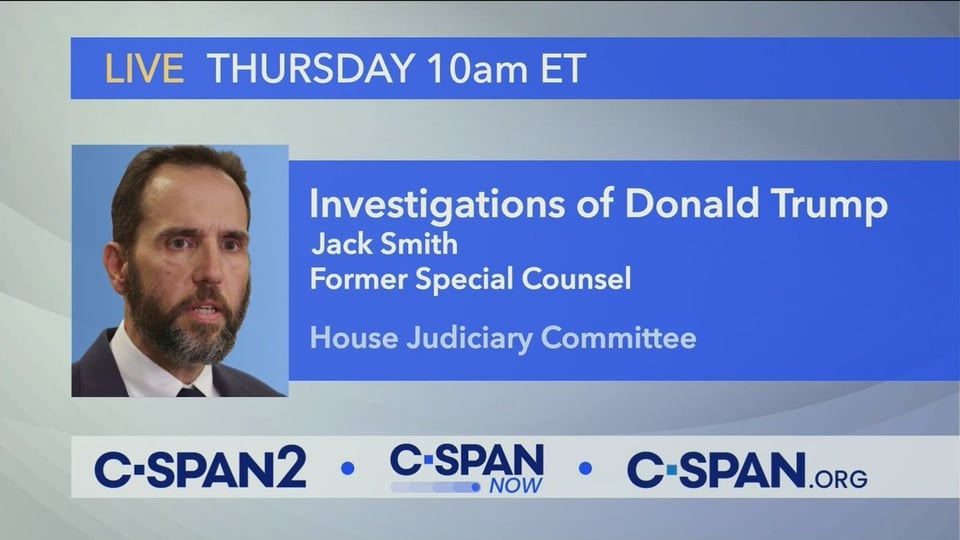
10:00 am ET/ 7:00 am PT.
Footnotes for Saving America by Saving the Family: A Foundation for the Next 250 Years
accessed October 4, 2025.
-
National Archives and Records Administration, “Declaration Signers Gallery Facts. ↩
-
Marcus Tullius Cicero, De Officiis, trans. Walter Miller (London: William Heinemann, 1913), book 1, sec. 54. ↩
-
John Adams,”From John Adams to Massachusetts Militia,” Founders Online, National Archives October 17, 1798accessed October 30, 2025 ↩
-
Lyman Stone, “1-in-3: A Record Share of Young Adults Will Never Marry,” Institute for Family Studies, February 26, 2024 accessed October 30, 2025. ↩
-
U.S. Department of Commerce, U.S. Census Bureau, “Historical Marital Status Tables,” November 2024 accessed October 30, 2025. ↩
-
U.S. Department of Commerce, U.S. Census Bureau, Historical Households Tables, Table HH-1 accessed October 30, 2025. ↩
-
Stephanie Kramer, “U.S. Has World’s Highest Rate of Children Living in Single-Parent Households,” Pew Research Center, December 12, 2019 accessed October 30, 2025. ↩
-
Wendy Wang and Kim Parker, “Chapter 1: Public Views on Marriage,” in Record Share of Americans Have Never Married, Pew Research Center, September 24, 2014 accessed October 30, 2025 ↩
-
U.S. Department of Health and Human Services, Centers for Disease Control and Prevention, “US Birth Rate Hits Historic Low: What It Means for America’s Future,” GovFacts, August 25, 2025 accessed fOctober 30, 2025. ↩
-
U.S. Department of Commerce, U.S. Census Bureau, Current Population Reports, P25-1144, Demographic Turning Points for the United States: Population Projections for 2020 to 2060, revised February 2020 accessed October 30, 2025. ↩

