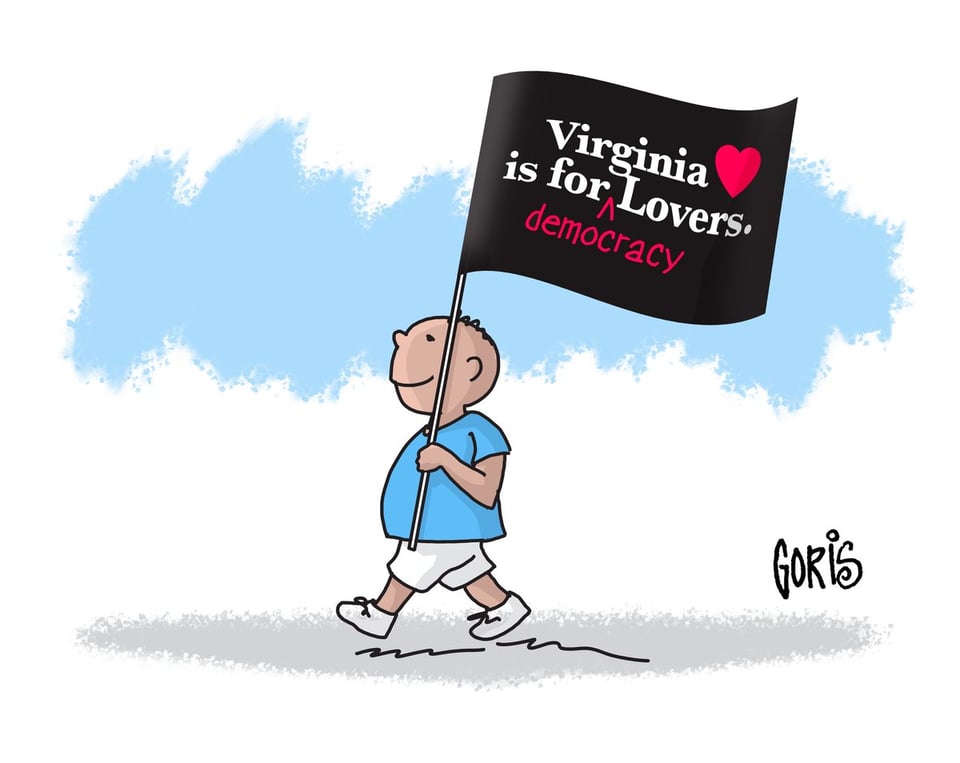
Thursday, April 23, 2026. Annette’s Roundup for Democracy.
What the Passage of the Virginia Redistricting Plan Means for Control of Congress.
A redistricting referendum that could allow Democrats to flip up to four House seats has passed in Virginia, marking a victory for the party in the ongoing nationwide battle to gain an electoral edge ahead of the fall midterm elections.
“Virginia just changed the trajectory of the 2026 midterms,” Don Scott, the Democratic speaker of the state’s House of Delegates, said in a statement after the Associated Press called the tight race Tuesday night.
Following the ballot measure’s passage, with 51% support from some 3 million voters, Virginia’s constitution will be amended to temporarily grant the state’s general assembly, currently controlled by Democrats, the authority to redraw its congressional map.
Virginia has 11 congressional districts, six of which are currently represented by Democrats in the House. The proposed map could give the party the advantage in 10.
With the November midterms looming, that change could prove critical in Democrats' push to take control of the House, where Republicans currently hold a razor-thin majority. Republicans had previously made a slight net gain in the mid-cycle redistricting war the parties have been waging in states around the country, garnering an edge in an additional eight or nine districts compared to roughly six new Democratic-leaning seats. The new Virginia map is poised to shift that balance back toward Democrats.
Under the measure, the state’s general assembly will retain the power to redraw voting lines until Oct. 31, 2030, at which point it will return to Virginia’snonpartisan redistricting commission.
Ahead of the vote on Tuesday, nearly $100 million in “dark money” contributions flooded into the redistricting battle in Virginia from tax-exempt non-profit groups that are not required to disclose their donations.
The Virginians for Fair Elections referendum committee, the main group behind the push for the ballot measure, received $64 million in contributions from such organizations between December 2025 and April. All figures are based on campaign finance records reviewed by TIME.
The best-funded group that opposed the redistricting measure––the Virginians for Fair Maps referendum committee––raised at least $23 million in large contributions.
Millions more were contributed to other, smaller groups amid the battle.
A Virginia judge had blocked the effort to change the map, but the state Supreme Court allowed the referendum to proceed, noting that it would decide on the amendment’s legality following Tuesday’s vote.
Voting maps are traditionally redrawn once a decade following the census to adjust for population changes. But last summer, President Donald Trump sparked a mid-cycle scramble by calling for Republican-led states to redistrict in order to create more red-leaning districts to help the party retain control of the House.
Several other states have enacted changes to their maps that are set to be in effect in the November midterms.
Republicans stand to gain in several: Texas, the first state to respond to Trump’s call to action, could add as many as five Republican seats under a new map Gov. Greg Abbott signed into law in August. Redistricting measures enacted in Missouri and North Carolina could add one additional GOP seat each, while in Ohio the party could secure one or two more as a result of a plan approved by a state commission
California has successfully redistricted in an effort to counter the Republican moves, however, and stands to add five Democratic-leaning seats after voters in November approved a measure allowing the state to redraw its map.
Democrats could also be set to gain in deep-red Utah, where a judge threw out a map approved by the GOP-controlled legislature and approved one that could give Democrats one additional seat.
Florida is pushing to change its map as well. Republican Gov. Ron DeSantis is urging lawmakers to approve redistricting in a special session set to begin later this month, potentially adding more seats for the GOP ahead of the midterms. (Time)
One more thing.
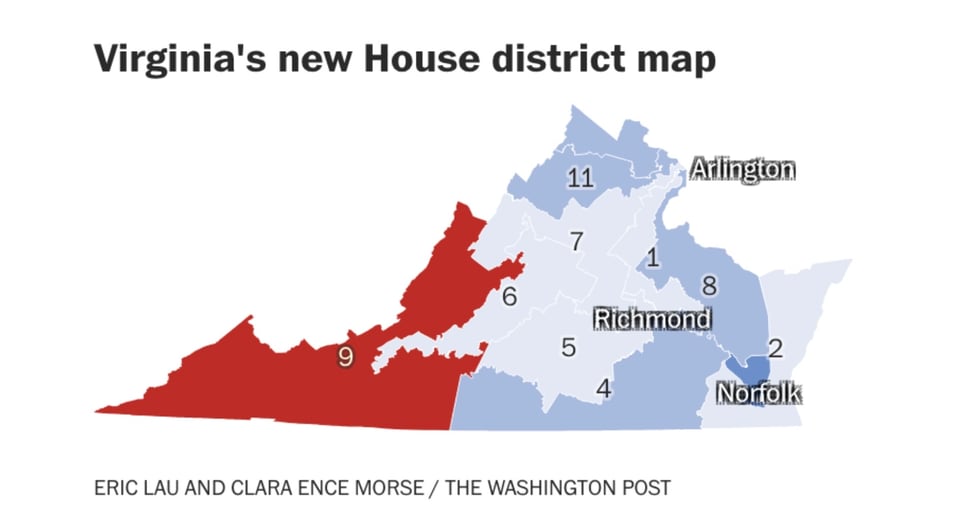
Last year, Trump pressed Republican-led states to break with that tradition and gerrymander their districts to help his party maintain its narrow control of the House.
The push resulted in better lines for the GOP in five districts in Texas, two in Ohio and one each in Missouri and North Carolina. Democrats responded by persuading voters to approve new maps that would give Democrats the edge in five seats in California and four in Virginia. In addition, a court approved a new map in Utah that could give Democrats one district. (The Washington Post)
Also remember, who is on the side of the angels.
# Trump fought to keep the ballroom fundraising contract secret. Here’s what’s in it.
The agreement governing hundreds of millions in private donations was kept secret until a watchdog group sued and a judge ordered it disclosed.
The Trump administration’s contract governing hundreds of millions of dollars in private donations to build President Donald Trump’s White House ballroom shields donors’ identities, excludes the White House from conflict of interest protections and was disclosed only after a lawsuit and a judge’s order, records obtained by The Washington Post show.
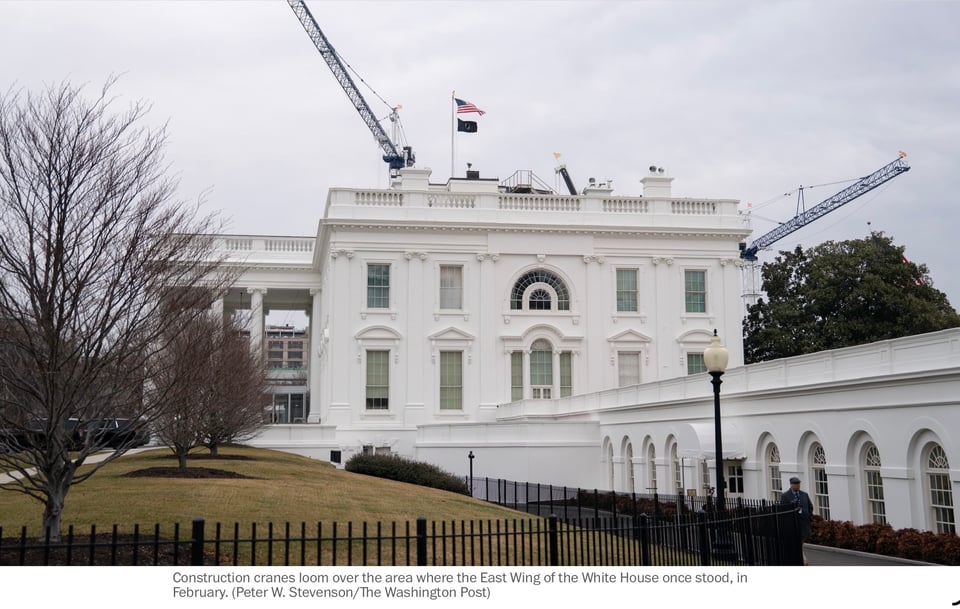
The agreement establishing the legal and financial framework for the planned $400 million undertaking — the most significant change to the White House in decades — was signed in early October, less than two weeks before demolition crews started destroying the East Wing. Public Citizen, a government watchdog organization, sued to obtain the contract between the White House, the National Park Service and the Trust for the National Mall, the nonprofit managing donations for the project, and shared the document with The Post.
“The Trump administration’s failure to disclose this contract was flatly unlawful,” said Wendy Liu, a Public Citizen attorney and lead counsel on the lawsuit, filed after the Park Service and the Interior Department failed to fulfill a public records request for the document. “The American people are entitled to transparency over this multi-million-dollar project.”
The secrecy surrounding the contract mirrors the administration’s broader approach to the project. White House officials have declined to disclose the total amount raised, the identities of all donors or, until recently, basic details about the building’s design. Court documents show Trump knew he was going to tear down the East Wing at least two months before doing so, but he never told the public.
The contract provisions, taken together, allow wealthy donors with business before the federal government to contribute anonymously to a sitting president’s pet project, while exempting the White House from key conflict of interest safeguards and limiting scrutiny by Congress and the public.
“President Trump is working 24/7 to Make America Great Again, including his historic beautification of the White House, at no taxpayer expense,” White House spokesman Davis Ingle said in a statement defending the administration’s process.
White House officials said not publicly posting the agreement was standard practice for contracts involving the executive residence, citing security concerns. They also said offering anonymity for donors was standard for significant projects and framed the use of private funds as a boon for taxpayers. The administration did not respond to questions about failing to respond to the public records request for the contract or fighting the release of the document in court. Trump has said that the administration has raised about $300 million for the project.
The contract resembles templates used by the Park Service for more routine fundraising partnerships — with several notable differences: Provisions peppered throughout the agreement prevent the signatories from revealing the identities of anonymous donors, and a review process for detecting conflicts of interest with the Park Service and Interior Department makes no mention of doing the same for the president, other White House officials or the 14 other executive departments he oversees.
Here is the White House Funding Agreement for Trump’s Ballroom.
Dozens of the project’s known donors — which include Amazon, Lockheed Martin, Palantir and Google — collectively have billions of dollars in federal contracts before the administration. (Amazon founder Jeff Bezos owns The Post.) Critics have argued that allowing anonymous gifts to a sitting president’s signature project creates precisely the kind of conflict the contract itself states it seeks to prevent.
“This document reveals that anonymous donations are the heart of this agreement,” said Jon Golinger, a lawyer and public policy advocate with Public Citizen. “Who are these anonymous donors, and what are they hiding?”
Charles Tiefer, a retired law professor at the University of Baltimore who spent three years on a congressionally authorized commission scrutinizing wartime contracting in Iraq and Afghanistan, said the anonymity provisions potentially set up the Trump administration to block congressional inquiries into the project’s funding.
“If Congress knocks on the door, the White House is going to slam it shut and say, ‘You’re not allowed to know these donors,’” Tiefer said.
The National Park Service did not immediately respond to questions about the agreement. The Trust for the National Mall said the Park Service asked it to accept and manage private donations for the project and that it is “not involved in the fundraising, planning, design, contracting, or execution” of the ballroom, spokeswoman Julie Moore said in an email. Donations are subject to the same vetting process the Trust uses for other Park Service projects, and donor names are disclosed in its annual report, website and tax filings, she added.
Except those who don’t want to be.
“Some donors may wish to remain anonymous and we respect donor wishes, while in compliance with all applicable laws and regulations,” Moore said.
The Trust has performed a similar role on previous White House projects, including first lady Melania Trump’s Rose Garden restoration and tennis pavilion during her husband’s first term.
The contract excludes the White House from its conflict of interest review, which explicitly obligates the Trust and the Park Service to ensure that fundraising does not give rise to “an appearance of a loss of integrity or impartiality.” But the Executive Residence at the White House, the party responsible for identifying and referring donors to the Trust — and which the Trump administration has said in court filings is helping manage the overall ballroom project — is not required to face that scrutiny.
Kathleen Clark, a government ethics lawyer and law professor at Washington University in St. Louis, called the agreement’s review process “nothing more than a sham,” because it mandates the Trust conduct a narrowly scoped conflict of interest examination while ignoring the vast majority of the federal government. Meanwhile, companies and individuals could be anonymously donating tens of millions of dollars as they stand to gain billion-dollar government contracts, want to avoid a Justice Department criminal investigation, or rid their companies of onerous labor or environmental regulations, she said.
The contract was signed as work on the ballroom project was already underway. Crews had begun clearing trees and foliage from the White House grounds in September. Twelve days after it was signed, demolition crews started tearing down the East Wing. The existence of the contract was not disclosed at the time. Trump, who says the ballroom is needed to host VIPs at larger functions, is pushing to finish it before the end of his second term in 2029.
Congressional Democrats have pressed the Trust for months to share more information about the project. Sen. Elizabeth Warren (D-Massachusetts) and colleagues sent a letter in January demanding to know how much money had been raised, whether donors had been promised special access or other perks, and whether the organization had internal controls to prevent preferential treatment. The Trust declined to disclose the amount raised but said it was adhering to all Park Service guidelines.
Sen. Richard Blumenthal (Connecticut), the top Democrat on the Senate Homeland Security and Governmental Affairs Permanent Subcommittee on Investigations, demanded answers from dozens of ballroom donors and contractors about their involvement and questioned the “rapidly changing and secretive terms” of Trump’s planned ballroom. He also sent letters to several people who attended a White House dinner in October, which Trump held to honor ballroom donors. Blumenthal asked whether they had contributed and under what terms, noting that the administration had acknowledged it had not publicly identified all donors.
“At every turn, President Trump has sought to conceal the facts about his monstrous multimillion-dollar ballroom,” Blumenthal said in a statement to The Post. “His Administration has kept the contract under wraps, the identities of big dollar donors secret, and the American people in the dark about what big corporations have to gain by funding this boondoggle.”
Blumenthal, Warren and other Democrats have introduced legislation to ban anonymous donations for the ballroom and other projects on the White House grounds.
“There’s only one good explanation for why Trump’s ultra-wealthy ballroom donors want to stay anonymous: They have something to hide,” Warren told The Post.
A federal judge last month also criticized the Trump administration’s approach to soliciting private donors through its contract with the Park Service, calling it a “Rube Goldberg contraption” that allowed the president to avoid congressional oversight while building the ballroom.
U.S. District Judge Richard Leon, an appointee of President George W. Bush, ruled last month that construction must be halted on the ballroom until Congress authorizes the project. The Trump administration has appealed that ruling, and a three-judge panel at the U.S. Court of Appeals for the D.C. Circuit has allowed construction to continue while the case proceeds.
The White House has repeatedly declined to release the government’s contracts with the private companies designing, engineering and building the ballroom. (The Washington Post)
Wanna bet Țrump doesn’t like what is happening?
Trump sure is unpopular. Look at that number with Independents.
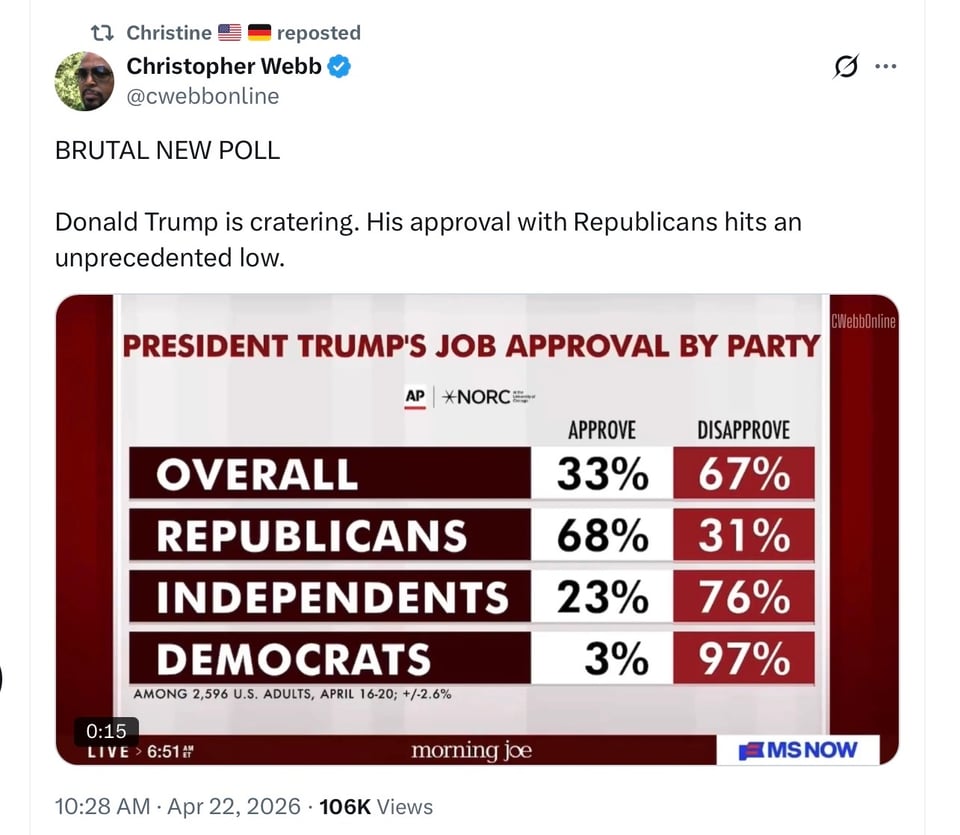
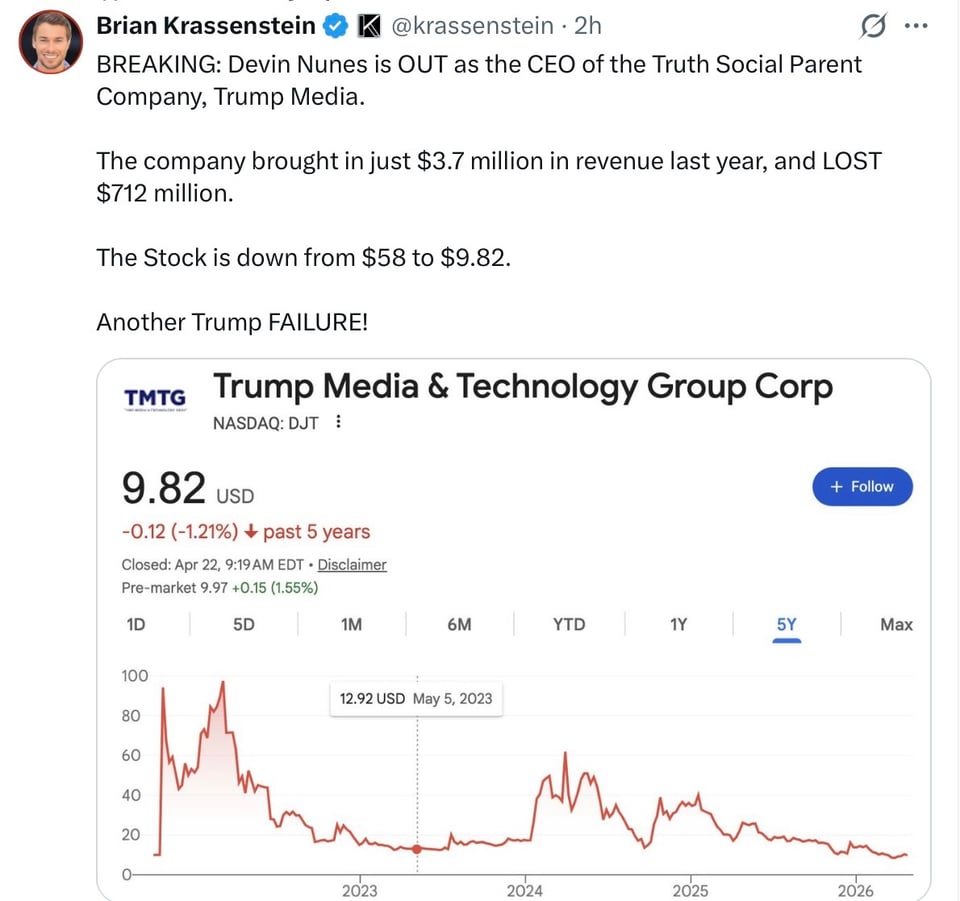
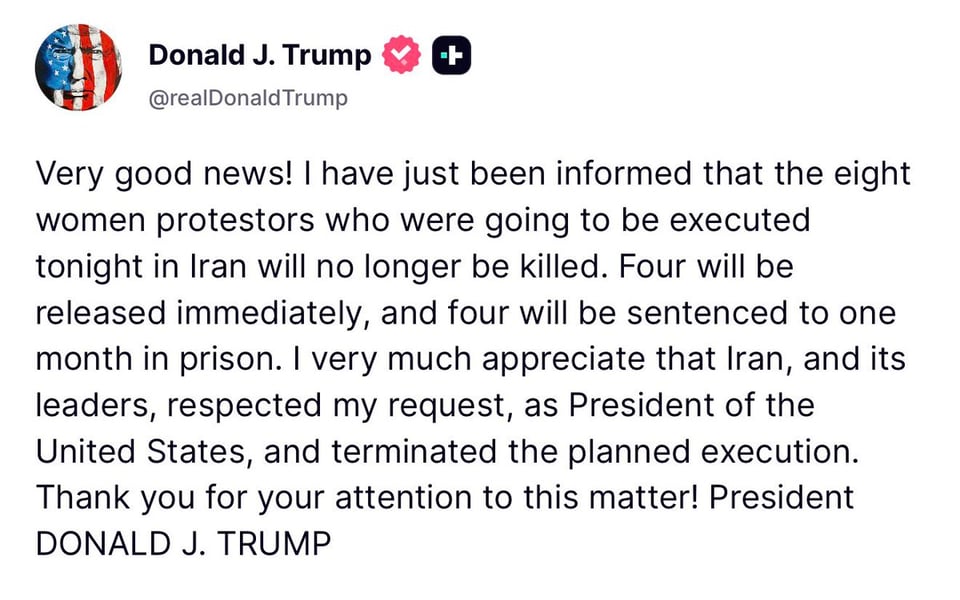
More Trump Truth Socialism.
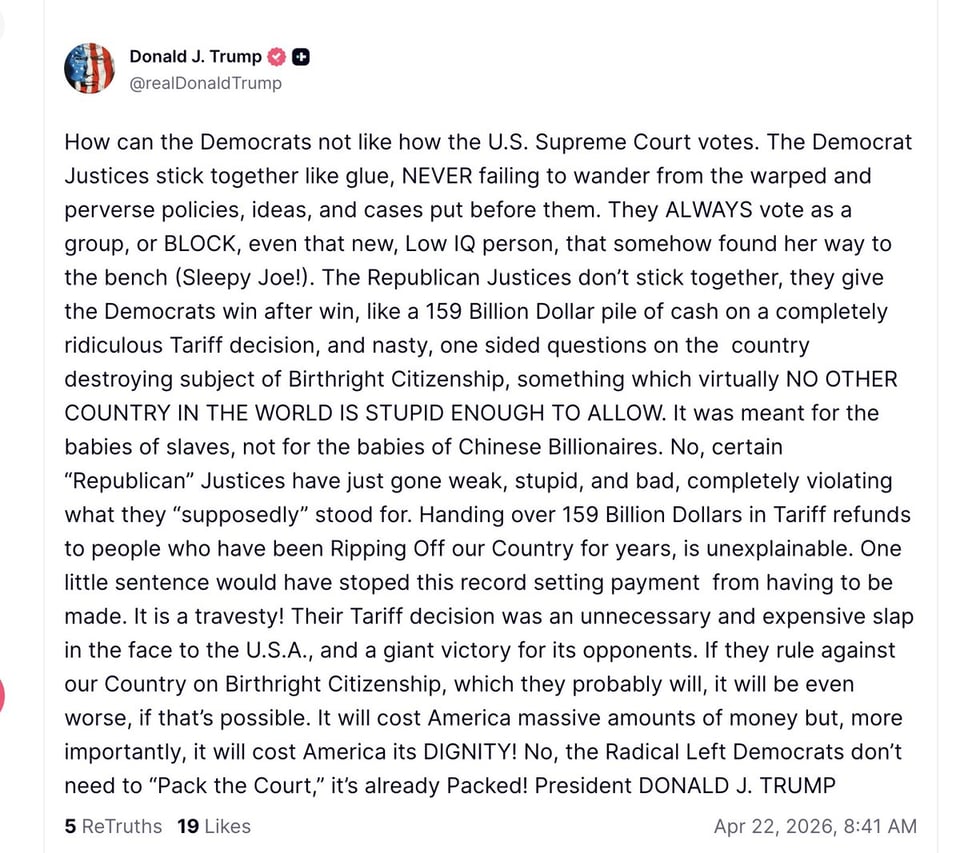
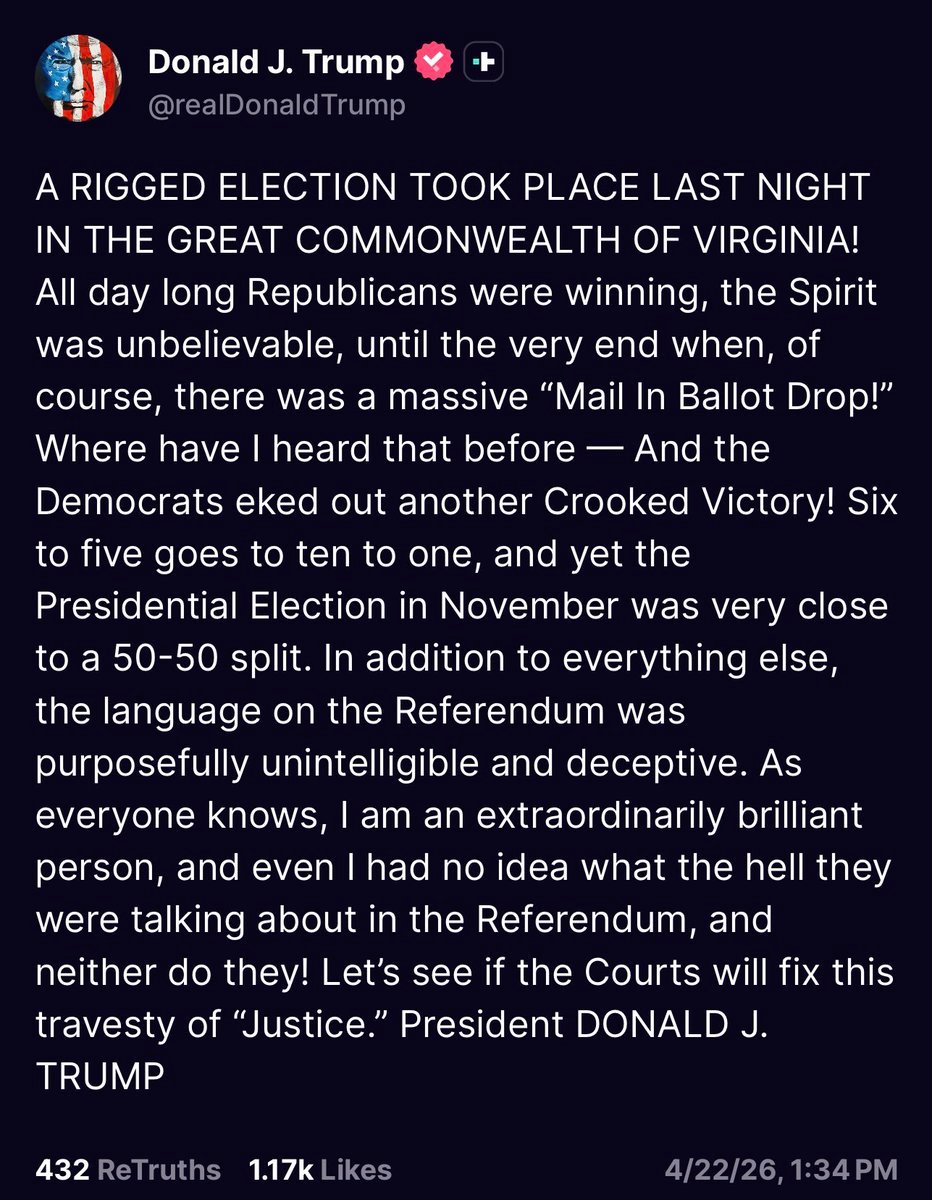
A uniquely worthwhile note from Trump. How can that be.
One more thing.
This lie belongs to Hegseth.👇
One more thing.
Trump’s Defense Secretary, Pete Hegseth seems determined to put American troops at risk from the flu, but has Bobby Kennedy, Trump’s Health Secretary, decided not to put American children at risk from measles?

Kennedy continued to back away from his criticism of the measles vaccine.
Over four days and nearly 20 hours of testimony, [at the Congress] under harsh questioning from Democrats, Health Secretary Robert F. Kennedy Jr. has repeatedly backed away from his longstanding criticism of the measles, mumps and rubella vaccine. On Wednesday, he made his strongest statement yet — albeit on behalf of his department and not himself.
“We promote the M.M.R.,” Mr. Kennedy told the Senate Finance Committee on Wednesday morning, referring to the combined vaccine for measles, mumps and rubella. “We have advised every child to get the M.M.R. That’s what we do.”
The comment stands in stark contrast to Mr. Kennedy’s past advice, and senators wondered aloud why he hasn’t told the public what he said on Capitol Hill this week. Last week, he conceded the measles vaccine is “safe and effective” for most people.
When measles broke out in Texas last year, Mr. Kennedy did not recommend vaccination; he said it should be “a personal choice.” Last year, asked if he would advise parents to vaccinate newborns, he said it was not up to him to provide medical advice. His advice, he said, was: “Do your own research.”
But even as he shifted on measles, Mr. Kennedy stuck by his longstanding assertion that improvements in hygiene and sanitation, and not vaccination, fueled the decline in deaths from infectious diseases during the 20th century.
“If you want to talk about what, why disease mortality has disappeared in the 20th century, it was not vaccines,” he said, testifying before the Senate health committee Wednesday afternoon.
As proof, Mr. Kennedy cited a study published in the journal Pediatrics in 2000. But he failed to note that the study also reported that vaccines introduced in the second half of the 20th century had “virtually eliminated” deaths from diseases including polio and measles. In 1999, the Centers for Disease Control and Prevention listed vaccination as one of “ten great public health achievements” of the 20th century.
After Mr. Kennedy made the assertion, Senator Bill Cassidy, the Republican chairman of the Senate health committee, asked about the author of the study; Mr. Kennedy gave him the author’s name. Later in the hearing, Mr. Cassidy produced the paper and told Mr. Kennedy he had taken it out of context. (New York Times)