Saturday, March 7, 2026. Annette’s Roundup for Democracy.
It’s the Economy, Stupid!
AI and the Workforce. What can be done.
America Cannot Withstand the Economic Shock That’s Coming
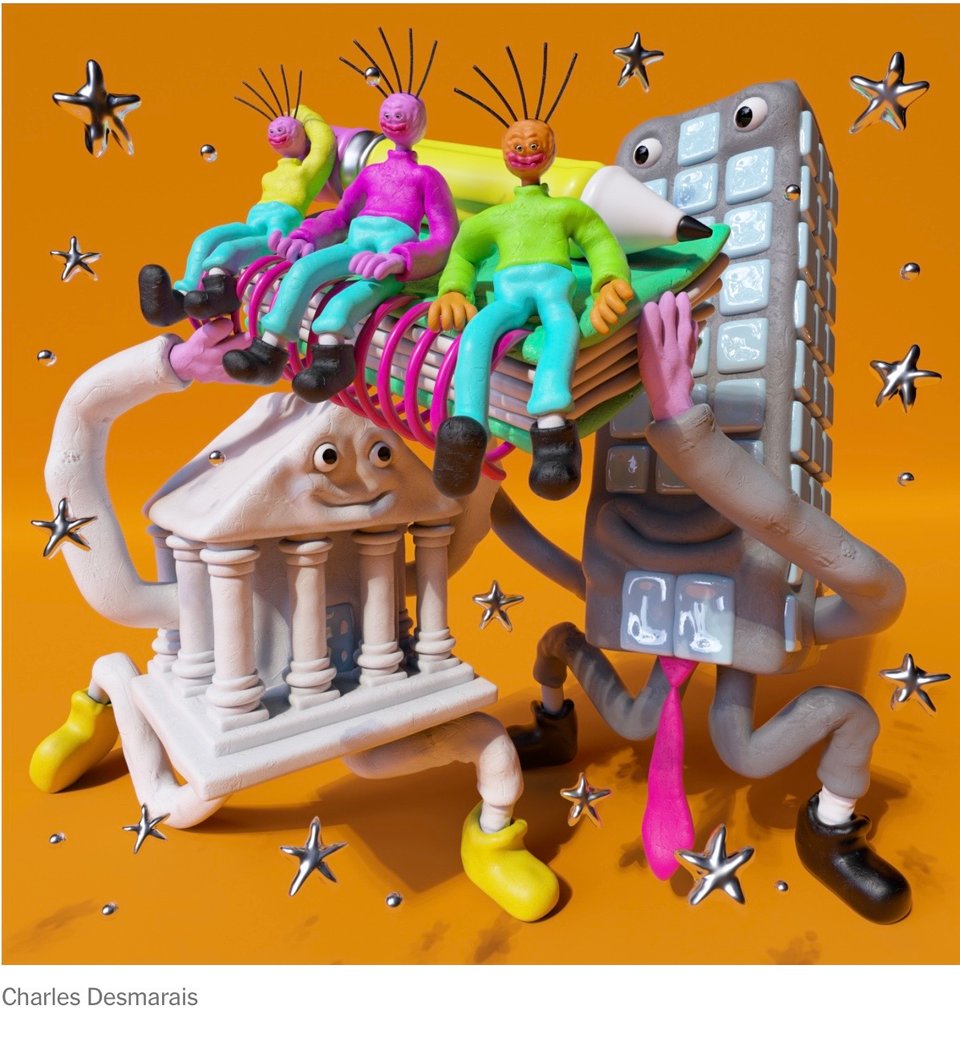
When the Bulova watch factory in Providence, R.I., closed in the 1980s, my father faced an abrupt end to his 30-year career. Like many American manufacturers, Bulova moved its production overseas, chasing the cheaper labor that new free-trade agreements made so irresistible. At 56, my father was a casualty of a new economic rulebook stapled to an old work force model. There were no effective public or private initiatives to help him or millions of other Americans transition to new jobs in the new economy, leaving many American cities hollowed out and helping produce the politics of division that plague us today.
This story isn’t just my memoir; it’s history we’re about to repeat. Artificial intelligence is transforming work faster than our work force is adapting. Millions of Americans — from white to blue collar, entry level to executive — may soon find themselves jobless and without prospects. Leaders across the political spectrum and the private sector tell me this crisis is coming and there’s no obvious solution.
I refuse to accept that an unemployment crisis is inevitable.
The answer, however, isn’t to slow down A.I. innovation and leave ourselves less competitive and less prepared. Nor is generic “re-skilling” that pushes people into completely new roles and industries. Instead, we should build a modern transition system with better data to predict job losses and new forms of support to help workers transition between jobs.
What we need is a new grand bargain between the public and private sectors — one in which employers are held responsible for defining skills essential to the A.I. economy and for creating pathways into jobs, and the government invests in the training, incentives and safety nets that help workers move quickly into them.
The private sector has always been better positioned to see which new jobs are emerging, which skills matter and how quickly demand will shift. So this new bargain should start with businesses taking the lead and providing real-time, A.I.-powered insights into hiring plans, technology adoption and skill needs.
This can start with tearing down the wall between the business and education communities. I saw this firsthand as secretary of commerce when implementing the CHIPS Act, which put billions of dollars toward semiconductor development and production. Working intensively with TSMC, the Taiwanese chipmaker, my team learned new chip plants were stymied by talent gaps in tool maintenance, electrical engineering and pipe fitting. TSMC used these findings to lobby states, employers and schools like Maricopa Community College to build accelerated certificate programs to train people to fill these specific talent gaps.
The future of higher education should be modular, and employers must be active partners in shaping what gets taught. The country needs to shift focus from long and expensive degrees that risk obsolescence before completion toward short, affordable job-linked credits that offer on-ramps between education and work. People should be encouraged to pursue credentials that can stand alone or be stacked over time into degrees, bringing people back to campus over the arc of their lives. A midcareer accountant displaced by A.I. doesn’t need another master’s degree. Instead, she may be better off with a four-month credential and temporary wage insurance that bridges any pay gap and incentivizes her to accept a new role sooner.
The funding model for higher education must change, too. Public investment should hold schools to measurable labor market results, not just enrollments. Texas offers a working example: Community colleges that award credentials in high-demand fields receive greater state funding. If we take this approach, we’ll quickly see a survival of the fittest emerge: Innovative programs that meet labor market needs will be rewarded, while underperformers will shutter.
When it comes to employer-led training, the country needs a modern apprenticeship system that allows workers to earn while they learn, which many European countries have embraced. Workers in fields persistently plagued by talent shortages or undergoing rapid technological change need this. A manufacturing apprentice, for example, could earn a paycheck operating equipment in a factory while learning blueprint reading from a senior technician and taking classes.
But to make all this happen at scale, the private sector must be incentivized to do it. That may mean employer tax credits tied to on-the-job training. States could pilot tax code reforms that reward worker retention and entry-level hiring, penalize layoffs and encourage companies to reinvest A.I.-driven savings into the creation of jobs. This isn’t corporate charity; it’s strategic necessity.
The future of higher education should be modular, and employers must be active partners in shaping what gets taught. The country needs to shift focus from long and expensive degrees that risk obsolescence before completion toward short, affordable job-linked credits that offer on-ramps between education and work. People should be encouraged to pursue credentials that can stand alone or be stacked over time into degrees, bringing people back to campus over the arc of their lives. A midcareer accountant displaced by A.I. doesn’t need another master’s degree. Instead, she may be better off with a four-month credential and temporary wage insurance that bridges any pay gap and incentivizes her to accept a new role sooner.
The funding model for higher education must change, too. Public investment should hold schools to measurable labor market results, not just enrollments. Texas offers a working example: Community colleges that award credentials in high-demand fields receive greater state funding. If we take this approach, we’ll quickly see a survival of the fittest emerge: Innovative programs that meet labor market needs will be rewarded, while underperformers will shutter.
When it comes to employer-led training, the country needs a modern apprenticeship system that allows workers to earn while they learn, which many European countries have embraced. Workers in fields persistently plagued by talent shortages or undergoing rapid technological change need this. A manufacturing apprentice, for example, could earn a paycheck operating equipment in a factory while learning blueprint reading from a senior technician and taking classes.
But to make all this happen at scale, the private sector must be incentivized to do it. That may mean employer tax credits tied to on-the-job training. States could pilot tax code reforms that reward worker retention and entry-level hiring, penalize layoffs and encourage companies to reinvest A.I.-driven savings into the creation of jobs. This isn’t corporate charity; it’s strategic necessity.
Skeptics will argue that we’ve tried work force reform before and it hasn’t worked. That the landscape for work force development is littered with underperforming, small-scale training initiatives. They aren’t wrong. But history shows that real change comes in times of crisis. After World War II, the G.I. Bill and land grant universities sent millions of veterans to school while public research funding seeded advancements in manufacturing, aerospace, semiconductors and computing. Decades later, the financial crisis and Covid sparked new growth industries with millions of new jobs in clean energy, fintech and health care.
A.I.-driven mass unemployment is a potential crisis on the horizon. This country cannot withstand the kind of economic shock I see coming. Without solutions, America’s anxiety will become rage — and political backlash will follow, targeting companies that make A.I., businesses that deploy it and politicians who back it. A new grand bargain between the public and private sectors can help us meet this moment. I know we have the ingenuity to do it. What’s missing now is the collective will. (Op-Ed, New York Times by By Gina Raimondo, secretary of commerce under the Biden administration and the 75th governor of Rhode Island.)
Mass Hysteria. Thousands of Jobs Lost. Just How Bad Is It Going to Get?

Thomas Greifenberger graduated from the University of Delaware last spring. Although he double-majored in finance and marketing and minored in economics, it took him just three years to earn his bachelor’s degree. He had hoped that his solid grades and demonstrated drive would help him land a position in the financial services industry. But when Mr. Greifenberger began his job search, it quickly became apparent to him that he was sending résumés into a void. He got a few nibbles — several companies invited him to do asynchronous video interviews.
Nothing more came of those opportunities, however, and after a point, he concluded that he was on a futile quest. “It was super discouraging,” he said.
He has returned home to Long Island, where he is now employed by his family’s tree service business. Mr. Greifenberger enjoys the work — he is often the guy up in the bucket, pruning branches — and the tangible results it yields. But he admits that it’s not the future he had envisioned for himself. “I still go on LinkedIn from time to time, but I think that ship has sailed for me,” he said.
Just a few years ago, an entry-level role with a bank or an asset management firm might have been Mr. Greifenberger’s for the asking. But the white-collar job market has cooled sharply. While the unemployment rate remains relatively low, 4.3 percent, office jobs are suddenly a lot harder to come by, for recent college graduates and experienced professionals alike.
Many companies went on hiring sprees coming out of the pandemic, and the slowdown is perhaps just the inevitable adjustment. But it is happening against the backdrop of the generative A.I. revolution and fears that vast numbers of knowledge workers will soon be evicted from their cubicles and replaced by machines — fears being amplified by an army of online Cassandras. In a sequence of events that called to mind the 1938 Orson Welles radio adaptation of “The War of the Worlds,” famous for convincing panicked listeners that aliens had really invaded, a recent Substack post imagining the economic hellscape that could result from an A.I.-induced white-collar blood bath helped send the Dow Jones industrial average tumbling 800 points. Anxious times.
It is certainly possible that we are in another moment of mass hysteria, even mass hallucination, and that A.I. will not cause permanent widespread joblessness — either because its capabilities will prove to be more limited than observers first thought or because our highly adaptable species will respond to technological change as it always has, by finding new sources of gainful employment. That the people selling the artificial intelligence are among those sounding the most ominous warnings about its potential fallout is notable, however. Some of them are prone to bombastic claims, but it is hard to see how spooking the public serves their interests. It might be wise to take their predictions at face value and assume that A.I. is indeed going to devour a lot of white-collar jobs.
While new ones will hopefully emerge, the transition won’t be painless, and if the cracks we are seeing in the labor market become sinkholes, the effect not just on our economy but also on our politics could be profound. If millions of college-educated voters have their lives upended by A.I., they will surely make their fury known. That prospect should be causing alarm in Washington and spurring efforts to try to cushion Americans from the blow that may soon befall them — by giving serious consideration, for instance, to something like universal basic income. But it is an election year, Congress is barely functioning, and on this issue, as with so many others, inertia will very likely prevail.
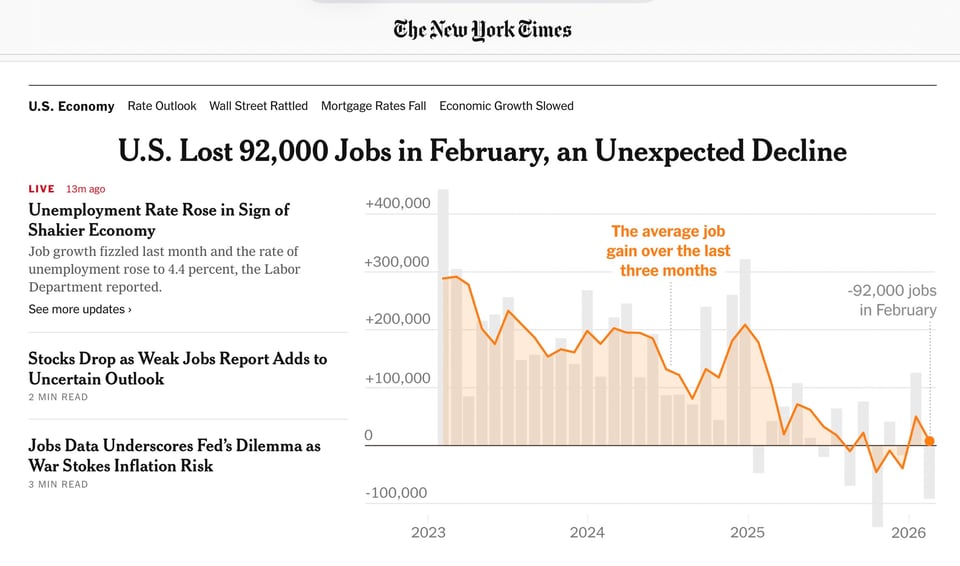
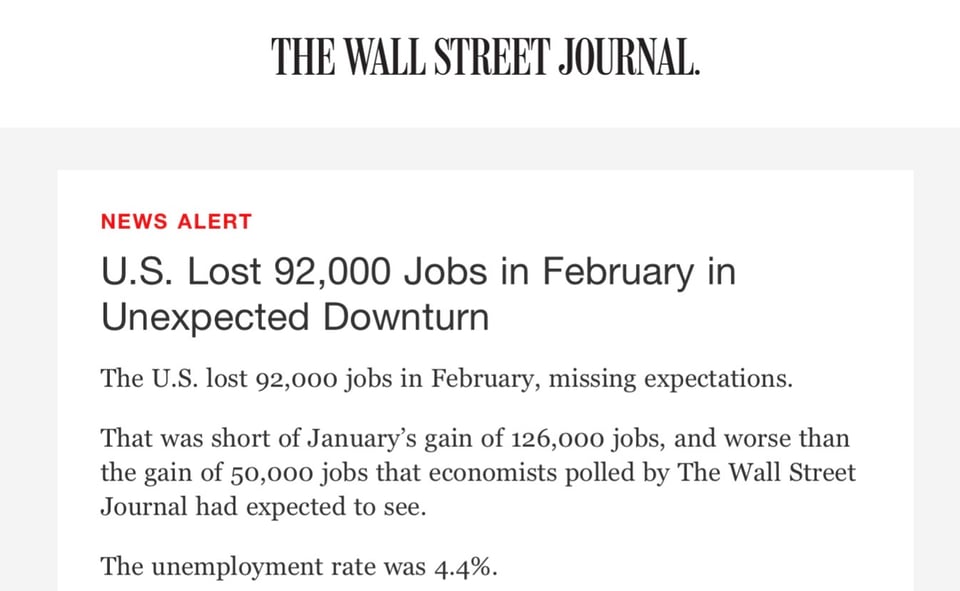
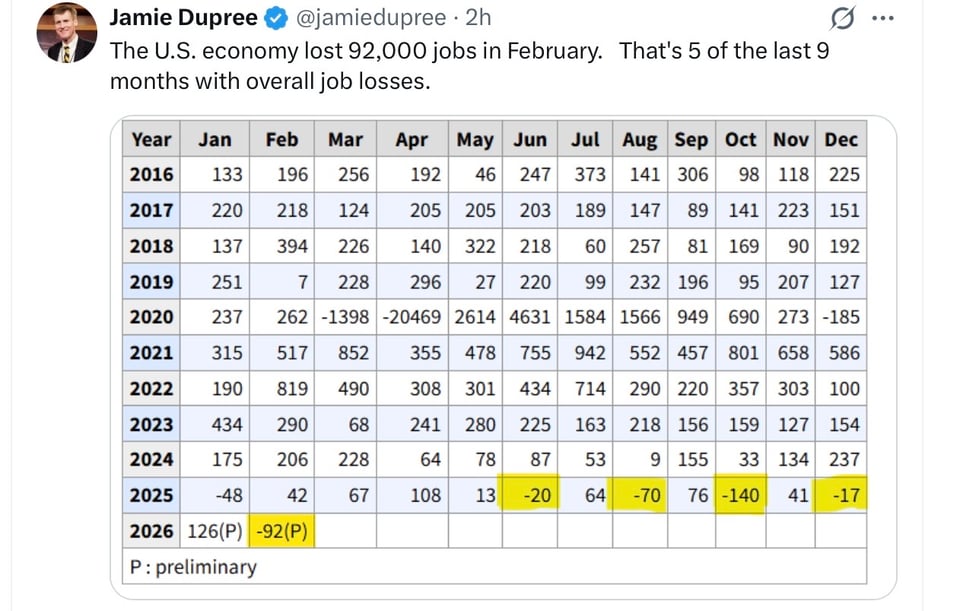
So are those cracks the first signs of an A.I. jobs apocalypse? It’s too soon to say, but the employment picture has darkened. The economy added only 181,000 jobs in 2025, a shockingly low figure in a year that saw gross domestic product grow by a modest but respectable 2.2 percent. According to Lawrence Katz, a professor of economics at Harvard University, what we are experiencing now — a sustained period of “slow job growth and gradually rising unemployment without a real recession” — is virtually unprecedented.
Another anomaly: White-collar workers have been disproportionately affected. Blue-collar and service workers are usually hit hardest when the job market turns, while white-collar occupations enjoy a degree of insulation because they are concentrated in “safer, less cyclically sensitive sectors,” says Mr. Katz. Now, however, knowledge workers are the ones struggling.
To be sure, this is not the first time the future of white-collar employment has been called into doubt. In the 2000s, some economists predicted that globalization would eviscerate office work much as it had manufacturing. But while a lot of jobs were sent overseas, others were simply transferred to less expensive parts of the country, and the anticipated white-collar collapse never materialized. It is very possible that the current slowdown is nothing more than a necessary correction after a period of overhiring.
But in another recent Substack post, the economist Gad Levanon of the Burning Glass Institute offered an alternative hypothesis. He noted that hiring has come to a virtual standstill in finance, insurance, accounting, consulting and tech, which are pillars of the “knowledge” economy. Mr. Levanon pointed out that companies in these areas have generally performed well of late while either trimming their head counts or keeping them largely unchanged, which suggested to him that they have found new ways to increase productivity without adding workers. It is unclear if A.I. is contributing to this trend, but the industries he cited all involve functions that seem especially ripe for automation.
This, of course, is the specter haunting millions of Americans who hold white-collar positions. In the not-so-distant past — which is to say, before the debut of ChatGPT in November 2022 — people with desk jobs feared being fired; now, they must also fret about whether the positions they have will even exist a year from now and if the skills they have developed over the course of a career are about to be rendered obsolete. Last year, Microsoft published a study identifying 40 jobs that it said could be most vulnerable to A.I. The list ranged from historians to P.R. specialists to data scientists to — gulp — writers. More recently, the Microsoft A.I. chief executive, Mustafa Suleyman, stated that most professional tasks will be fully automated over the next 12 to 18 months.
It looks all but certain that A.I. will transform knowledge work; the question is to what extent. The optimal outcome, says Harvard’s Mr. Katz, is that A.I. becomes a kind of “co-pilot” that helps people improve their skills and efficiency, and that new types of jobs replace those that are lost. Word that IBM plans to triple the number of entry-level employees it hires this year prompted lots of relieved chatter among office grunts sweating out the A.I. rollout.
The doomsday scenario is that businesses embrace A.I. agents as a substitute for querulous humans. The financial technology company Block announced last month that it was laying off 40 percent of its staff, around 4,000 people, because of the progress it claims to be seeing with A.I. In a social media post, Jack Dorsey, its chief executive, said that “the intelligence tools we’re creating and using, paired with smaller and flatter teams, are enabling a new way of working which fundamentally changes what it means to build and run a company.”
A few former employees have challenged his explanation: They contend that poor management left Block with a bloated payroll and that A.I. is just a convenient excuse for the pink slips. Whatever the truth, investors responded with delight to the news: Block’s stock soared over 20 percent, which is perhaps indicative of where Wall Street comes down on the job augmentation versus job elimination question.
Some of those being let go may find comparable work. Others, however, could be unemployed for a while — it is a tough market — and as they run short of options and savings, they might have to follow Mr. Greifenberger’s example and consider nonoffice roles. That isn’t necessarily a bad thing. Sure, when you hear tech oligarchs who haven’t screwed in a lightbulb or fixed a toilet in years extolling the virtues of being an electrician or a plumber, it is hard to suppress a laugh — and hard, too, not to see it as a cynical ploy to persuade Americans to dial back their expectations as A.I. comes for their jobs and more of the nation’s wealth is funneled upward.
But it seems a growing number of white-collar workers are looking at the skilled trades as a potential fallback, and if the rise of A.I. leads to a modest brain drain from the professions into fields such as construction and carpentry, it might also cause us to re-evaluate the prestige that we assign to certain types of labor but not others. It will definitely accelerate the development of so-called new-collar jobs, which blur the distinction between white and blue.
I got a glimpse of this trend during a recent visit to a company called Hadrian, a manufacturing start-up that leans heavily on automation and A.I. to produce parts for planes, rockets and satellites. One employee on its factory floor had worked for a commercial real estate brokerage. He traded a white-collar job for a nominally blue-collar one, but in a high-tech setting, and like all of the company’s employees, he is partly compensated with equity — a stake that could be lucrative if and when Hadrian goes public.
Still, that is just one person who made the switch, and there are only so many Hadrians. If A.I. proves to be a job killer and several million people are culled from the white-collar work force, it stands to reason that a significant percentage of them will have trouble maintaining their economic footing. For decades, white-collar jobs have been the main driver of social mobility in the United States. Even now, college-educated workers command an enormous wage premium — more than 70 percent, by most calculations — over those with only high school diplomas.
Many Americans already take a dim view of A.I. and feel as if they are being frog-marched to a future that they neither asked for nor wanted. If A.I. robs some of them of their livelihoods, knocks them out of the middle class and thwarts the aspirations of their kids, wariness will quickly give way to rage.
In a recent interview, Martin Wolf, the chief economics commentator of The Financial Times, suggested that if lots of “skilled, trained thinking activities” are displaced by machines, it could provoke a furious backlash. “We could have a social and political crisis that makes deindustrialization look trivial,” he said. “Deindustrialization, though one of the biggest forces shaping our world, shook the working class, particularly the male working class, from top to bottom. Shaking the prospects of the educated middle class is socially far more dangerous and explosive because it affects them and their parents, who are the people who run our societies in almost every possible way.”
Mr. Wolf is not inclined to hyperbole, and when someone as reliably levelheaded as he is is talking this way, it is a good indication that the risk is real. Given the upheaval we may soon be facing, it would be nice if we had a president capable of leading a thoughtful national conversation about where A.I. is taking us. Suffice it to say, Donald Trump is not that kind of president.
Some on Capitol Hill are treating the job threat seriously. Last fall, Senators Mark Warner and Josh Hawley introduced legislation that would require companies to provide information to the Department of Labor about the number of jobs they have cut or created because of A.I. and how they are helping employees navigate the new technology. But the bill would do nothing to ameliorate the circumstances of those who lose their jobs to A.I. On that front, we are apparently just going to hope for the best, not really plan for the worst and trust that creative destruction will somehow see us through it all. (Op-Ed, By Michael Steinberger, New York Times)
The Times says Tehran is “battered.” Are we at war?
Attention must be paid.


U.S. Officials Reveal Chilling Truth of Strike on Iran Girls’ School
U.S. military investigators believe that it’s likely the United States was responsible for the deadly strike that killed more than 175 people, including dozens of children, at a girls’ school in Iran.
Two U.S. officials told Reuters Thursday that the horrific attack at Shajarah Tayyebeh over the weekend was most likely the work of the U.S. military, but they noted that the investigation was still ongoing and did not rule out discovering evidence that could point the blame elsewhere.
The strike on the girls’ primary school is the deadliest single attack of the U.S. and Israel’s military campaign thus far. Among the dead were dozens of young girls between the ages of 7 and 12, according to the public prosecutor in Minab. In a statement Sunday, Unesco condemned the attack on Shajarah Tayyebeh as a grave violation of international law, which prohibits attacks on schools.
An analysis from The New York Times suggested that the school had been struck at the same time as a U.S. strike on the Iranian Revolutionary Guard Corps, or IRGC, naval base next door—indicating that the U.S. was likely responsible for both.
It was not immediately clear why the school was targeted. Satellite images from 2013 showed that the school was previously connected to the IRGC naval base. More recent satellite images from 2016 showed that the school had been separated from the naval base by a wall. (New Republic)

Jesse Jackson was laid to rest yesterday.
Thousands gather to celebrate the life of Rev. Jesse Jackson at Chicago funeral.
The homegoing ceremony, lasting more than 5 hours, alternated between fiery speeches and gospel music. Three former presidents spoke, including Barack Obama who gave a rousing eulogy at Friday’s service at House of Hope on the city’s South Side.
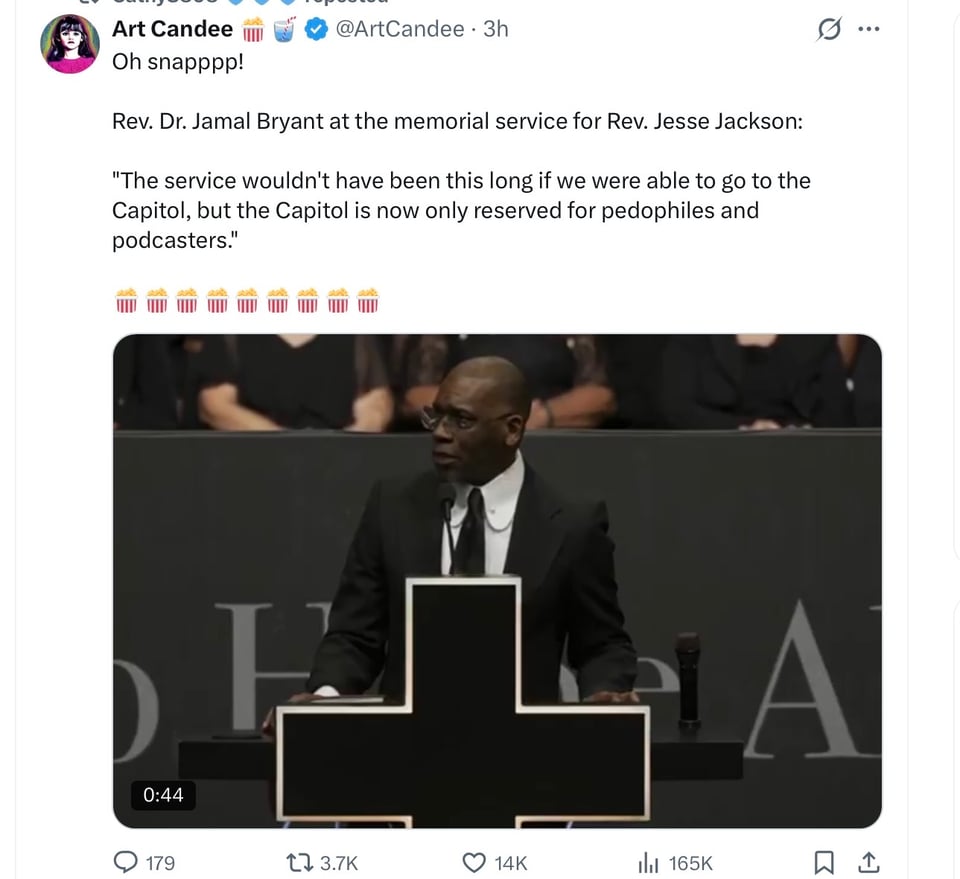
The funeral service honoring Rev. Jesse Jackson began at 11 a.m. at Chicago’s House of Hope in Chicago’s Pullman neighborhood. Scores of people from around the world took their seats at the homegoing to honor the civil rights icon.(Chicagos Sun Times)
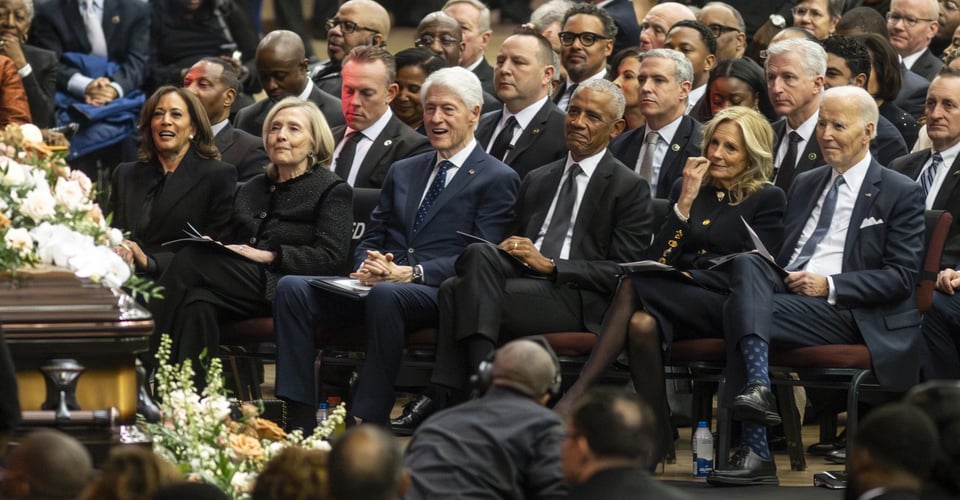
Jennifer Hudson sang, A Change is gonna come.
2 of the multiple speeches honoring the Civil Rights Leader.
Vice President Kamala Harris.
President Barack Obama.
One more thing.
A remarkable woman passed our way
Ronnie Eldridge, a Fixture in N.Y. Politics, Dies at 95

Ronnie Eldridge at a City Council meeting in 1991.Two decades earlier, while working as a top aide to Mayor John V. Lindsay, she was described by The Times as “one of the most influential women of politics in the city government.” Credit...Marilynn K. Yee/The New York
Ronnie M. Eldridge, a liberal Manhattan Democrat who helped found the anti-Vietnam War “Dump Johnson” movement, served as an influential political strategist to Mayor John V. Lindsay, spent 12 years on the City Council and championed the rights of women, gays, prisoners and other marginalized groups, died on Wednesday in Manhattan. She was 95.
Her death, at a hospital, was announced by her daughter Emily.
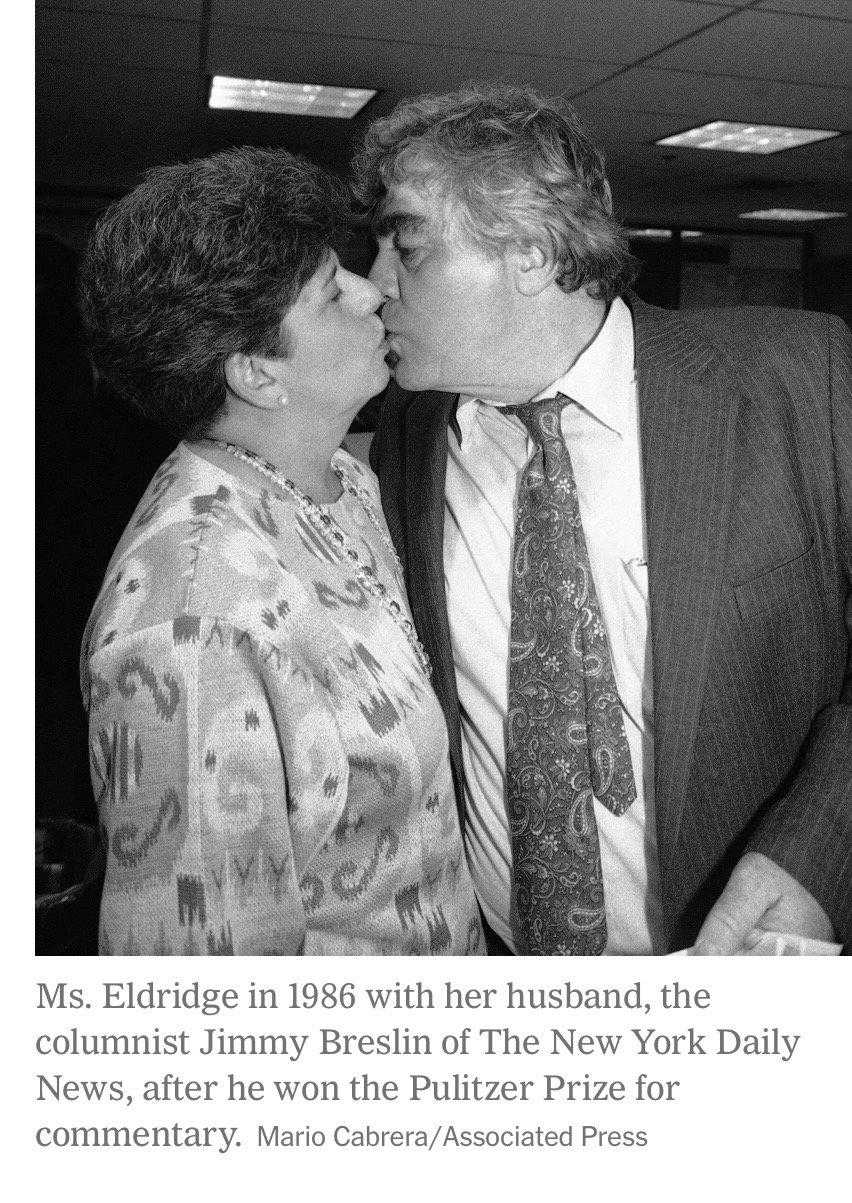
For decades, Ms. Eldridge was a fixture of New York’s political life — as an appointed official and an elected representative, and also as the spouse of Jimmy Breslin, the Pulitzer Prize-winning Daily News and Newsday columnist and best-selling author.
She liked to say she was “born political” because she shared a birthday with President Franklin D. Roosevelt. “I remember being 5 years old and wearing an F.D.R. button,” she told The New York Times. “I used to send birthday cards to the White House, and the White House used to send birthday cards to me.”
A political science major at Barnard College with a self-proclaimed mission of “trying to change the world,” she became a Reform Democratic leader on Manhattan’s Upper West Side. It whetted her appetite for office, but it was an era, she recalled, when women were expected to “serve coffee, address envelopes, act like ladies, be quiet and follow the men.”
However, as a young mother, she became an energetic volunteer, working for Robert F. Kennedy’s successful U.S. Senate run in 1964. Three years later, she opened her West 93rd Street brownstone to a disgruntled and prominent local group of antiwar Democrats who planned to demonstrate against President Lyndon B. Johnson at a party fund-raising dinner in New York and to recruit a challenger for the party’s nomination.
That protest led to the movement that persuaded Senator Eugene J. McCarthy of Minnesota and Senator Kennedy to challenge the president in the primaries, and that prompted Mr. Johnson’s stunning decision to withdraw from the race.
“That was all organized in my living room,” Ms. Eldridge recalled in an oral history interview with the John F. Kennedy Presidential Library. Mr. Kennedy’s assassination in June 1968, she later said, temporarily left her disillusioned with politics. But she quickly found herself with a new source of inspiration, Mayor John V. Lindsay, a liberal Republican whose stances on civil rights, student protests, the Vietnam War and the women’s and gay rights movements were in harmony with her own.
“He was the perfect mayor for those turbulent times,” Ms. Eldridge, who served as coordinator of Democrats for Lindsay in his 1969 re-election campaign, wrote in The Times.
That year, she persuaded her friend Bella S. Abzug, a prominent feminist and co-founder of Women Strike for Peace — an antinuclear and antiwar group — to join her in bolting the Democratic Party and endorsing Mr. Lindsay’s re-election after he lost the Republican primary. He won a second term that November running as a Liberal and an independent against a conservative Democratic opponent as well as a Republican rival.
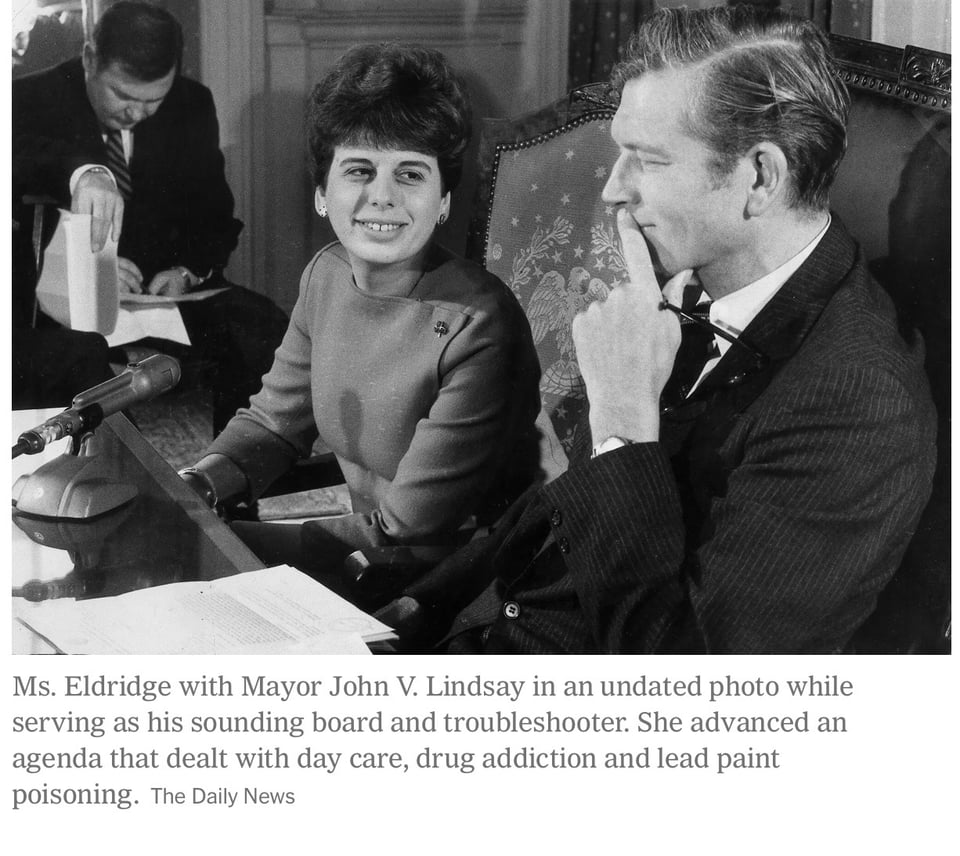
Within the Lindsay administration, she was a trusted sounding board and troubleshooter who pursued her policy agenda relentlessly but disarmingly.
“She had a very clear moral compass,” Jay L. Kriegel, Mr. Lindsay’s chief of staff at the time, said in an interview for this obituary before his death in 2019. “Her values were instinctual. And Ronnie’s laugh had a shaming impact on many of us. Her laugh basically said, ‘Come on, be serious, it’s obvious, it’s clear.’”
An unnamed Lindsay aide praised her to The Times in 1970: “In the mucky‐muck of reform politics, she is one of the few who manages to have cordial relations with everybody. You couldn’t stay mad at her. She also has a very nice way of leaning on you to get something done. She’ll come back each day to ask, ‘Have you done it?’ She’ll smile, and you couldn’t get mad, but she’ll never let go.”
In his book “The Ungovernable City,” a 2001 political biography of Mr. Lindsay, Vincent J. Cannato described Ms. Eldridge’s presence at City Hall as “important because she served as a liaison to liberal Democrats and other previously marginalized groups,” including advocates for gay and women’s rights. She advanced an agenda that dealt with day care, drug addiction and lead paint poisoning.
“Ronnie was our conscience,” Sid Davidoff, another member of Mr. Lindsay’s inner circle, said in an interview for this obituary before his death last year.
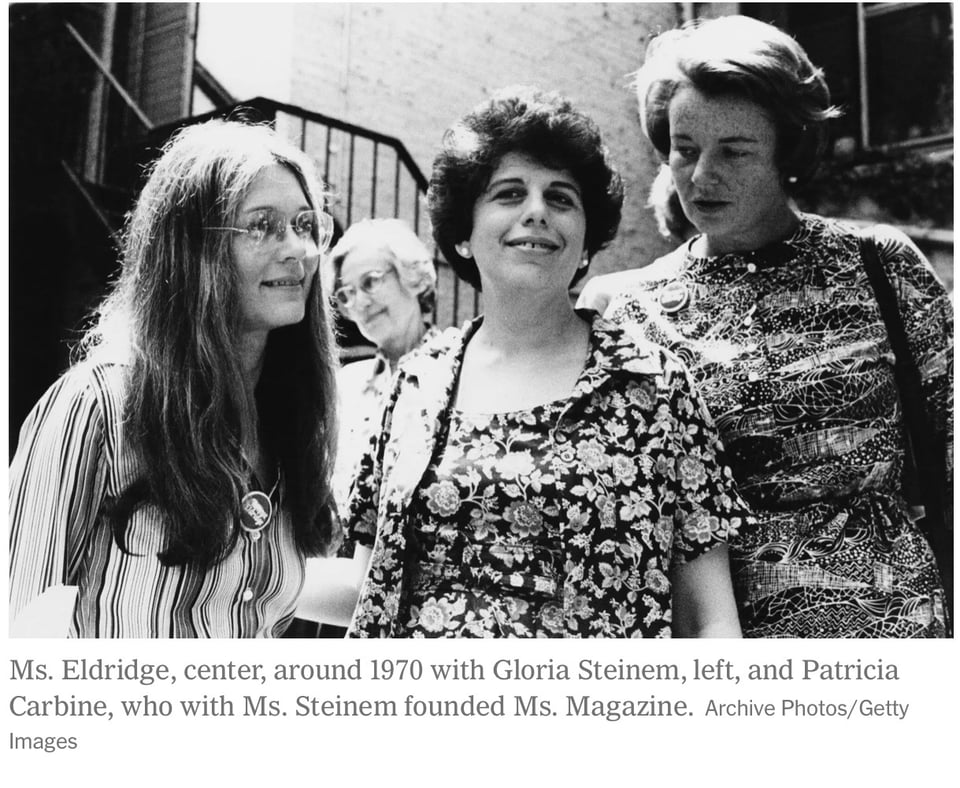
With titles of special assistant to the mayor and later deputy city administrator, she was described by The Times as “one of the most influential women of politics in the city government.” She played a key role in making top appointments, including Robert M. Morgenthau — the future Manhattan district attorney — as a mayoral deputy.
However, Mr. Lindsay rejected Ms. Abzug’s request to be named City Hall’s “activist” emissary to Washington, and she refused to take the role of housing commissioner. When Ms. Eldridge was unable to mediate successfully, Ms. Abzug declared her candidacy in 1970 for what would be the first of three terms in the House of Representatives.
“I could not think of a job for her,” Ms. Eldridge recalled, adding: “She was so angry about that she decided to run for Congress — which was a very good thing.” She went on to assist Mr. Lindsay with his brief presidential primary bid in 1971 and managed Ms. Abzug’s successful re-election campaign in 1972.
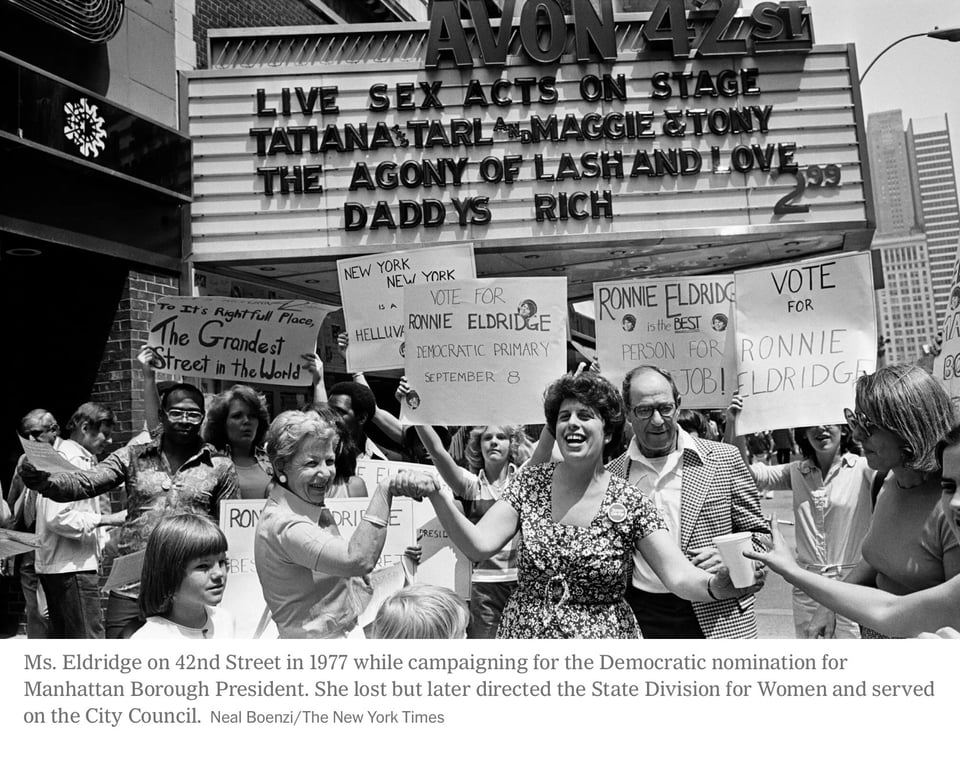
In subsequent years, Ms. Eldridge was an executive producer at WNET-TV (Channel 13); ran unsuccessfully in 1977 for Manhattan borough president; did community relations work for the Port Authority of New York and New Jersey; directed the state Division for Women under Gov. Mario M. Cuomo; was a founder of the New York City Battered Women‘s Defense Committee; hosted an interview program on CUNY-TV; and, from 1989 to 2001, represented an Upper West Side district on the City Council, where she worked on issues including funding support for abused women.
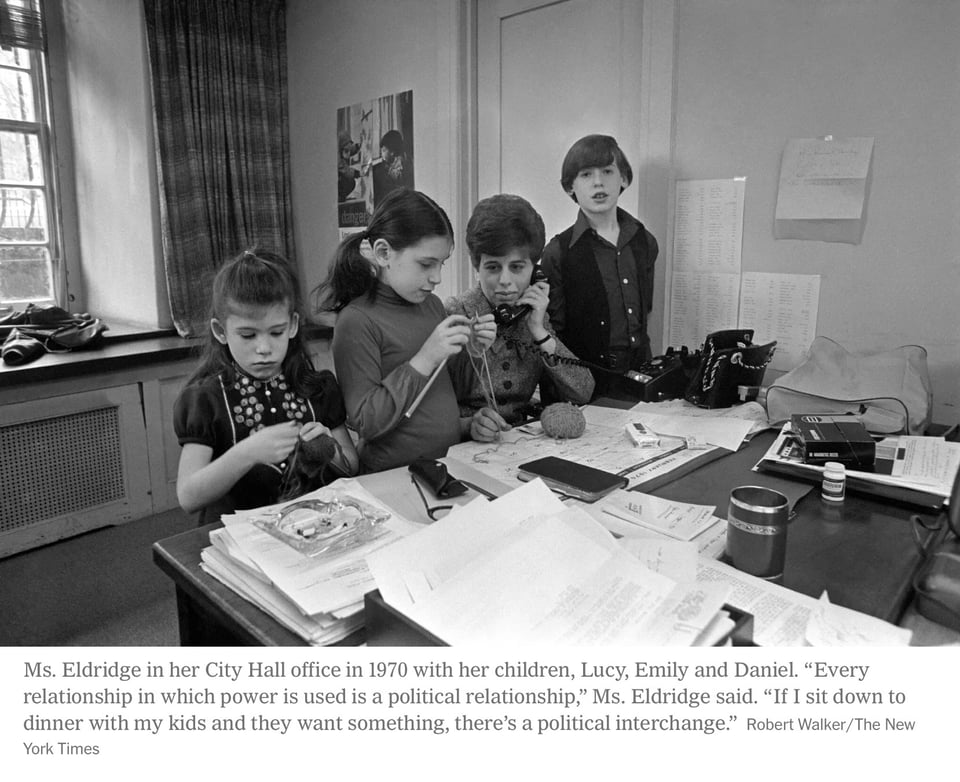
“Politics is all of life,” she once explained to The Times. “Every relationship in which power is used is a political relationship. If I sit down to dinner with my kids and they want something, there’s a political interchange.”
Roslynn (a combination of her grandmothers’ names, Rosa and Lena) Myers was born in Manhattan on Jan. 30, 1931.
Her father, Clifford, was a former hotel manager who handled public relations for Planned Parenthood and fund-raising for the Red Cross. Her mother, Aimee (Fleck) Myers, was an interior decorator.
Ms. Eldridge graduated from what was then known as the High School of Music & Art and in 1952 from Barnard. In 1955, she married Lawrence Eldridge, a psychologist. He died in 1970.
She was married to Mr. Breslin from 1982 until his death in 2017. She is survived by three children from her first marriage, Daniel, Emily and Lucy Eldridge; four stepchildren, James, Kevin, Patrick and Christopher Breslin; six grandchildren; six step-grandchildren; and a step-great-grandchild.
Mr. Breslin recalled that in 1989, at 6:30 in the morning after his wife was first elected to the Council, and after she promised him that she would serve only one term, “she wings out of bed and hits the floor with a thump” to attend a breakfast with labor leaders.
“What are you going there for?” he demanded. “You won the thing last night, remember?”
“Don’t be silly,” she replied. “This is how you get re-elected.” (New York Times)
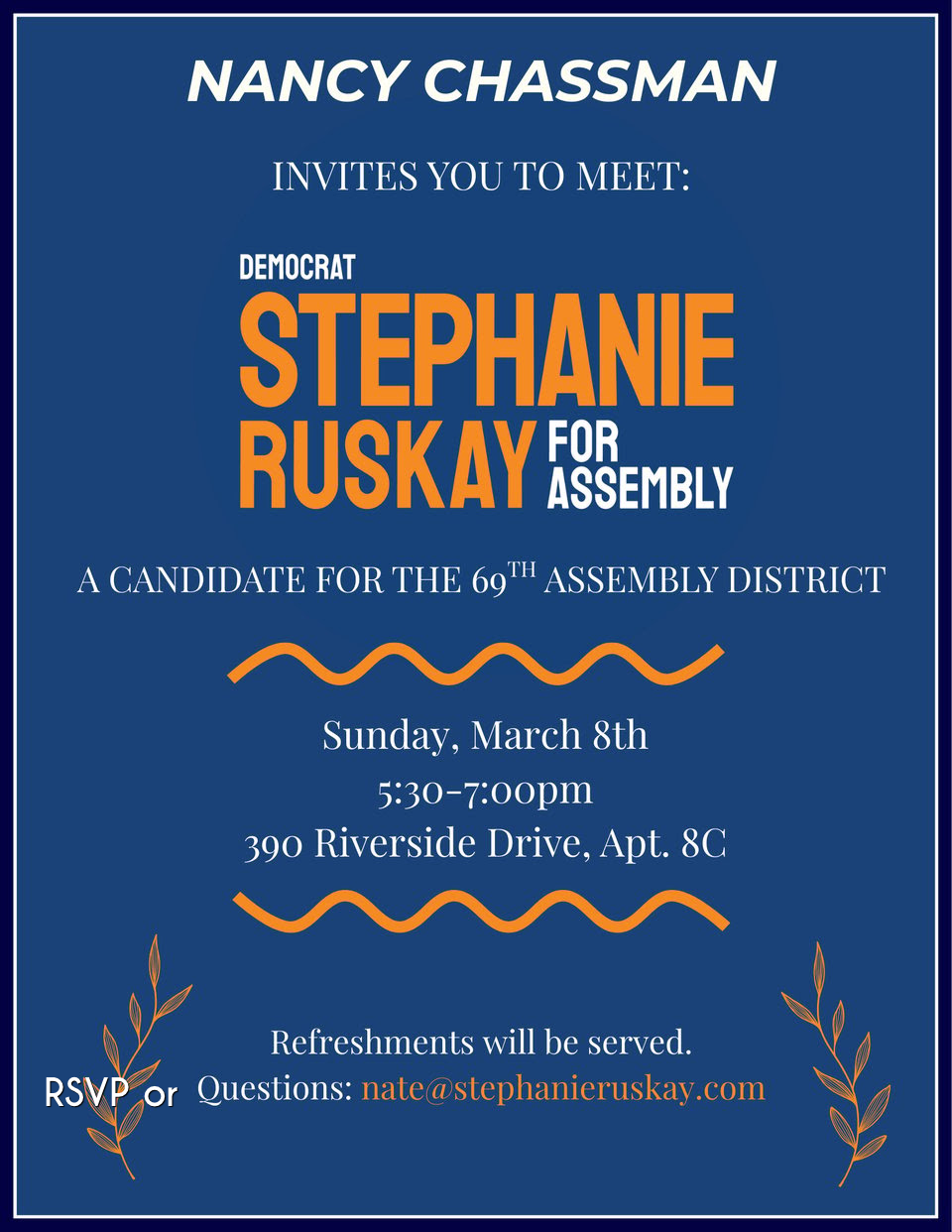
Last call to join Eve and me at a NYC house party for Stephanie Ruskay, candidate for Assembly District 69.
Sunday night. RSVP to Nate@StephanieRuskay.com
If we don’t see you on Sunday, see you on Tuesday.

