Saturday, January 3, 2025. Annette’s Roundup for Democracy.
New Mayors for the New Year.
Mary Sheffield was sworn in as Detroit’s 76th mayor, becoming the first woman to hold the office in the city's 324-year history pic.twitter.com/gfBJRxKAtA
— philip lewis (@Phil_Lewis_) January 1, 2026
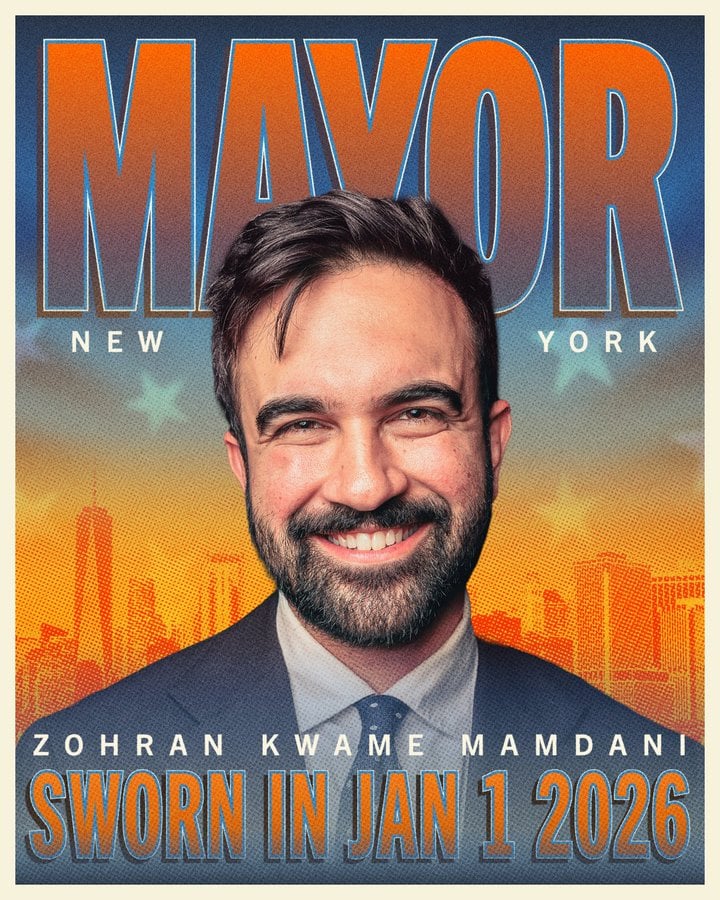
Zohran Mamdani delivered his first public address as New York City's mayor on Thursday, after being officially sworn in as the city’s first Muslim mayor and first mayor of South Asian descent.
During his public inauguration ceremony at New York City Hall on New Year's Day, Mamdani was sworn in by Vermont Sen. Bernie Sanders, a Brooklyn-born independent and fellow democratic socialist who has been an ideological ally, before addressing the crowd.
Read the live transcript of Mamdani's approximately 25-minute inauguration address below.👇
New York City Mayor Zohran Mamdani delivers inaugural address.
"My fellow New Yorkers -- today begins a new era.
I stand before you moved by the privilege of taking this sacred oath, humbled by the faith that you have placed in me and honored to serve as either your 111th or 112th mayor of New York City. But I do not stand alone.
I stand alongside you, the tens of thousands gathered here in Lower Manhattan, warmed against the January chill by the resurgent flame of hope.
I stand alongside countless more New Yorkers watching from cramped kitchens in Flushing and barbershops in East New York, from cellphones propped against the dashboards of parked taxi cabs at LaGuardia, from hospitals in Mott Haven, and libraries in El Barrio that have too long known only neglect.
I stand alongside construction workers in steel-toed boots and halal cart vendors whose knees ache from working all day.
I stand alongside neighbors who carry a plate of food to the elderly couple down the hall, those in a rush who still lift strangers' strollers up subway stairs, and every person who makes the choice day after day, even when it feels impossible, to call our city home.
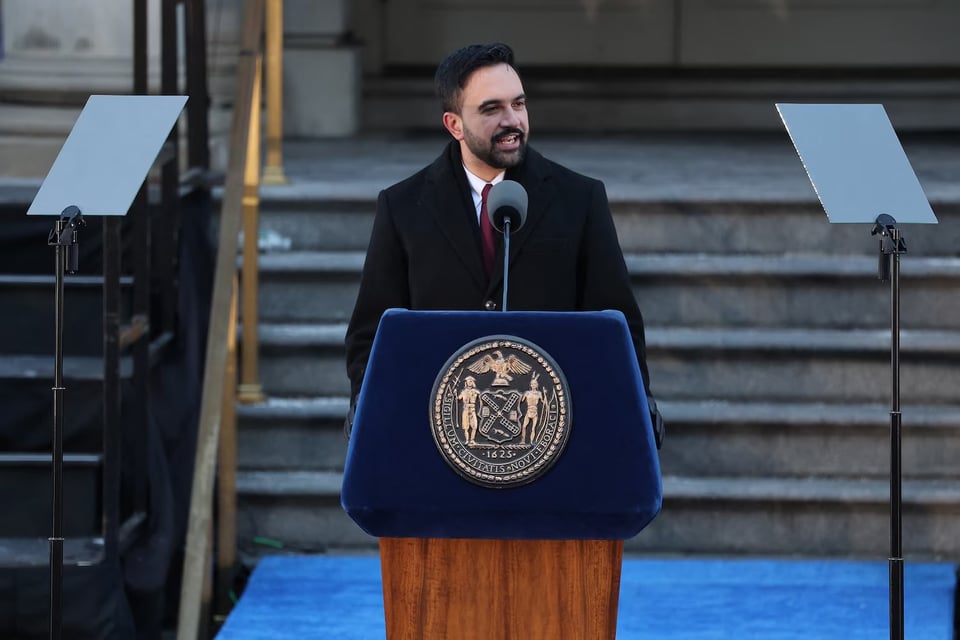
New York mayor Zohran Mamdani speaks during his public inauguration ceremony followed by a block party at City Hall in New York on January 1, 2026.
I stand alongside over one million New Yorkers who voted for this day nearly two months ago -- and I stand just as resolutely alongside those who did not. I know there are some who view this administration with distrust or disdain, or who see politics as permanently broken. And while only action can change minds, I promise you this: If you are a New Yorker, I am your mayor. Regardless of whether we agree, I will protect you, celebrate with you, mourn alongside you, and never, not for a second, hide from you.
I thank the labor and movement leaders here today, the activists and the elected officials who will return to fighting for New Yorkers the second this ceremony concludes, and the performers who have gifted us with their talent.
Thank you to Gov. Hochul. Thank you as well to Mayor Adams -- Dorothy's son, a son of Brownsville who rose from washing dishes to the highest position in our city -- for being here as well. He and I have had our share of disagreements, but I will always be touched that he chose me as the mayoral candidate that he would most want to be trapped with on an elevator.
Thank you to the two titans who, as an assemblymember, I’ve had the privilege of being represented by in Congress -- Nydia Velázquez and our incredible opening speaker, Alexandria Ocasio-Cortez. You have paved the way for this moment.
Thank you to the man whose leadership I seek most to emulate, who I am so grateful to be sworn in by today -- Sen. Bernie Sanders.
Thank you to my teams -- from the Assembly, to the campaign, to the transition and now, the team I am so excited to lead from City Hall.
Thank you to my parents, Mama and Baba, for raising me, for teaching me how to be in this world, and for having brought me to this city. Thank you to my family --from Kampala to Delhi. And thank you to my wife, Rama, for being my best friend and for always showing me the beauty in everyday things.
Most of all -- thank you to the people of New York.
A moment like this comes rarely. Seldom do we hold such an opportunity to transform and reinvent. Rarer still is it the people themselves whose hands are the ones upon the levers of change.
And yet we know that too often in our past, moments of great possibility have been promptly surrendered to small imagination and smaller ambition. What was promised was never pursued, what could have changed remained the same. For the New Yorkers most eager to see our city remade, the weight has only grown heavier, the wait has only grown longer.
In writing this address, I have been told that this is the occasion to reset expectations, that I should use this opportunity to encourage the people of New York to ask for little and expect even less. I will do no such thing. The only expectation I seek to reset is that of small expectations.
Beginning today, we will govern expansively and audaciously. We may not always succeed, but never will we be accused of lacking the courage to try.
To those who insist that the era of big government is over, hear me when I say this -- no longer will City Hall hesitate to use its power to improve New Yorkers' lives.
For too long, we have turned to the private sector for greatness while accepting mediocrity from those who serve the public. I cannot blame anyone who has come to question the role of government, whose faith in democracy has been eroded by decades of apathy. We will restore that trust by walking a different path -- one where government is no longer solely the final recourse for those struggling, one where excellence is no longer the exception.
We expect greatness from the cooks wielding a thousand spices, from those who stride out onto our Broadway stages, from our starting point guard at Madison Square Garden. Let us demand the same from those who work in government. In a city where the mere names of our streets are associated with the innovation of the industries that call them home, we will make the words 'City Hall' synonymous with both resolve and results.
As we embark upon this work, let us advance a new answer to the question asked of every generation: Who does New York belong to?
For much of our history, the response from City Hall has been simple: It belongs only to the wealthy and well-connected, those who never strain to capture the attention of those in power.
Working people have reckoned with the consequences: crowded classrooms and public housing developments where the elevators sit out of order; roads littered with potholes and buses that arrive half an hour late, if at all; wages that do not rise and corporations that rip off consumers and employees alike.
And still -- there have been brief, fleeting moments where the equation changed.
Twelve years ago, Bill de Blasio stood where I stand now as he promised to 'put an end to economic and social inequalities' that divided our city into two.
In 1990, David Dinkins swore the same oath I swore today, vowing to celebrate the 'gorgeous mosaic' that is New York, where every one of us is deserving of a decent life.
And nearly six decades before him, Fiorello La Guardia took office with the goal of building a city that was 'far greater and more beautiful' for the hungry and the poor.
Some of these mayors achieved more success than others. But they were unified by a shared belief that New York could belong to more than just a privileged few. It could belong to those who operate our subways and rake our parks, those who feed us biryani and beef patties, picanha and pastrami on rye. And they know that this belief could be made true if only government dared to work hardest for those who work hardest.
Over the years to come, my administration will resurrect that legacy. City Hall will deliver an agenda of safety, affordability, and abundance -- where government looks and lives like the people it represents, never flinches in the fight against corporate greed, and refuses to cower before challenges that others have deemed too complicated.
In so doing, we will provide our own answer to that age-old question -- who does New York belong to? Well, my friends, we can look to Madiba and the South African Freedom Charter: New York 'belongs to all who live in it.'
Together, we will tell a new story of our city.
This will not be a tale of one city, governed only by the 1%. Nor will it be a tale of two cities, the rich versus the poor.
It will be a tale of 8 1/2 million cities, each of them a New Yorker with hopes and fears, each a universe, each of them woven together.
The authors of this story will speak Pashto and Mandarin, Yiddish and Creole. They will pray in mosques, at shul, at church, at gurdwaras and mandirs and temples -- and many will not pray at all.
They will be Russian Jewish immigrants in Brighton Beach, Italians in Rossville, and Irish families in Woodhaven -- many of whom came here with nothing but a dream of a better life, a dream which has withered away. They will be young people in cramped Marble Hill apartments where the walls shake when the subway passes. They will be Black homeowners in St. Albans whose homes represent a physical testament to triumph over decades of lesser-paid labor and redlining. They will be Palestinian New Yorkers in Bay Ridge, who will no longer have to contend with a politics that speaks of universalism and then makes them the exception.
Few of these 8 1/2 million will fit into neat and easy boxes. Some will be voters from Hillside Avenue or Fordham Road who supported President Trump a year before they voted for me, tired of being failed by their party's establishment. The majority will not use the language that we often expect from those who wield influence. I welcome the change. For too long, those fluent in the good grammar of civility have deployed decorum to mask agendas of cruelty.
Many of these people have been betrayed by the established order. But in our administration, their needs will be met. Their hopes and dreams and interests will be reflected transparently in government. They will shape our future.
And if for too long these communities have existed as distinct from one another, we will draw this city closer together. We will replace the frigidity of rugged individualism with the warmth of collectivism. If our campaign demonstrated that the people of New York yearn for solidarity, then let this government foster it. Because no matter what you eat, how you pray, or where you come from -- the words that most define us are the two we all share: New Yorkers.
And it will be New Yorkers who reform a long-broken property tax system. New Yorkers who will create a new Department of Community Safety that will tackle the mental health crisis and let the police focus on the job they signed up to do. New Yorkers who will take on the bad landlords who mistreat their tenants and free small business owners from the shackles of bloated bureaucracy. And I am proud to be one of those New Yorkers.
When we won the primary last June, there were many who said these aspirations and those who held them had come out of nowhere. Yet one man’s nowhere is another man’s somewhere. This movement came out of 8 1/2 million somewheres -- taxi cab depots and Amazon warehouses, DSA meetings and curbside domino games. The powers that be had looked away from these places for quite some time -- if they’d known about them at all -- so they dismissed them as nowhere. But in our city, where every corner of these five boroughs holds power, there is no nowhere and there is no no one. There is only New York, and there are only New Yorkers.
Eight and a half million New Yorkers will speak this new era into existence. It will be loud. It will be different. It will feel like the New York we love.
No matter how long you have called this city home, that love has shaped your life. I know that it has shaped mine.
This is the city where I set land-speed records on my Razor scooter at the age of 12. Quickest four blocks of my life.
The city where I ate powdered donuts at halftimes during AYSO soccer games and realized I probably was not going to be going pro. The city where I devoured too-big slices at Koronets Pizza, played cricket with my friends at Ferry Point Park, and took the 1 train to the BX10 only to still show up late to Bronx Science.
The city where I have gone on hunger strike just outside these gates, sat claustrophobic on a stalled N train just after Atlantic Avenue, and waited in quiet terror for my father to emerge from 26 Federal Plaza.
The city where I took a beautiful woman named Rama to McCarren Park on our first date and swore a different oath to become an American citizen on Pearl Street.
To live in New York, to love New York, is to know that we are the stewards of something without equal in our world. Where else can you hear the sound of the steelpan, savor the smell of sancocho, and pay $9 for coffee on the same block? Where else could a Muslim kid like me grow up eating bagels and lox every Sunday?
That love will be our guide as we pursue our agenda. Here, where the language of the New Deal was born, we will return the vast resources of this city to the workers who call it home. Not only will we make it possible for every New Yorker to afford a life they love once again -- we will overcome the isolation that too many feel and connect the people of this city to one another.
The cost of childcare will no longer discourage young adults from starting a family -- because we will deliver universal childcare for the many by taxing the wealthiest few.
Those in rent-stabilized homes will no longer dread the latest rent hike -- because we will freeze the rent.
Getting on a bus without worrying about a fare hike or whether you’ll be late to your destination on time will no longer be deemed a small miracle -- because we will make buses fast and free.
These policies are not simply about the costs we make free, but the lives we fill with freedom. For too long in our city, freedom has belonged only to those who can afford to buy it. Our City Hall will change that.
These promises carried our movement to City Hall, and they will carry us from the rallying cries of a campaign to the realities of a new era in politics.
Two Sundays ago, as snow softly fell, I spent 12 hours at the Museum of the Moving Image in Astoria, listening to New Yorkers from every borough as they told me about the city that is theirs.
We discussed construction hours on the Van Wyck Expressway and EBT eligibility, affordable housing for artists and ICE raids. I spoke to a man named TJ who said that one day a few years ago, his heart broke as he realized he would never get ahead here, no matter how hard he worked. I spoke to a Pakistani auntie named Samina, who told me that this movement had fostered something too rare: softness in people's hearts. As she said in Urdu: 'logon ke dil badalgyehe.'
One hundred and forty two New Yorkers out of 8 1/2 million. And yet -- if anything united each person sitting across from me, it was the shared recognition that this moment demands a new politics, and a new approach to power.
We will deliver nothing less as we work each day to make this city belong to more of its people than it did the day before.
Here is what I want you to expect from the administration that this morning moved into the building behind me.
We will transform the culture of City Hall from one of 'no' to one of 'how?'
We will answer to all New Yorkers, not to any billionaire or oligarch who thinks they can buy our democracy.
We will govern without shame and insecurity, making no apology for what we believe. I was elected as a democratic socialist and I will govern as a democratic socialist. I will not abandon my principles for fear of being deemed radical. As the great senator from Vermont once said: 'What's radical is a system which gives so much to so few and denies so many people the basic necessities of life.'
We will strive each day to ensure that no New Yorker is priced out of any one of those basic necessities.
And throughout it all we will, in the words of Jason Terrance Phillips, better known as Jadakiss or J to the Muah, be 'outside' -- because this is a government of New York, by New York, and for New York.
Trump, Mamdani promise to work to help NYC and tackle affordability in cordial meeting
Before I end, I want to ask all of you, if you are able, whether you are here today or anywhere watching, to stand with me.
I ask for you to stand with us now, and every day that follows. City Hall will not be able to deliver on our own. And while we will encourage New Yorkers to demand more from those with the great privilege of serving them, we will encourage you to demand more of yourselves as well.
The movement we began over a year ago did not end with our election. It will not end this afternoon. It lives on with every battle we will fight, together; every blizzard and flood we withstand, together; every moment of fiscal challenge we overcome with ambition, not austerity, together; every way we pursue change in working peoples' interests, rather than at their expense, together.
No longer will we treat victory as an invitation to turn off the news. From today onwards, we will understand victory very simply: something with the power to transform lives, and something that demands effort from each of us, every single day.
What we achieve together will reach across the five boroughs and it will resonate far beyond. There are many who will be watching. They want to know if the left can govern. They want to know if the struggles that afflict them can be solved. They want to know if it is right to hope again.
So, standing together with the wind of purpose at our backs, we will do something that New Yorkers do better than anyone else: We will set an example for the world. If what Sinatra said is true, let us prove that anyone can make it in New York -- and anywhere else, too. Let us prove that when a city belongs to the people, there is no need too small to be met, no person too sick to be made healthy, no one too alone to feel like New York is their home.
The work continues. The work endures. The work, my friends, has only just begun.
Thank you." (ABC News)
Tonight is the first time New York State has officially recognized Muslim American Heritage Month, and we're grateful to @GovKathyHochul for this proclamation honoring the Muslim New Yorkers who help make this place what it is—from small business owners to first responders,… pic.twitter.com/iyUXuOJJqD
— NYC Mayor's Office (@NYCMayorsOffice) January 3, 2026
Trump Accountability for January 6th is in the air.
#1. Former Special Counsel Jack Smith testified before the House Judiciary Committee in a closed-door deposition on December 17, 2025, about the riot of January 6, 2021 and Trump’s role in it. The transcript of his testimony was released on New Year's Eve, December 31, 2025.
The Jan. 6th attack 'does not happen' without Trump, Jack Smith told Congress.
Jack Smith - The Short Version.
Touch for the summary of the special counsel’s testimony.👇
JACK SMITH: “We had proof beyond a reasonable doubt Trump engaged in a criminal scheme to overturn the results of the 2020 election, prevent the peaceful transfer of power, retained classified docs, obstructed justice… I’d charge an ex president again regardless of party.” pic.twitter.com/sDUgFburhY
— The Tennessee Holler (@TheTNHoller) January 1, 2026
The Eight hour video testimony.
Jack Smith’s testimony.Redacted
#2. A Clear and Powerful Statement on Trump by the New York Times editorial board.
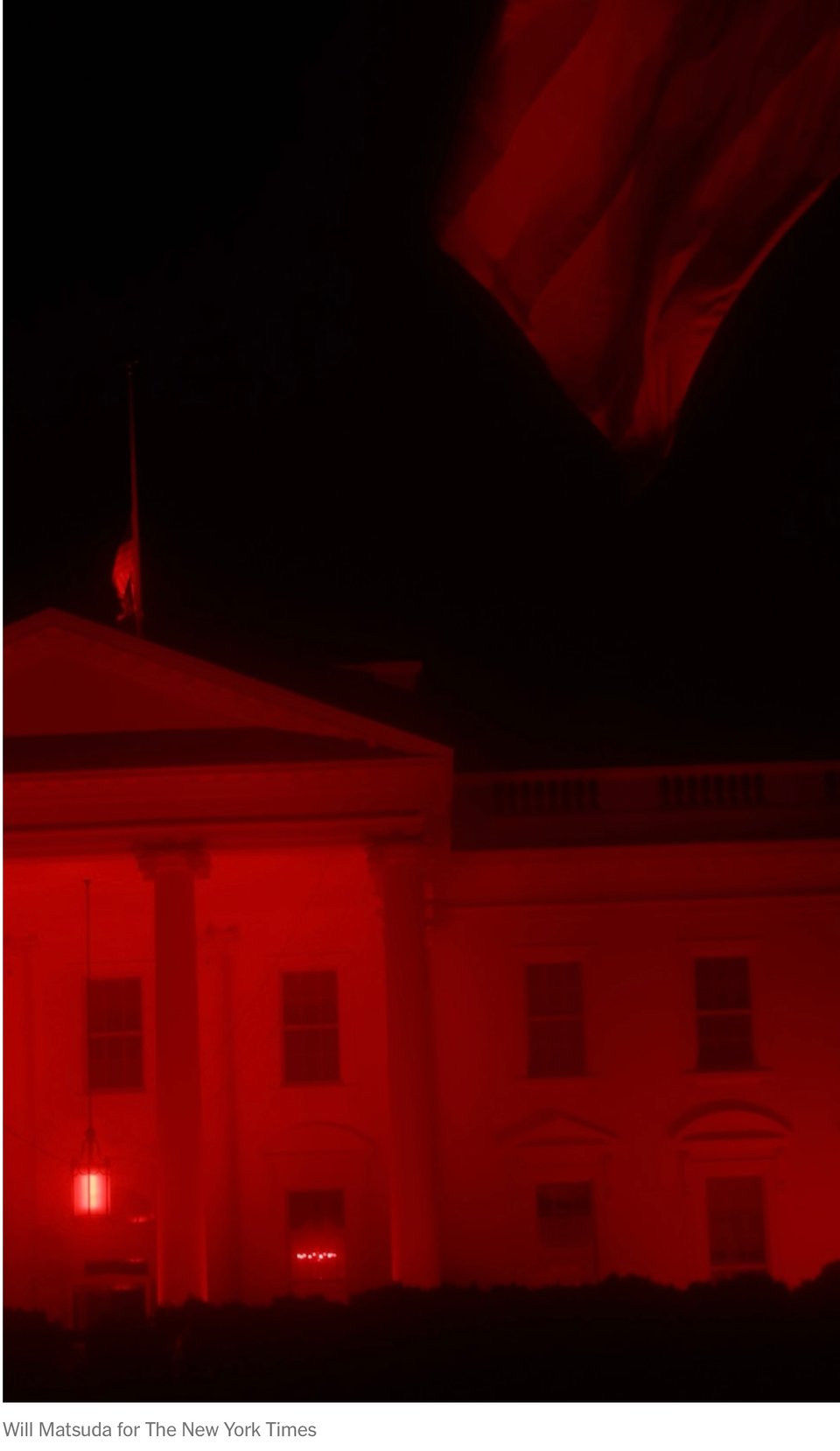
Trump Is the Jan. 6 President.

It was a day that should live in infamy. Instead, it was the day President Trump’s second term began to take shape.
Five years ago, on Jan. 6, 2021, a pro-Trump mob stormed the Capitol, hoping to overturn the result of the 2020 presidential election. After the sun set that day, Congress reconvened to certify Joe Biden’s victory. The rioters lost, and so did Mr. Trump, who had summoned them to Washington and urged them to march to the Capitol. The Trump era seemed to have ended in one of the most disgracefully anti-American acts in the nation’s history.
That day was indeed a turning point, but not the one it first seemed to be. It was a turning point toward a version of Mr. Trump who is even more lawless than the one who governed the country in his first term. It heralded a culture of political unaccountability, in which people who violently attacked Congress and beat police officers escaped without lasting consequence. The politicians and pundits who had egged on the attack with their lies escaped, as well. The aftermath of Jan. 6 made the Republican Party even more feckless, beholden to one man and willing to pervert reality to serve his interests. Once Mr. Trump won election again in 2024, despite his role in encouraging the riot and his many distortions about it, it emboldened him to govern in defiance of the Constitution, without regard for the truth and with malice toward those who stand up to his abuses.
Tragically, America is still living in a political era that began on Jan. 6, 2021. Recognizing as much is necessary to bring this era to an end before it has many more anniversaries.
All this would have been hard to conceive for many Americans five years ago. Disgust was bipartisan for a time because so many episodes of that day seemed unforgettable.
As members of Congress were meeting to certify the presidential election result, more than 2,000 protesters forced their way into the Capitol, smashing windows and overturning barricades. They chanted about their desire to hang Vice President Mike Pence and track down Representative Nancy Pelosi. Fearing for their lives, elected officials, their aides and people who happened to be visiting the Capitol scrambled to find safe hiding spaces. The rioters eventually broke into the Senate chamber.

The victims who suffered the worst violence were the police officers protecting the Capitol. Patrick McCaughey, one of the rioters, pinned a Metropolitan Police officer, Daniel Hodges, with a stolen riot shield. Steven Cappuccio, another attacker, used Officer Hodges’s own baton to beat him, leaving him to scream through bloodied teeth. David Dempsey discharged a stream of pepper spray that burned the lungs, throat, eyes and face of Detective Phuson Nguyen. Julian Khater shot pepper spray into the face of the Capitol Police officer Brian D. Sicknick, who suffered a series of strokes hours later and died.
As the deceased officer’s mother, Gladys Sicknick, later said to the attackers in court, “All of you bear responsibility for the injuries sustained by Brian’s fellow officers — the broken bones, head trauma and the continuing mental anguish they suffer and will endure for the rest of their lives.” Four other officers on duty that day died by suicide in the seven months after the attacks.
Mr. Trump made possible the lawlessness. After he lost the 2020 election, he spent weeks peddling the lie that he had rightfully won. He encouraged state officials to “find” votes for him or simply appoint electors loyal to him. He tried to pressure Mr. Pence not to certify the result. In a final attempt to subvert democracy and overturn the election, Mr. Trump’s supporters went to Washington on Jan. 6.
That morning, he appeared at the Ellipse, a park near the White House, and suggested to his supporters gathered there that he would march with them to the Capitol. He said so even though he knew some of them were armed, according to House Jan. 6 committee witness testimony. “Fight like hell,” he told the mob.
After the protesters marched to Capitol Hill and forced their way into the Capitol, Mr. Trump tweeted criticism of Mr. Pence at almost the same moment that Mr. Pence had to flee to a secure location. As the violence intensified and Mr. Trump’s staff implored him to intervene, he delayed sending security reinforcements to the Capitol. He sent a couple of halfhearted tweets urging his supporters to stay peaceful but did not tell them to leave the building.
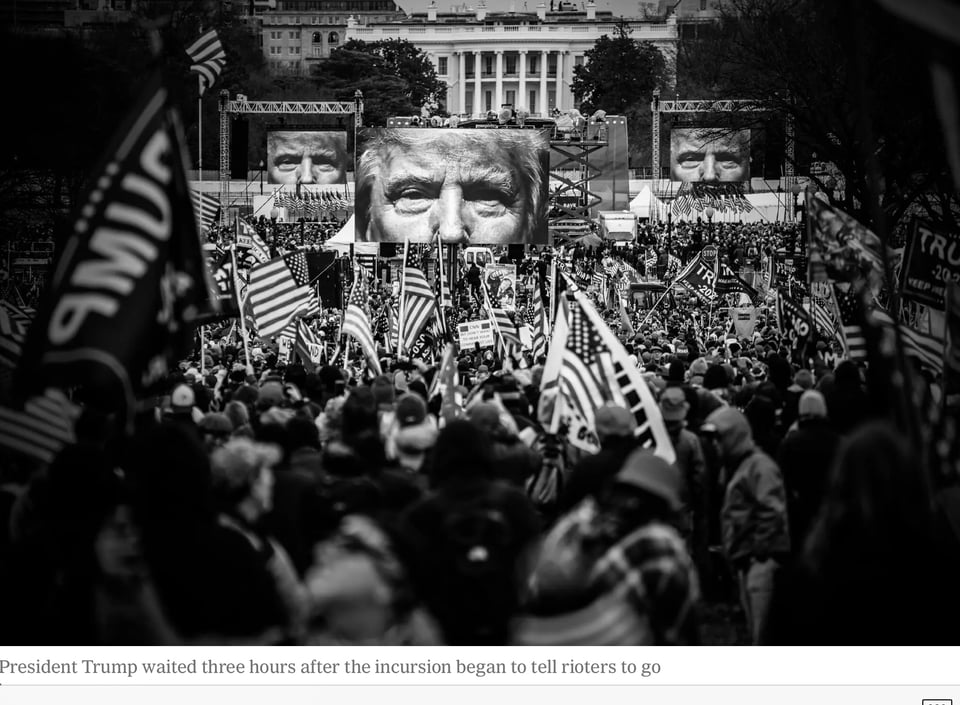
Not until almost three hours after the attack began did Mr. Trump release a video telling the rioters to go home. It was clear that restoring peace was far from his priority. In the video, he dwelled on his false claims that the 2020 election had been stolen, which was the mob’s justification for attacking the certification of votes. His video was, at best, a mixed message, in which he signaled that the cause of the riot was just even as he called for nonviolence long after violence had started.
That video would mark the high point of his chagrin for the Jan. 6 violence. At 6 p.m., less than two hours after releasing the video, he returned to distorting the historical record. “These are the things and events that happen when a sacred landslide election victory is so unceremoniously & viciously stripped away from great patriots who have been badly & unfairly treated for so long,” he tweeted. “Go home with love & in peace. Remember this day forever!”
Over the next several years, Jan. 6 became a “day of love” in Mr. Trump’s telling: The rioters were “patriots,” and those detained were “hostages” whose suffering compared to that of Japanese Americans interned during World War II. He made common cause with the most extreme elements of his coalition to manipulate history. Together, they rallied right-wing media to their cause, silenced all but a few Republican critics and intimidated corporate leaders into complicity.
This behavior, though inexcusable, was not shocking. It fit with Mr. Trump’s character, as both a businessman and a politician who has long pursued his self-interest without legal or ethical restraint.
The shocking part of the story was the response of so many other people in government, media and business.
Initially, many denounced him. As rioters stormed the Capitol, the Fox News hosts Sean Hannity and Laura Ingraham sent texts to the White House chief of staff at the time, Mark Meadows, urging him to persuade Mr. Trump to end the attack. Amazon and other companies suspended campaign donations to Republicans who had refused to certify the 2020 election results. Facebook and Twitter banned Mr. Trump from their platforms.
The most important role fell to Congress. It had the power to bar him from holding office again, the appropriate punishment for a political leader who encouraged and praised an attack on Congress. The House impeached him, with 222 Democratic and 10 Republican votes, just seven days after Jan. 6.
Hard as it may be to recall now, the Senate appeared close to convicting him and barring him from office. As The Times reported on Jan. 12, Senator Mitch McConnell, then the Republican leader, “has concluded that President Trump committed impeachable offenses and believes that Democrats’ move to impeach him will make it easier to purge Mr. Trump from the party, according to people familiar with Mr. McConnell’s thinking.”
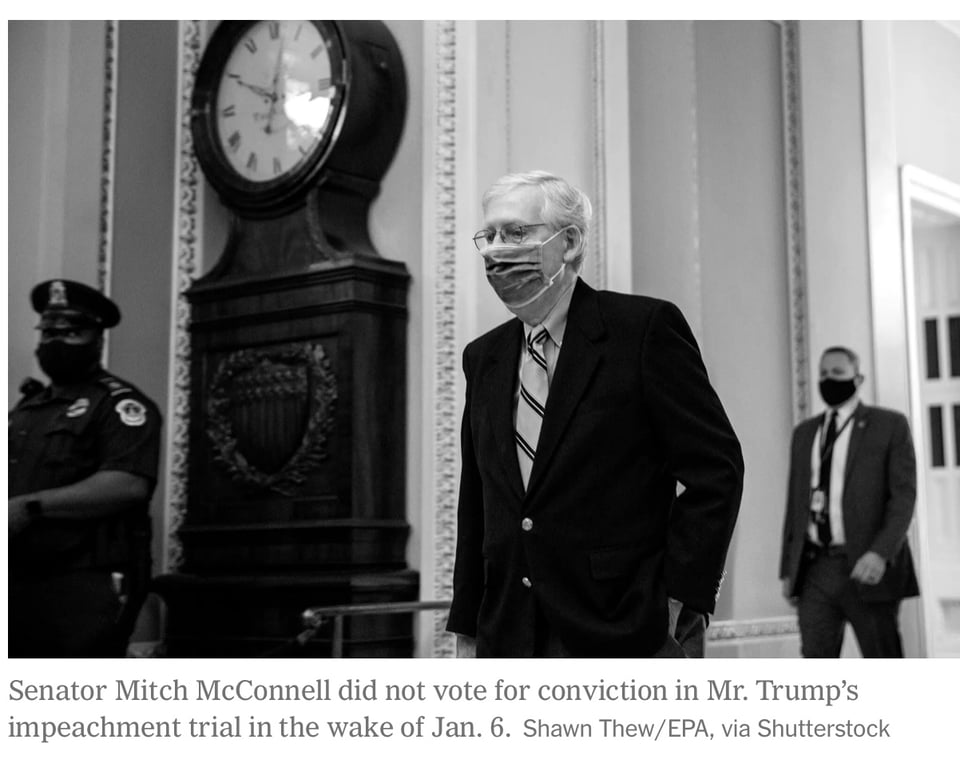
Within days, though, Mr. McConnell surrendered his influence and his principles. He “never mounted a campaign to persuade other Republicans to join him,” The Times reported. He allowed Mr. Trump’s supporters to dominate the debate. Convicting Mr. Trump would have required 17 Republican votes in the Senate, and seven senators courageously voted for conviction. The most consequential unknown of Jan. 6 is what would have happened if Mr. McConnell had shown similar courage. He might well have found the 10 extra votes needed to change American history. In the end, he did not even vote for conviction himself.
It will be the defining stain on Mr. McConnell’s legacy. He may realize it, too. In the past year, he has turned into a rare Republican senator willing to defy Mr. Trump on some major policies.
After the Senate voted against conviction, there were no similarly clean paths toward accountability. The House of Representatives’ Jan. 6 committee did admirable work, reconstructing the day and Mr. Trump’s role in it, in 2022. That work appears to have had a political impact. In the midterm elections that year, Mr. Trump’s allies and defenders fared five percentage points worse, on average, than other Republicans. In swing states, prominent 2020 election deniers lost their races. Still, dissatisfaction with the Biden administration handed Republicans control of the House, and they abandoned any Jan. 6 accountability once they were in charge. Instead, they began investigating their colleagues who had attempted to bring justice to Mr. Trump.
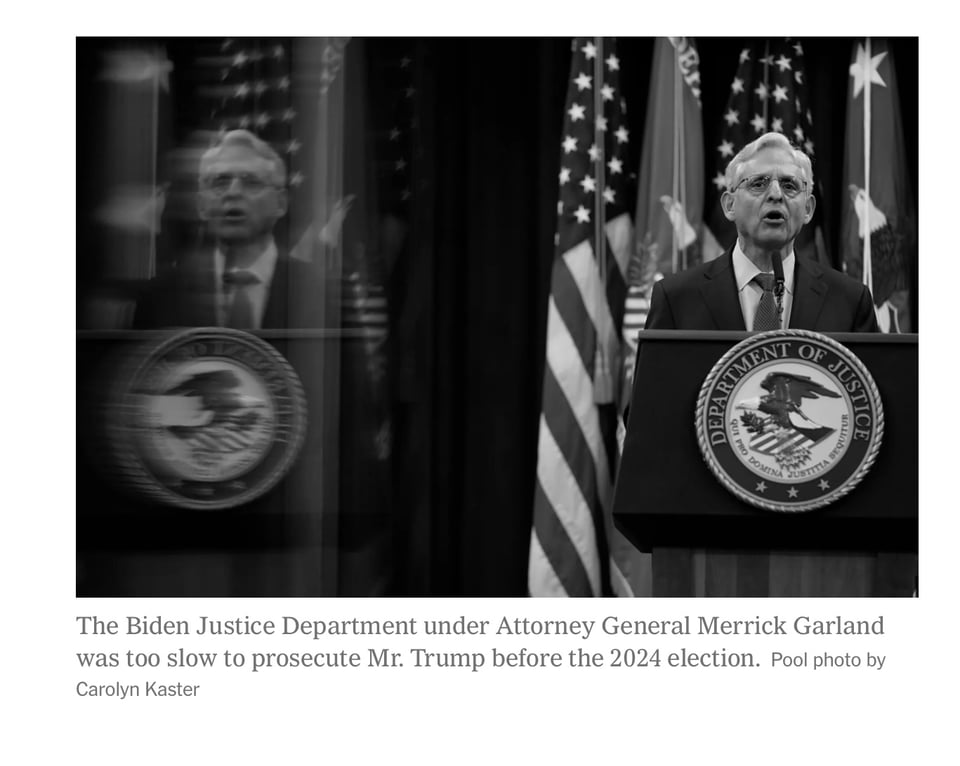
The legal system also took some steps to fill the accountability gap. But it moved slowly and ineffectively. Justice Department officials, led by Attorney General Merrick Garland, agonized over whether to prosecute a former president from the other party. In the end, they did, but their case produced arguably the worst of all results. It happened too slowly for a trial to take place before Mr. Trump ran for president again in 2024 and thus potentially to influence public perceptions, as the House’s Jan. 6 hearings did two years earlier. Yet the existence of the case allowed Mr. Trump to cast himself as the victim of a politicized prosecution.
The strongest state case, in Georgia, was even more flawed. Prosecutors, led by Fani Willis, the district attorney of Fulton County, charged Mr. Trump and 18 others with a racketeering conspiracy for their efforts to overturn Georgia’s 2020 election. Those prosecutors also moved slowly. Worse, Ms. Willis undermined the case by engaging in a secret, deeply irresponsible romantic relationship with a prosecutor who reported to her.
Even without these issues, the criminal justice system would always have been a less effective means than Congress for holding Mr. Trump accountable. Only Congress could have definitively ended his political career. A convicted person can still run for federal office.
With the political and legal systems failing to punish him, much of the rest of the country started to move on. Business leaders made excuses for him. The conservative media establishment promoted him again and cheered on the purge of Republicans who had criticized his role in Jan. 6. Many voters, too, forgave — or at least proved willing to overlook his crimes — and decided that a second Trump presidency was preferable to Mr. Biden’s or Kamala Harris’s leadership. Some 77 million Americans voted for Mr. Trump in 2024.
He learned that he could get away with more than he dared to try in his first term.
Once he was elected, his post-Jan. 6 experience inspired his administration’s goals and methods. He and his aides concluded that intimidation and lawlessness could yield victories even in seemingly unwinnable and sometimes illegal circumstances.
They used Jan. 6 as a litmus test to identify and promote loyalists. They asked prospective national security officials whether the Capitol assault was “an inside job,” The Washington Post reported. The administration gave senior jobs to extremists, opportunists and conspiracy theorists. Kash Patel, Mr. Trump’s current F.B.I. director, promoted the theory that the F.B.I. had secretly encouraged Jan. 6 violence. Mr. Patel and other administration officials retaliated against prosecutors and F.B.I. agents who had insisted on enforcing the law impartially. Many noble people have been fired or demoted. Some face unjust federal investigations.
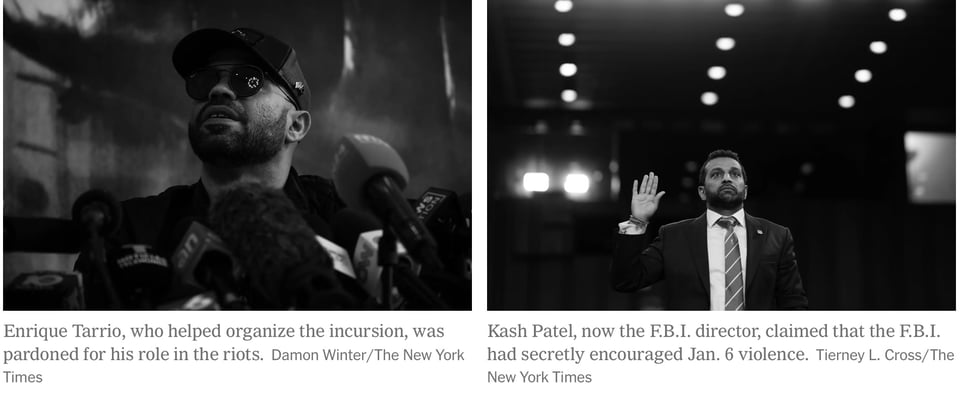
On the first day of his second term, Mr. Trump granted clemency to all of the nearly 1,600 people charged or convicted in connection with Jan. 6. The group included hundreds of defendants found to have assaulted law enforcement officers. It included Stewart Rhodes and Enrique Tarrio, who helped organize the attack. The pardons came eight days after JD Vance, preparing to take office as vice president, said, “If you committed violence on that day, obviously you shouldn’t be pardoned.” The president has also pardoned supporters, like Rudolph Giuliani, who tried to overturn the 2020 election results with fraudulent electors.
The pardons issue a message: If you break the law to protect me, you will be supported, and if you uphold the law to restrain me, you will be persecuted. Today, Ed Martin, who helped raise money for Jan. 6 defendants, holds a top Justice Department job effectively dedicated to hounding Mr. Trump’s perceived enemies. Mr. Martin and his working group are investigating prosecutors, F.B.I. agents and members of Congress whose jobs obligated them to investigate Jan. 6.
The thuggishness extends far beyond the people who were directly involved in Jan. 6 cases. The legacy of that day has taught Mr. Trump how to use power more aggressively to advance his interests. In his second term, he has surrounded himself with officials who accede to his lawless demands. One example: Bill Pulte, who runs the Federal Housing Finance Agency, has accused outspoken Democratic lawmakers of mortgage fraud and gone after Lisa Cook, a Federal Reserve governor whose views on monetary policy Mr. Trump does not like.
Mr. Trump has also learned that congressional Republicans will bow to him even when he treats them with contempt or ignores the Constitution. He has defied the War Powers Act by blowing up boats in international waters, set high tariff rates without consulting Congress and nominated preposterous candidates for the Senate to confirm. He has forced the retirement of legislators who buck him. He has suggested that the House of Representatives has little independent power. “I’m the speaker and the president,” he recently joked. In private, legislators acknowledge that they obey him partly because they fear violence from his supporters.
Mr. Trump likewise plays the courts more successfully than in his first term. The Supreme Court has helped him, first by ruling in 2024 that presidents have almost complete immunity from future prosecution. As a result, he knows that he faces little legal jeopardy for his most outrageous actions. The justices have also proved unwilling to halt some of Mr. Trump’s most dubious second-term policies, such as his tariffs and use of ethnic profiling in immigration raids. The justices have instead allowed most policies to proceed while the cases gradually wind through the courts. Much as he ran out the clock on his post-Jan. 6 prosecutions, he has reshaped U.S. trading relationships, immigration policy and other areas before the legal system has roused itself to intervene.
Again and again, Mr. Trump dares the system to stop him. He does so knowing that the same system that failed to hold him to account for Jan. 6 is unlikely to do so now. The effects might outlast him. He has shown his Republican would-be successors, starting with Mr. Vance, that they can rewrite palpable history, encourage federal crimes for political ends by pardoning guilty people, exact revenge on those who do their duty to uphold the law and manipulate a docile Supreme Court majority willing to hand sweeping, unprecedented powers to a president.
In Mr. Trump’s second term, he has governed as if Jan. 6 never ended. The damage to the nation is severe.
As dark as this story has become, it is not over. Its next chapters will depend on what Americans do now, especially those who share some of Mr. Trump’s policy preferences but remain loyal to American democracy. Many people have already responded heroically to Jan. 6. Police officers risked their lives and suffered beatings to defend the Capitol. Hundreds of F.B.I. agents, prosecutors, congressional aides and others investigated the day’s events and created a historical record that Mr. Trump cannot erase. A small number of elected Republicans — including Liz Cheney, Anthony Gonzalez, Jaime Herrera Beutler, Adam Kinzinger, Peter Meijer and Mitt Romney — insisted on defending the Constitution, at the cost of their careers.
The past few months offer some new reasons for hope. Mr. Trump’s approval ratings have fallen. His party has lost elections. Lower-court judges, including some appointed by Mr. Trump, have blocked some of his policies and called out his brazen disregard for truth. Even some congressional Republicans have voted against him on a few matters, like the Jeffrey Epstein files and health care subsidies. These developments make it possible to imagine a better future.
The Jan. 6 era turns five years old on Tuesday. The anniversary will always be a mournful one for America. The nation’s challenge now is to ensure that the day is ultimately viewed as it initially was: as an aberration. Americans must summon the collective will to bring this era to an end and make certain that the violence, lawlessness and injustice of Jan. 6 do not endure. (The New York Times Editorial).
Another one bites the dust.
The more GOP Representatives leave the House, the narrower their majority is.
BREAKING FOX NEWS: Rep. Lauren Boebert has resigned, according to sources familiar with the situation. President Trump reacted moments ago on Truth Social, “I liked her when she was a paid escort. She's now a stupid, low-life bimbo. Lauren is a RINO. Total DISASTER for Colorado.” pic.twitter.com/icP2XM4kMr
— Staff Sergeant Johnson (@Colonel_Myway) January 1, 2026

This one too, but more expected.