Friday, May 15, 2026. Annette’s Roundup for Democracy.
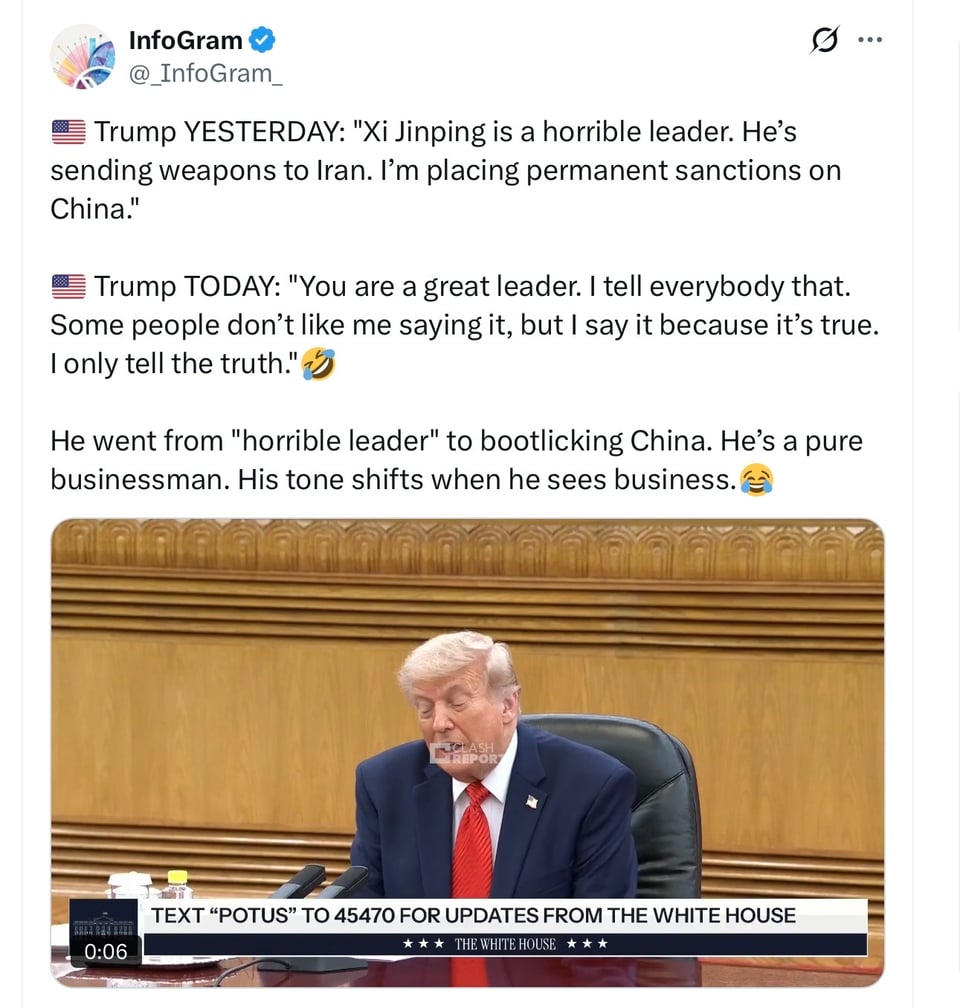
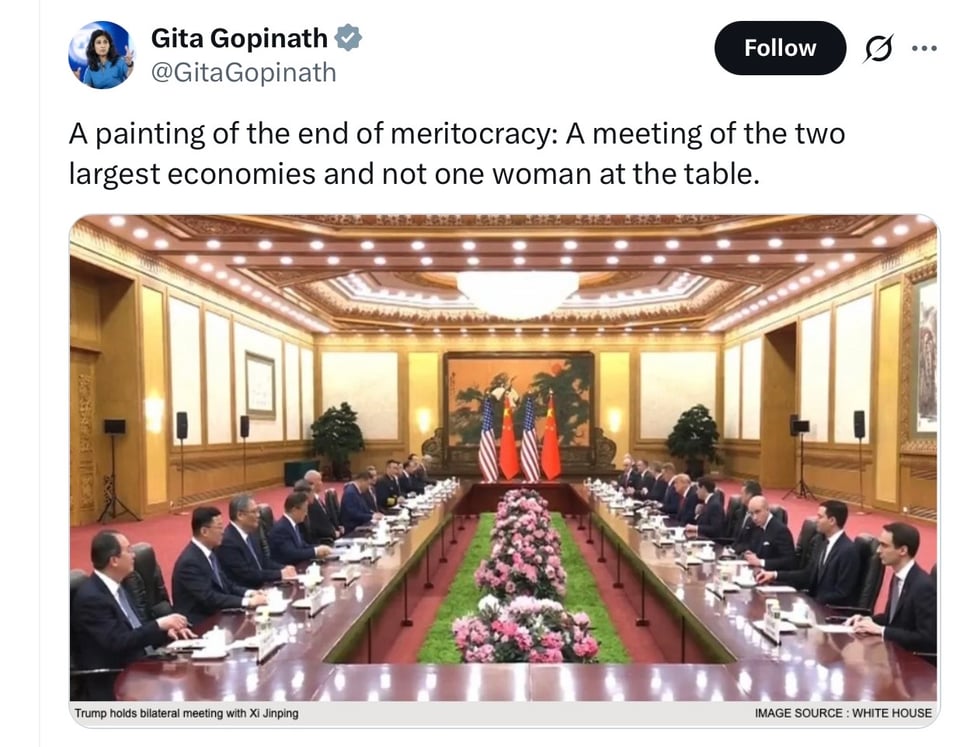
While life continues in America and the rest of the world, Trump is in China, embarrassing America.

One more thing.
Trump wasn’t thinking of Americans when he went to war.
Trump Says Americans’ Economic Pain Is Not a Consideration for the Iran War
President Trump said on Tuesday that he does not think about the economic hardship Americans feel as a result of his war in Iran, and it did not factor into his negotiations to end it.
Speaking to reporters at the White House before departing on a trip to China for most of the week, Mr. Trump said Iran’s nuclear program was the only thing motivating him to make a deal as the two countries remain deadlocked.
With midterms looming and affordability on voters’ minds, Mr. Trump was asked whether Americans’ financial situation was motivating him to make a deal. He replied bluntly, “Not even a little bit.”
“The only thing that matters when I’m talking about Iran — they can’t have a nuclear weapon,” he said.
“I don’t think about Americans’ financial situation,” Mr. Trump added. “I don’t think about anybody. I think about one thing: We cannot let Iran have a nuclear weapon. That’s all.”
It was a stunning admission even for Mr. Trump, who has spent weeks downplaying the economic toll the war has taken on the country. The Labor Department reported on Tuesday that last month, inflation in the United States accelerated at its fastest rate since May 2023, driven by energy costs caused by the war in the Middle East.
And since Mr. Trump began the war in Iran in February, gas prices have surged past $4.50 a gallon — hitting the lowest-income Americans the hardest — compounding an already persistent cost-of-living crisis that has caused even his supporters to increasingly sour on his economic record.
And with his party facing midterm elections in just six months, this was not the argument that congressional Republicans, who have grown impatient with Mr. Trump's war, had been hoping the president would make to voters.
Following a string of victories in elections over the past year by Democrats who ran on an affordability platform, Mr. Trump was supposed to emphasize how his economic agenda had delivered for everyday Americans.
Instead, he has used campaign-rally style speeches to mock the notion of affordability, tout the construction of a ballroom at the White House, whose price has nearly doubled, boast about the stock market, and make a series of false claims about the sticker prices that Americans are seeing with their own eyes.
On Tuesday, Mr. Trump continued to insist that his economic policies were working, “incredibly,” and that “the American people understand when it’s over, you’re going to have a massive drop in the price of oil.”
“If you go back to just before the war, for the last three months, inflation was at 1.7 percent,” he said. “Now, we had a choice — let these lunatics have a nuclear weapon. If you want to do that, then you’re a stupid person.” (New York Times)
Yes, Trump was thinking about money when he talked about his ballroom.

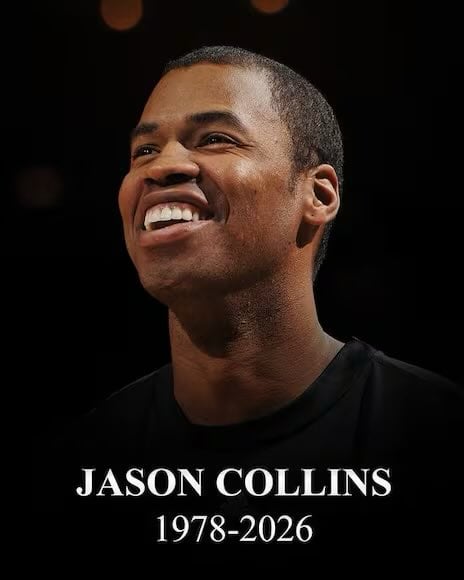
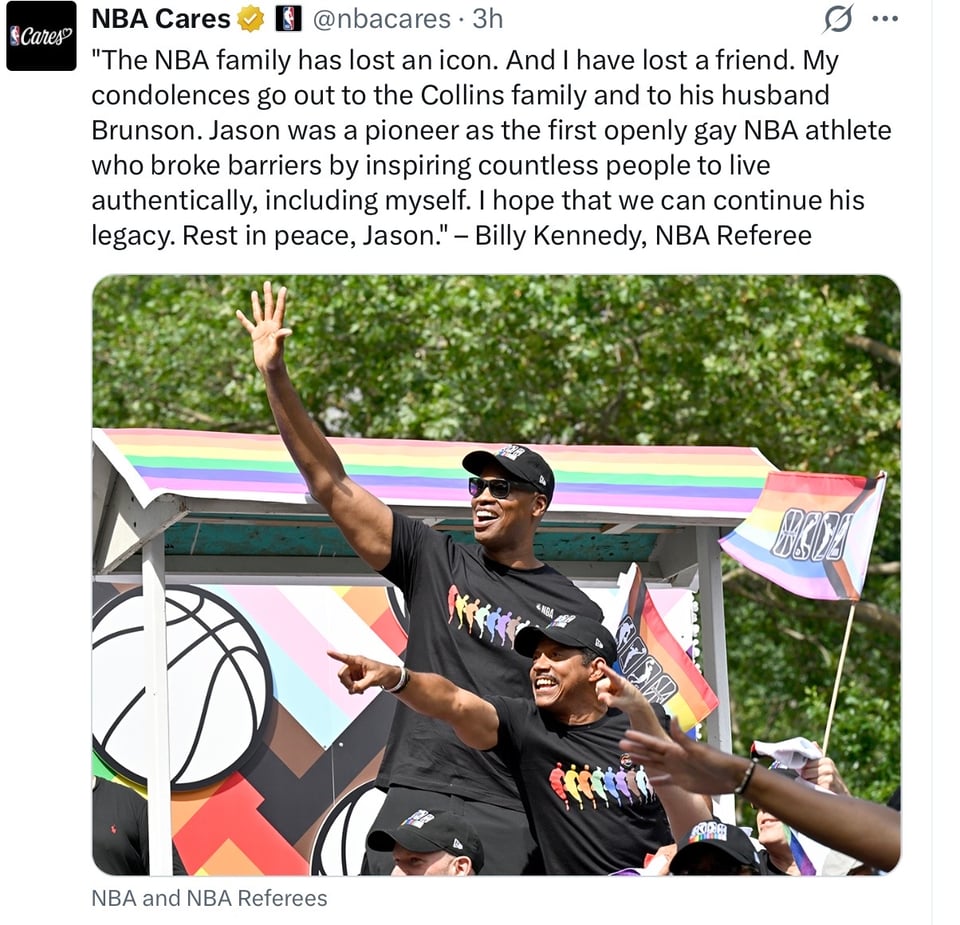
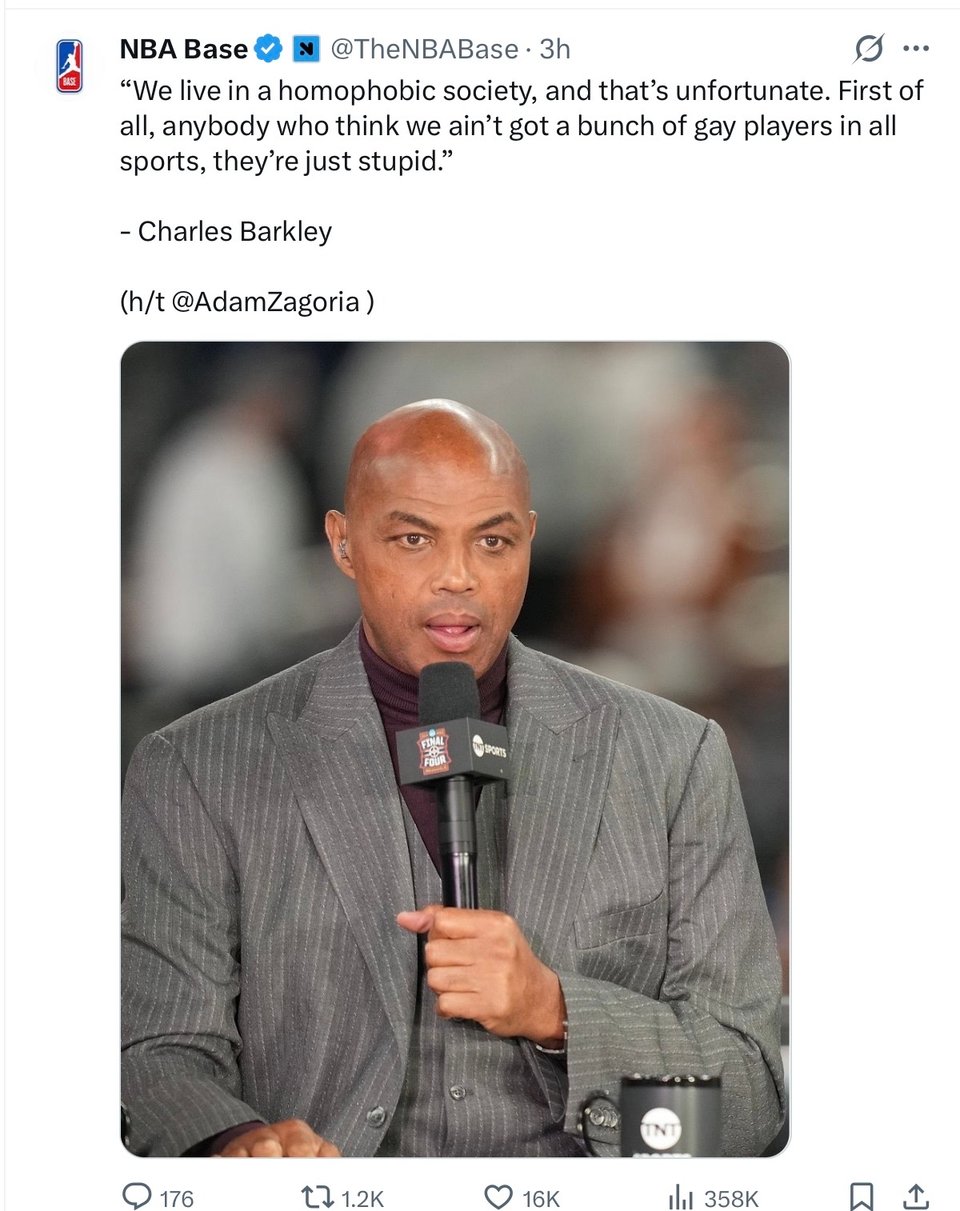
Jason Collins, first LGBTQ+ in the NBA (National Basketball Association) dies at 47.
Jason Collins, First Active N.B.A. Player to Come Out as Gay, Dies at 47.
His achievements on the court were eclipsed by an essay he wrote in Sports Illustrated in 2013 in which he declared: “I’m a 34-year-old N.B.A. center. I’m Black and I’m gay.”
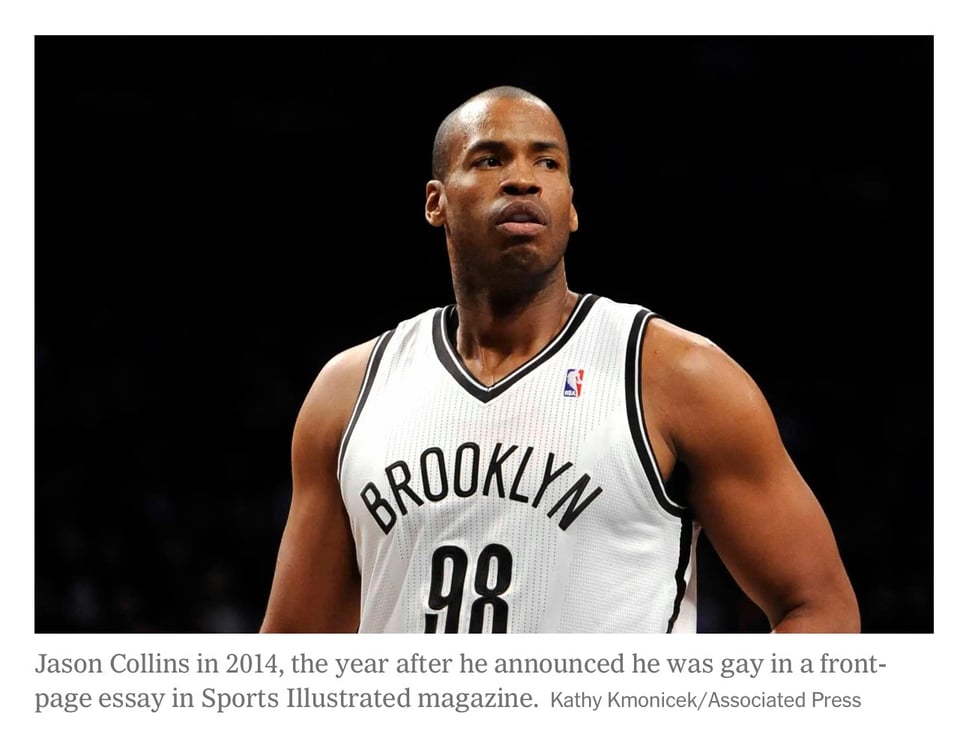
Jason Collins, a 7-foot center and N.B.A. journeyman who in 2013 became the first openly gay player in any of the four traditional major American men’s sports leagues, has died. He was 47.
Adam Silver, the N.B.A. commissioner, announced the death in a statement on Tuesday. Collins’s family said the cause was glioblastoma, an aggressive form of brain cancer. In December, he disclosed his diagnosis and said he was undergoing treatments.
Collins entered the N.B.A. in 2001, in a period when professional basketball was less perimeter-oriented and geared toward taller players who played closer to the rim. While he was never a scoring leader or even a full-time starter, his height, professionalism and ability to defend against other centers made him a valuable asset to six N.B.A. teams in a professional career that lasted 13 seasons.
When he retired in 2014, Collins said he hoped to be remembered as “a great teammate, someone who always sacrificed for the team.”
But his achievements on the court were eclipsed by a front-page essay he wrote in Sports Illustrated in 2013.
“I’m a 34-year-old N.B.A. center. I’m Black and I’m gay,” it began.
In the essay, Collins said he was spurred to speak publicly after his former Stanford University roommate, Joe Kennedy, a congressman from Massachusetts at the time, marched in a Pride parade in Boston.
“I’m seldom jealous of others, but hearing what Joe had done filled me with envy,” Collins wrote. “I was proud of him for participating but angry that as a closeted gay man I couldn’t even cheer my straight friend on as a spectator.”
Collins was a free agent when he wrote the essay, and there was an open question about whether it would end his career. Though the gay rights movement had made significant strides, gay marriage would not be made legal nationwide until 2015 and American men’s professional sports had not historically been welcoming to gay athletes.
But Collins received considerable support from celebrities and sports figures. He took a phone call from President Barack Obama and was invited to attend the 2014 State of the Union address as a guest of Michelle Obama, the first lady. He was appointed to serve on the president’s Council on Fitness, Sports and Nutrition.
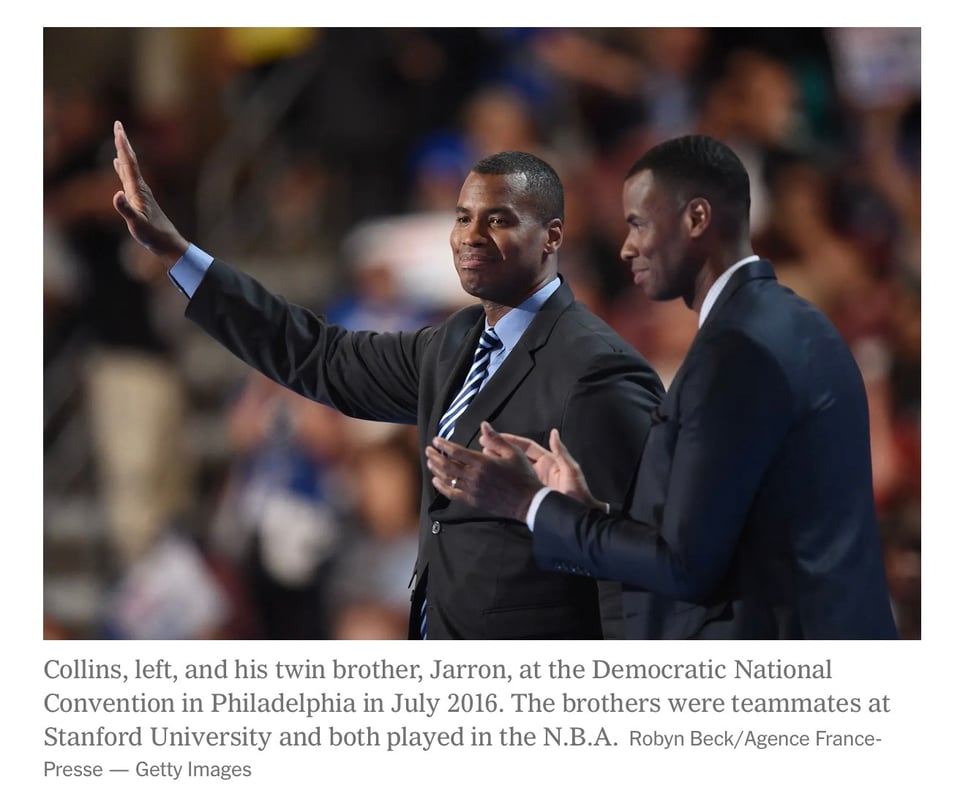
Two tall men wearing suits stand in a crowd. One waves, and the other applauds.
Collins, left, and his twin brother, Jarron, at the Democratic National Convention in Philadelphia in July 2016. The brothers were teammates at Stanford University and both played in the N.B.A.Credit...Robyn Beck/Agence France-Presse — Getty Images
The praise wasn’t universal. “All these beautiful women in the world and guys wanna mess with other guys SMH…” the Miami Dolphins wide receiver Mike Wallace wrote on Twitter, using shorthand for “shaking my head.” He later apologized.
But the largely positive response from other N.B.A. figures showed how views about gay people had shifted. The Los Angeles Lakers star Kobe Bryant, who was fined by the N.B.A. in 2011 for directing an anti-gay slur at a referee, posted a message of support for Collins on social media: “Proud of @jasoncollins34. Don’t suffocate who u r because of the ignorance of others.”
Collins also received a supportive call from the retired star point guard Tim Hardaway, who in 2007 told a radio station that he hated gay people and that he would not have wanted to be on the same team as John Amaechi, another former player who had come out that year. Hardaway has since become a vocal supporter of gay rights.
Hardaway’s evolution was “something that many people in the L.G.B.T.Q. community are very familiar with,” Collins told The St. Paul Pioneer Press in 2022.
“They might start off on one end of the spectrum as far as not being supportive and being homophobic,” he said. “But then over time of having more exposure and more education, then they become an ally and next thing you know they’re at the Pride parade celebrating. That’s literally how it happened with Tim.”
Collins at the Boston pride parade in 2013. “Never be afraid or ashamed or have any fear to be your true authentic self,” he said after rejoining the Nets in 2014.Credit...John Tlumacki/The Boston Globe, via Getty Images
No team signed Collins before the start of the 2013-14 season. He wasn’t even invited to any training camps. But midway through the season, Collins, then 35, signed with the Brooklyn Nets, the team where he began his career when it was based in New Jersey.
“My message to other athletes, period, is just be yourself,” Collins said after his first appearance with the team in February 2014, adding, “Never be afraid or ashamed or have any fear to be your true authentic self.”
While Collins’s announcement was heralded as a major moment for men’s professional sports, players like Collins and Michael Sam, who in 2014 became the first openly gay player to be drafted by an N.F.L. team, opened a door that few other men have walked through. Sam retired from football having never played in a regular season N.F.L. game. Aside from Carl Nassib, who in 2021 became the first openly gay active N.F.L. player, other prominent gay male athletes — such as Amaechi and the major-league baseball outfielders Glenn Burke and Billy Bean — came out only after their playing days were over.
There are currently no openly gay active players in any of the four major men’s professional sports leagues. This stands in stark contrast to women’s professional sports, where there are dozens of openly gay players in the W.N.B.A. alone, including stars like Brittney Griner and Chelsea Gray.
Jason Paul Collins was born on Dec. 2, 1978, in Los Angeles to Paul and Portia Collins. His mother, who was expecting just one child, gave birth to Jason’s twin brother, Jarron, eight minutes after delivering him. Jason and Jarron attended the private Harvard-Westlake School in Los Angeles, where they led the basketball team to two state Division III titles. The twins were teammates at Stanford before moving on to the N.B.A.
Jason Collins was selected as the 18th overall pick in 2001 by the Houston Rockets and was swiftly traded to the Nets. He spent his first six seasons with the Nets, and was a key part of teams that made the finals in 2002 and 2003, the most successful stretch in franchise history. He would play for six teams over 13 seasons.
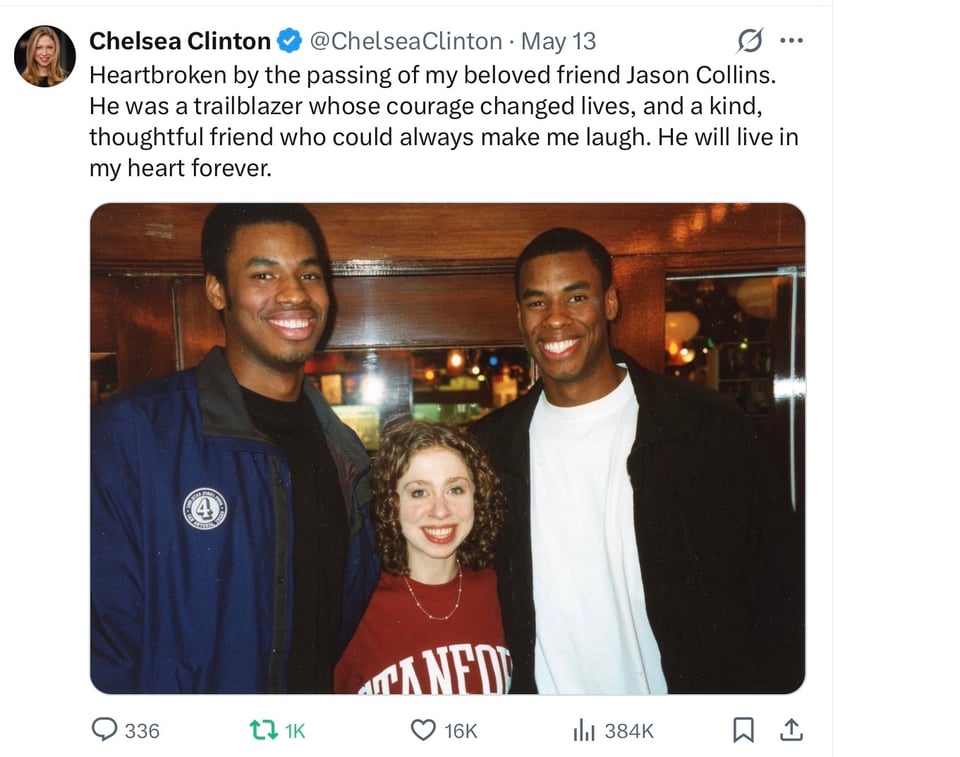
After retiring in November 2014, Collins was a public speaker and political activist, campaigning for Hillary Clinton in 2016, and becoming a critic of President Trump. After Nassib became the first active N.F.L. player to come out, Collins told The Los Angeles Times: “As professional athletes, we’re used to inspiring the next generation, people who are younger than us. But he’s going to find that his actions have inspired not only people who are younger than him but older than him.”
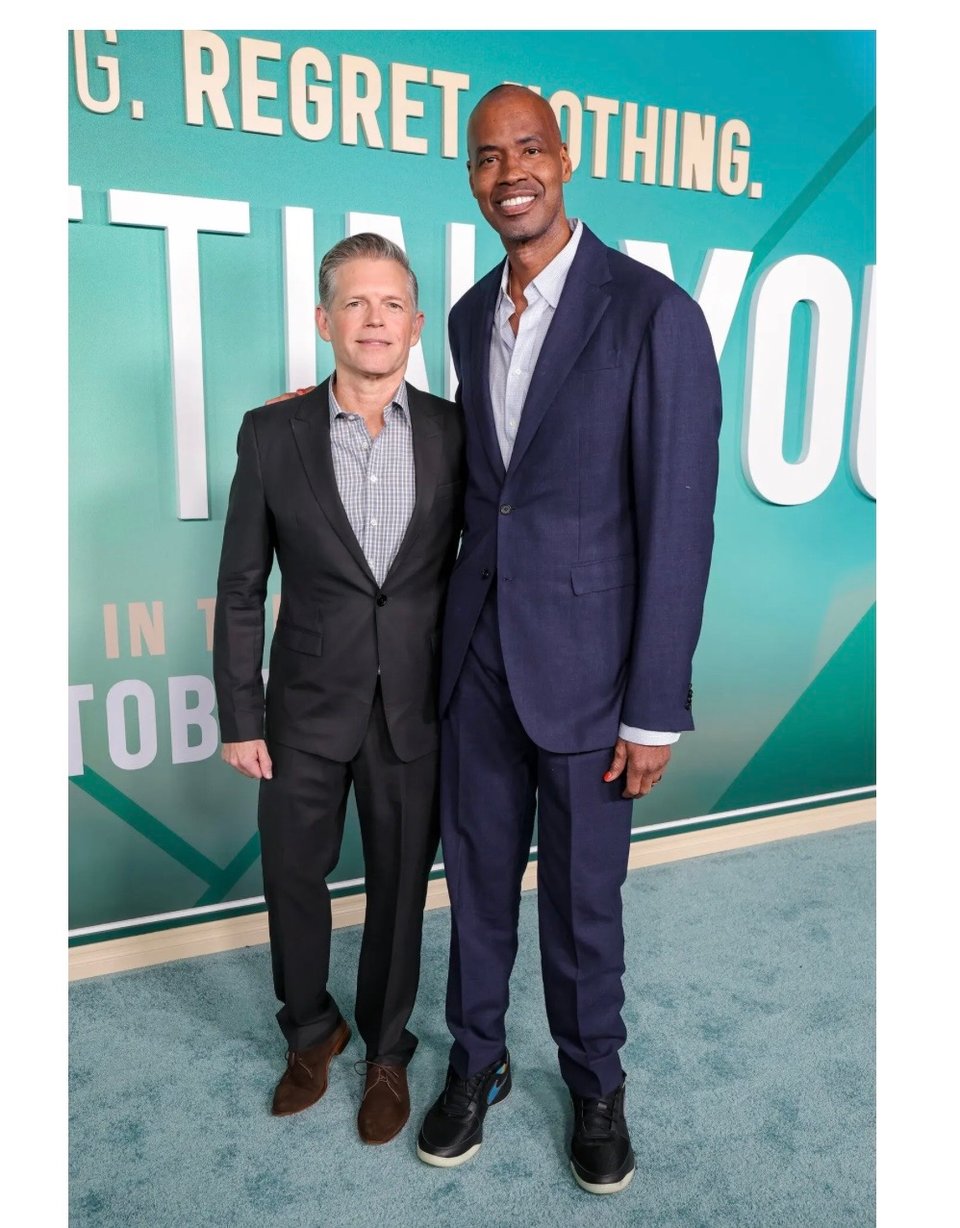
Collins, right, married Brunson Green, a film producer, in May 2025.
Collins married Brunson Green, a film producer, in May 2025. In addition to his husband, Collins is survived by his parents and his brother, Jarron, who played 10 seasons in the N.B.A., most of them with the Utah Jazz, and is now an assistant coach with the New Orleans Pelicans.
In an essay for ESPN in which he revealed his glioblastoma diagnosis, Collins recalled his announcement from more than a decade earlier.
“I got to tell my own story, the way I wanted to. And now I can honestly say, the past 12 years since have been the best of my life,” he wrote. “Your life is so much better when you just show up as your true self, unafraid to be your true self, in public or private.” (New York Times).
One more thing.
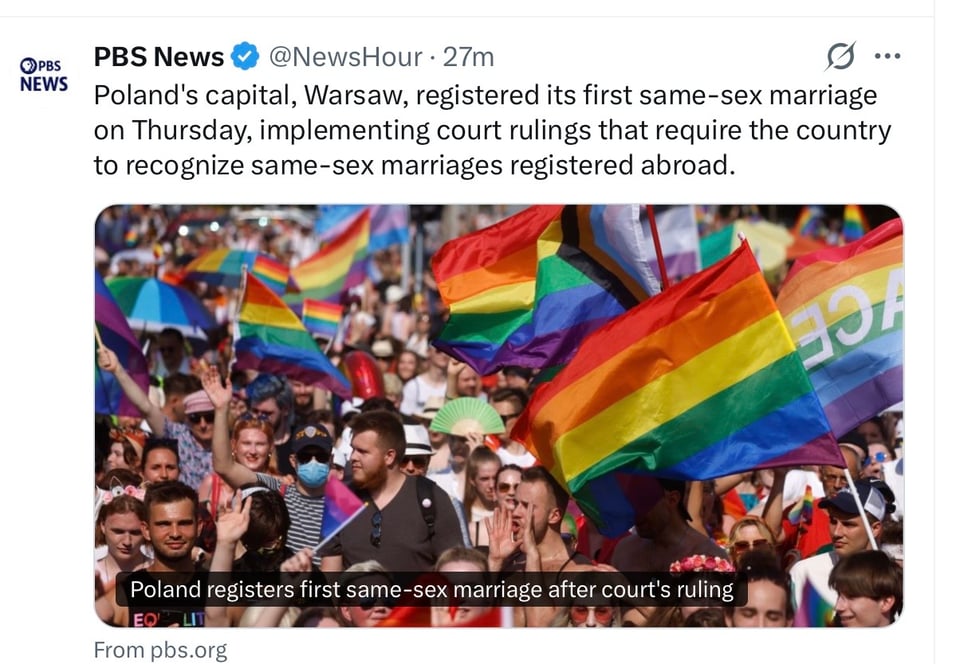
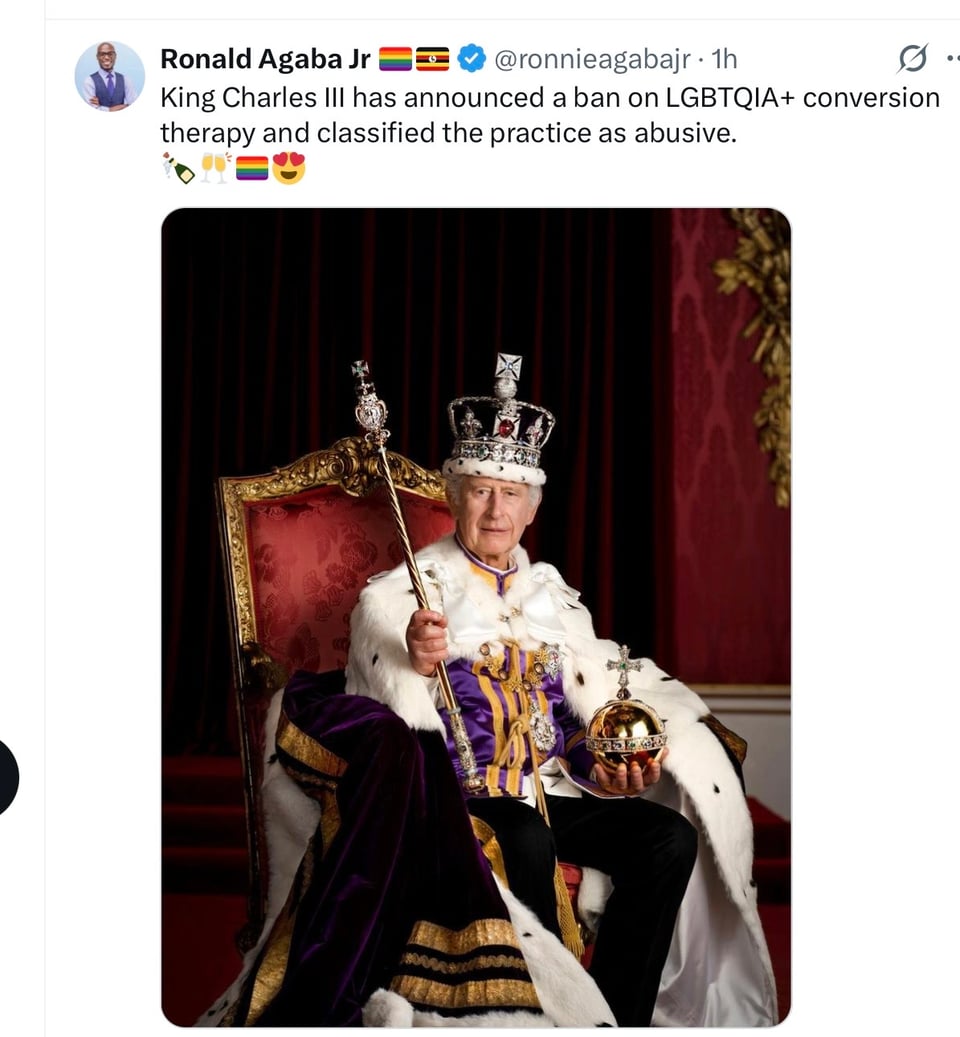
LGBTQ+ move forward.

Update on the abortion pill.
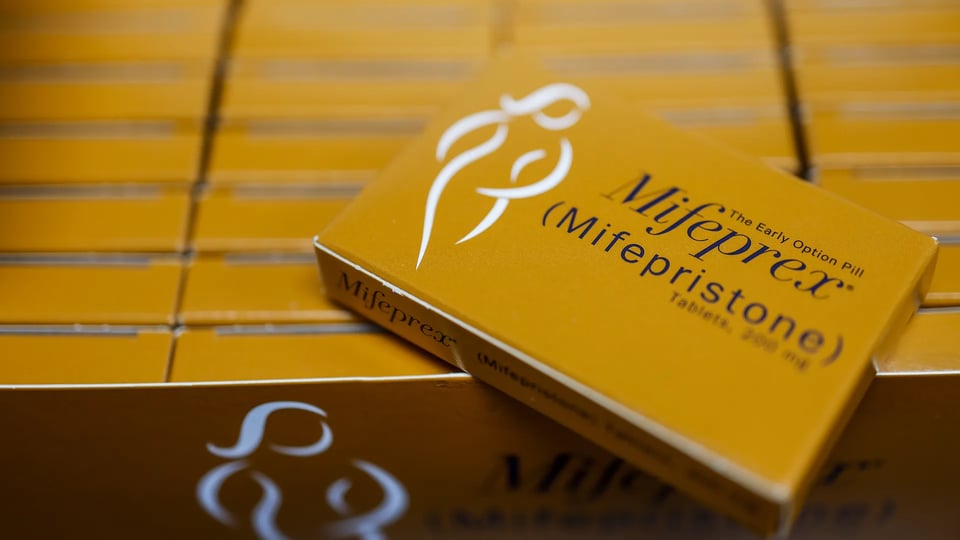
Mifepristone provides 2/3s of the abortions in America. It’s not stopped yet.
Supreme Court allows abortion pill access while lawsuit proceeds
A divided Supreme Court on Thursday indefinitely extended a freeze on strict new restrictions for dispensing the widely used abortion pill mifepristone while an underlying legal fight over the drug plays out.
Why it matters: The widely expected order provides legal certainty for pharmacies, telehealth companies and clinicians caught up in the latest battle over accessing the pill.
Justices Samuel Alito and Clarence Thomas dissented.
Teleprescribing and mailing of abortion drugs now account for more than 60% of all abortions in the health system.
Driving the news: Alito had issued two earlier stays temporarily freezing a ruling by the 5th U.S. Circuit Court of Appeals that would have required patients to see a provider in person before getting the drug.
Drugmakers Danco Laboratories and GenBioPro had asked the high court to restore access to mifepristone through telehealth prescriptions and mail delivery.
The case drew a flurry of briefs from Congress, state attorneys general and local governments on both sides of the abortion debate.
A group of former Food and Drug Administration commissioners and the drug industry lobby PhRMA have also argued the 5th Circuit decision creates serious consequences for the entire drug approval system and opens the door for any state to challenge any FDA decision.
Zoom in: Abortion rights advocates cheered the stay, but cautioned that long-term access isn't secured yet.
"The Supreme Court just did the bare minimum, but this ruling is a relief for patients who can continue to get the care they need," Alexis McGill Johnson, president of Planned Parenthood Action Fund, said in a statement.
Still, "we know this is just one in a long line of attacks on our rights and our care," she added.
Danco said in a statement Thursday that it remains confident in mifepristone's safety and that Louisiana's complaints should be dismissed.
Louisiana brought the underlying case challenging Biden administration rules that expanded access to mifepristone, arguing they undermined its laws protecting unborn human life and caused it to spend Medicaid funds on emergency care for women harmed by mifepristone.
The FDA is conducting a safety review of the drug and previously asked a judge to hold off on ruling in Louisiana's lawsuit until the agency completed the review.
Anti-abortion voices accused then-FDA Commissioner Marty Makary of dragging his feet on the review before he resigned from his post earlier this week. His temporary replacement has already been more vocally anti-abortion.
The FDA will press forward to complete its science-based safety review of the mifepristone REMS and, in an effort to provide greater transparency, will provide updates as key milestones are reached," the agency wrote in a post on X following Thursday's decision.
The other side: In his dissent, Alito said the expanded access to mifepristone undermines the court's previous decision that abortion policy should be left up to individual states.
He also said the medication manufacturers have not shown irreparable harm to their businesses.
"If the FDA were to execute an abrupt about-face and commence enforcement of the in-person-dispensing requirement, the manufacturers could promptly reapply for stays at that time," Alito wrote.
Thomas added in a separate dissent that he agreed with Louisiana's argument that mail-order mifepristone violates the Comstock Act, a long-dormant law that prohibits mailing "obscene" materials.
What we're watching: The court did not agree to immediately hear the underlying legal arguments in the case, instead sending it back to the 5th Circuit. But the case will likely end up at the Supreme Court again soon.(Axios)
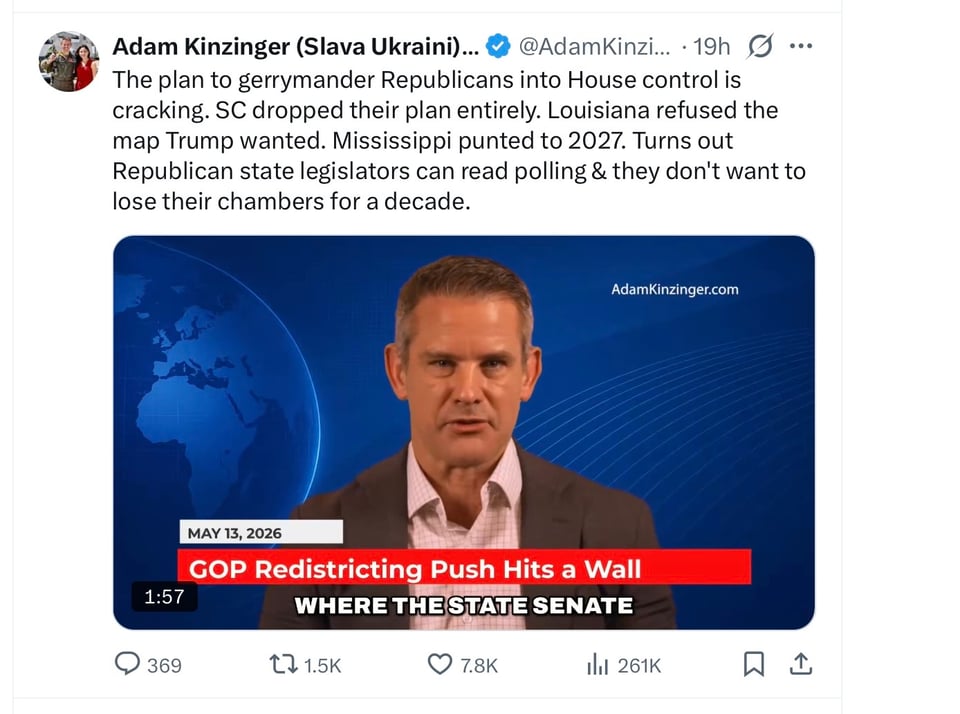
GOP Gerrymandering isn’t going down as they expected.
Happening in New York City.
Estée Lauder heir hands gallery and $135mn Klimt to Metropolitan Museum.
Neue Galerie specialises in early 20th-century German and Austrian art and design.
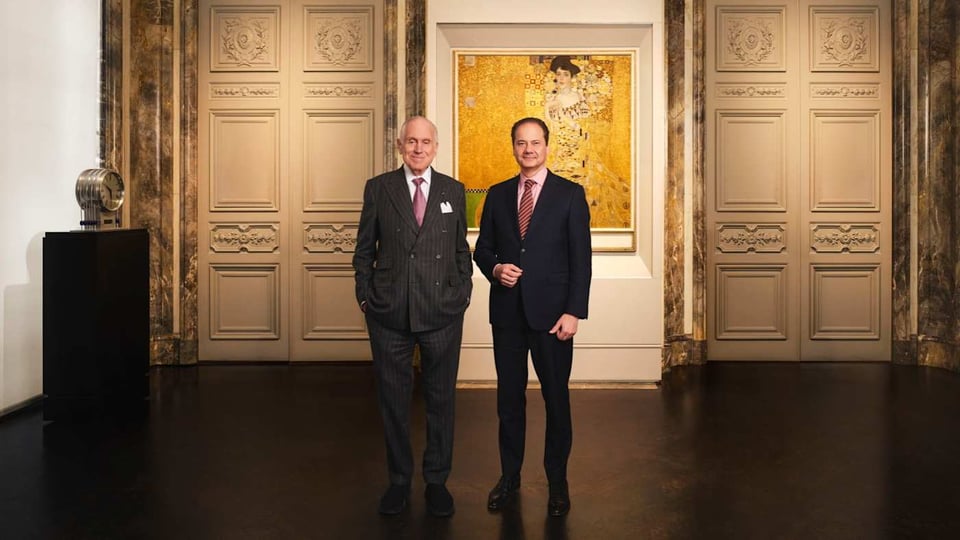
Collector Ronald Lauder, left, and Max Hollein, director of the Metropolitan Museum, standing in front of Gustav Klimt’s ‘Portrait of Adele Bloch-Bauer.
The Neue Galerie, which Lauder established in 2001, specialises in early 20th-century German and Austrian art and design. The donation includes the gallery’s early 20th-century Fifth Avenue building on “Museum Mile”, where the renamed Met Ronald S Lauder Neue Galerie will remain.
In a letter to mark the announcement, Lauder wrote that he wanted the move to “preserve and strengthen the Neue Galerie’s legacy in perpetuity”. He said the museum’s opening two months after the September 11 terror attacks in 2001 had offered “a sense of renewal” in a city that was “still reeling”.
Lauder is worth $4.9bn, according to Forbes, largely thanks to his stake in Estée Lauder.
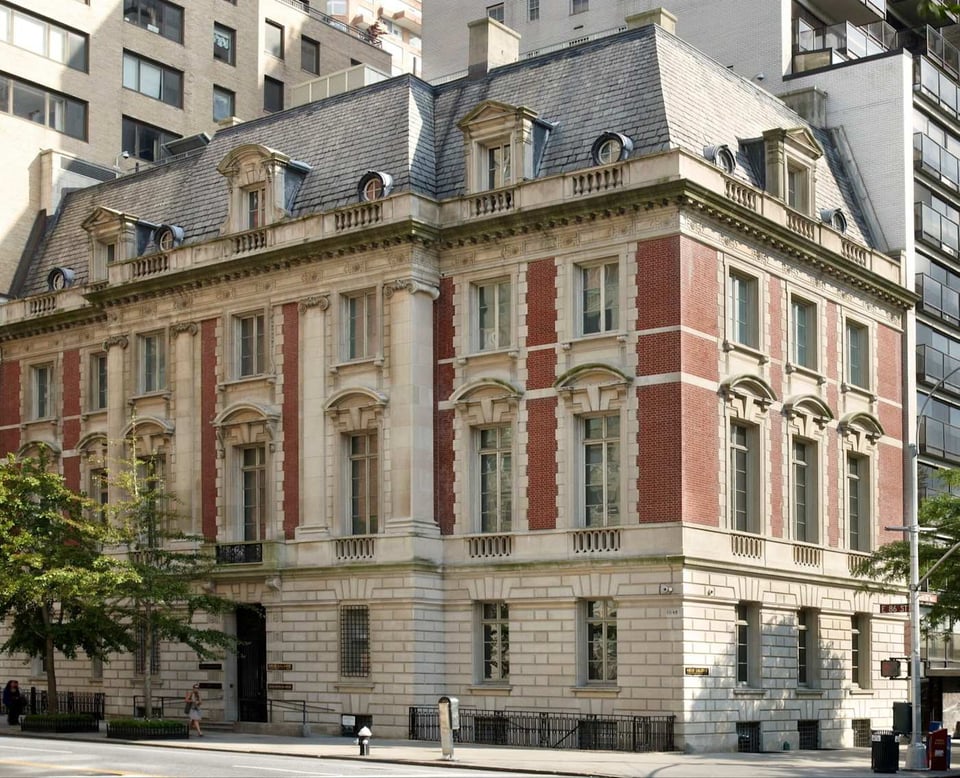
The Neue Galerie’s building on Fifth Avenue was completed in 1914 by Carrère & Hastings.
Max Hollein, director and chief executive of the Met, told the FT: “This is clearly one of the greatest and biggest gifts ever given to a museum.” With more than 600 artworks, it would fill gaps in the Met’s collection, he said.
Hollein, who has been a trustee of the Neue Galerie since 2006, said discussions had been ongoing since summer 2025 after Lauder “came to the conclusion . . . that he wants to make sure the maximum number of works of art will remain public”.
The Neue Galerie’s best-known work is Gustav Klimt’s “Portrait of Adele Bloch-Bauer I” (1907), which was seized by the Nazis in 1938 and only restituted to Bloch-Bauer’s heir in 2006.
Lauder bought it later that year for $135mn, then a world-record price for a painting, and made it the centrepiece of the Neue Galerie’s display.
Lauder and his daughter, Aerin Lauder Zinterhofer, will give 13 additional paintings by Klimt and other artists, as well as money towards an endowment to support the gallery and its building and operations in the long term.
The gift, which is legally a merger between the Neue Galerie and the Met, is due to be completed in 2028.

Adele Bloch-Bauer I’ (1907) by Gustav Klimt © Neue Galerie New York
Lauder is the father-in-law of the next Federal Reserve chair, Kevin Warsh. He has long been a close ally of US President Donald Trump and is one of his top financial backers. He gave $5mn to Maga Inc, the pro-Trump campaign group, in March 2025.
In 2013 Lauder’s brother Leonard, who died last year, donated a collection of 78 Cubist works to the Met by artists including Picasso, Braque, Gris and Léger.
The history of major gifts and legacies from wealthy collectors to museums and galleries includes Sir Hans Sloane’s collection, which became the basis of the British Museum. Last year, the National Gallery in London received two £150mn donations from venture capitalist Sir Michael Moritz and his wife Harriet Heyman, and the Julia Rausing Trust. (Financial TImes)

