Friday, June 26, 2026. Annette's Roundup for Democracy.
A modest proposal.
A Bold Idea to Make Elite Colleges Affordable.
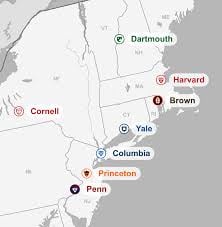
Princeton recently waived tuition for most students from families making up to $250,000 a year. Reporting in The Daily Princetonian suggests that this move may have removed the university from the One Big Beautiful Bill Act’s endowment tax rolls.
Although Republicans created the tax on endowments in 2017 and increased it for many institutions last year as little more than a way to stick a thumb in the eye of elite colleges, they may have inadvertently created an incentive for Princeton to expand access and diversity on its campus by exploiting a new tax loophole.
This is the kind of tax evasion we should all get behind.
We’re members of a student-driven organization that pushes elite colleges and universities to be more accessible to ordinary Americans, so it feels odd to praise Princeton for possibly avoiding a tax on its over $36 billion endowment. It feels even stranger to praise anything about legislation that is a giant tax giveaway to the wealthy that guts a range of social services.
Yet the Republicans’ endowment tax revealed a useful lesson: It seems possible to push wealthy colleges like Princeton to enroll more working- and middle-class students. They surely need that push, because our most prestigious universities enroll a larger share of rich students now than they did in the 1980s. Congress should devise a smarter endowment tax to reward the country’s most exclusive colleges for better serving the American public.
In 2017, a Republican-controlled Congress imposed a 1.4 percent tax on the investment earnings of private colleges and universities with endowments worth more than half a million dollars per student. There was an exemption to any college that enrolled fewer than 500 tuition-paying students. The exception applied to Berea College in Kentucky, whose senator Mitch McConnell was then the majority leader. It was good policy for Berea to have been exempted, since it uses its more than $1 billion endowment to be tuition free for all of its students, 96 percent of whom are from lower-income households.
Republicans, however, betrayed the spirit of the Berea exemption after intense objections in 2025 from liberal arts colleges, religious schools and Hillsdale College, which has strong ties to the Trump administration. Congress increased the endowment tax rates, but it also raised the enrollment ceiling for the exemption to 3,000 tuition-paying students, which means that several dozen institutions with multimillion- and even multibillion-dollar endowments will actually stop paying the tax this year.
These colleges are not being rewarded for being generous like Berea; they are being rewarded simply for being small. If anything, the higher threshold gives dozens of liberal arts colleges a good reason to maintain their exclusivity.
Princeton seems to have effectively become small by being more generous. In January, the managing director of the Princeton University Investment Company reportedly told attendees at a closed-door event that the school expects to stop paying the federal endowment tax. This is most likely thanks to the university’s new policy, which waives tuition for students from the 90 percent of American households that make less than a quarter-million dollars a year.
Princeton is not alone in its expansion of financial support to families with incomes in the $200,000 to $300,000 range. In the past year, the University of Chicago, Yale and Swarthmore have all announced hefty fee waivers. The problem is that we have no idea how many students will actually benefit. The promise of free tuition, even for selective colleges, is no doubt a smart marketing move. But until these schools enroll many more working and middle class students, those who actually qualify for aid, it is hard to see it as much more.
The additional $44 million Princeton was expected to spend on financial aid last school year is a fraction of the over $200 million it was projected to owe under the tax every year. Even if this move is entirely self-serving, the effect will not be. Princeton will surely need to enroll classes that are majority working- and middle-class every year in order to avoid the endowment tax.
That incentive does not exist for wealthy institutions that enroll fewer than 3,000 students, like Grinnell College (endowment value: nearly $3 billion) and Caltech (about $4.5 billion). Nor does it exist for ones with many more students than Princeton, like Harvard (about $57 billion) or Stanford (over $40 billion), which essentially could get under the tax’s enrollment threshold only by eliminating tuition for a large proportion of its students, including many rich ones.
A smarter tax would give many more institutions the chance to make a choice: either use their endowment to increase access and diversity, or pay the tax to offset the cost of hoarding opportunity for the wealthy.
A better designed tax would apply to schools with endowments worth more than $500,000 per student, regardless of enrollment size, but the rate they pay would go down, potentially to zero, as they increase their share of students from the bottom 80 percent of income and provide them enough financial aid to avoid debt. Institutions would be rewarded, as well, for rejecting unfair admissions practices like legacy and donor preferences, and increasing their share of community college transfers. Every dollar the tax raises should go straight to community colleges and regional public universities — the schools most American college students attend — where the real problem is making sure students have the financial and academic support they need to graduate.
We want many more elite colleges to be subject to the tax, but we also want to give them more ways to get out of it by making a genuine commitment to access. The endowment tax needs a bigger net with more ways out.
While the Trump administration has fomented and exploited popular resentment of elite colleges for its own ideological ends, wanting to make elite colleges look less like country clubs and more like the country shouldn’t be a partisan issue. If anything, shared mistrust of elite colleges provides a rare opportunity to work across the aisle.
Americans don’t have to choose between an assault on higher education and a status quo built to serve a privileged few. A better, bipartisan endowment tax that rewards access and affordability and sends revenue to the colleges that do the most good is a way out of that false choice and a step toward repairing higher education’s broken social contract with the nation. (Guest essay, New York Times)
James S. Murphy is a senior fellow at Class Action, a student-driven nonprofit reimagining the role of elite colleges and universities in society. Ryan Cieslikowski is a recent Stanford graduate and the director of Class Action.
As to the GOP, birds of a feather stick together.
Pathetic.
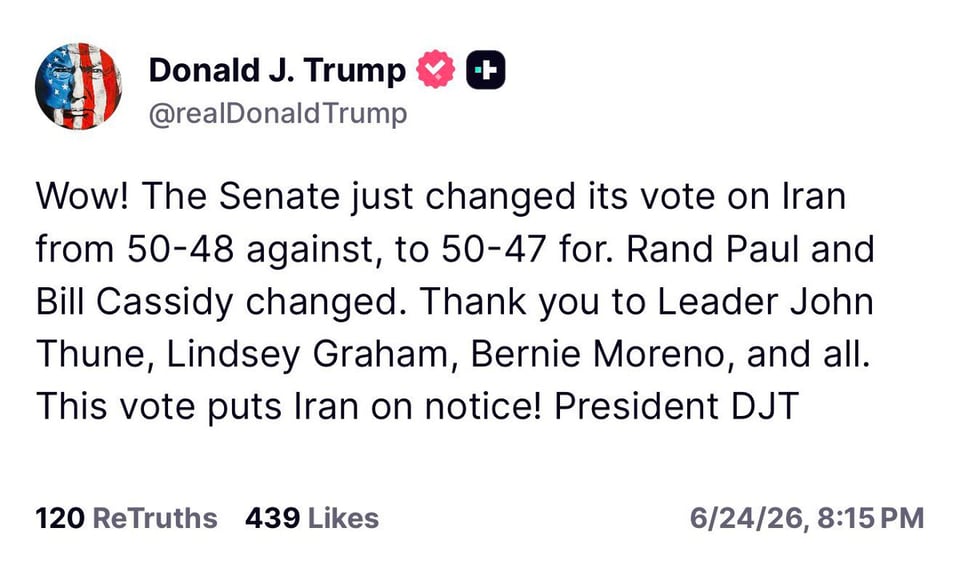
CASSIDY AND PAUL CAVE ON IRAN A DAY AFTER STANDING UP TO TRUMP
One day after voting to limit Trump’s war powers in Iran, Republican Sens. Bill Cassidy and Rand Paul reversed themselves Wednesday night, helping kill a follow-up war powers resolution by a vote of 47-50-1.
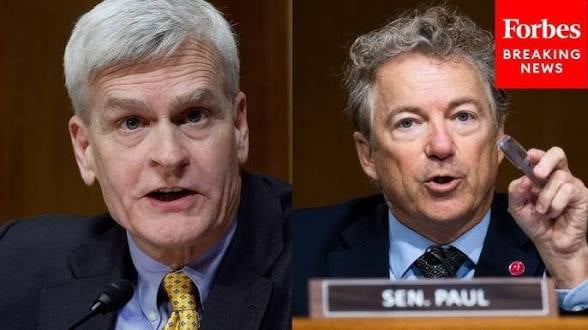
Cassidy had stood up to Trump in person hours earlier, telling him the Iran war “was supposed to last four weeks. It’s lasted four months. Our original objectives have not been achieved.” By that evening, after a briefing from JD Vance and Steve Witkoff, Cassidy voted no. Paul voted present, saying he wanted to give Trump “more space and leverage to negotiate.”
Trump had spent the day attacking Republicans who backed the original resolution, calling them “losers” on Truth Social and telling Cassidy directly that his election loss to a Trump-backed primary challenger was relevant to the conversation.
It took less than 24 hours for a Republican senator to go from confronting Trump face to face over a war with no clear endpoint to voting his way out of having to answer for it. That is not a policy disagreement resolving itself. That is pressure working exactly as intended.
One more thing.
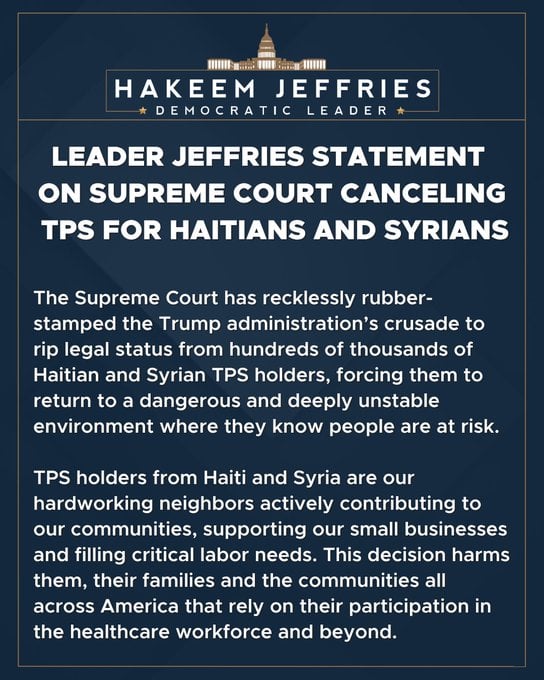
The Supreme Court of the United States today seems to stand hand in hand with Trump. That wasn't always the case.
In the past, the Court was not the enemy of fairness. Today, June 26, is a landmark day in LGBTQ+ history.
Lawrence v. Texas — June 26, 2003
What it was about:
Texas had a law making it a crime for two people of the same sex to have consensual sexual intimacy. John Lawrence and Tyron Garner were arrested in Lawrence’s home under that law.
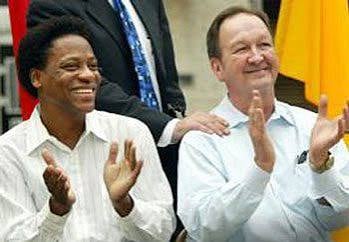
Tyron Garner (left) And John Lawrence.
What the Court held:
The Supreme Court struck down the Texas law. It said adults have a constitutional liberty interest, protected by the Due Process Clause of the Fourteenth Amendment, to engage in private, consensual intimate conduct without the state criminalizing them.
Why it mattered:
This case overturned Bowers v. Hardwick, the 1986 case that had allowed states to criminalize same-sex intimacy. Lawrence did not create marriage equality, but it removed the criminal-law stigma that had been used to treat gay people as outside constitutional protection.
In plain English:
The government could no longer make gay people criminals for private adult relationships.
⸻
United States v. Windsor — June 26, 2013
What it was about:
Edith Windsor and Thea Spyer were legally married in Canada, and New York recognized their marriage. When Spyer died, Windsor was denied the federal estate-tax benefit available to surviving spouses because Section 3 of DOMA, the Defense of Marriage Act, defined marriage for federal law as only between one man and one woman.

Thea Speyer (left) and Edie Windsor.
What the Court held:
The Supreme Court struck down Section 3 of DOMA. It held that the federal government could not refuse to recognize same-sex marriages that were valid under state law. Oyez summarizes the ruling as finding DOMA unconstitutional under equal-protection principles applied through the Fifth Amendment.
Why it mattered:
Windsor did not yet require every state to allow same-sex marriage. But it meant that where a same-sex couple was legally married, the federal government had to treat that marriage as real — for taxes, Social Security, immigration, veterans’ benefits, and many other federal purposes.
In plain English:
If a state says a same-sex couple is married, the federal government cannot pretend they are strangers.
⸻
Obergefell v. Hodges — June 26, 2015
What it was about:
Same-sex couples challenged state laws that either refused to let them marry or refused to recognize their marriages from other states. The lead plaintiff, Jim Obergefell, wanted Ohio to recognize his Maryland marriage to John Arthur on Arthur’s death certificate.
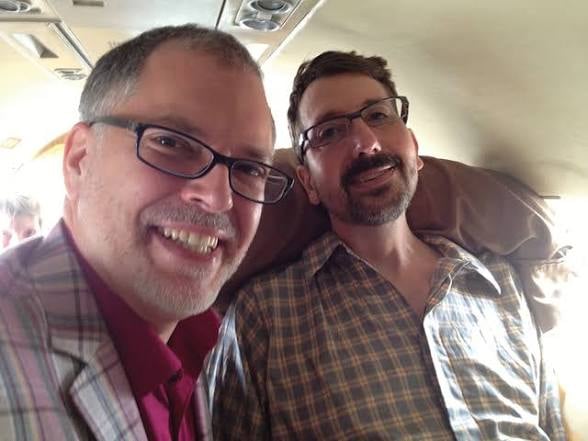
Jim Obergefell (left) and John Arthur.
What the Court held:
The Supreme Court held, 5–4, that the Fourteenth Amendment requires states both to license same-sex marriages and to recognize same-sex marriages lawfully performed elsewhere. The Court relied on both due process — marriage as a fundamental liberty — and equal protection — same-sex couples cannot be excluded from that liberty.
Why it mattered:
This made marriage equality nationwide. After Obergefell, no state could ban same-sex marriage, and no state could refuse recognition of a lawful same-sex marriage from another state.
In plain English:
Same-sex couples have the same constitutional right to marry as different-sex couples. The right of same-sex couples to marry was now the law of the Land.
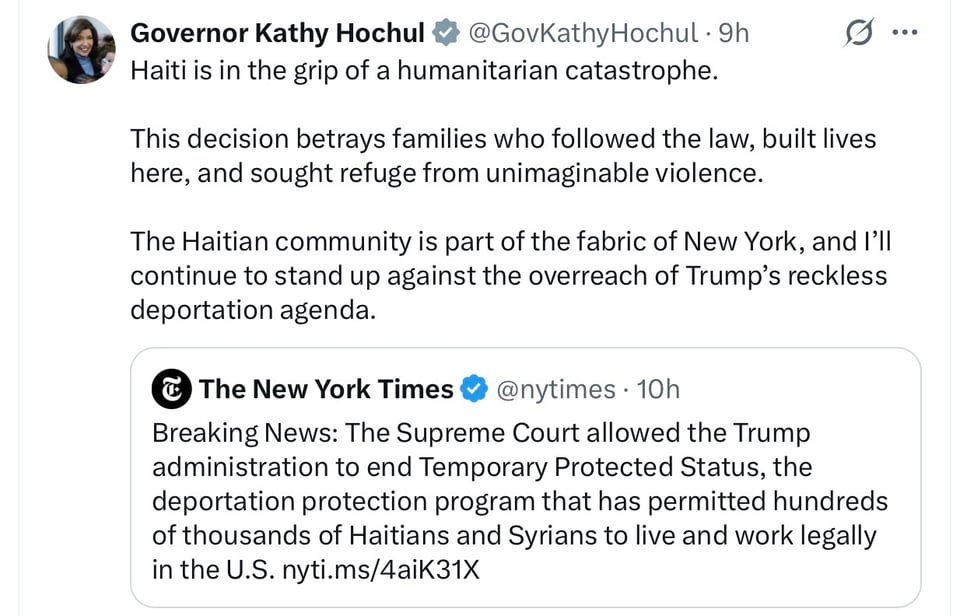
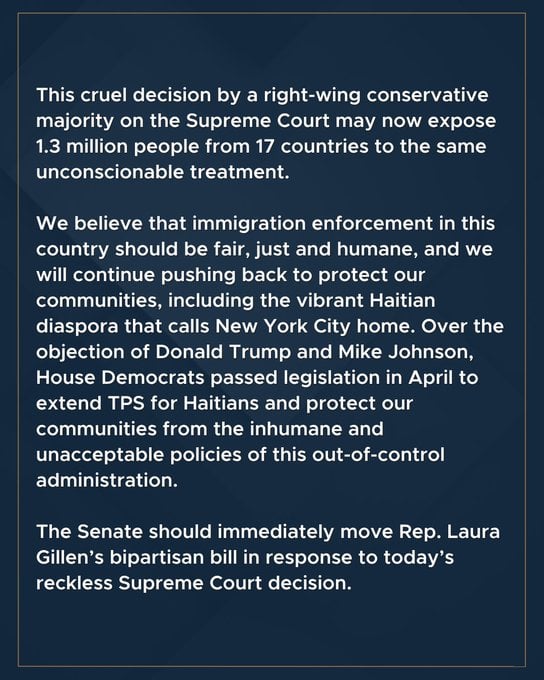
Thankfully, federal judges are still at work, trying to keep the rule of law alive in America.
Thankfully, others will fight for our neighbors too.
Some sample fighters.
JD Vance makes clear what he values and who he is.
He greeted his pregnant wife, “of course”good to see you” & patted her knee twice.
Promise made, promise kept in NYC
Tennis legend King receives honorary Oxford degree
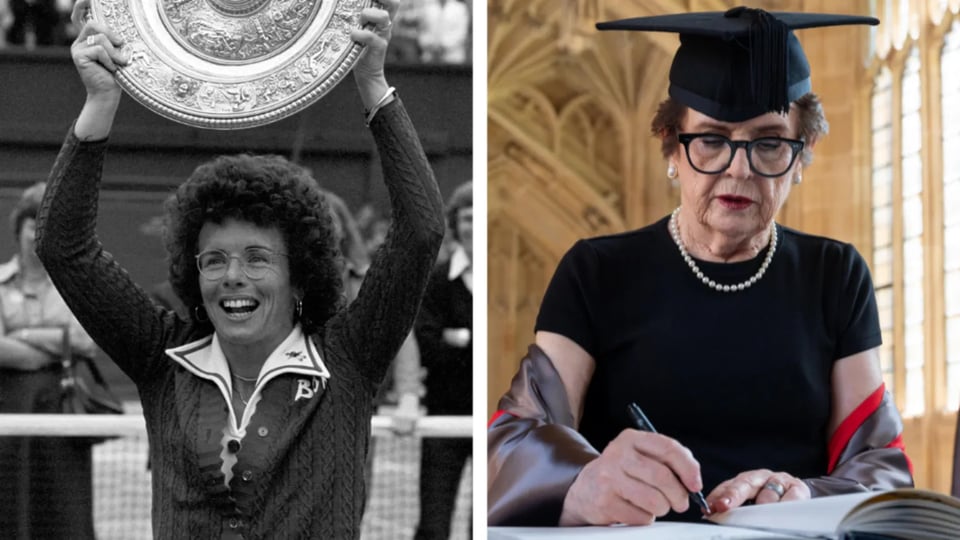
Tennis legend Billie Jean King and former Prime Minister of New Zealand Dame Jacinda Ardern have received honorary degrees from the University of Oxford.
King and Ardern were two of nine recipients who received the prestigious honour during a sweltering Encaenia ceremony at the Sheldonian Theatre on Wednesday.
As part of the centuries-old service, a procession made up of university dignitaries and degree recipients walk through the city - usually in full academic dress.
King said it was an "honour and a privilege" to receive this degree during the "historic celebration".
"Education, at any age, is a powerful tool and we must always keep learning and learning how to learn," she added.
The ceremony usually has a strict dress-code, but this was relaxed due to the ongoing heatwave - with jackets and gowns optional for those in the procession.
Following the procession, the recipients signed their names in the Honorary Degrees Book at the Divinity School, before moving to the Sheldonian Theatre - where the Encaenia ceremony has been held in some form since 1670.
The university said "additional measures" had also been put in place to "help guests manage the heat".
King, 82, is best known as one of the greatest female tennis players of all time, winning 39 Grand Slam titles in singles and doubles competitions.
She is also an advocate for gender equality and social justice, winning the 'Battle of the Sexes' match against Bobby Riggs in 1973.
Alongside King, Dame Jacinda - who spent more than five years as Prime Minister of New Zealand - was also honoured.
She had initially been expected to receive an honorary degree in 2025, but was unable to attend that year's ceremony.
Other recipients of the honorary degrees included actress and theatre director Adjoa Andoh, former GSK chief executive Dame Emma Walmsley and Cuban ballet dancer Carlos Acosta.
Nobel Prize winning physicist Prof Shuji Nakamura, biochemist Prof Katalin Karikó and historian and award-winning filmmaker Prof Henry Louis Gates Jr were also honoured during the ceremony. (BBC)
One more thing.
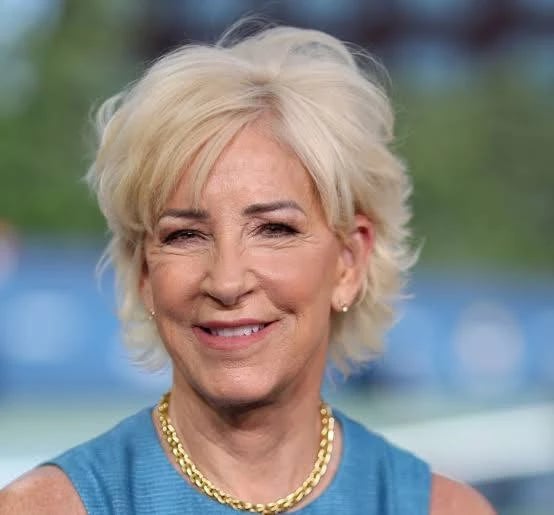
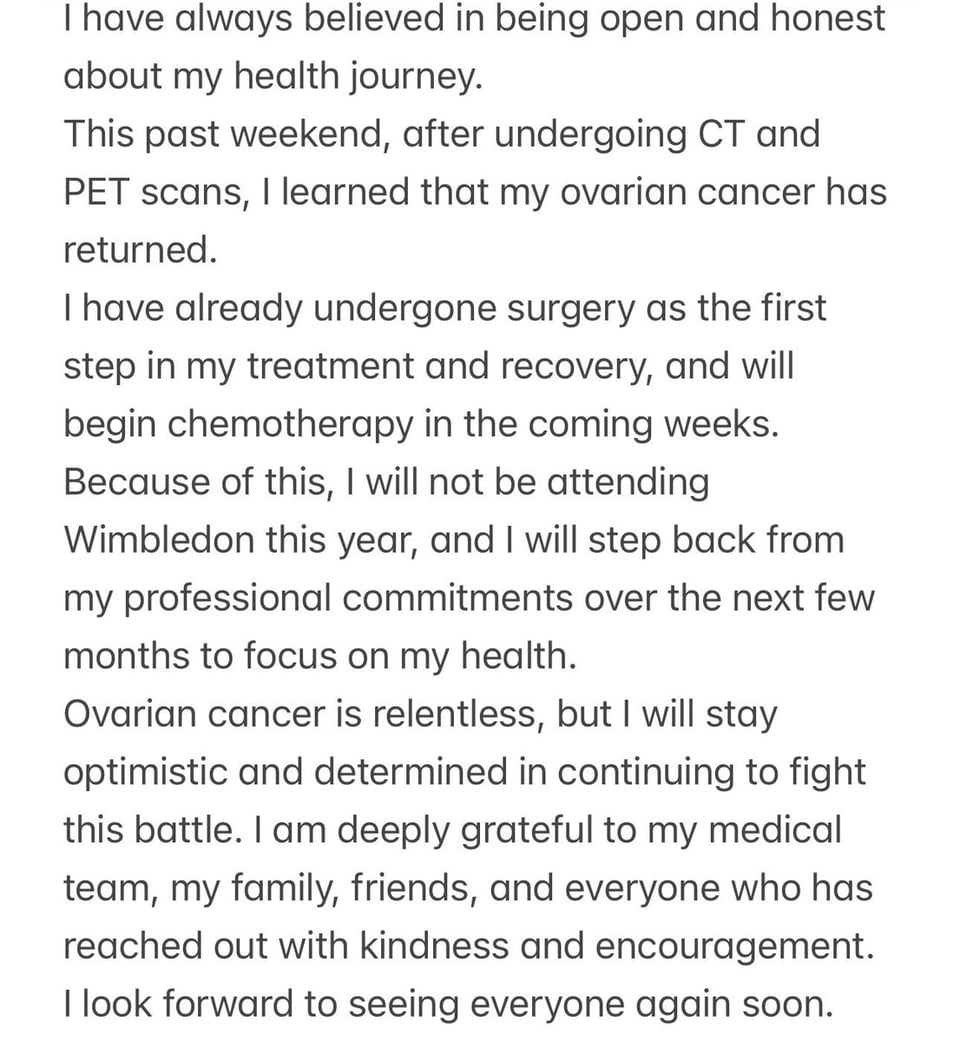
Great news about Billie. ☝️ Bad news about Chrissie.👇