Friday, December 5, 2025. Annette’s Roundup for Democracy.
Answering Trump’s racist rants.
Ilhan Omar: Trump Knows He’s Failing. Cue the Bigotry.
On Tuesday, President Trump called my friends and me “garbage.”
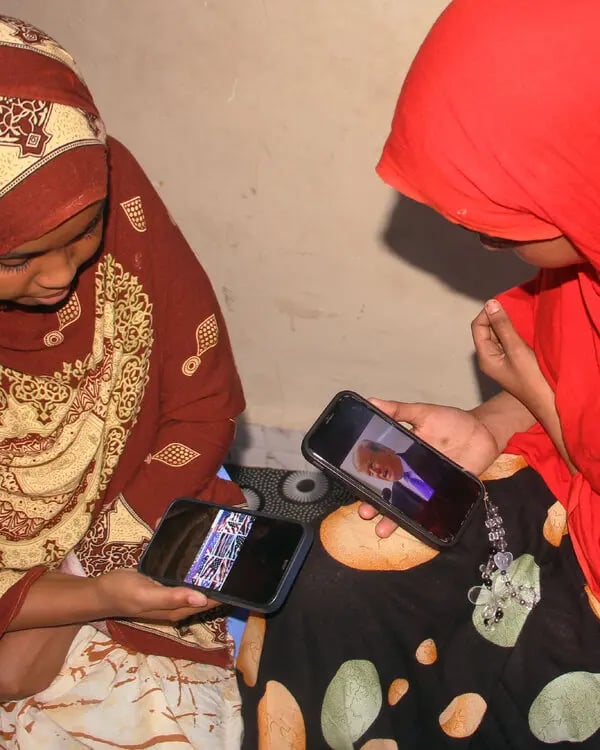
This comment was only the latest in a series of remarks and Truth Social posts in which the president has demonized and spread conspiracy theories about the Somali community and about me personally. For years, the president has spewed hate speech in an effort to gin up contempt against me. He reaches for the same playbook of racism, xenophobia, Islamophobia and division again and again. At one 2019 rally, he egged on his crowd until it chanted “send her back” when he said my name.
Mr. Trump denigrates not only Somalis but so many other immigrants, too, particularly those who are Black and Muslim. While he has consistently tried to vilify newcomers, we will not let him silence us. He fails to realize how deeply Somali Americans love this country. We are doctors, teachers, police officers and elected leaders working to make our country better. Over 90 percent of Somalis living in my home state, Minnesota, are American citizens by birth or naturalization. Some even supported Mr. Trump at the ballot box.
“I don’t want them in our country,” the president said this week. “Let them go back to where they came from.”
Somali Americans remain resilient against the onslaught of attacks from the White House. But I am deeply worried about the ramifications of these tirades. When Mr. Trump maligns me, it increases the number of death threats that my family, staff members and I receive. As a member of Congress, I am privileged to have access to security when these threats arise. What keeps me up at night is that people who share the identities I hold — Black, Somali, hijabi, immigrant — will suffer the consequences of his words, which so often go unchecked by members of the Republican Party and other elected officials. All Americans have a duty to call out this hateful rhetoric when we hear it.
The president’s dehumanizing and dangerous attacks on minority immigrant communities are nothing new. When he first ran for president a decade ago, he launched his campaign with claims that he was going to pause Muslim immigration to this country. He has since falsely accused Haitian migrants of eating pets and referred to Haiti and African nations as “shithole” countries. He has accused Mexico of sending rapists and drug peddlers across our border. It is unconscionable that he fails to acknowledge how this country was built on the backs of immigrants and mocks their ongoing contributions.
While the president wastes his time attacking my community, my state, my governor and me, the promises of economic prosperity he made in his run for president last year have not come to fruition. Prices have not come down; in many cases, they have risen. His implementation of tariffs has hurt farmers and small business owners. His policies have only worsened the affordability crisis for Americans. And now, with Affordable Care Act tax credits set to expire, health care costs for American households are primed to skyrocket, and millions of people risk losing their coverage under his signature domestic policy bill.
The president knows he is failing, and so he is reverting to what he knows best: trying to divert attention by stoking bigotry.
When I was sworn into Congress in 2019, my father turned to me and expressed bewilderment that the leader of the free world was picking on a freshman member of Congress, one out of 535 members of the legislative body. The president’s goal may have been to try to tear me down, but my community and my constituents rallied behind me then, just as they are now.
I often say that although Minnesota may be cold, the people here have warm hearts. Minnesota is special. That is why when so many Somalis arrived in this country, they chose the state as home. I am deeply grateful to the people of Minnesota for the generosity, hospitality and support they have shown to every immigrant community in our state.
We will not let Mr. Trump intimidate or debilitate us. We are not afraid. After all, Minnesotans not only welcome refugees, they also sent one to Congress.
Ilhan Omar is a Democratic congresswoman from Minnesota.(Op-Ed, New York Times).
The Mayor of Minneapolis, Jacob Frey, answered Trump too.
NYS Attorney General Letitia James won again.
Letitia James 2
— greg (@mistergeezy) December 4, 2025
Donald Trump 0 https://t.co/nisGzrmPz0 pic.twitter.com/YReoMypAdI
Some bad news. Were you hoping the Roberts’ Court would stand for Justice?
Seems it is not gonna happen.
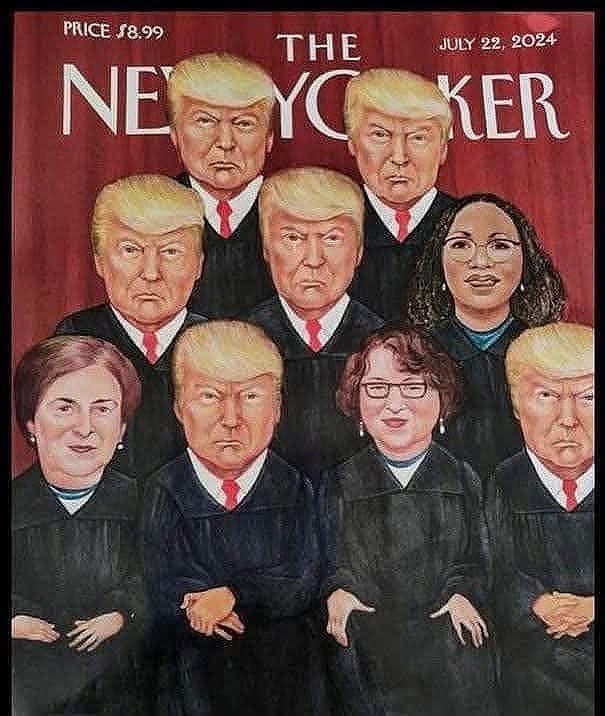
BREAKING: The Supreme Court has permitted Texas to keep its newly redistricted, GOP-favorable congressional map in 2026.
— Kyle Cheney (@kyledcheney) December 4, 2025
Kagan, Sotomayor and Jackson dissent.https://t.co/XCzbZBBhzH pic.twitter.com/1Wy2M4AU0i
🚨 MAJOR BREAKING — MASSIVE WIN AT SCOTUS: The Supreme Court has UPHELD Texas’s new U.S. House maps which are set to go into effect for 2026, 6-3
— Nick Sortor (@nicksortor) December 4, 2025
HUGE loss for Democrats 🔥
Republicans are now set to gain FIVE more seats in the U.S. House from the state of Texas alone. Keep… pic.twitter.com/pKrOqDyl4r
Tit for tat all around the country. What a sad state of affairs.
BREAKING: Virginia House Democratic Speaker Don Scott just announced he is considering drawing a 10 Democrats to 1 Republican House map for the midterms. This is how you fight back. pic.twitter.com/h4oUQ0FfQG
— Democratic Wins Media (@DemocraticWins) December 4, 2025
Some good news. Have you been worrying about NPR?
Public Radio seems safe, at least for the time being.
I missed this. 👇 Did you?
Corporation of Public Broadcasting revives $36 million NPR deal killed after Trump’s pressure
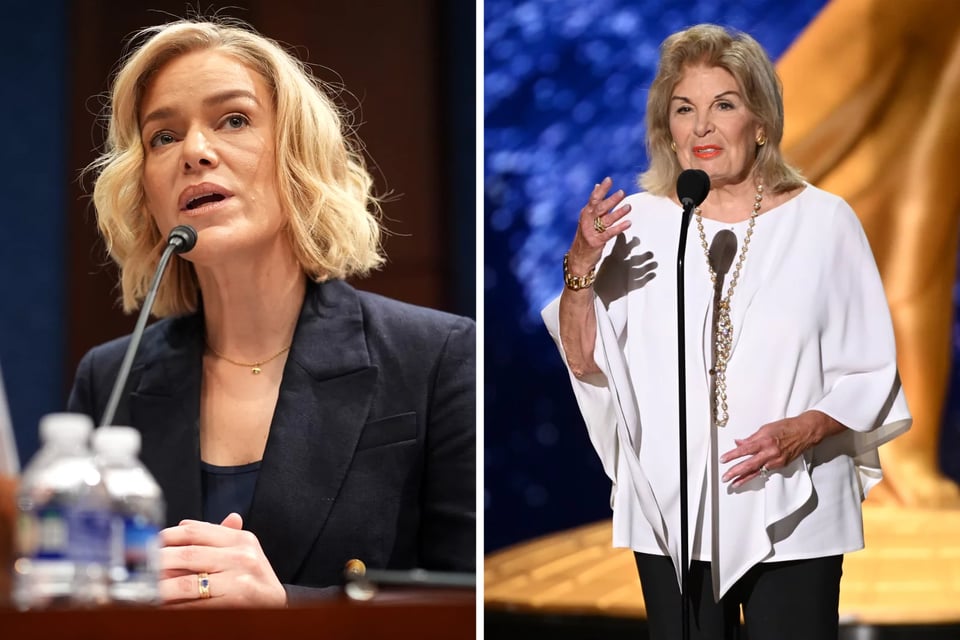
On left, NPR President and CEO Katherine Maher testifies during a House Oversight and Government Reform Committee hearing at the U.S. Capitol on March 26. On right, CPB President and CEO Patricia Harrison accepts the Governors Award on CPB's behalf during the 2025 Creative Arts Emmy Awards on Sept.
The Corporation for Public Broadcasting agreed Monday to fulfill a $36 million, multi-year contract with NPR that it had yanked after pressure from the Trump White House.
The arrangement resolves litigation filed by NPR accusing the corporation of illegally yielding to Trump's demands that the network be financially punished for its news coverage. The argument, part of a broader lawsuit by NPR and several stations against the Trump administration, focused on CPB funding for NPR's operation of a satellite distribution system for local public radio stations. NPR announced Monday it would waive all fees for the stations associated with the satellite service for two years.
The judge in the case had explicitly told CPB's legal team he did not find its defense credible. CPB lawyers had argued that the decision to award a contract instead to Public Media Infrastructure, a new consortium of public media institutions, was driven by a desire to foster digital innovations more swiftly.
"The settlement is a victory for editorial independence and a step toward upholding the First Amendment rights of NPR and the public media system in our legal challenge to [Trump's] Executive Order," Katherine Maher, President and CEO of NPR, said in a statement. "While we entered into this dispute with CPB reluctantly, we're glad to resolve it in a way that enables us to continue to provide for the stability of the Public Radio Satellite System, offer immediate and direct support to public radio stations across the country, and proceed with our strong and substantive claims against this illegal and unconstitutional Executive Order. We look forward to our day in court in December."
In its submission Monday evening to the court, CPB did not concede that it had acted wrongfully — nor that it had yielded to political pressure from the administration.
Instead, in a statement posted on its website, CPB asserted its side "prevails" as a result of the settlement.
"This is an important moment for public media," said Patricia Harrison, president and CEO of CPB. "We are very pleased that this costly and unnecessary litigation is over, and that our investment in the future through [Public Media Infrastructure] marks an exciting new era for public media." The contract with PMI will continue, CPB said.
Federal subsidies for public broadcasting stopped on Oct. 1 as a result of a party-line vote over the summer by Congress, called a rescission. Only a skeleton crew remains at CPB, which was created as a nonprofit corporation more than a half-century ago to funnel federal subsidies to public media. While PBS has had layoffs and NPR is monitoring its own finances, many local stations across the country have been hit hard.
Over the course of the litigation this fall, mounting evidence appeared to demonstrate that CPB's board chair and executives had acted against NPR in what turned out to be a futile attempt to salvage the corporation's own future.
Mathew Hunter, 26, works at KYUK in Bethel. Due to the funding cuts his position will drop from full-time to 10-15 hours on call.
MEDIA
Alaska station that covered devastating storm cuts jobs
In hearings last month in Washington, D.C., U.S. District Court Judge Randolph Moss told CPB's legal team they had not made a credible case for why the corporation reneged on the contract just a day after a top White House official warned senior CPB leaders against doing business with NPR. A trial had been set to start on Dec. 1.
CPB's change of mind — and NPR's ensuing lawsuit — sparked consternation and unease within the larger public media ecosystem. The two organizations had served as partners for decades. But that relationship frayed earlier this year, as the system came under attack from the Trump administration.
More than 60 years after President Lyndon B. Johnson signed the Public Broadcasting Act of 1967 into law, Congress is voting on whether to take back federal funding already promised for the public media system. The Republican majority has accused PBS and NPR of left-leaning bias and being a waste of taxpayer funds.
How bipartisan support for public media unraveled in the Trump era
Trump's public campaign against NPR and PBS started in earnest soon after he returned to the White House. Trump kicked it into high gear in late March with a series of social media posts.
In early April, CPB leaders sought to get money out the door before Trump took action against public media. On April 2, CPB's board approved the extension of a contract with NPR to distribute public radio programs, including those not produced by NPR. The arrangement stretched back four decades. The amount included millions still due on the then-current contract.
The next day, CPB's board chair and two senior executives met with a top White House budget official who attested to her "intense dislike for NPR." The budget official told them CPB didn't have to "throw the baby out with the bathwater," according to a deposition from CPB executive Clayton Barsoum submitted as part of NPR's legal filings.
Lori Walsh hosts the soon-to-be canceled In the Moment, which currently plays three times a day.
A public broadcaster's path after losing U.S. funds: Youth sports and less local news
And the day after that — just 48 hours after that board vote — CPB reversed itself. CPB executive Kathy Merritt informed NPR's top official over the satellite and distribution service that it had to be spun off: it could not be part of NPR. NPR refused to do so. CPB revised the scope of the contract and solicited new bids. NPR's submission proved unsuccessful.
Meanwhile, the White House was ramping up the pressure. It accused NPR and PBS of bias. On April 14, for example, it issued a formal statement that called their offerings "radical, woke propaganda disguised as 'news'." NPR and PBS's chief executives have rejected the accusations of bias.
On May 1, Trump issued an executive order that no federal money should go to the two public broadcasting networks. NPR and three Colorado public radio stations then filed suit against the White House, saying they were being unlawfully punished because the president did not like their news coverage. They contended the executive order represented a violation of First Amendment protections. Their suit names CPB as a defendant as well for, in their characterization, bending to the president's will. In Monday's legal filing, CPB agreed that the executive order was precisely the sort of government interference that Congress sought to prevent in establishing CPB as it did.
In the summer, Republican leaders in Congress, urged on by Trump, pulled back all $1.1 billion for future public broadcasting that had already been approved and signed into law by the president.
Throughout the legal battle, NPR has said, regardless of the outcome of the case, it would work with Public Media Infrastructure.
NPR's broader constitutional case against Trump's executive order continues. A hearing on its merits is scheduled for next month. (NPR)
Goodnight, Moon.
Last full moon of 2025.
Tonight's full Cold Moon (a supermoon), rising over the East River as seen from Manhattan. pic.twitter.com/qSAFFRBb5D
— Manhattan Bird Alert (@BirdCentralPark) December 5, 2025

