Friday, April 24, 2026. Annette’s Roundup for Democracy.
Virginia Redistricting is still in the news.
Greg Evans in the New Republic.
How Trump Accidentally Handed Dems Their Big Win in Virginia.
The “vote yes” campaign featured Trump in all of its closing ads in areas where it ran up huge numbers. Voters know who started this war.
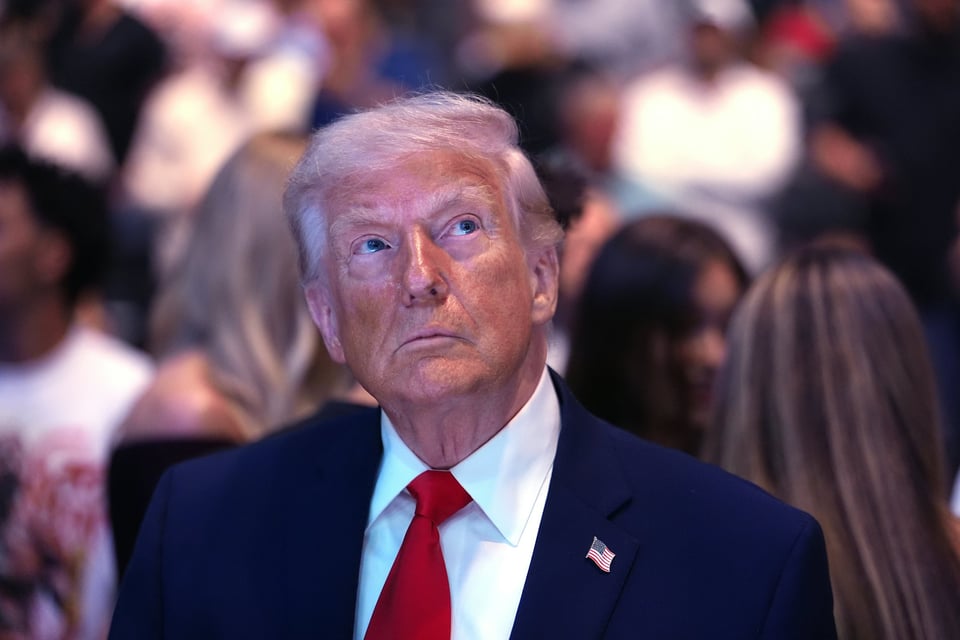
On Monday night, just before Virginia voters approved a referendum Tuesday that will allow Democrats to draw up to four new House seats before the midterms, Donald m Trump captured the true essence of this situation in a single sentence. “I don’t know if you know what gerrymandering is,” Trump told a conference call of Virginia supporters, “but it’s not good.”
Trump, of course, urged Texas Republicans last summer to gerrymander to help the GOP hold the House, then pressed other red states to follow suit. That prompted Democrats to retaliate in blue states. Trump initiated this arms race. So by declaring the Virginia initiative “not good,” he inadvertently confirmed the actual Trump-GOP position: Republicans should be permitted to rig elections to their maximum benefit, and Democrats should roll over and accept it.
It’s fitting that Trump laid this bare so clearly. Because as it turns out, Trump is perhaps the primary reason that the referendum passed.
In the “vote yes” campaign’s final days, 100 percent of the ads that aired in Northern Virginia markets heavily emphasized or featured very prominent imagery of Trump, a source familiar with ad buy information tells me. “Trump’s mug was all over the communications that voters were receiving, specifically among the lion’s share of the voters we needed,” the source says. “Trump’s name and face were plastered all over the mess he made.”
It was largely Northern Virginia that put the referendum—which passed by a narrow three points—over the top. The most heavily populated areas there—Fairfax, Loudoun, Prince William, Arlington, Alexandria—all voted for it by big to enormous margins, contributing nearly 600,000 of the “yes” side’s total of nearly 1.6 million votes.
Meanwhile, some of the heavily Black areas—like Petersburg, Portsmouth, Hampton, and Newport News—also were bombarded by heavily anti-Trump messaging. They edged toward Democrats, relative to 2024.
Trump did that. A typical closing ad for the “yes” side intoned: “Trump is rigging elections so he can hold onto power—Virginia, we can stop him.” And so, when Trump suggested Monday that gerrymandering is good when he and Republicans do it but unacceptable when Democrats do, he neatly confirmed the “yes” campaign’s main anti-Trump message.
“Donald Trump started this fight—and voters responded by rejecting him,” Dan Gottlieb, the communications director for the “yes” campaign, told me.
Trump initiated this war, but now he may have helped Democrats gain the advantage in it. With Republicans adding seats in Texas and other states—and Democrats creating new ones in California and Virginia—the Democrats are on track to add one or two more seats than the GOP will, though Florida could still redistrict and change that.
The basic contours of this situation—Trump ordered Republicans to rig the midterms in their favor to the greatest extent possible, and Democrats acted in response to prevent them from doing that—are glaringly obvious. Yet they are getting obscured in news accounts, which are emphasizing the Democrats’ longtime opposition to gerrymandering to portray their use of it this time as unprincipled.
For instance, today’s New York Times overview piece calls this “head-spinning” and a “stark reversal.” Another Times piece gives Democrats their say but uncritically lets Republicans get away with denouncing their “hypocrisy” and snarks: “Everybody is fine with gerrymandering as long as they get to do it.”
Well, no, everybody is not fine with gerrymandering. Here’s a simple way of clarifying matters. In 2021, when Democrats controlled the White House and Congress, they passed a bill through the House that, among other things, would end partisan gerrymandering nationally. With near total uniformity, Democrats supported it and Republicans opposed it, with the latter blocking it in the Senate.
Extreme partisan gerrymandering is bad. It treats the opposition’s voters with deep disrespect and enables lawmakers to insulate themselves from accountability. While both parties have done this over the decades, the differences matter. Republicans dramatically maximized the tactic after their 2010 blowout victory gave them control over most state legislatures, in some cases engaging in deliberate racial targeting. By contrast, Democrats—while gerrymandering themselves to some degree—have sought for many years to end the practice permanently for both sides.
In short, if Democrats had their way, neither party would be able to engage in extreme gerrymanders. But if Republicans are going to do it, Democrats are right not to let that go unanswered. Because if they did, it would functionally allow Trump and Republicans to play by their own rules. As Bill Kristol notes, Democrats could have resorted to “handwringing” about the “unfairness” of it all, but instead opted to neutralize the GOP’s underhandedly obtained advantage. In fact, doing this creates at least marginally more of a chance that Republicans might agree to a truce.
Republicans are calling the Virginia move everything from “hypocrisy” to an “egregious power grab,” but what really gets them angry is that they are not being permitted the exclusive right to tilt elections their way. As Adam Serwer joked about a conservative who lamented on X that rural voters would be “disenfranchised” by the new Virginia redistricting: “You can’t do that to rural voters! What are they, Black people?”
The Democratic position, then, is that if Republicans must insist on a system that allows state legislatures to engage in extreme partisan gerrymanders—with all the negative effects it has—they will simply play by the same rules, while continuing to invite Republicans to join in changing them.
Indeed—and this too should further clarify the situation—Republicans will likely have another chance to act on their newfound distaste for extreme gerrymandering soon enough. If Democrats win the House, they are all but certain to pass new initiatives ending the practice, and challenge Republicans to support them.
“I will be delighted to work with any Republicans as we attempt again to reintroduce redistricting reform in the next Congress,” Representative Jamie Raskin, who has also introduced bills on ranked-choice voting, tells me. “Do they actually believe that we should break from partisan redistricting? Or do they just want it to work for them in every case?”
Republicans: If you don’t like this situation, by all means, join with Democrats to end it. (The New Republic)
My opinion. Not sure the New Republic is right on this analysis.
I am not sure that Trump’s request for Republicans to vote NO in Virginia didn’t account for the surprisingly large GOP turnout while our BLUE WIN was far too close.
Kamala won VA by 5.8 points. Abigail Spanberger won the governorship by 8 points. We won the redistricting vote but not by as much.
- Yes: 1,575,367
- No: 1,486,451
- Margin: 88,916 votes or fewer (see chart below)
- Percent: 51.45% to 48.55% or 2.9 points.
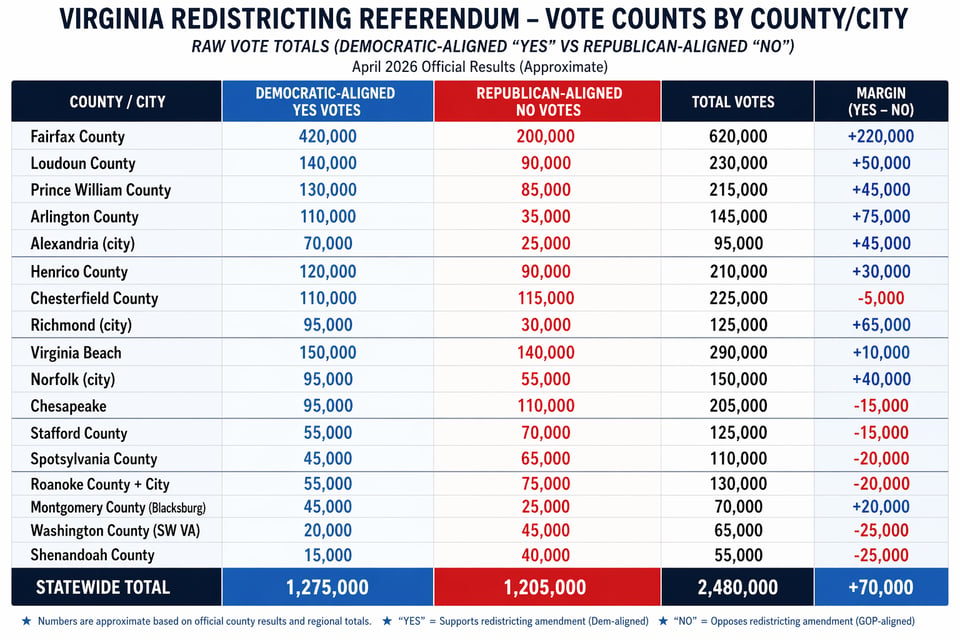
We beat Trump but we threw our best people out there (Obama, Spanberger, Wes Moore, Raskin, etc), and Yes, we won, but it was no landslide.
We will win the Midterms, but we need to prepare to fight Trump with every inch of our beings.
The New York Times weighs in on Trump’s popularity.
Disapproval of Trump Hits Highest Level of His Second Term.
The president’s weakening poll numbers come as the war in Iran has driven up gas prices, and more Americans are expressing concerns about the economy.
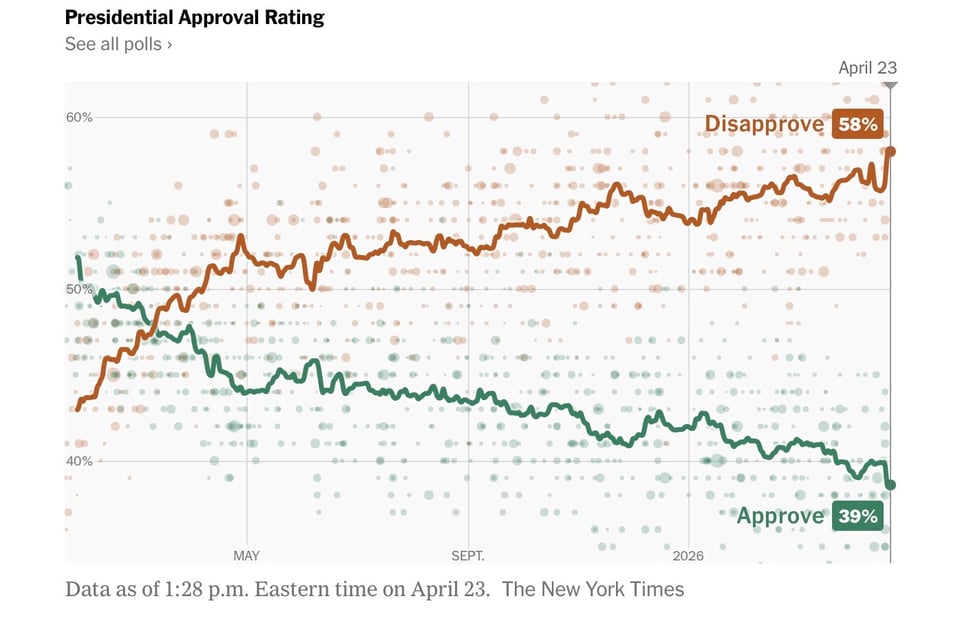
Disapproval of President Trump has climbed to the highest level of his second term, according to The New York Times polling average, which found that 58 percent of Americans disapprove of the president’s job performance while only 39 percent approve.
That is the highest disapproval rating Mr. Trump has faced since the end of his first term, in the aftermath of his re-election campaign loss and the Jan. 6 attack on the U.S. Capitol.
Mr. Trump’s weakening poll numbers come as the war in Iran has sharply driven up gas prices, and as a growing number of Americans are expressing concerns about the economy. Many Democrats are trying to make the midterm elections a referendum on Mr. Trump’s presidency, and some of Mr. Trump’s former allies in the conservative media, including Tucker Carlson, have turned against him in recent days.
A Marquette University Law School poll taken last week found Mr. Trump’s approval rating has dipped to 28 percent among political independents, down from 39 percent when he took office. Among Republicans the president has also lost some ground, though the vast majority of the party — 80 percent — still approve of his job performance.
Taken together, the Times polling average shows that Mr. Trump now has a net approval rating — approval minus disapproval — of negative 19 percentage points, as of Thursday.
Approval ratings can move around from day to day as new polls update our understanding of how the American public is feeling about the president, but Mr. Trump has experienced several weeks of weakening poll numbers.
Concern about the economy is reaching a fever pitch. Seven in ten voters now say that the economy is getting worse for them and their families, up from 55 percent just one year ago in a recent Fox News poll. Economic anxiety is also up sharply with the president’s base. Nearly half of Republicans now say the economy is getting worse, double the share who said the same last April.
This comes as Mr. Trump’s approval on the economy stands at 34 percent and his approval on handling inflation at just 28 percent. Voters are far more likely to approve of how he has been handling immigration and the border. Nearly half of all voters — 46 percent — approve of Mr. Trump’s immigration policy.
This ‘n That.
Trump Daily Delusions.
The WNBA Season is beginning soon.