ARTchivist's Notebook: What are you willing to give?
A symposium helps frame our precarious, scary present and fosters resolve for what comes next.
A couple weeks ago, I attended “Echoes of History: Inspiring Civic Action and Building Democracy” at the Democracy Center at the Japanese American National Museum. The day-long symposium was an amazing gathering of activists, organizers, artists, journalists, writers, philanthropic leaders, administrators, lawyers, and curators (no archivists, but maybe next time) who provided some much needed framing for what is happening to U.S. democracy (getting ever closer to not-democracy) and what we can do about it.
They described the steps toward authoritarianism (We are currently in the second-to-last stage: consolidation of power.); what it means to organize a sustainable general strike (lots of planning, and a population pushed so close to the brink that we overlook our differences to exercise collective power); the interlocking strands of imperialism abroad and repression at home; the role that arts and culture play in resistance movements (I mean, if not for arts and culture, why are we resisting at all?), and envisioning together a “3rd Earth,” or a society with, at a bare minimum, more justice and accountability.
In his keynote, journalist Robert Evans posed the sobering question of what we are willing to give — up to and including our lives — to resist authoritarianism and salvage our freedom. As the brutal murders of Renée Good and Alex Pretti demonstrate, for many of us, the coming days, weeks, months, and years (sigh) will demand more than we have previously been willing to sacrifice. Author and scholar Viet Thanh Nguyen reminded us that the current crisis is part of an ongoing saga of imperialism and perpetual war that has always undergirded life in the U.S., manifesting in recent memory in the Vietnam and Gulf Wars, and in our backing of the Israeli genocide of Palestinians. Curator Hamza Walker asserted that despite the current rise of artists like Amy Sherald and Kerry James Marshall, Black artists and cultural workers have always persisted, with or without institutional/governmental support. Even if all they have is toothpicks and glue, their creativity will continue.
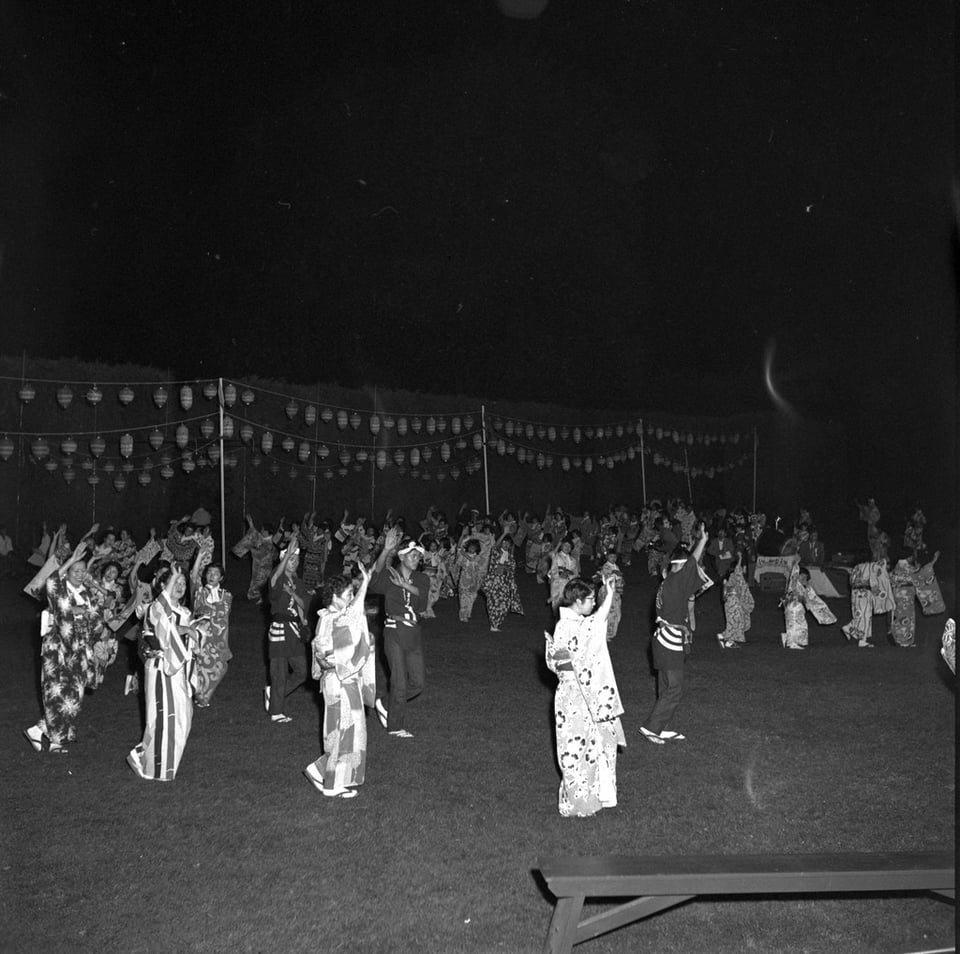
It was an exhausting and inspiring day, and it ended, in true Japanese American fashion, with a dance circle, a stroke of genius on the part of the organizers. After sitting in a darkened room digesting hard truths for hours, it was a balm to go outside and move (more or less) in unison to the sounds of Palestinian and Latin/Japanese musics. There’s something about dancing together under the stars (or under the helicopters, as is more likely in L.A.) that is magical, and gives me hope. Because we will eventually emerge from this darkness. What comes next is up to us, together.
News & Opportunities
Rooted in Memory II
In April, I’ll be facilitating a session on Radical Metadata (with the singular Mario Ramirez) at this community archival workshop series hosted by The Radical Archive Project (T.R.A.P.). These bi-monthly, virtual guided conversations with archivists and memory workers are centered on care-based, community-engaged archival practice. The series is designed to feel less like a formal lecture and more like a thoughtful exchange among colleagues and friends - while still offering practical insight and shared resources. The first session is Feburary 19. » More information
How Do Museums Resist Censorship?
I’ll be attending this discussion on Feb. 23 about how museums can resist the erasure and revision of our history and culture, and what it means for documenting our shared past, present, and future. Panelists include: American Alliance of Museums Board Chair and Michigan State University Museum Director Devon Akmon, JANM President and CEO Ann Burroughs, and The Brick Director and MONUMENTS Co-Curator Hamza Walker, moderated by National Coalition Against Censorship Arts & Culture Advocacy Program Director Elizabeth Larison. » More information
Art Collection Practices Survey
You know I love a good survey. The Ames Library at Illinois Wesleyan University is conducting research about art collections in academic libraries. They are seeking participation in the Art Collection Practices Survey from a variety of academic libraries. » More information
Transcript Accuracy Auditor
The inimitable Doug Boyd (of Oral History Metadata Synchronizer fame) has developed a new tool to measure the accuracy of machine-generated transcription services like Otter.ai, Descript, etc. I haven’t given it a whirl yet, but for those of us who need to transcribe oral histories or other recordings, it could be very useful in deciding what tools to use. » More information
Western Archives Institute returns in July 2026
WAI is an intensive, two-week program that offers instruction in basic archival practices. It is designed for individuals with diverse professional goals, including those whose roles require a foundational understanding of archival skills but who have little or no prior archival training; those assuming increased responsibility for archival materials; practicing archivists without formal archival education; and individuals committed to pursuing a career in archives. Scholarships are available. » More information