ARTchivist's Notebook: An AI Story
How AI stole my idea and claimed it as its own.
As you may have gathered from previous emails, I’m an AI-pessimist. I don’t see how trading control, autonomy, and accountability for faster, easier, error-riddled results is a good deal. As a former cataloger, I don’t mind doing repetitive tasks, and I like knowing that data is clean and properly structured because I created or reviewed it. It’s not that I never make mistakes, but at least I know where they come from.
I recently had an experience with AI that highlighted the weird space we’ve entered when it comes to credit and accountability. Librarians and teachers have long known the dangers of AI’s fake citations. It’s so eager to please us that when we ask it for something that doesn’t exist, it just makes ish up. Especially insidious are AI’s embedded in our systems that are learning things from uncite-able sources like our emails and online interactions and claiming the insights as their own.*
Here’s what happened: I’ve been working on a paper about an under-documented artist. (I’m going to keep everything anonymous and generalized as the paper hasn’t been published and it doesn’t really matter who’s who in this case.) I’ve been collaborating with some folks on the research (in fact, they contracted me to write an earlier version of the essay), so when I received feedback from the journal, I shared it with them. The feedback, which was anonymous, got shared with Gemini AI.
In the essay, which was summarized and critiqued in the feedback, I assert that the artist had a tangential relationship with a prominent American art movement. This relationship doesn’t appear in other things written about the artist, so I was curious if Gemini knew about it while other AIs did not. I asked Gemini and ChatGPT the same question — and got wildly different answers.
Gemini essentially claimed that there was a strong connection (which isn’t exactly what I argue). It did not provide citations for this information, and when I asked it how it knew, it said it was an “analytical synthesis” of its own. In stark contrast, ChatGPT said there was no connection between the artist and the movement.
This kind of blew my mind. Under the influence of one document — a secondhand, anonymous commentary — Gemini basically overstated my argument, presented it as established fact, and claimed responsibility for it. It is clearly “learning things” in the ambient soup of our data and then making half-baked conjectures that are impossible to verify. Perhaps I led it down this path by asking a very specific question that it had no other source for, but the fact that it doesn’t know the difference between a published source and a random piece of text (and then extrapolates and fabulates from that text), is disturbing. Also, if my question was leading, wouldn’t ChatGPT have come up with the same answer?
Is this the radical democratic promise of the internet? That an email or text can be just a consequential to our collective body of knowledge as a publication? As an archivist, I know there are cases where the answer is yes — the Epstein files being only the latest high profile example — but I can’t help thinking it’s gone too far. Then again, is it so different from the way my mind works? I half remember things, forget authors’ names or get them wrong, and make generalized claims about essays I read long ago and can no longer quote. The difference is everyone knows I’m fallible and have human biases, while AI presents itself as all-knowing, with the sum total of all online information at its beck and call. At least that is what the AI companies want us to believe. In reality, it’s stealing our work, claiming it as its own, and just plain making stuff up.
News & Opportunities
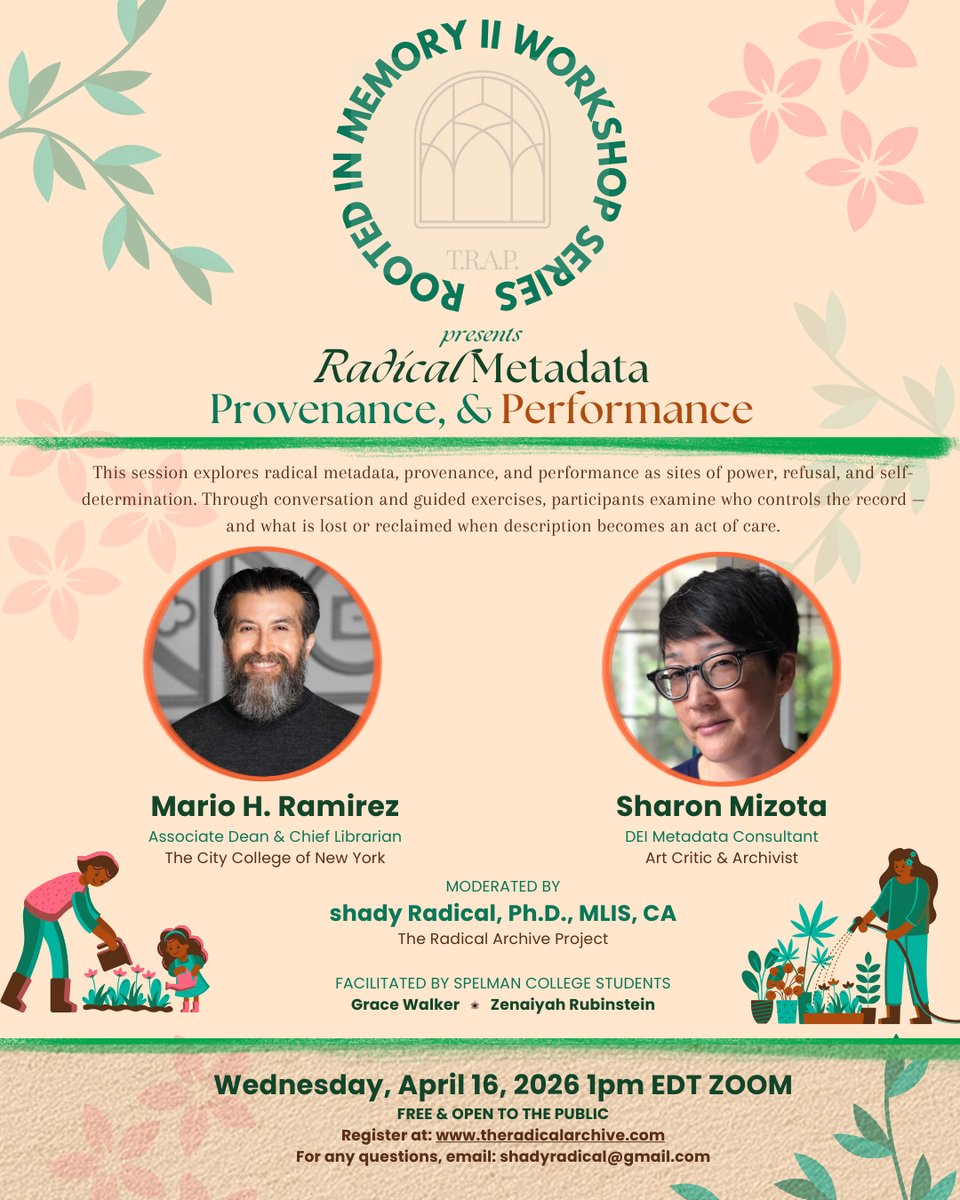
The People's Archive: Beyond The Past Tense
Excited to speak with Cristina Fontánez Rodríguez and Syreeta Gates to explore questions of data sovereignty, algorithmic justice, and how we build technologies that honor non-linear time, ancestral knowledge, and future generations. Organized by kinfolk, online, April 20 at 6:30 pm ET. Hope to see you there! Register here.
Paint It Black: Wally Hedrick
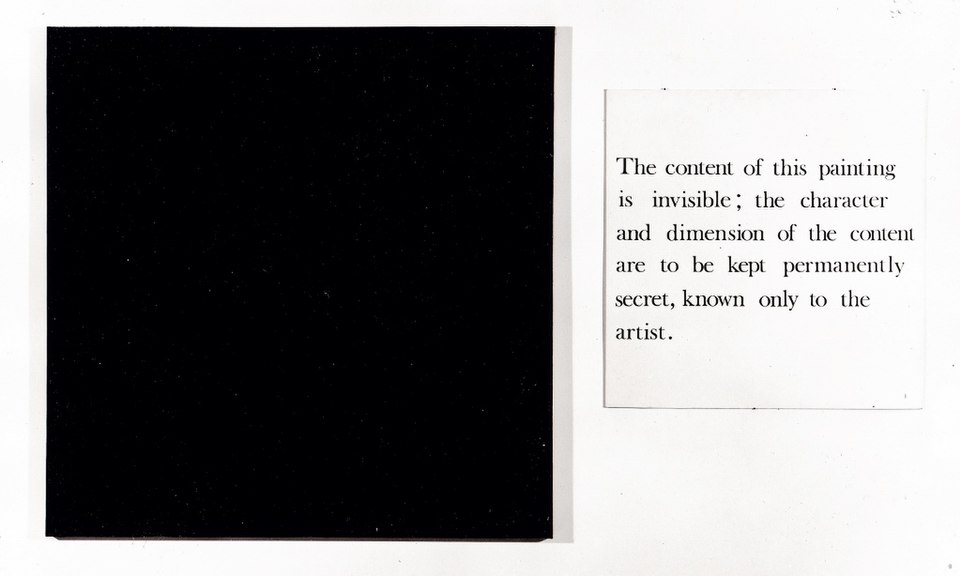
My latest review for KCRW’s Art Insider looks at a two-part retrospective of work by Wally Hedrick, an artist only California could make. He ran with the Beats and the Bay Area Funk artists but tread his own contrarian path, withdrawing from the art market to protest the American war in Vietnam. His all-black, anti-war paintings feel particularly resonant now. Read it here.
Nomadic Archivists Project (NAP) Scholarship
This annual award offers up to $1,500 to support students, early career professionals, and independent archivists of African descent — whether you’re attending the Society of American Archivists (SAA) Annual Meeting or pursuing a meaningful archival project of your own. The funds can be used for conference registration, travel, membership, trainings, supplies, personal time, or project expenses.
To be eligible, applicants must be current undergraduate or graduate students or independent archivists of African descent who are committed to pursuing archival work and demonstrate financial need. Applications should include a 500–750 word essay, resume, budget, and headshot. Submit your application by March 31st, 2026, to Miranda Mims at:
miranda@nomadicarchivistsproject.com!
Beyond Extraction: Memory in Revolt
This free virtual seminar series from archives & digital media lab led by Jamila J. Ghaddar is committed to confronting and dismantling the colonial and white supremacist logics that continue to structure archives, media infrastructures, and heritage institutions. The series began on March 2, but continues through mid_May with sessions on archives & cultural heritage in Africa, “migrated” archives, and Guerrilla Public History, among others. Register here.
A Practical Guidebook to Trauma-Informed Archival Practice
A recording of the Feb. 25 launch event with editors and authors, Michelle Ganz, Veronica Denison, and Sarah Aisenbrey as they discuss their new book about archival trauma. Also check out Society of American Archivists’ Crisis, Disaster, and Tragedy Response Working Group’s Documenting in Times of Crisis: A Resource Kit.
*For the record, I use Gmail but turned Gemini off awhile back. Who knows if it’s still lurking there somewhere, though?