ARTchivist's Notebook: AI & Cat-aloging
Cats and cataloging undergird the AI revolution, which may be paving the way to totalitarianism. Does art contain the answer?
I’ve been reading Yuval Noah Harari’s book Nexus, a “brief history of information networks from the Stone Age to AI.” It’s an eminently reasonable and accessible read — Harari is excellent at breaking down systems and historical events to reveal what’s really at stake — and also utterly terrifying. The book makes very convincing arguments, backed by history, that AI, with its increasing centralization and concentration of information, is pushing (leading?) us further down the path to totalitarianism.
What’s more, Harari asserts, AI is an alien intelligence, too big and complex for humans to fully understand. And, because it doesn’t have a body, or feelings, or a fear of death, it has no compulsion to support the flourishing of organic life.
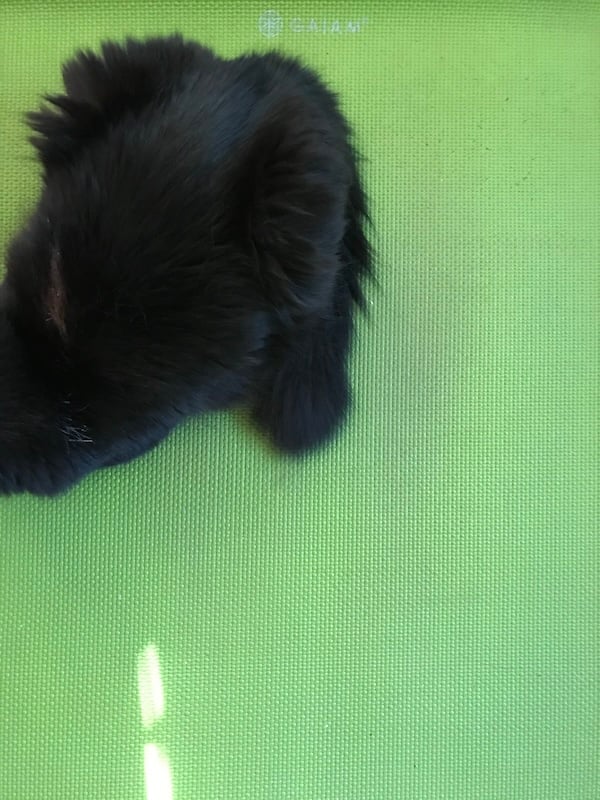
It was also trained largely on cats. Harari describes how some of the foundational moments in the history of AI were premised on its ability to identify cats in the bajillions of images we willingly share and describe online. Our obsession with our feline friends is perhaps the biggest collective cataloging project in history. As a metadata professional who has worked largely with visual materials, this is a chilling realization: our potential AI overlords are built on what we do everyday — translating images into text.
Of course, we provide access for human beings to information and experiences that were inaccessible before. Of course, we provide much-needed context and trace crucial relationships that reveal how history and the stories we tell are embedded in social and political systems. Of course, if we do our jobs responsibly and thoughtfully, we correct omissions and mischaracterizations in those histories and stories. But like the time-saving efficiencies of AI, cataloging cuts both ways. It has also made all of those things available to machines, who are in the process of using them to create inscrutable systems that increasingly control what it’s possible to find, learn, and think.
I’m not sure what can be done at this point. (Harari suggests stronger oversight and guardrails, most likely from governments…ha!) It may be too late. But I do think of the famous René Magritte painting, The Treachery of Images (This is Not a Pipe) from 1929. It’s a painting of a pipe underneath which is written, “Ceci n'est pas une pipe,” or “This is not a pipe.” This simple painting opens an abyss between representational systems. Of course it’s not a pipe; it’s a painting. Yet, to a being who has never smoked a pipe, has never drawn a breath, it is effectively a pipe, were it not for that contradictory text. What happens when image and text disagree? When is a cat not a cat? Severing the straightforward link between pictures and words has long been a disruptive strategy in art. What might that mean for cataloging? We have reparative metadata — what would subversive metadata look like?
Pop will eat itself…and maybe AI too
If you’re looking for something a little less depressing (although no less trenchant) on AI I recommend the Peacock show Mrs. Davis, which I watched last year, but which has come to feel incredibly prescient in its exploration of the parallels between AI and religious faith (both mysteries!) and the friendly facade beneath which AI might perpetrate world subjugation. It’s goofy and a little madcap, but ultimately spot-on in its assessment of AI’s impacts and motivations.
Meanwhile, in meat-space…
Please join me in person June 10 for a night celebrating arts criticism! It’s the Los Angeles premiere of “Out of the Picture,” the first feature-length documentary about the lives and work of art critics living through a precarious time for art and media. The film will be followed by a panel discussion with three critics: Carolina A. Miranda, Steven Vargas, and Tre'vell Anderson, moderated by Oliver Wang. And, we’ll be announcing the the recipients of this year's Irene Yamamoto Arts Writers Fellowship and the publication of the report, Topdogs and Underdogs: Critics of Color and the Theatrical Landscape. Here are the deets:
“Out of the Picture” Film Screening and Panel Discussion
Tuesday, June 10, 6 - 9:30 pm
Democracy Center at the Japanese American National Museum
General admission is $10; free for students, JANM members, and ARTchivist’s Notebook subscribers with the code PICTURE25.
Get tickets and more info here.
Funding opps
California cultural heritage orgs: Groundwork has announced a new “Major Projects” program offering grants up to $150,000 to support emergency preparedness projects. Applications will open in June. More information should be available soon here.
U.S. orgs with audio collections: The National Recording Preservation Foundation (NRPF) is accepting applications for $5,000 - $10,000 grants to support preservation of audio materials of cultural or historical importance. Deadline is June 30.