AI News Social —Sovereignty by Subscription
Sovereignty by Subscription
In December 2024, a piece in The National used the phrase "techno-colonialism" to describe what AI bias was doing to the Global South.
In December 2024, a piece in The National used the phrase "techno-colonialism" to describe what AI bias was doing to the Global South. By August 2025, a Trinidadian writer in The Guardian was warning that the digital age would perpetuate the inequalities of the colonial age. Between those two moments, eight African countries published national AI strategies, the UAE signed a partnership with Rwanda and Malaysia, Google launched three governmental initiatives in Latin America, and the World Bank started talking about "local realities." The rhetoric of sovereignty traveled a great distance in nine months. The infrastructure did not.
This week the column takes the arc of "AI sovereignty" — what the Global South has been saying about its own AI future, and what has actually been built or imported in its name. The tension that surfaces is not the familiar one between technology and tradition, nor between adoption and refusal. It is between the documents being signed and the data centers doing the work. A national strategy is a piece of paper. A model trained on someone else's corpus, hosted on someone else's cloud, governed by someone else's terms of service, is a fact on the ground. The question is whether the optimistic vocabulary that has come to dominate the conversation — leadership, partnership, leapfrogging, framework — has been describing a movement toward sovereignty or papering over its absence.
The arc holds zero inversion points across four quarters. The framing stays positive throughout. That is itself a finding worth examining: when a discourse refuses to admit a setback, the analyst has to ask whether the absence of contradiction reflects an absence of problems or an absence of permission to name them. The argument that follows is that it is the second, and that the optimism has come at a price.
This week in four categories
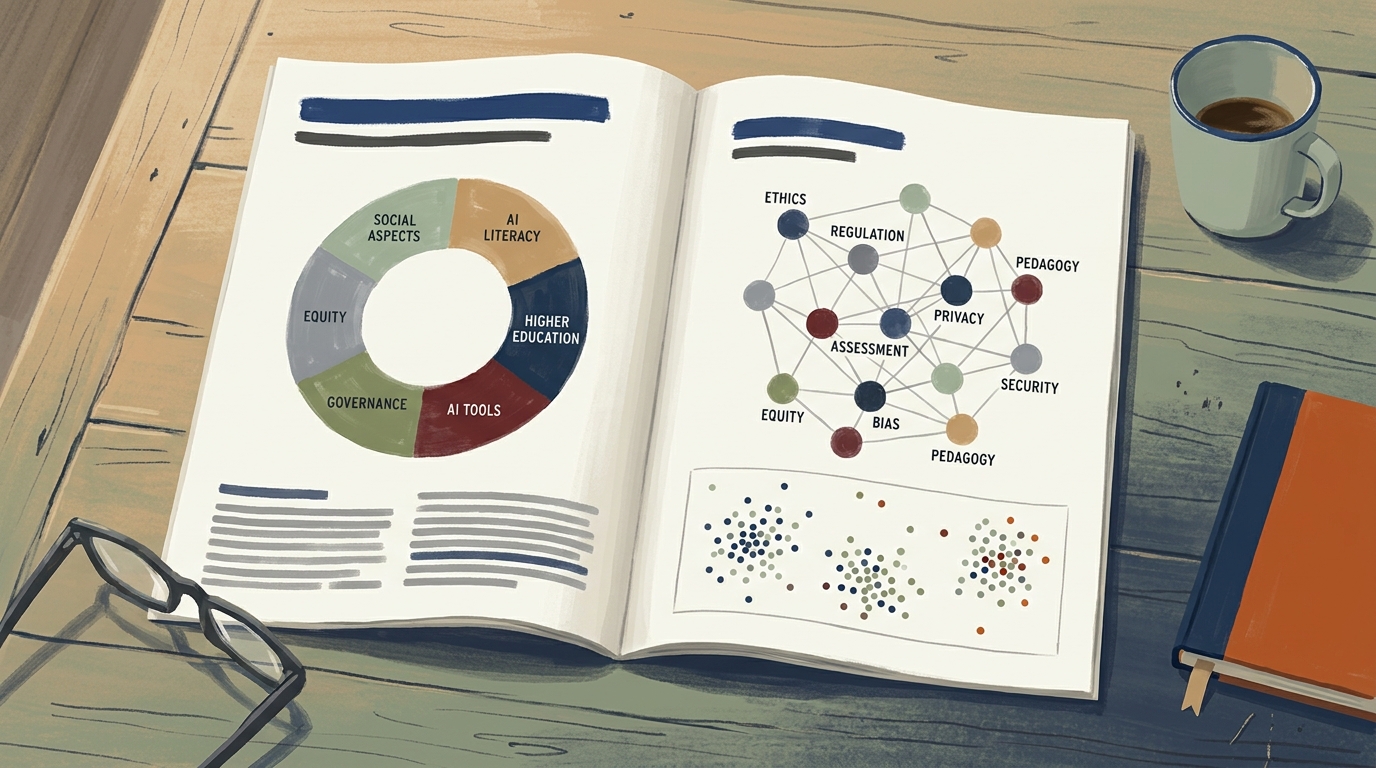
- Social Aspects of AI — 1546 articles · essay, report, podcast, top articles
- AI Literacy — 1425 articles · essay, report, podcast, top articles
- AI Tools — 1175 articles · essay, report, podcast, top articles
- Higher Education — 2490 articles · essay, report, podcast, top articles
Also this week
- Four audience briefings for Higher Education — general, educators, researchers, leadership: https://ainews.social/edition/2026-04-26/#cat-he
- TertulIA — the long-form weekly conversation podcast: https://ainews.social/edition/2026-04-26/#tertulia
- Three thinker columns (McLuhan, Toffler, Asimov): https://ainews.social/edition/2026-04-26/#thinkers
- Analytical strip (contradictions, stances, frames, themes) and full analysis page: https://ainews.social/edition/2026-04-26/#analyses
How this edition was made
6636 candidate sources were evaluated against a nine-criterion inclusion rubric; those that met threshold were read through four reader-serving probes — what is actually being said, what is being sold or obscured, who benefits, what it means for society / literacy / the tools / the institution — and synthesized into this week's editorial material.
Full methodology · This week's analyses · Previous editions
AI News Social is a weekly bilingual publication about artificial intelligence across four distinct lenses — society, literacy, tools, and higher education. Each edition leads with The Longer View column and the TertulIA conversation podcast, accompanied by four category reports, four audience briefings, and a full analytical surface. Orchestrated by Dr. Diego Bonilla at Sacramento State. You're receiving this because you subscribed at ainews.social — unsubscribe anytime using the link below.