
February 2026 update: Announcing our open roadmap
February was an intense month of learning and making progress in the strategic direction we shared in January. We've pushed forward a number of upstream and platform initiatives around cost controls and content sharing in JupyterHub. Here's what stood out.
We opened up our roadmap
In January, we decided to lean more into collaboration and co-creation as part of our organizational mission. This month we took a big first step towards doing so by opening up our roadmap and creating a public repository of initiatives. Check it out at the link below:
These steps give our member communities - and the outside world - an ability to see what we're building, who is supporting the work, and participate with us. We hope this will drive more design-level conversations with member communities to improve upstream technology. We also hope to co-fund work by using the roadmap to pool together resources from many communities.
Blog post about 2i2c's public roadmap ›
This month
Improved error messages when sharing notebooks: Jenny shipped better error handling in nbgitpuller - the tool educators use to share content with students via a link. Errors now tell you what went wrong and what to do about it. It's in pre-release now and should be shipped broadly soon. Blog post ›
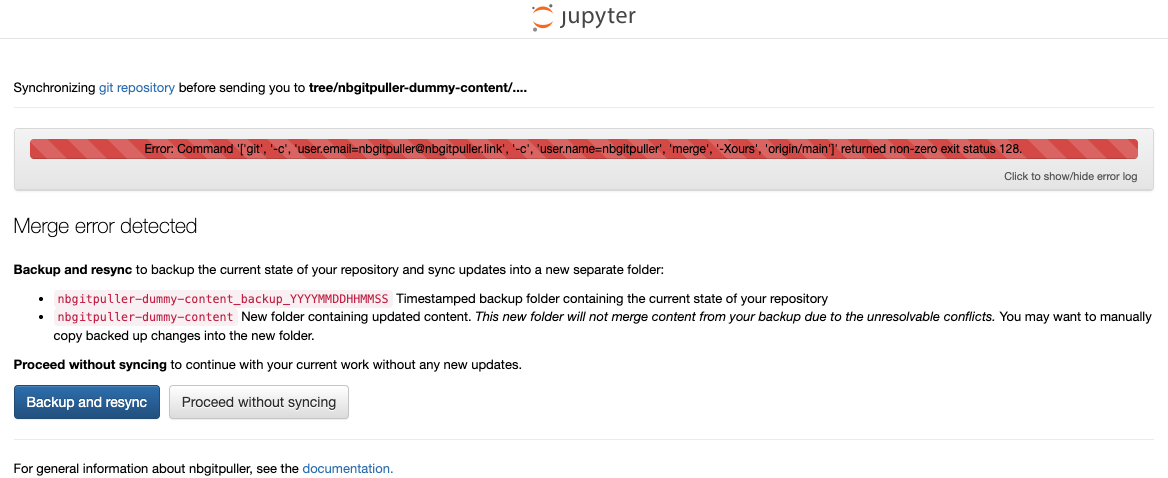
Jenny joins the JupyterHub team: Related to this work, Jenny was invited to join the JupyterHub team as a contributor and maintainer! We're excited about the recognition from the community for her sustained contributions. Blog post ›
Angus shared Jupyter Book's vision at FOSDEM: Angus Hollands gave a talk at FOSDEM 2026 introducing Jupyter Book 2 and the MyST Document Engine - what they are, why we rebuilt Jupyter Book, and how they support open computational publishing. Blog post ›
What we're working on
A subset of the initiatives from our roadmap currently driving our work.
GPU sharing for classrooms: Yuvi shipped the GCP implementation of GPU time-slicing this month to let instructors run GPU workshops without hitting quota limits. We're testing this out for an upcoming NAIRR workshop and thinking about how to offer this to other member communities as well. GitHub initiative ›
Compute quotas with EarthScope: We're building per-user compute quota tooling to help communities manage their costs on a per-use basis. Our driving use-case and funder is EarthScope who would like this work for an upcoming NSF workshop! GitHub initiative ›
mybinder.org on OVH is live: We launched a new mybinder.org federation member supported by BIDS (bids.mybinder.org). It is now serving ~10% of global mybinder.org traffic! We're helping operate this hub, and doing some final clean-up before considering this initiative complete. Many thanks to BIDS for supporting this work! GitHub initiative ›
Shout-outs
The JupyterHub community for recognizing Jenny's contributions and inviting her to join the team.
Min @ BIDS for taking point on the mybinder.org federation work and the upstream dask-gateway group-access PR that was merged this month.
EarthScope for giving us early requirements and helpful feedback on the compute quotas initiative. And Tarashish @ DevSeed for collaborating with us on the JupyterHub service to enable this.
And thanks to you all for being a part of the 2i2c community,
-- Chris and the 2i2c Team


